
As we continue our explorations how Gemini Deep Research could be used by museum curators to craft narratives around specific themes in their collections, last week we examined how Deep Research could prepare richly detailed historical briefings around the Collection's Americana archives. Let's repeat this process, this time asking Deep Research to prepare a proposed exhibition narrative and framing around our foundational collection of landmark Estonian historical milestones. For each item in the collection, we've asked Gemini Deep Research to prepare a literature review and historical backgrounder – all results below are machine-generated so may contain errors, but overall offer strong backgrounds to each piece, demonstrating once again the power of Gemini and especially Gemini Deep Research for collection curation.
The Overarching Narrative
Let's first ask Gemini to write an overarching historical narrative that weaves all of these individual artifacts into a single cohesive historical narrative of Estonia's founding and evolution that would help an exhibit curator think about how to display and contextualize the items as a single unified story:
Now let's dive in the collection item-by-item in chronological order, with photographs of each.
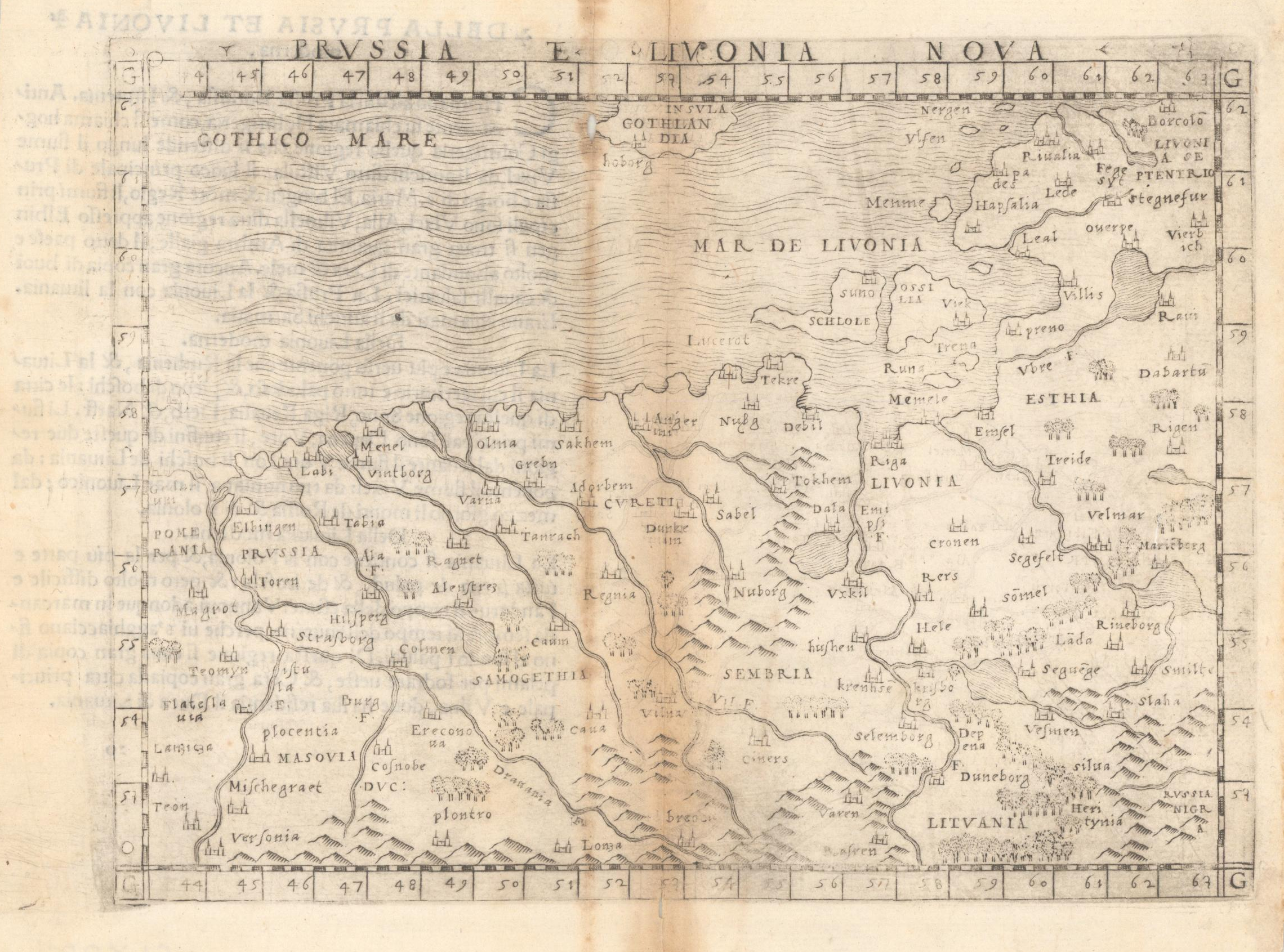
1548 – One of the earliest obtainable detailed maps of Estonia, Giacomo Gastaldi's 1548 map from La Geografia di Cladio Ptolemeo Alessandrino
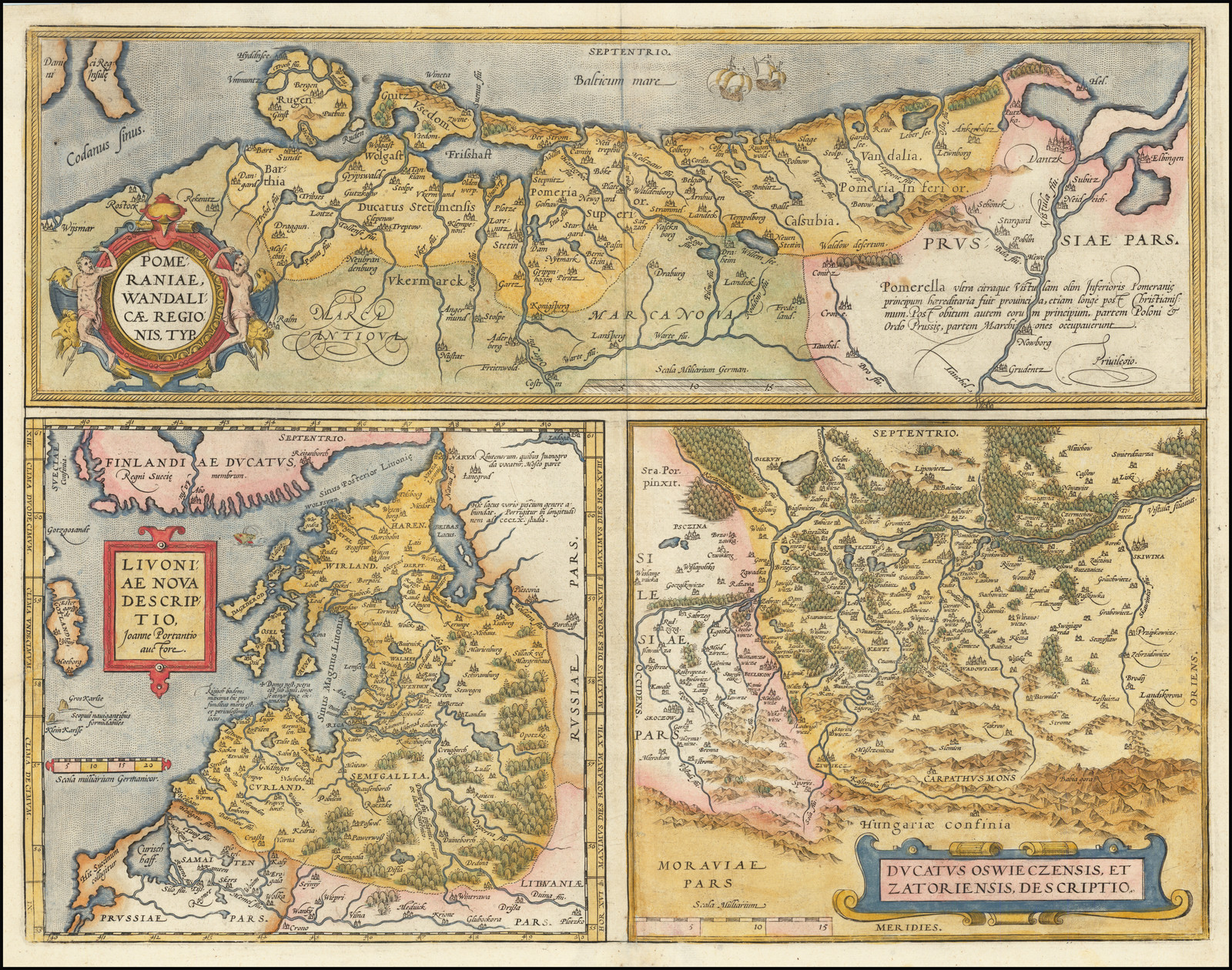
1573 – Johannes Portantius's 1573 map of Livonia (lower left of the trimap) from the 1584 printing of Abraham Ortelius's Theatrum Orbis Terrarum, recognized as the very first detailed custom map created of Estonia
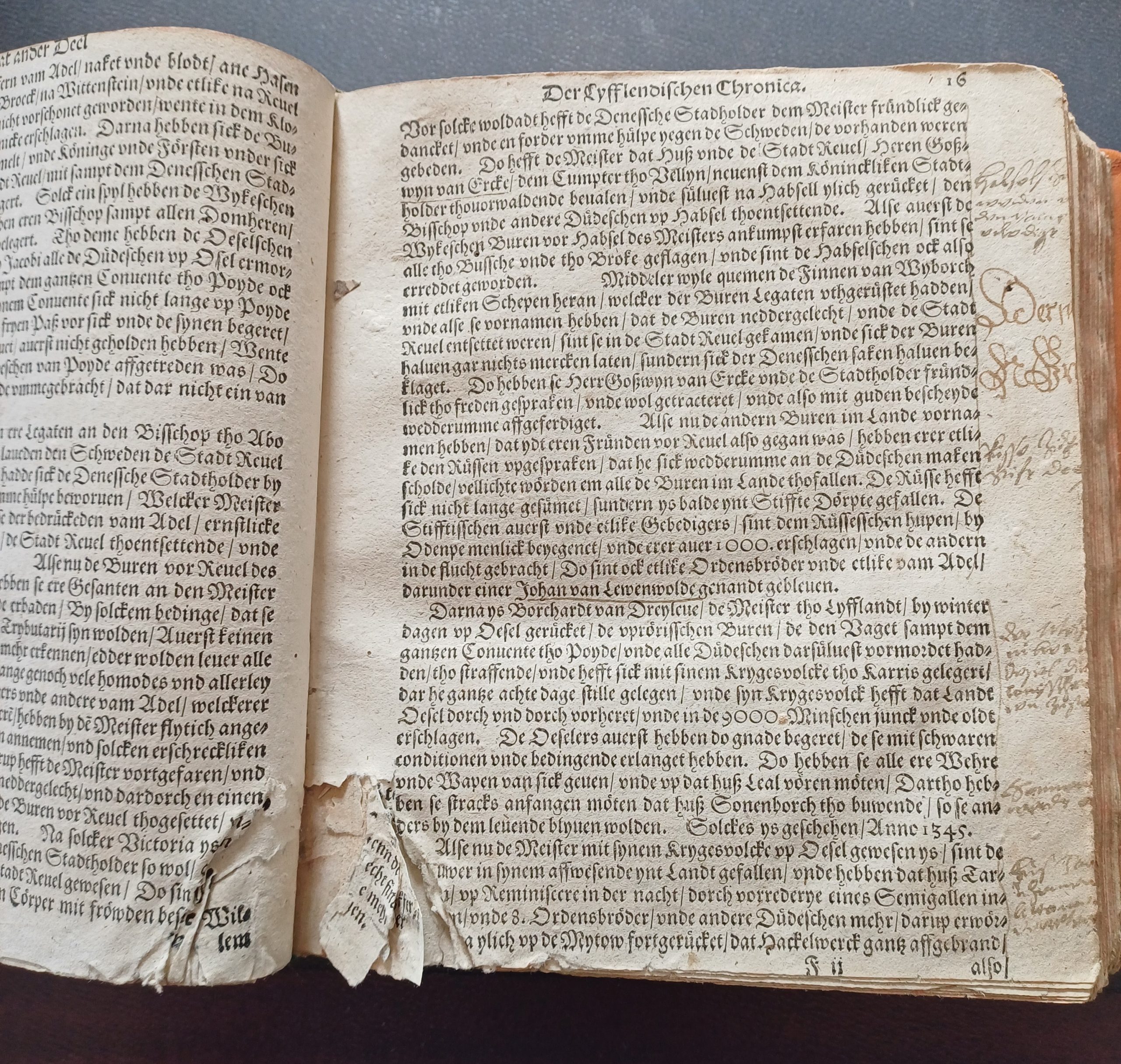
1584 – First expanded edition of Balthasar Rüssow’s "Der Lyffländischen Chronica" (the Livonian Chronicles), known as the first printed history of Estonia
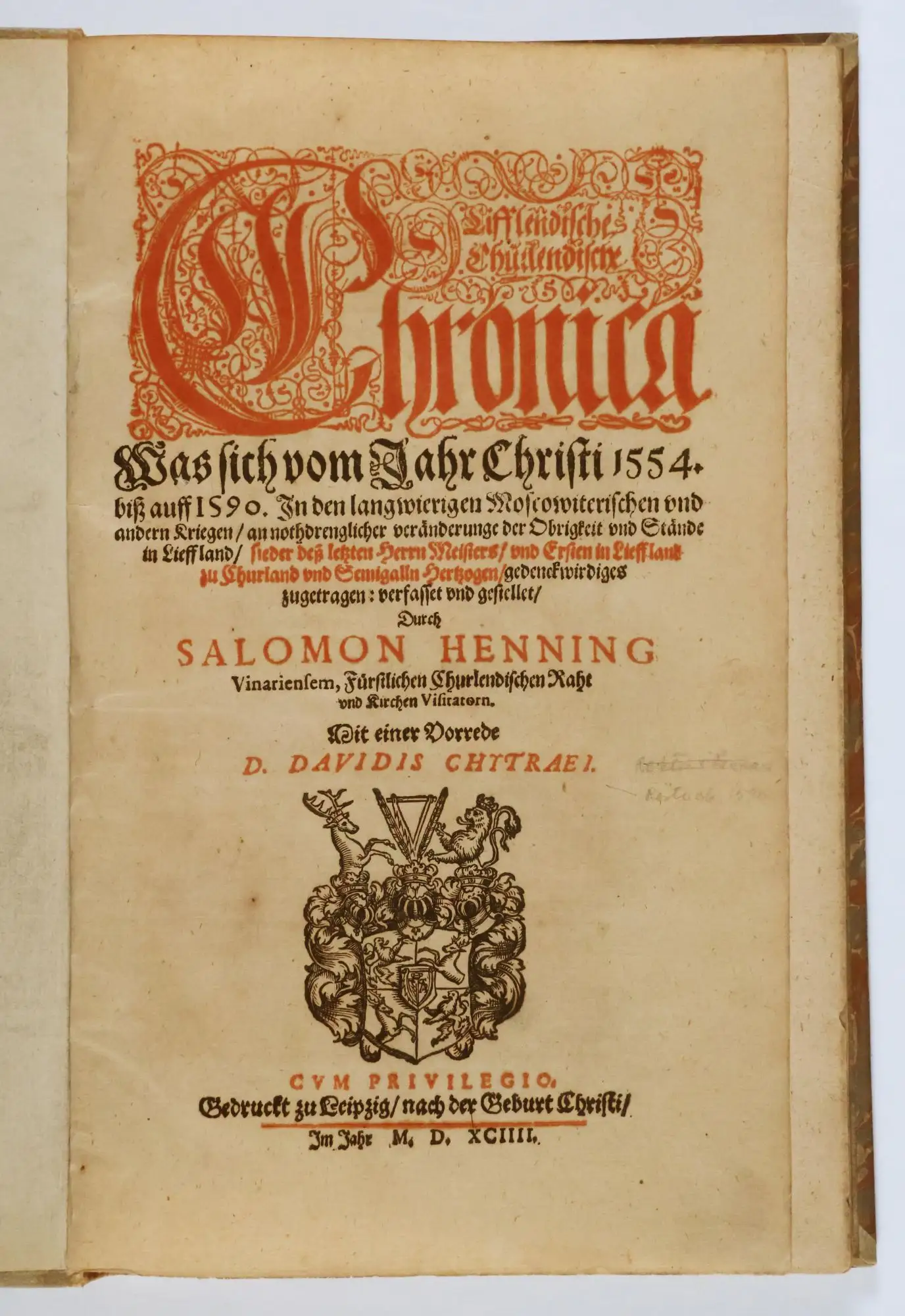
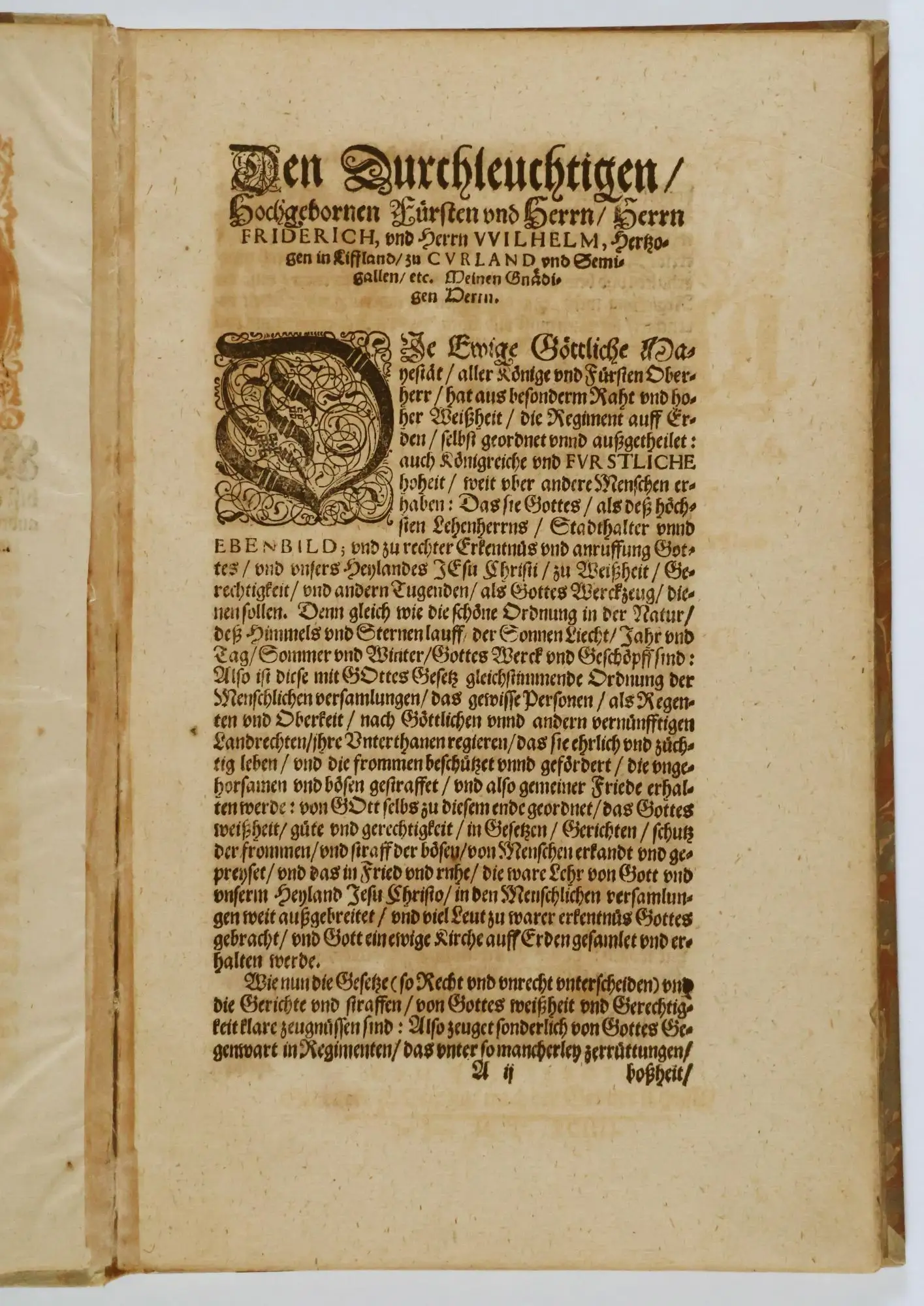
1594 – Salomon Henning's Lifflendische churlendische Chronica
Salomon Henning’s Lifflendische Churlendische Chronica (Leipzig, 1594, second edition) is one of the most important contemporary historical accounts of the Livonian War (1558–1583) and the collapse of medieval Livonia, a political transformation that profoundly shaped the subsequent history of Estonia and Latvia. Written by Henning (1528–1589), secretary and close associate of Gotthard Kettler, the last Master of the Livonian Order and first Duke of Courland, it provides an eyewitness perspective on the devastating wars, Russian invasions, political upheavals, and partition of Livonia among neighboring powers.
Whereas Russow wrote from the perspective of the peasant class, Tallinn, its citizens, and Swedish-aligned northern Estonia, Salomon Henning offers a rebuttal from the Livonian Order and the emerging Duchy of Courland. Together, the two chronicles rank among the essential sixteenth-century primary sources for understanding the destruction of medieval Livonia and the emergence of Estonia’s early modern political order.
1607 – An exceptionally rare 1607 gilded Mercator map of Estonia, believed to be a royal presentation edition
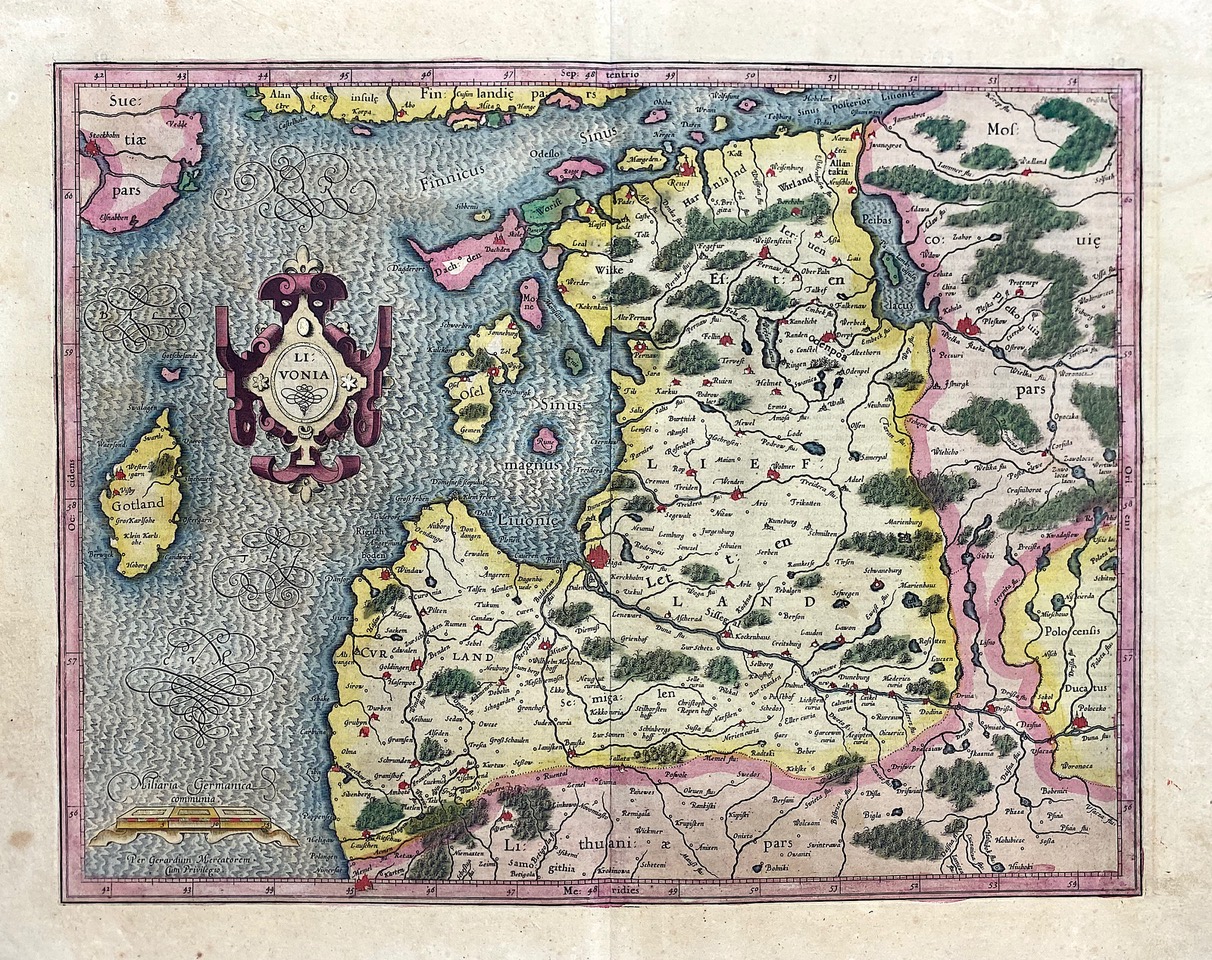
- The 1607 Gilded Mercator Map of Livonia: Cartography, Royal Patronage, and the Making of Early Modern Estonia
- Gemini Pro Analysis Of The Coloring
- Gemini Deep Research: The Material and Cartographic Analysis of an Illuminated 1607 Mercator-Hondius Map of Livonia
- Gemini Deep Research: The Gilded Meridian: A Comprehensive History and Analysis of Illuminated Mercator Maps (History of Gilded Mercator Maps)
- Gemini Deep Research: The Gilded Meridian: A Comprehensive History, Context, and Material Science of Illuminated Cartography (History of Gilded Maps In General)
1646 – Johannes Janssonius's Nova Totius Livoniae Accurata Descriptio
Map in the first state, "State I, Van der Krogt 1710:1B.1".
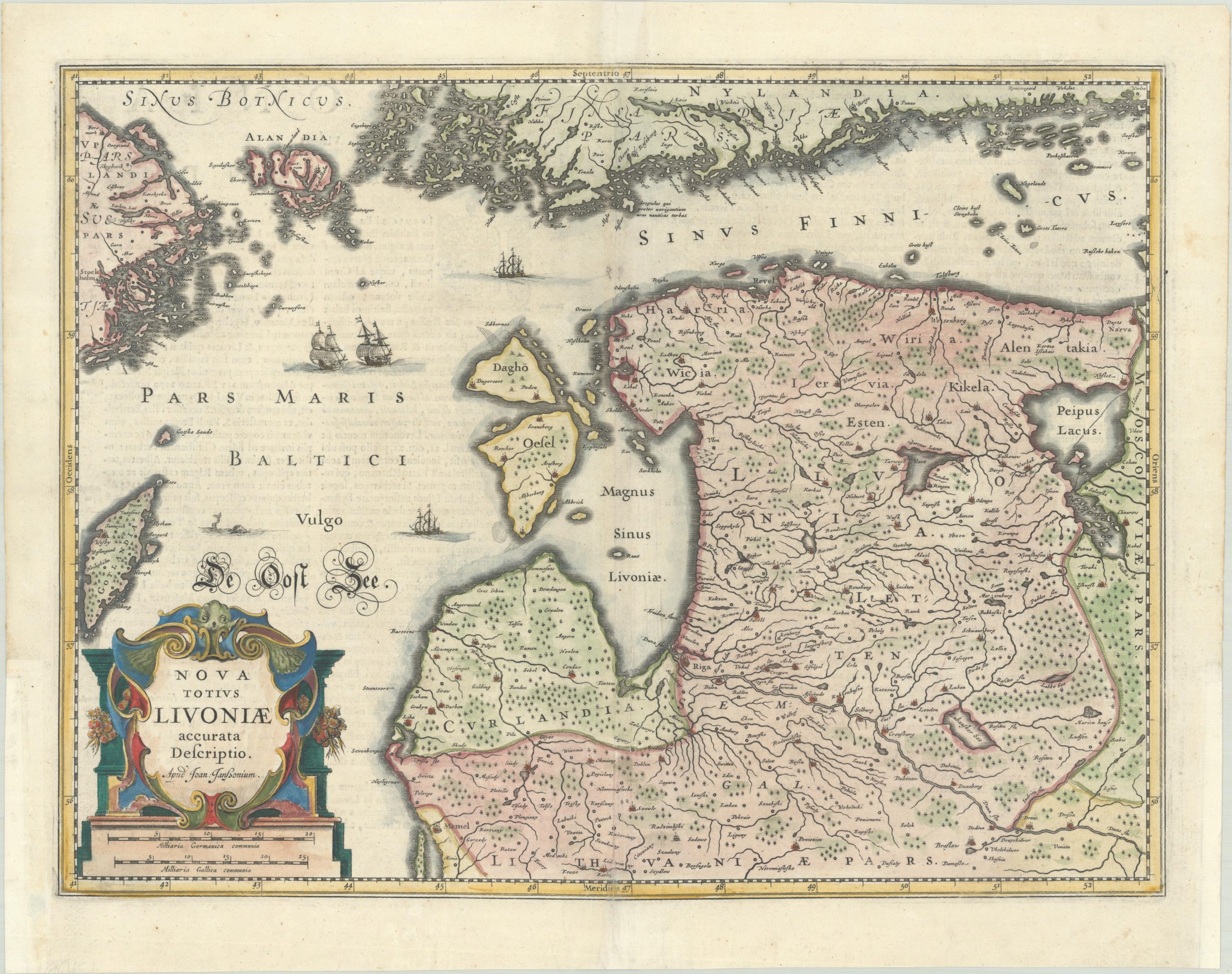
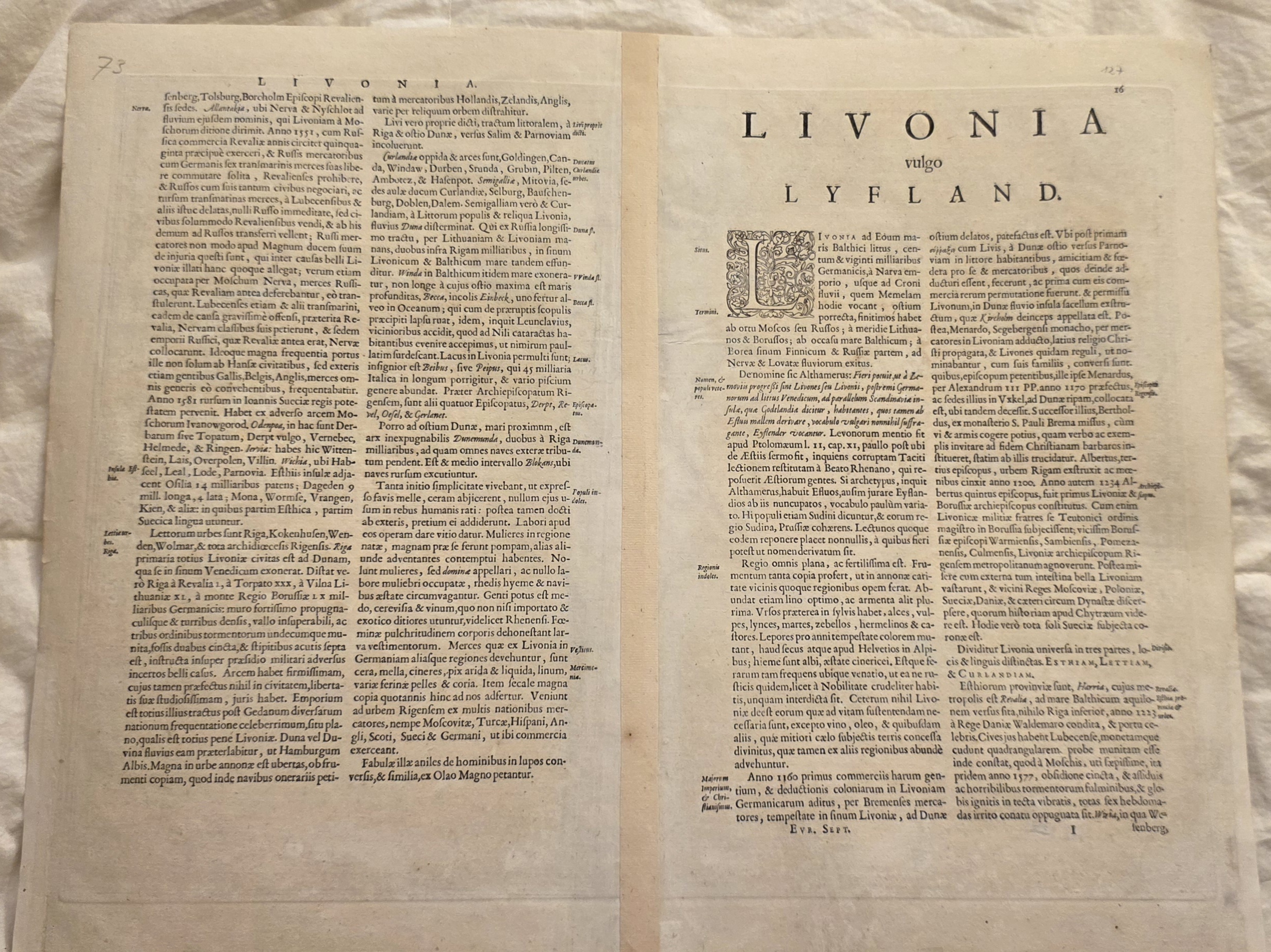
- Cartographic Echoes of the Baltic: A Historical and Geopolitical Analysis of Nova Totius Livoniae Accurata Descriptio
- Translation Of Verso Textual Description Of Livonia.
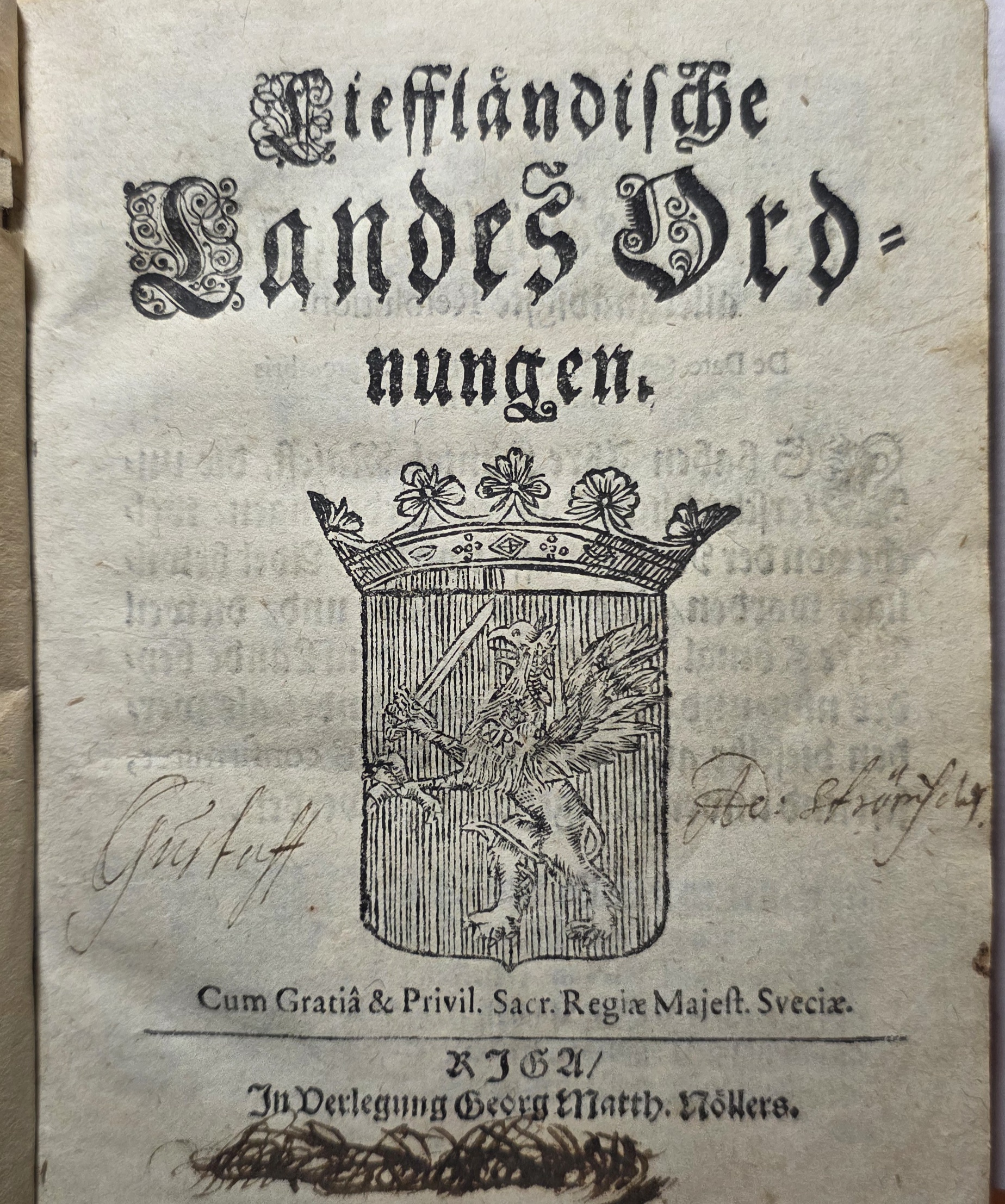
1689 – Livonian Provincial Ordinances — Rare First Edition (Lieffländische Landes-Ornungen)
The scarce first edition of one of the most important surviving collections of Swedish royal laws governing Livonia, encompassing much of present-day Estonia and Latvia. Published in Riga by Georg Matthias Nöller in 1689, this 168-page compilation preserves the legal and administrative framework of Swedish Livonia, including royal decrees, provincial regulations, and ordinances concerning governance, religion, justice, and society. Opening with a royal resolution of 1671 and a proclamation by Governor-General Clas Tott (1630–1674), the volume prominently displays the crowned Livonian griffin, symbolizing the province under Swedish sovereignty. This considerably rarer original edition predates the substantially expanded editions of 1705 and 1707 and represents an important primary source from the final decades of Swedish rule, before Russia's conquest of Livonia in 1710. Of particular historical significance, this copy bears an ownership inscription attributed to Gustaf Adolf Strömfelt (1640–1717), the Swedish royal governor of Dorpat (Tartu) and Pernau (Pärnu), whose administration ended with the Russian conquest in 1710. Subsequently preserved in the aristocratic library of Ericsberg Castle in Sweden, the volume offers a remarkable connection to the final generation of Swedish provincial government in Estonia and Latvia.
- The 1689 Riga Edition of the Lieffländische Landes Ordnungen: Legal Codification, Material Provenance, and the Administrative Transformation of Swedish Estonia
- Gemini For Museums: Identifying A 350-Year-Old Ownership Signature & The Incredible History Of A Livonian Law Book
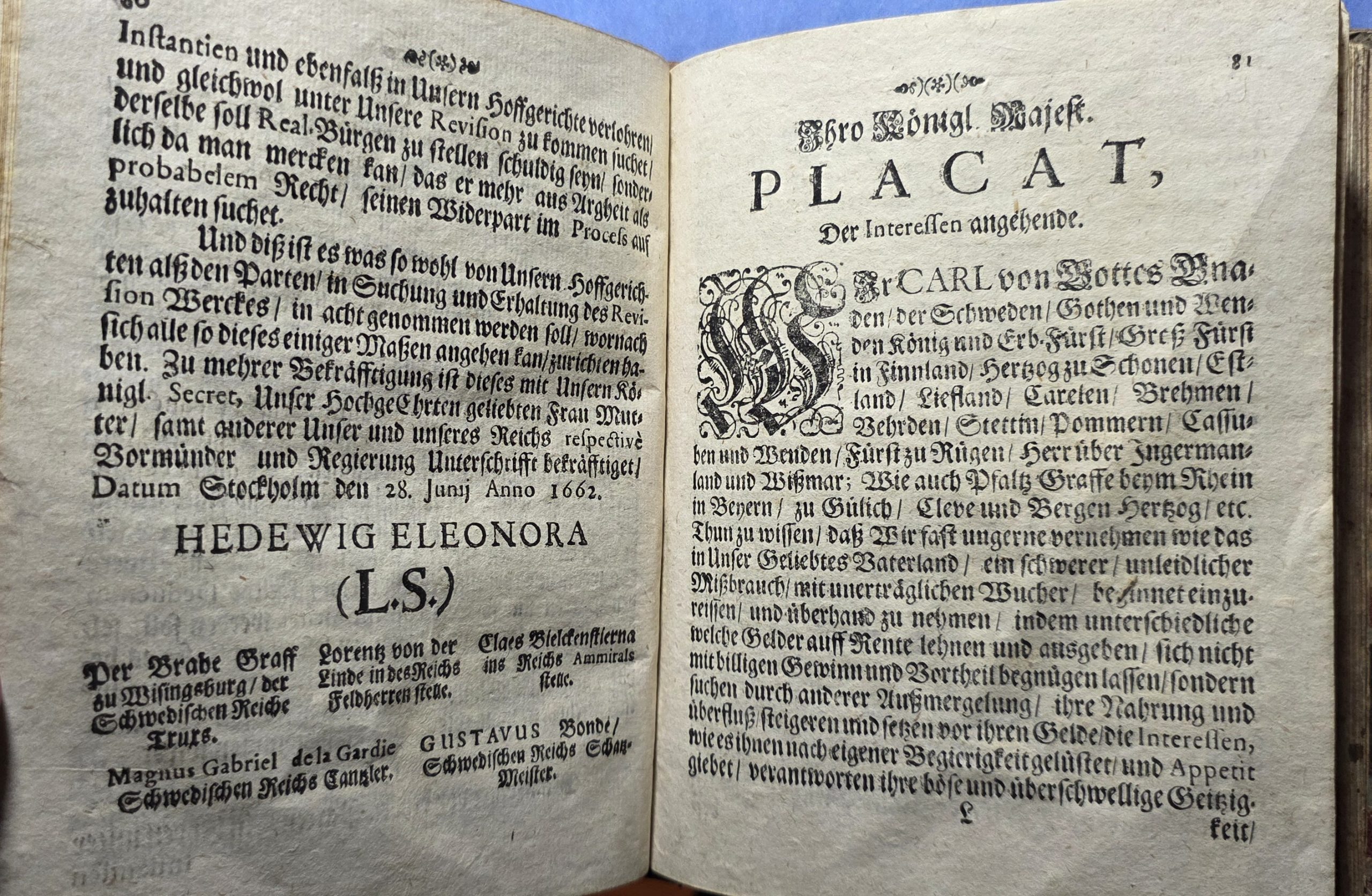
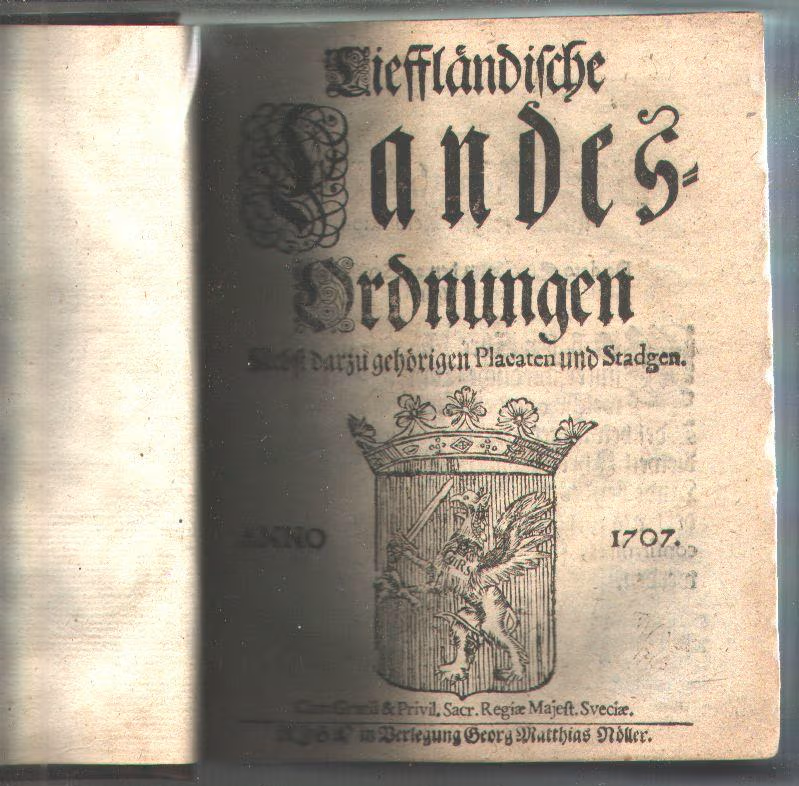
1707 – Livonian Provincial Ordinances (Lieffländische Landes-Ordnungen, nebst darzu gehörigen Placaten und Stadgen)
An important early eighteenth-century compilation of the laws and royal decrees governing Swedish Livonia, encompassing much of present-day northern Latvia and southern Estonia. Published in Riga by Georg Matthias Nöller in 1707, this substantially expanded edition of a collection first published in 1689 contains nearly 800 pages of provincial regulations, royal proclamations, and administrative ordinances governing the territory under Swedish rule. The title page prominently displays the crowned Livonian griffin, the historic heraldic symbol of the province. Published during the Great Northern War, just three years before Livonia's conquest by Russia in 1710, the work represents one of the last major compilations of provincial legislation issued under Swedish sovereignty. Remarkably, much of Livonia's established legal framework survived the transition to Russian rule, making this collection an essential primary source for understanding the administration, legal traditions, and social history of early modern Estonia and Latvia, particularly the enduring influence of Swedish institutions on the Baltic provinces.
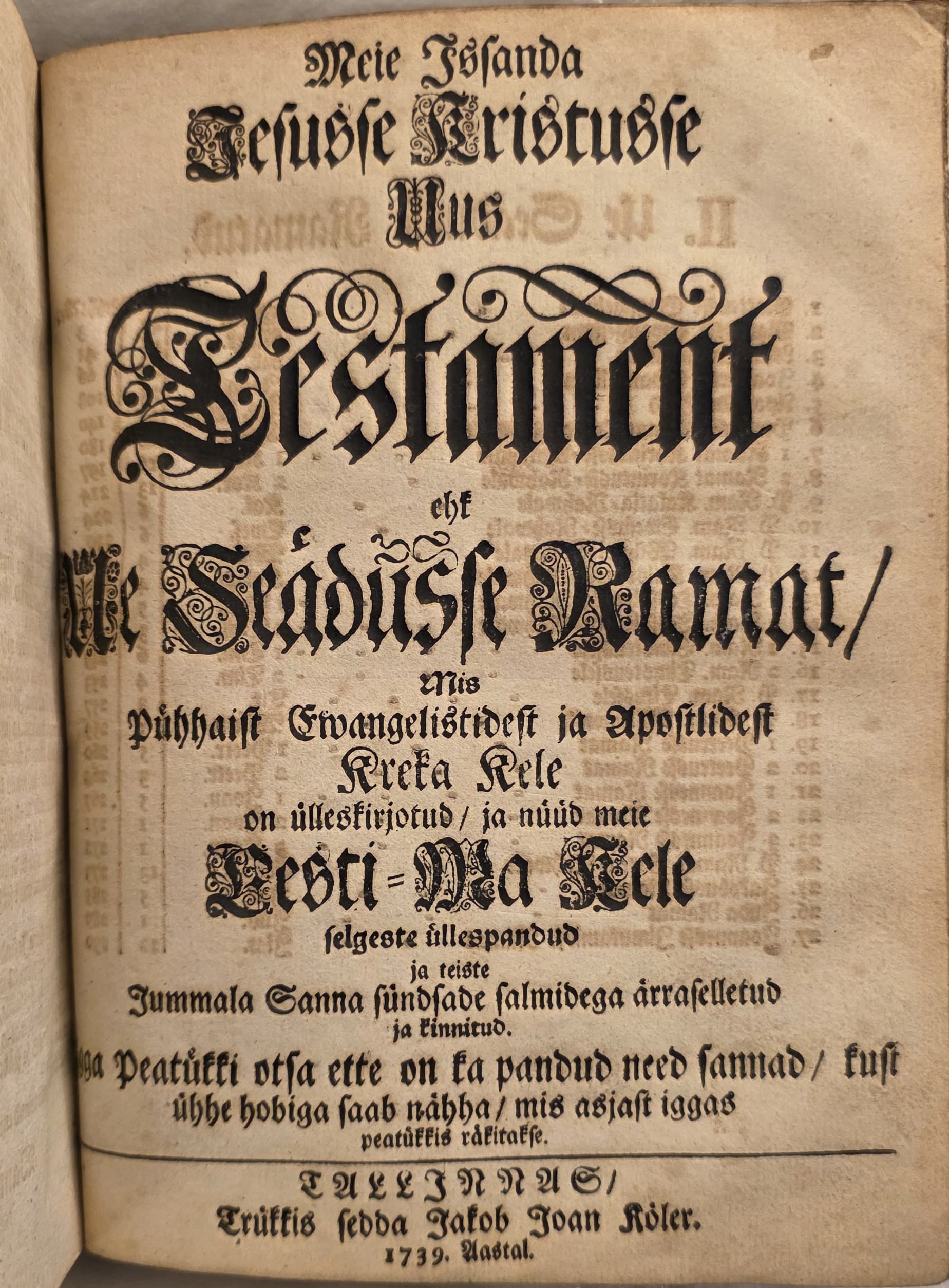
1739 – A nearly flawless 1739 Estonian Bible, the first complete bible translation in Estonian and one of the oldest surviving books written in the Estonian language
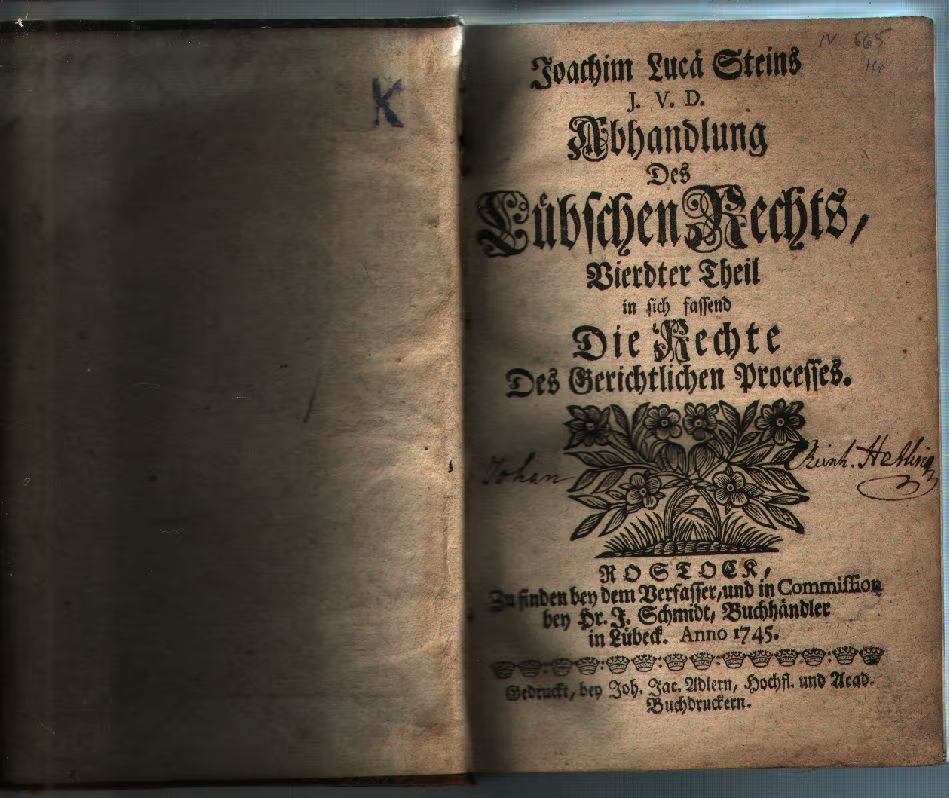
1745 – Joachim Lucas Stein — Treatise on Lübeck Law (1745) (Abhandlung des Lübischen Rechts)
An important eighteenth-century legal treatise by the distinguished German jurist Joachim Lucas Stein (1711–1785), published in Rostock in 1745. This volume contains the fourth part of Stein's comprehensive examination of Lübeck Law, devoted to judicial procedure, together with his separate treatise on Lübeck maritime law and supplementary legal commentary. Lübeck Law was one of medieval Europe's most influential municipal legal systems, governing commerce, property, inheritance, maritime affairs, and judicial proceedings across numerous cities of the Hanseatic world, including Reval (modern Tallinn), which received Lübeck Law in 1248. Its continued application in Estonia long after the decline of the Hanseatic League illustrates the remarkable durability of the city's German legal institutions under successive Danish, Swedish, and Russian rulers. Of particular historical significance, this copy bears the handwritten ownership inscription of Johann Reinhold Hetling (1718–1799), a mayor of Reval, establishing a direct connection between this important legal scholarship and the municipal authorities responsible for administering Lübeck Law in eighteenth-century Estonia.
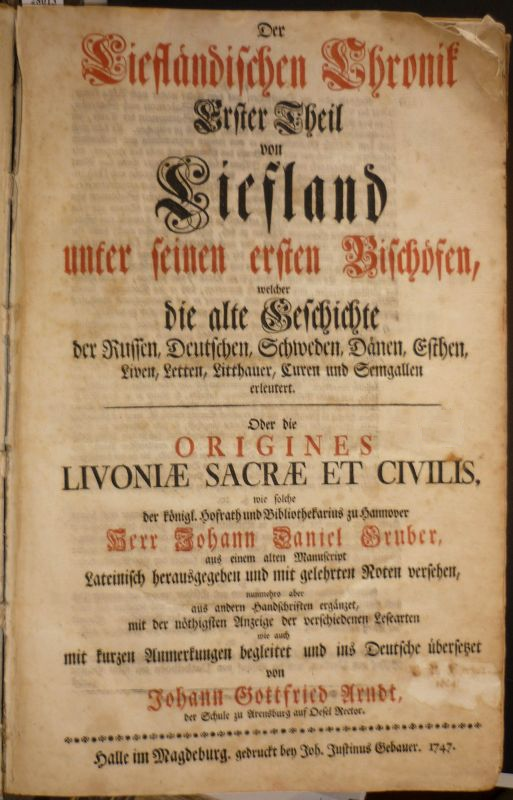
Arndt & Gruber's 1747 Der Liefländischen Chronik, which became the definitive entrance point to Johann Daniel Gruber's editio princeps of The Chronicle of Henry manuscript, the oldest recorded history of Estonia
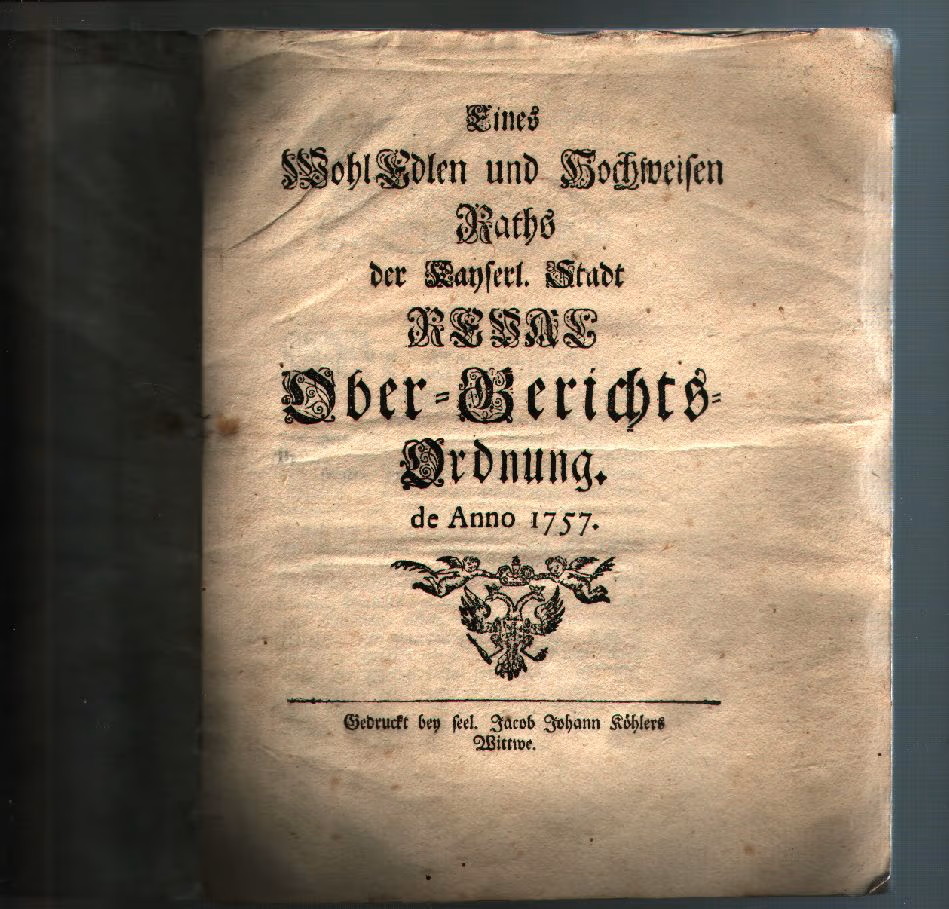
1757 – The Superior Court Ordinance of Reval (1757) (Eines Wohl-Edlen und Hochweisen Raths der Kayserlichen Stadt Reval Ober-Gerichts-Ordnung)
A rare eighteenth-century municipal legal ordinance issued by the City Council of Reval (modern Tallinn, Estonia) and officially promulgated on July 4, 1757. Printed in Reval by the widow of Jacob Johann Köhler, this 18-page publication established regulations governing the city's superior municipal court and its judicial proceedings. Issued during the reign of Empress Elizabeth of Russia, it reflects the remarkable legal autonomy retained by Reval following Estonia's incorporation into the Russian Empire in 1710. The city's judicial institutions continued to draw upon centuries-old Lübeck municipal law and Baltic German legal traditions inherited from the medieval Hanseatic period, even as Estonia passed from Danish to Swedish and eventually Russian sovereignty. This uncommon surviving ordinance provides valuable firsthand evidence of the administration of justice in eighteenth-century Tallinn and the enduring independence of its municipal institutions within the Russian Empire.
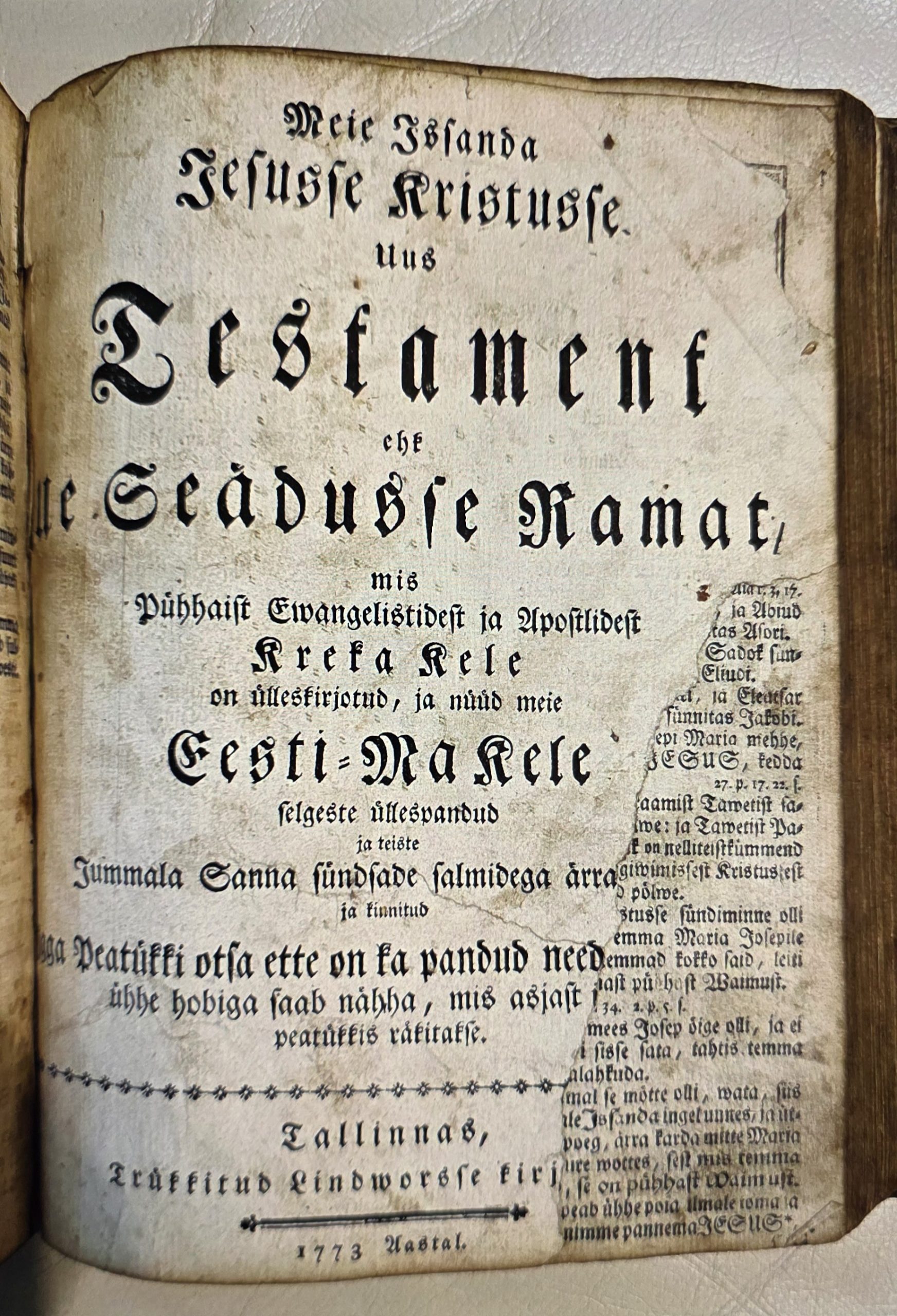
1773 – Second Edition of the Estonian Bible
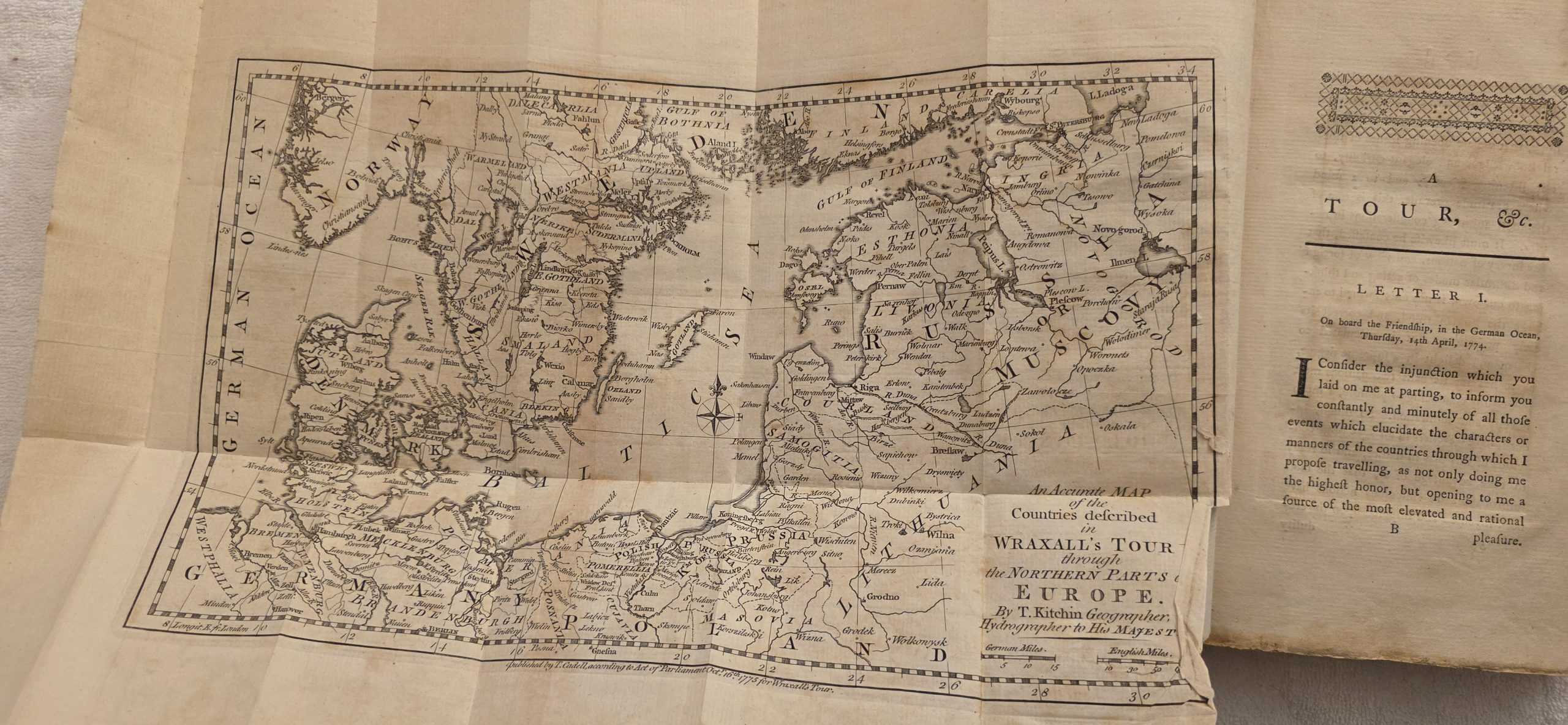
A 1776 copy of Nathaniel Wraxall's Tour Through Some of The Northern Parts of Europe
A 1777 copy of Topographische Nachrichten Von Lief – Und Ehstland Vol. II
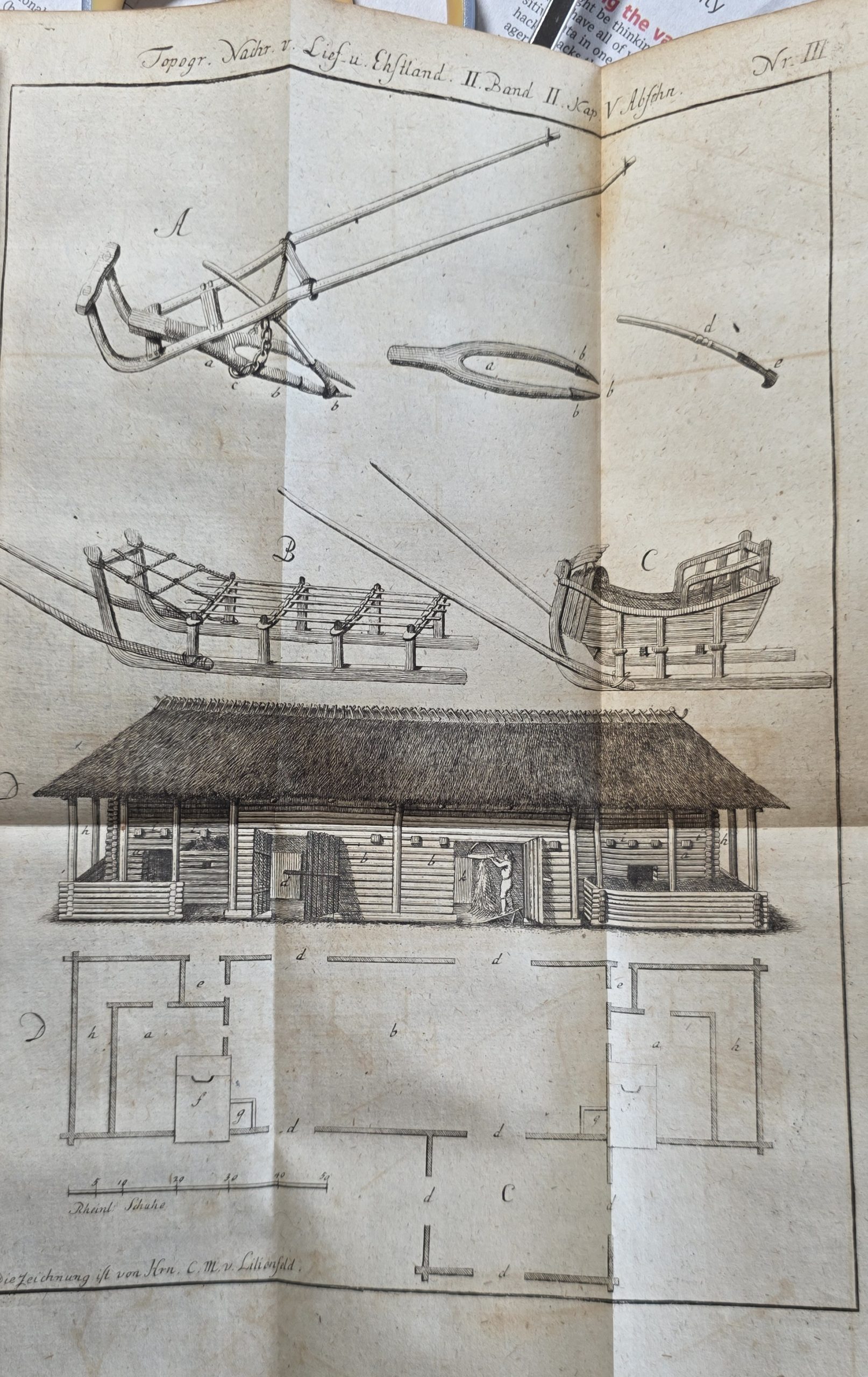
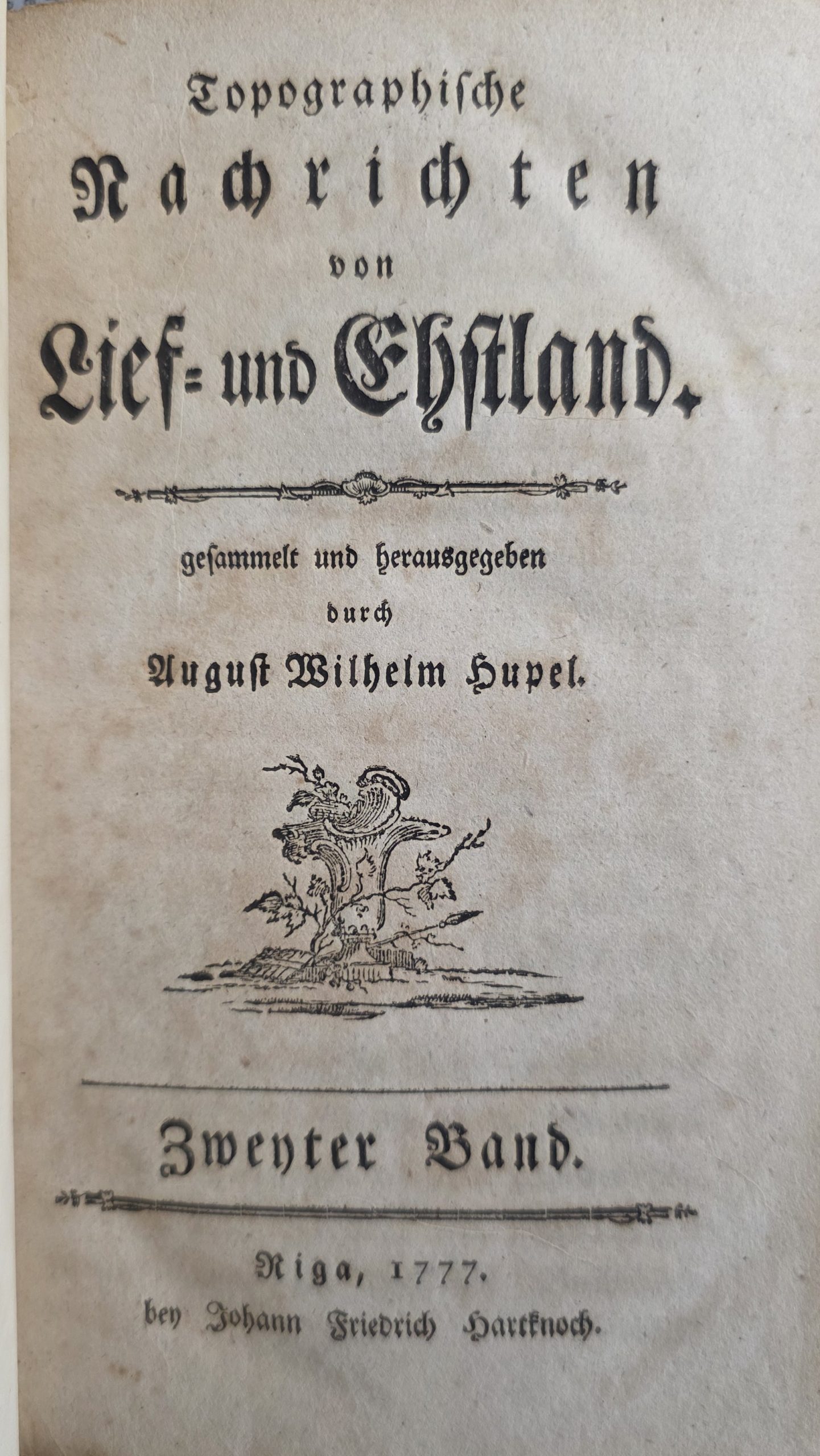
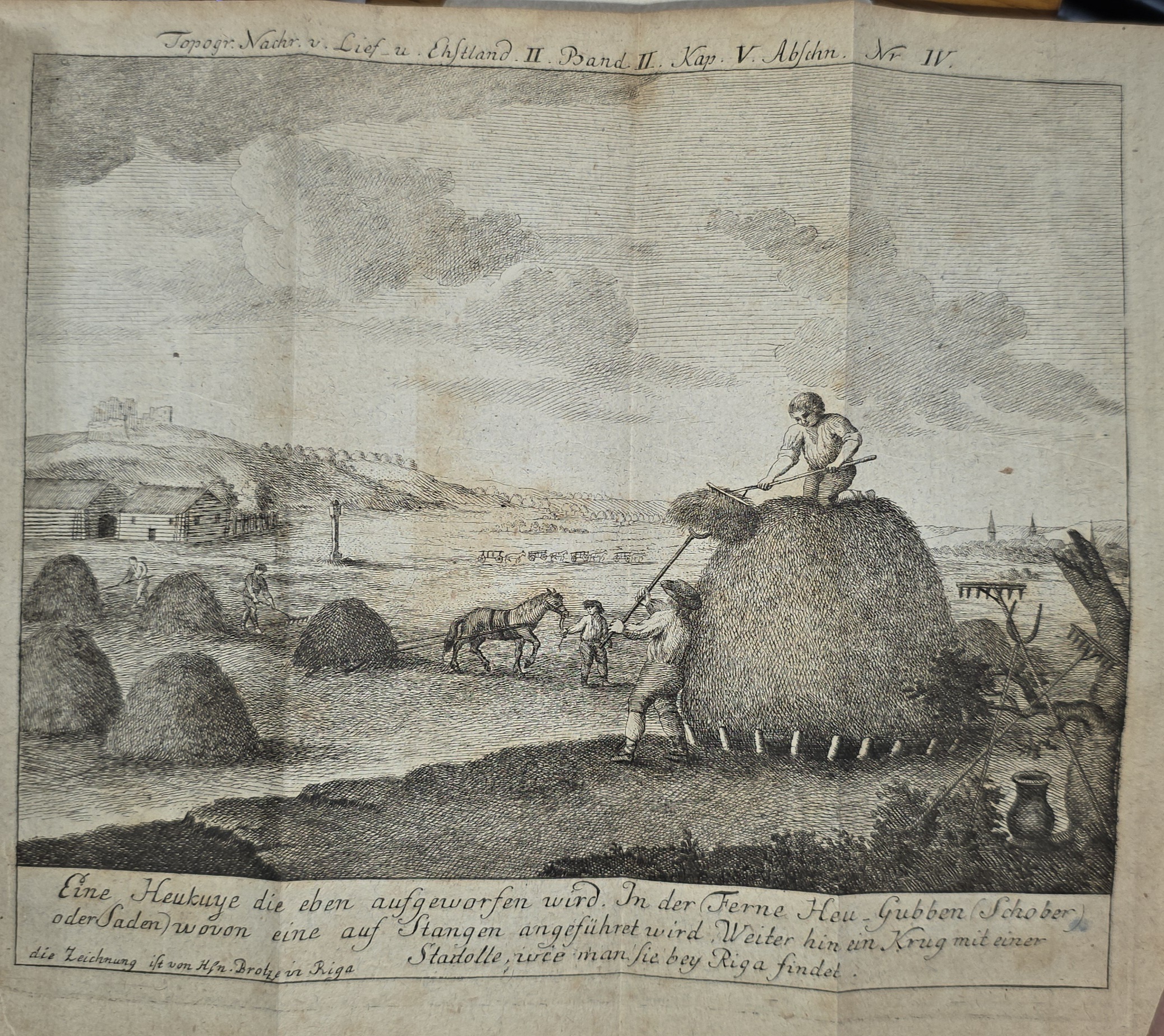
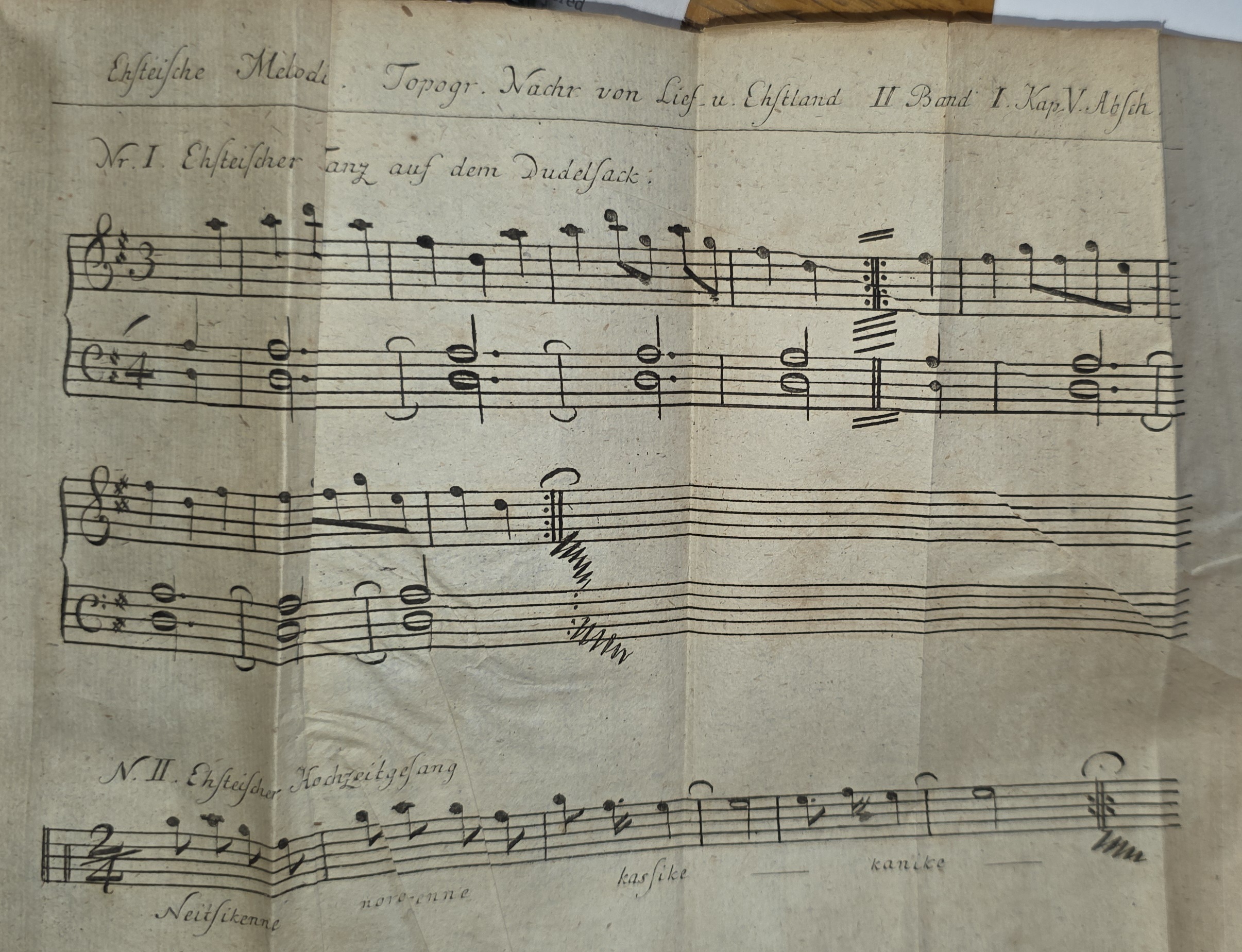
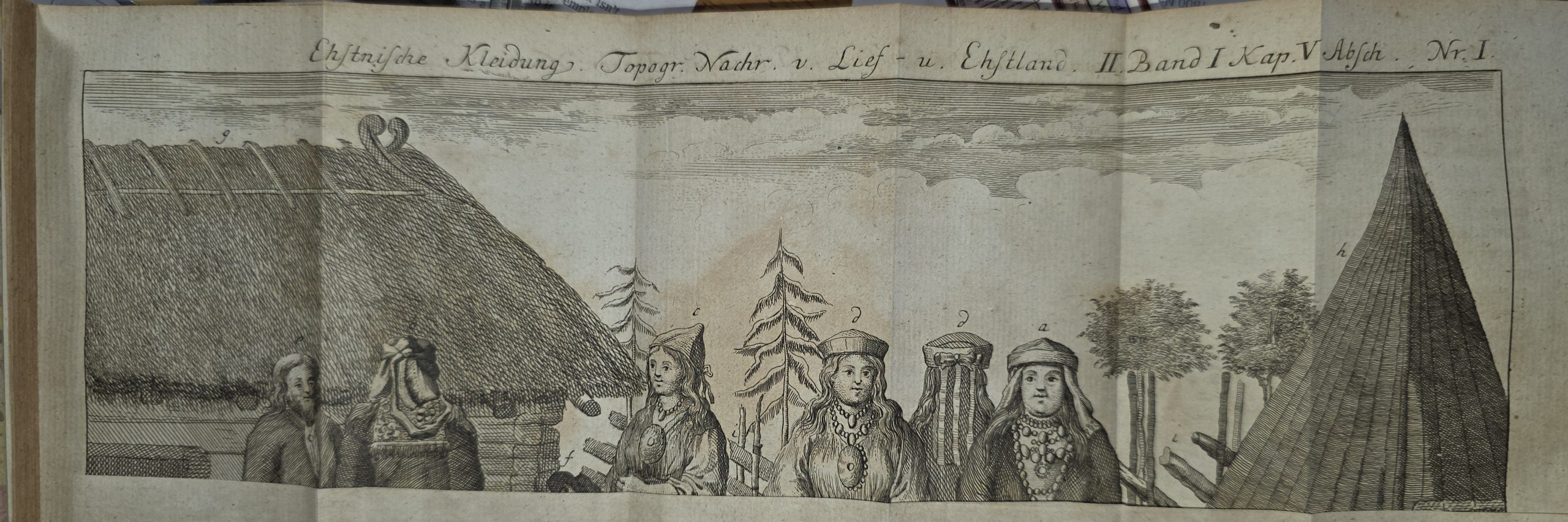
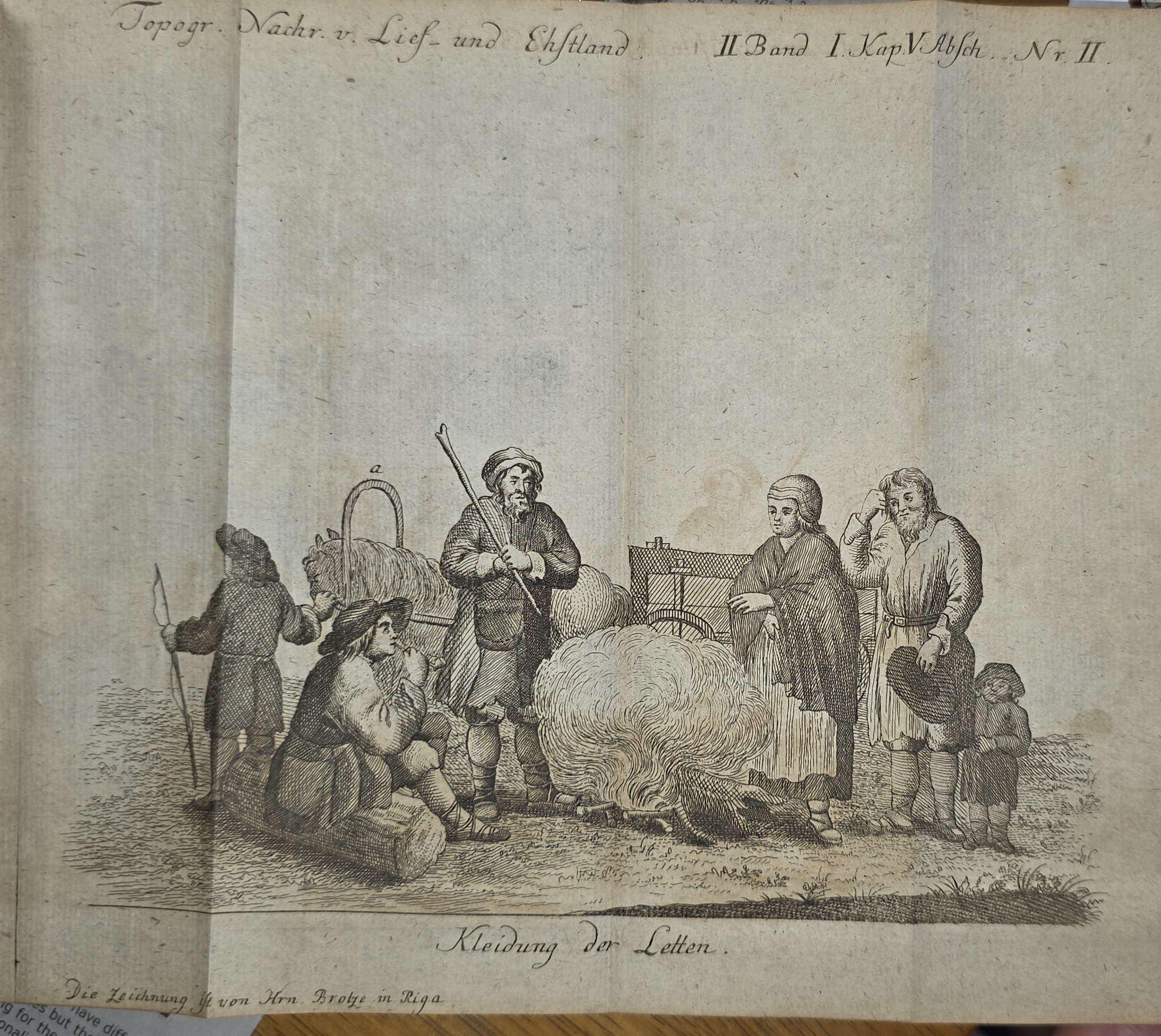
The collection currently holds only Volume II. How is this volume situated in the full series?
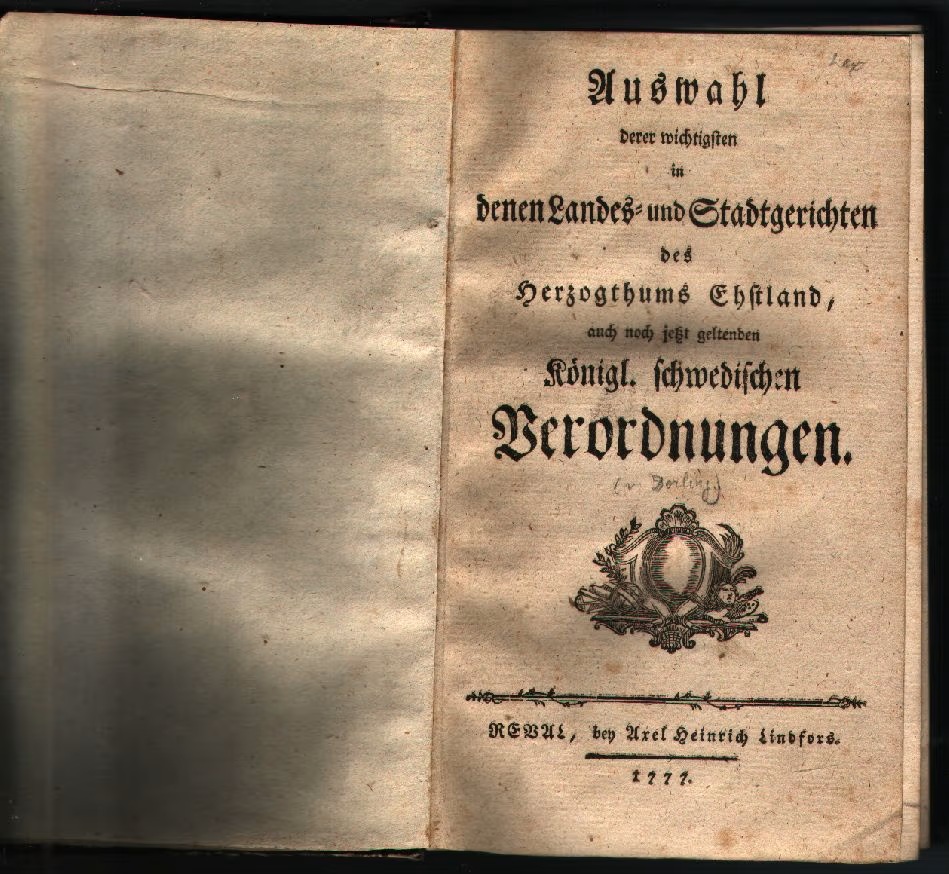
1777 – Royal Swedish Laws of the Duchy of Estonia (Auswahl derer wichtigsten in denen Landes- und Stadtgerichten des Herzogthums Ehstland, auch noch jetzt geltenden Königl. schwedischen Verordnungen)
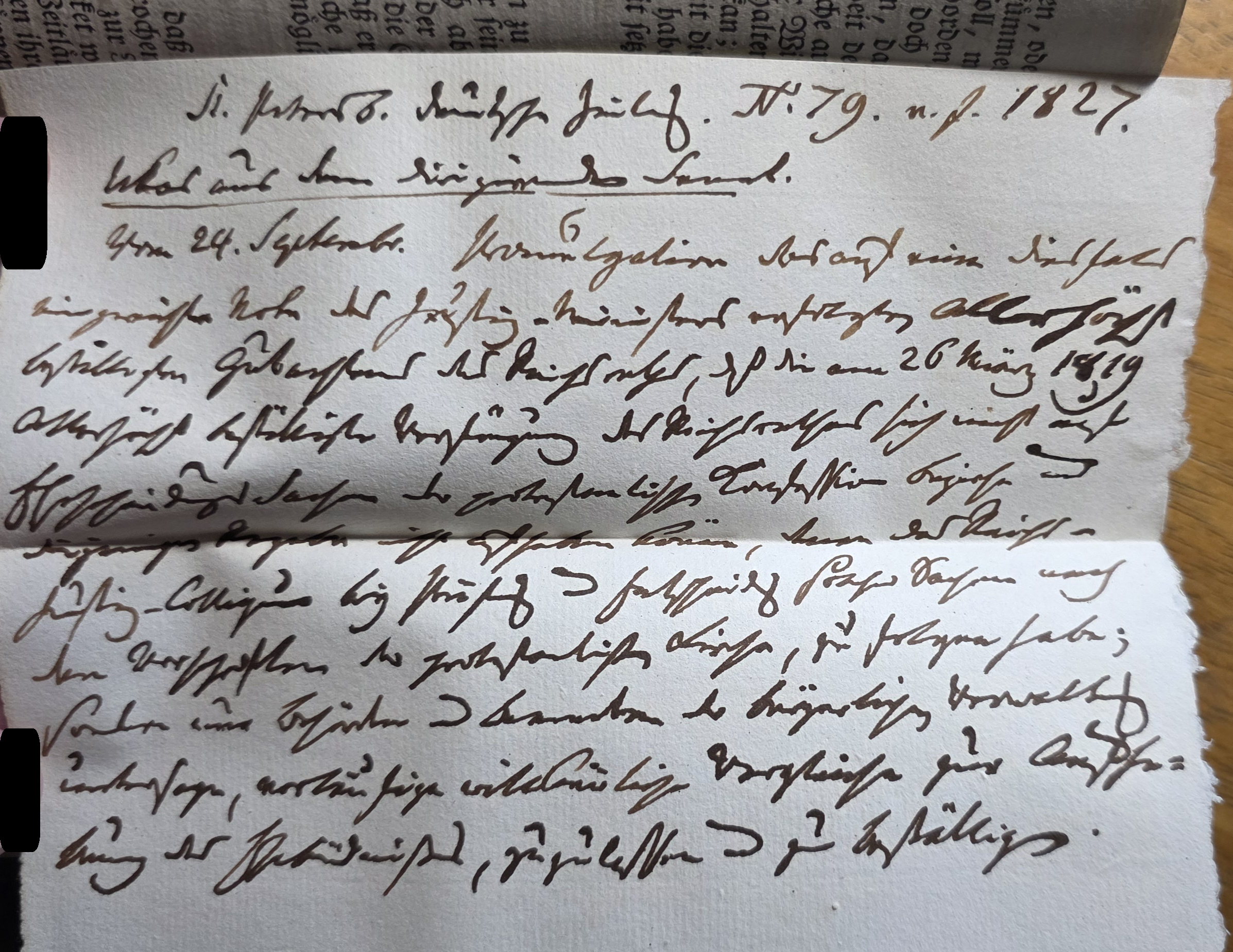
An important eighteenth-century compilation of Swedish royal ordinances that remained legally binding in Estonia long after the end of Swedish rule. Compiled by Heinrich Johann Derling and published in Reval (modern Tallinn) by Axel Heinrich Lindfors in 1777, this substantial volume of approximately 758 pages preserves the legal legacy of Estonia’s Swedish period (1561–1710). Following Russia’s conquest of Estonia in 1710, the Baltic provinces retained extensive legal and institutional autonomy, allowing many Swedish laws governing judicial proceedings, religious affairs, public morality, and civil administration to remain in force for generations. Published 67 years after Estonia passed from Swedish to Russian control, the collection provides remarkable evidence of the enduring influence of Swedish governance on Estonian society. It remains a valuable primary source for understanding the continuity of Estonia’s legal institutions across two empires and the complex foundations of Baltic German provincial law. This copy includes two contemporary hand-written letters.
- The 1777 Reval Legal Compendium: Swedish Statutory Continuity, Baltic German Autonomy, and Social Discipline in Eighteenth-Century Estonia
- Gemini For Museums: Gemini 4 Deciphered & Analyzed Two Two-Century-Old Handwritten Notes In An Estonian Law Book
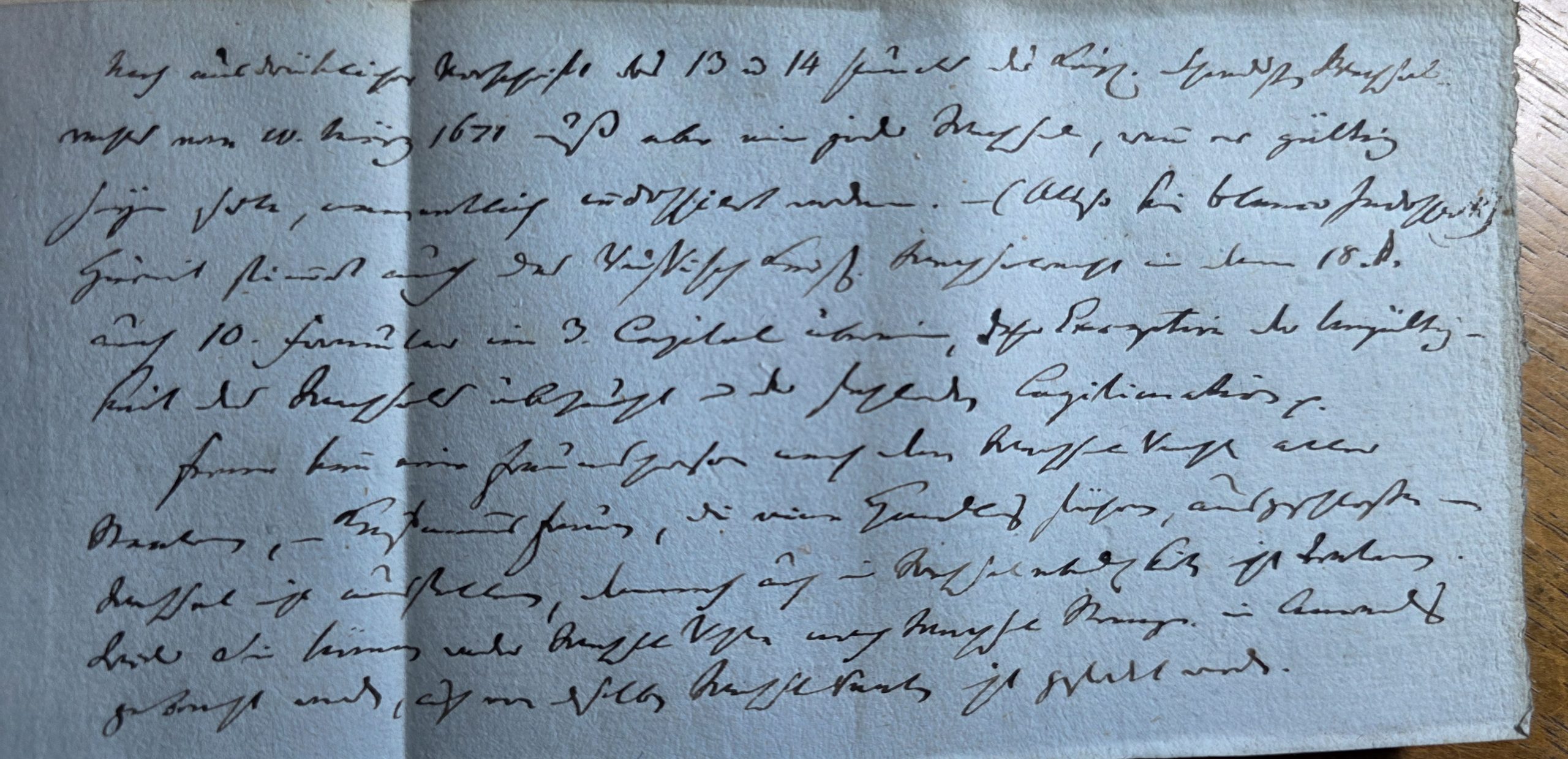
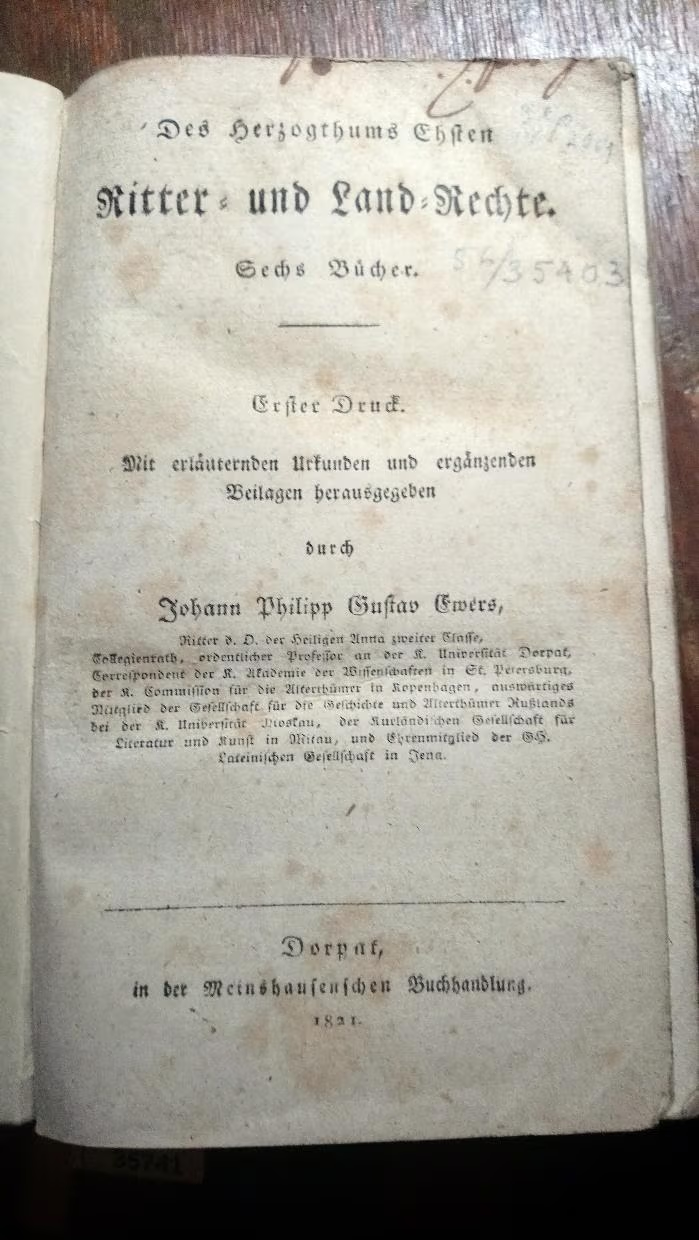
1821 – The Knightly and Land Laws of the Duchy of Estonia (Des Herzogthums Ehsten Ritter- und Land-Rechte)
The important first printed edition of one of the foundational legal codes of early modern Estonia, edited by the distinguished historian Johann Philipp Gustav Ewers (1781–1830) and published in Dorpat (modern Tartu). Originally compiled in 1650 under Swedish rule, this extensive six-book legal code governed the rights, privileges, property, and judicial institutions of the Baltic German nobility in the Duchy of Estonia. Although submitted to Queen Christina of Sweden for approval, it never received formal royal confirmation, yet nevertheless acquired the force of customary law through its continued application in Estonian courts, surviving the transition from Swedish to Russian sovereignty in 1710. Ewers’s landmark 1821 publication, supplemented with historical charters and legal documents, made this previously unpublished seventeenth-century legal tradition accessible to scholars for the first time. It remains an essential primary source for understanding the legal, political, and social history of Estonia and the remarkable continuity of its Baltic German institutions across centuries of foreign rule.
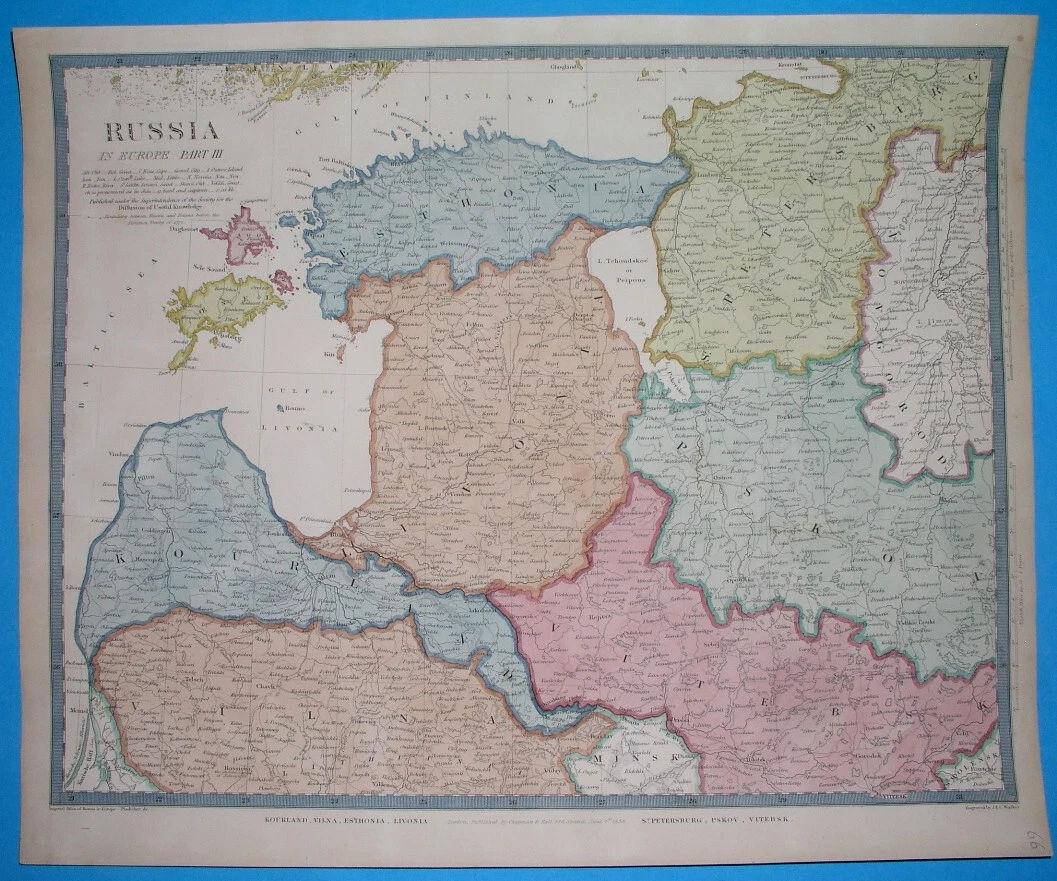
One of the more profusely hand colored maps from 1834 by J & C Walker based on cartographic data from Vasilii Petrovich Piadyshev's Imperial Atlas of Russia in Europe
Landrath Wrangell s Chronik von Ehstland nebst angehängten Ehstländischen Capitulations Punkten und Nystädter Friedensschluss (1845)
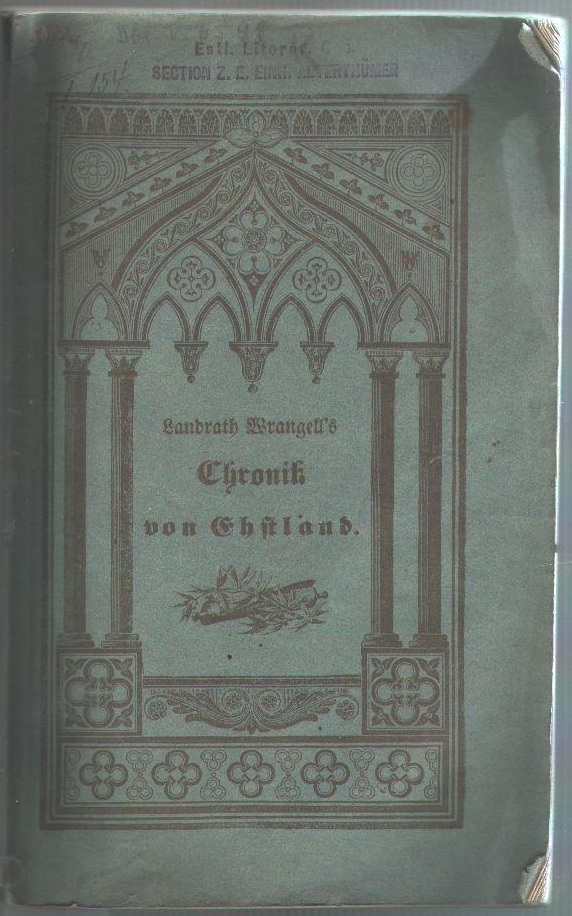
- The Historical Anatomy of Wrangell's Chronik von Ehstland: Provenance, Historiography, and Baltic Significance
- This copy is actually quite remarkable in that this specific copy was actually once part of the Estonian Literary Society's own collection (the organization that organized and printed the book) and bears the bookstamp "Estl. Literär. Ges. SECTION Z. E. EINH. ALTERTHÜMER" (Estonian Literary Society / Section for the Exploration of Domestic Antiquities) and upon that group's dissolution in 1940, was eventually accessioned into the Central Library of the Academy of Sciences of the Estonian Soviet Socialist Republic and bears the bookstamp "ENSV Teaduste Akadeemia Keskraamatukogu". The volume was then deaccessioned and sold before Tallinn University Academic Library acquired the remainder of the Academy's holdings. (More Details)
An 1853 copy of Scriptores rerum Livonicarum Volume 1
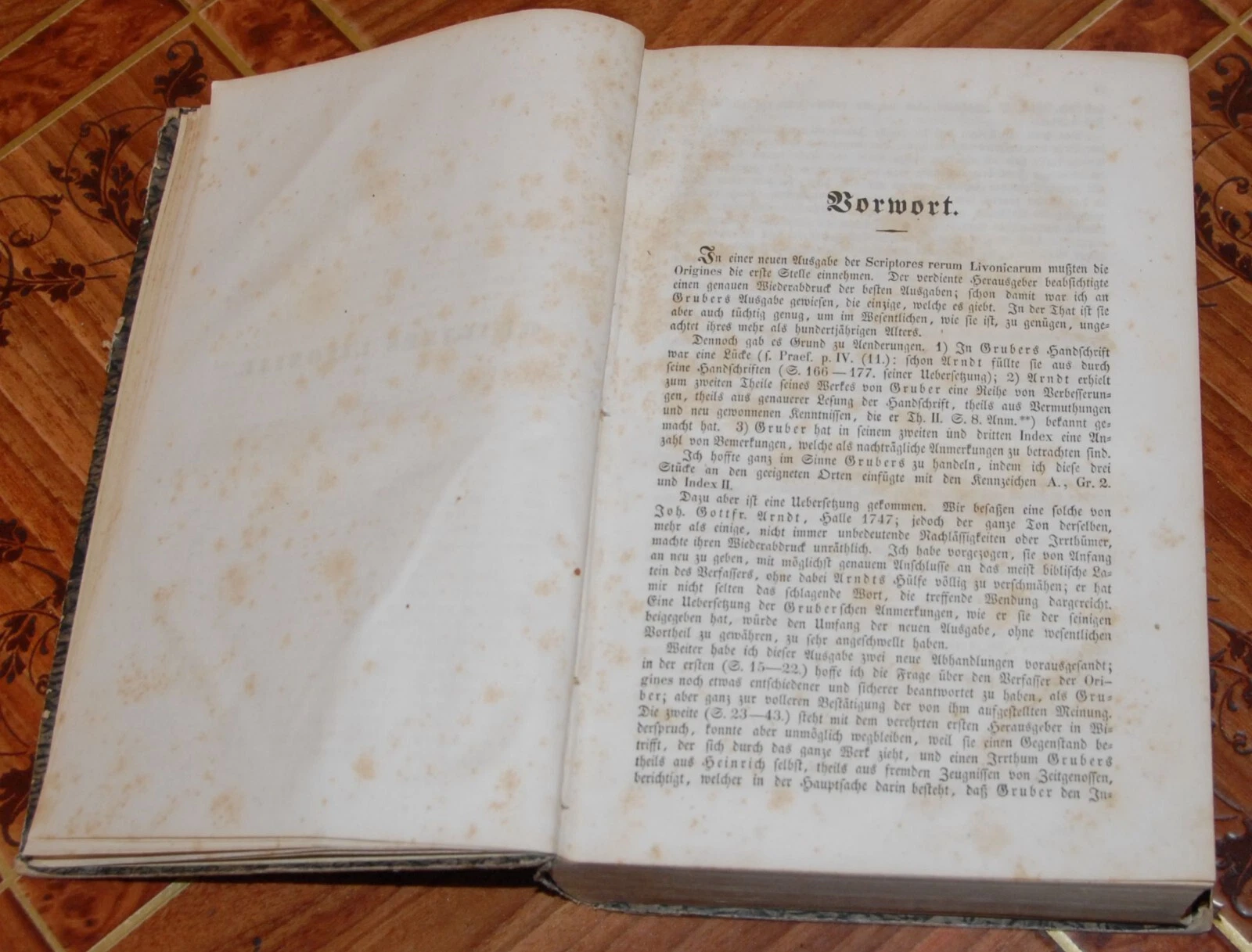
- The Genesis of Baltic Historiography: A Comprehensive Analysis of the 1853 Edition of Scriptores rerum Livonicarum (Volume 1)
- Comprehensive Historiographical Analysis of the Scriptores rerum Livonicarum: Structure, Contents, and the Evolution of the Estonian Paradigm
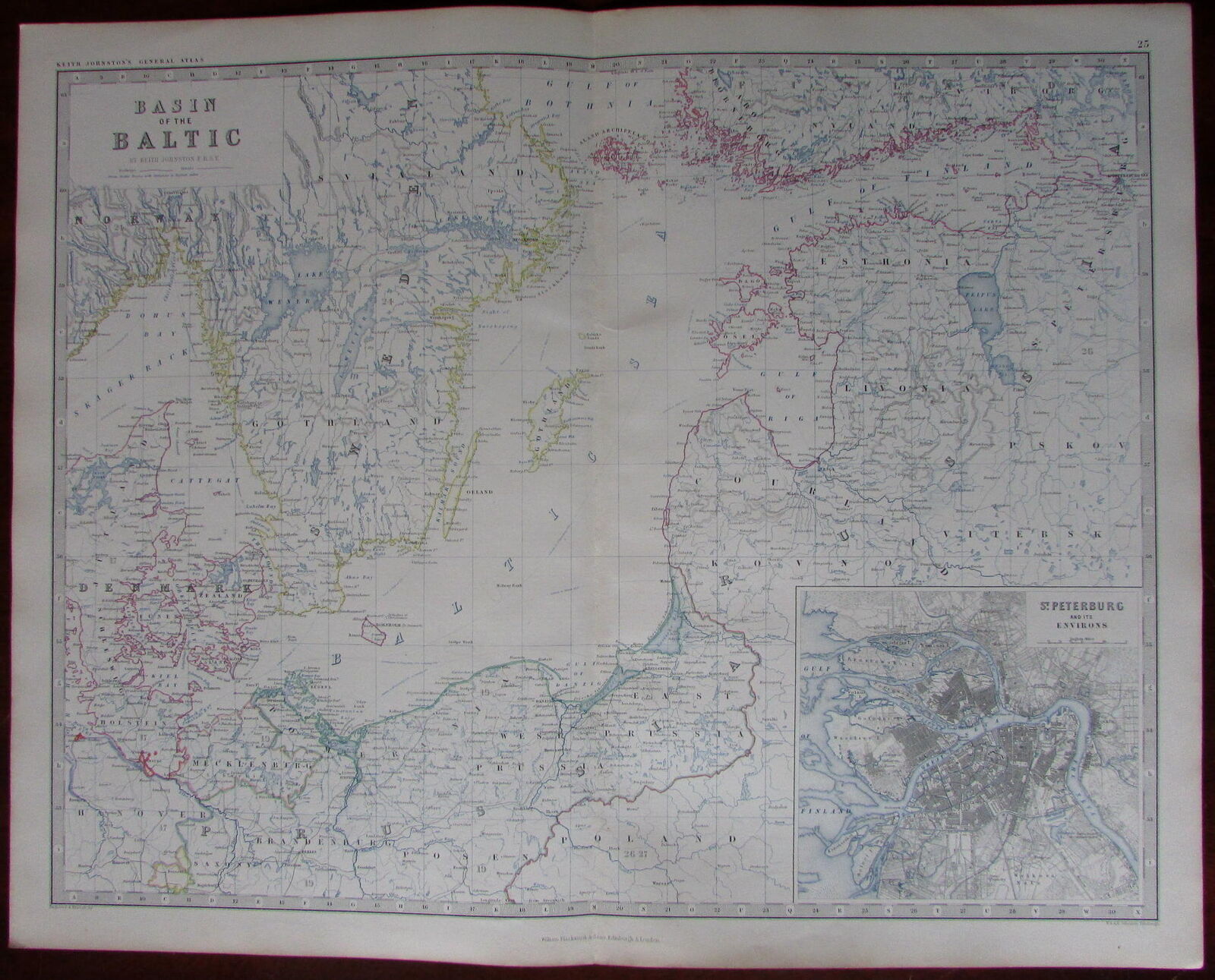
An 1861 map of the Baltic Basin showing the continued evolution of Estonia, by Keith Johnston E. R. S. E. and published by William Blackwood & Sons, from the first edition of the Royal Atlas of Modern Geography
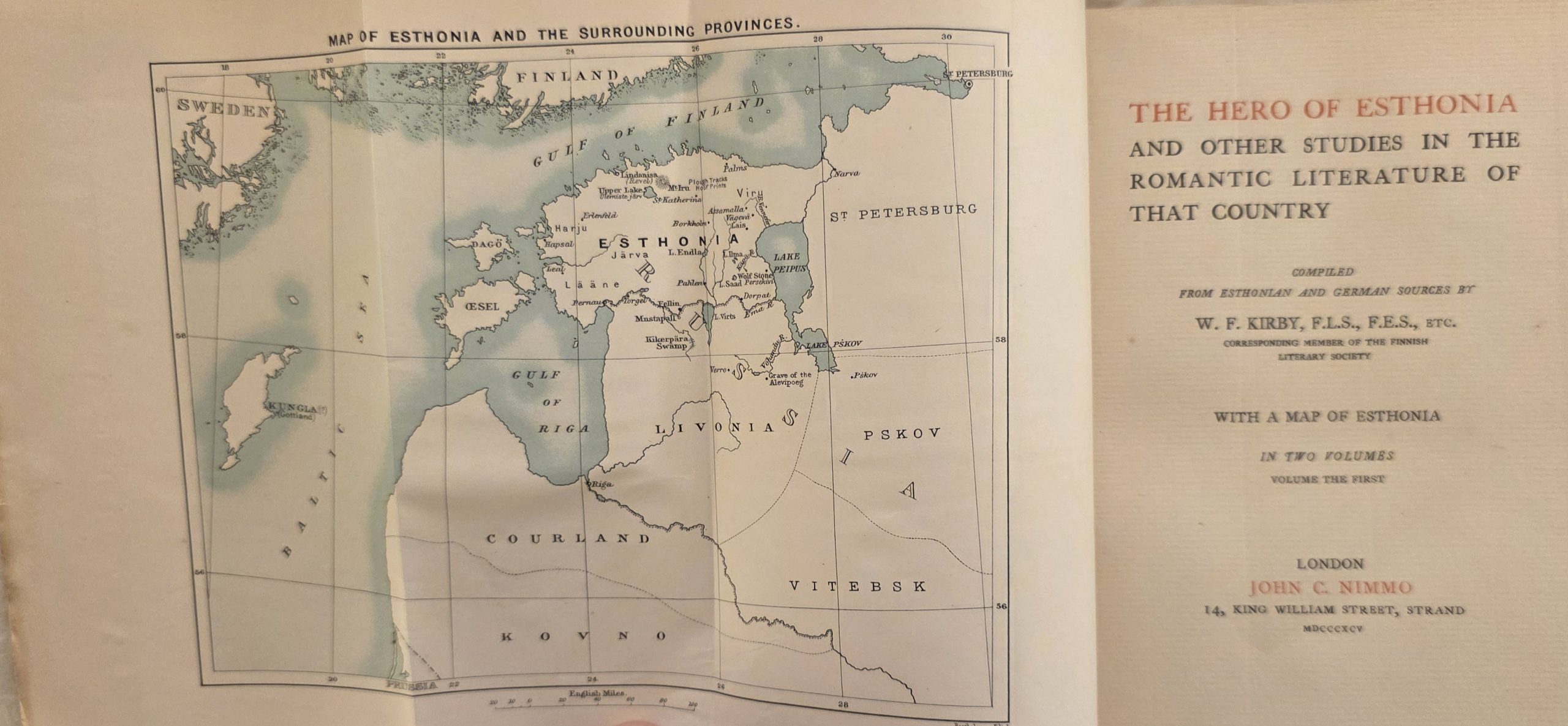
An 1895 copy of Kirby's The Hero of Esthonia, of the folktales of Estonia and the first English printing of Kalevipoeg
A 1923 copy of Eesti – Esthonie – Esthonia – Estland
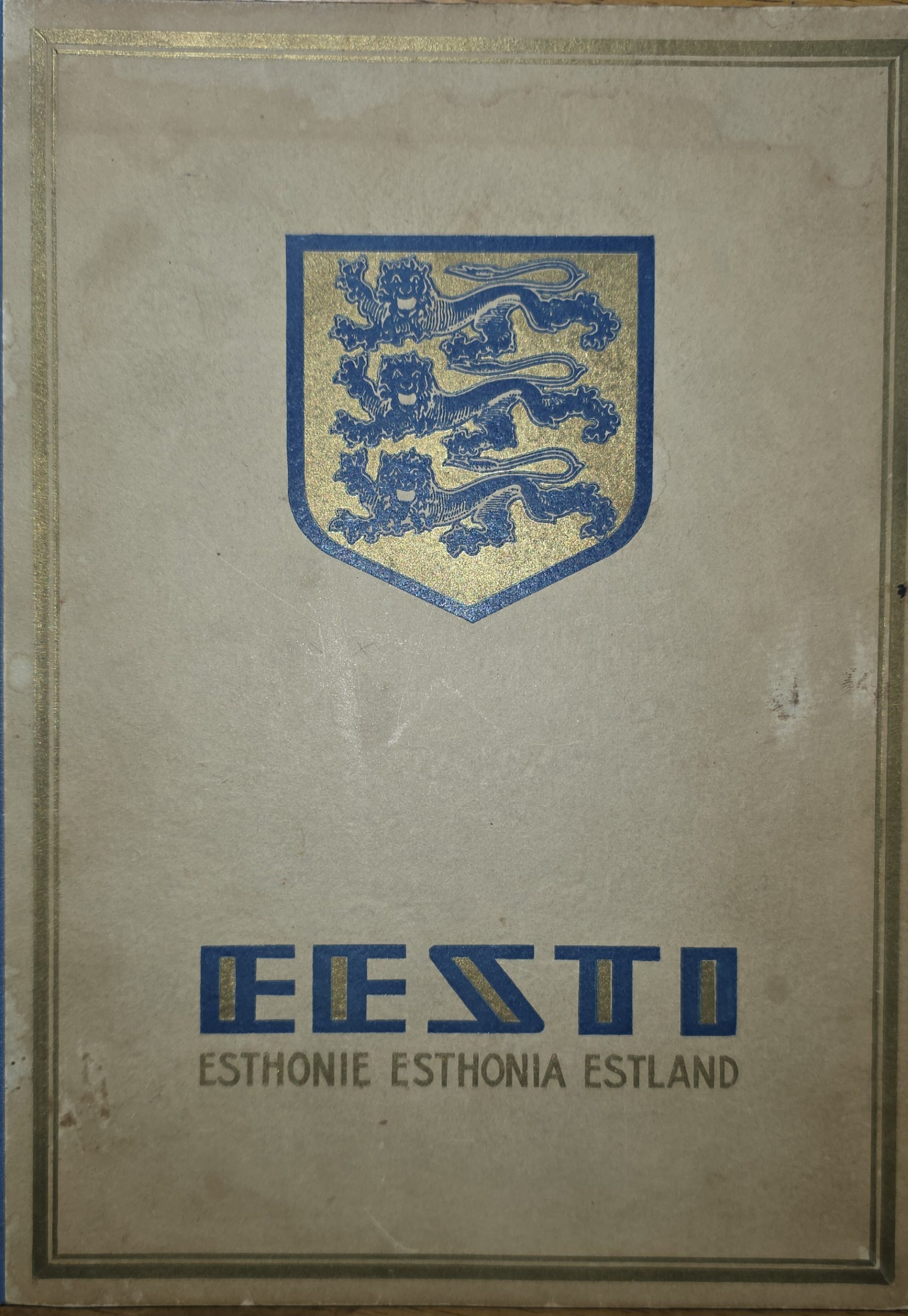
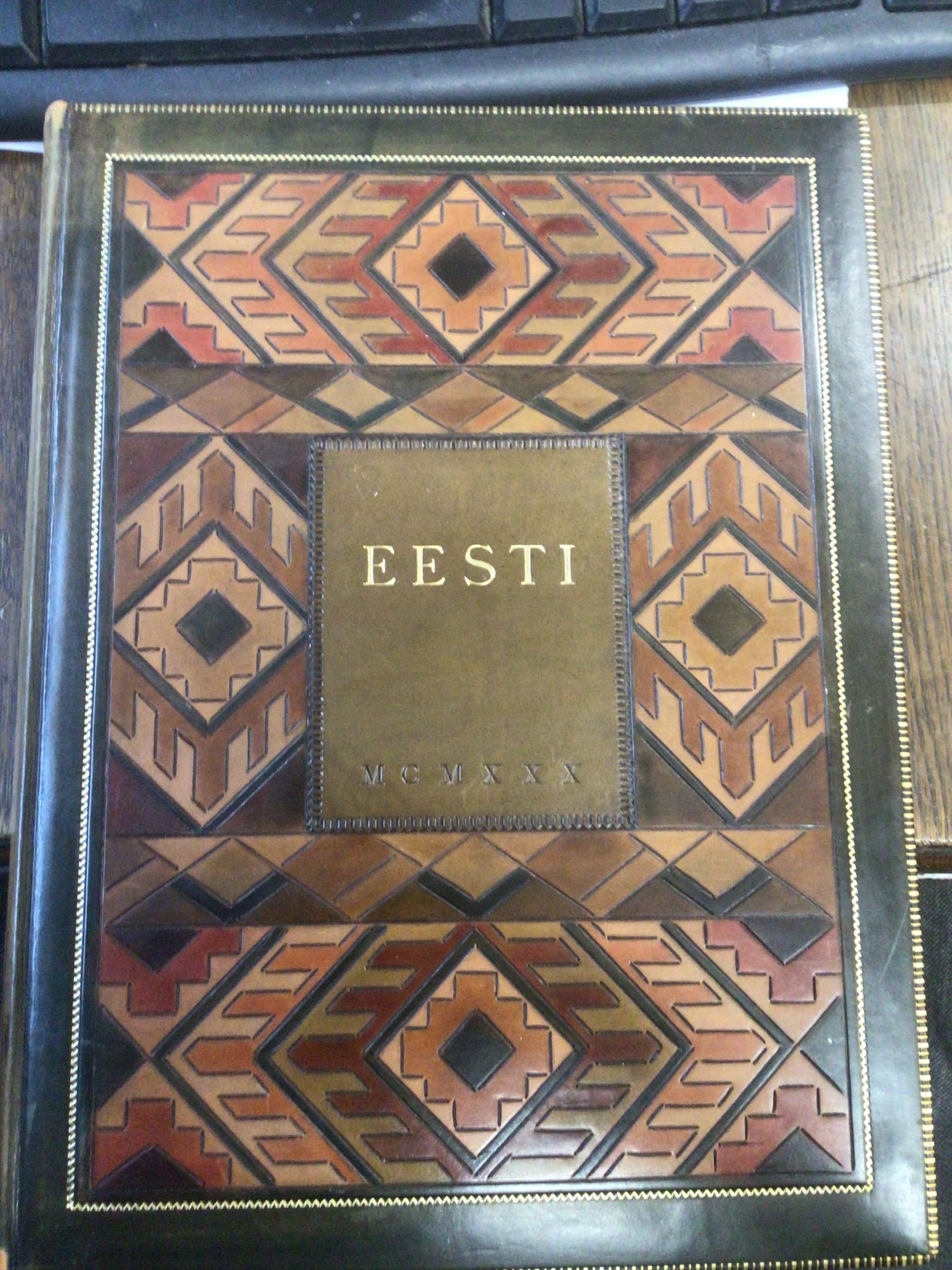
A stunning 1930 Taska-bound presentation copy of Eesti, Esthonie, Esthonia, Estland
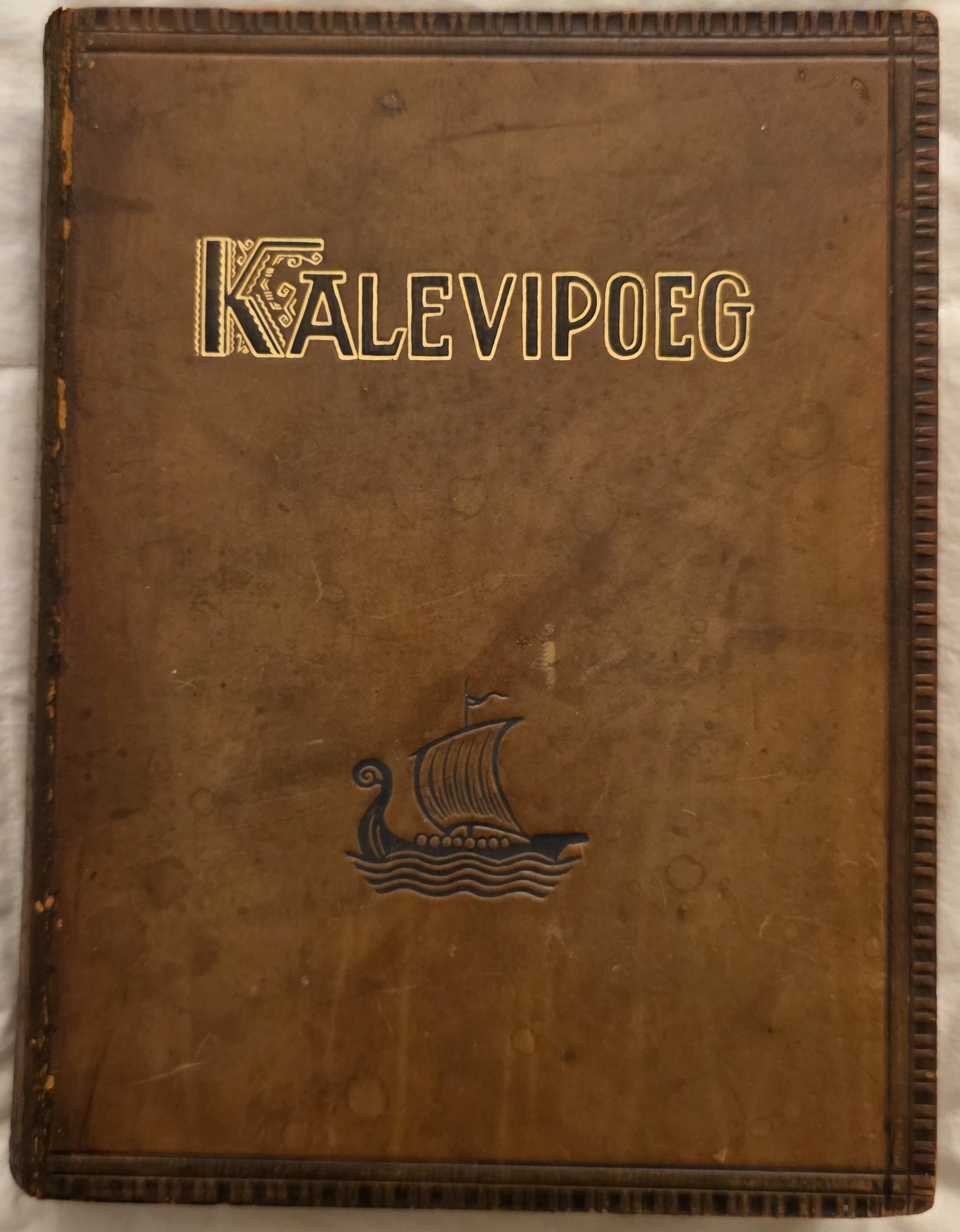
A stunning 1935 Taska presentation copy of Kalevipoeg
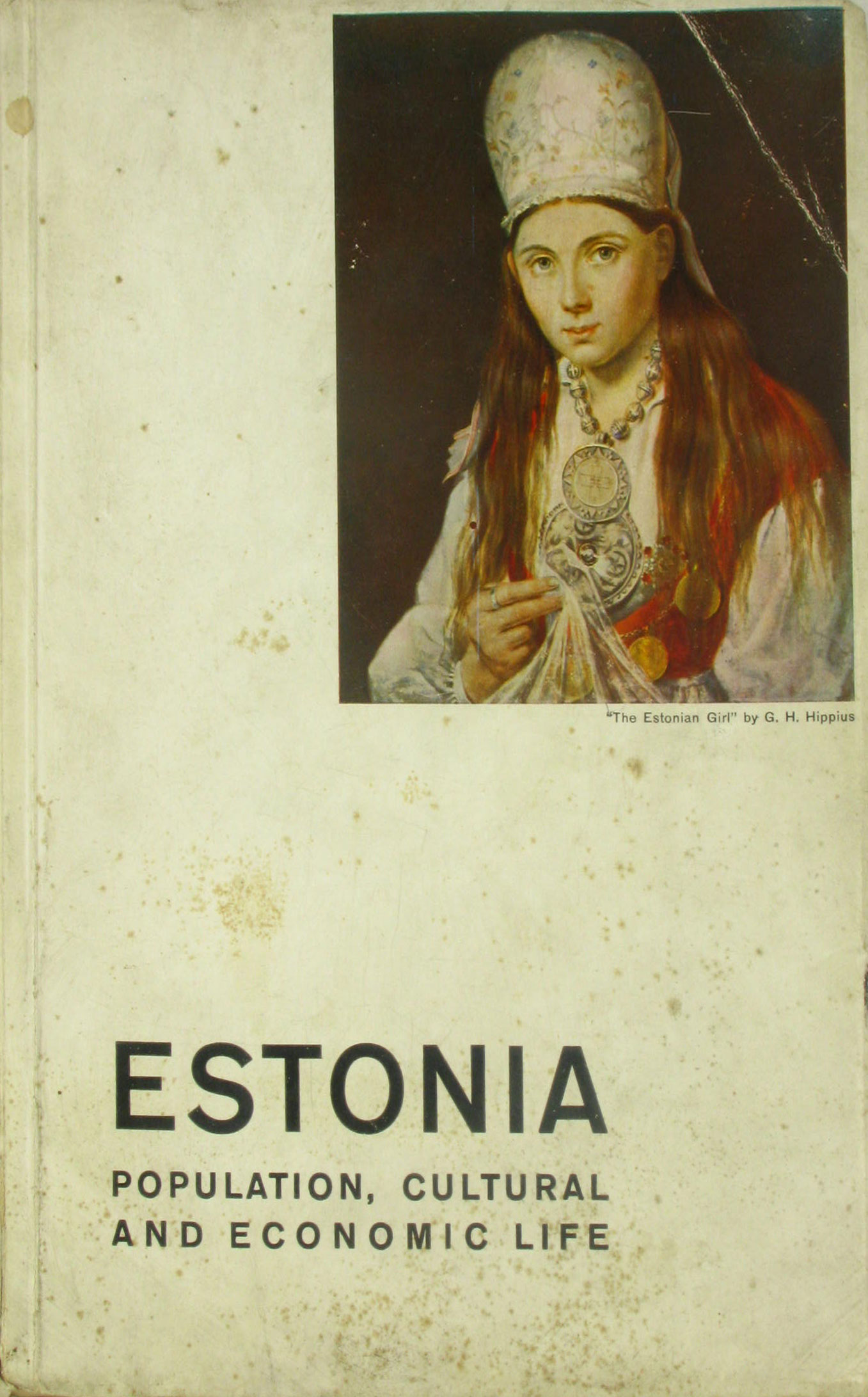
A 1935 Pullerits Estonia: Population, Cultural and Economic Life
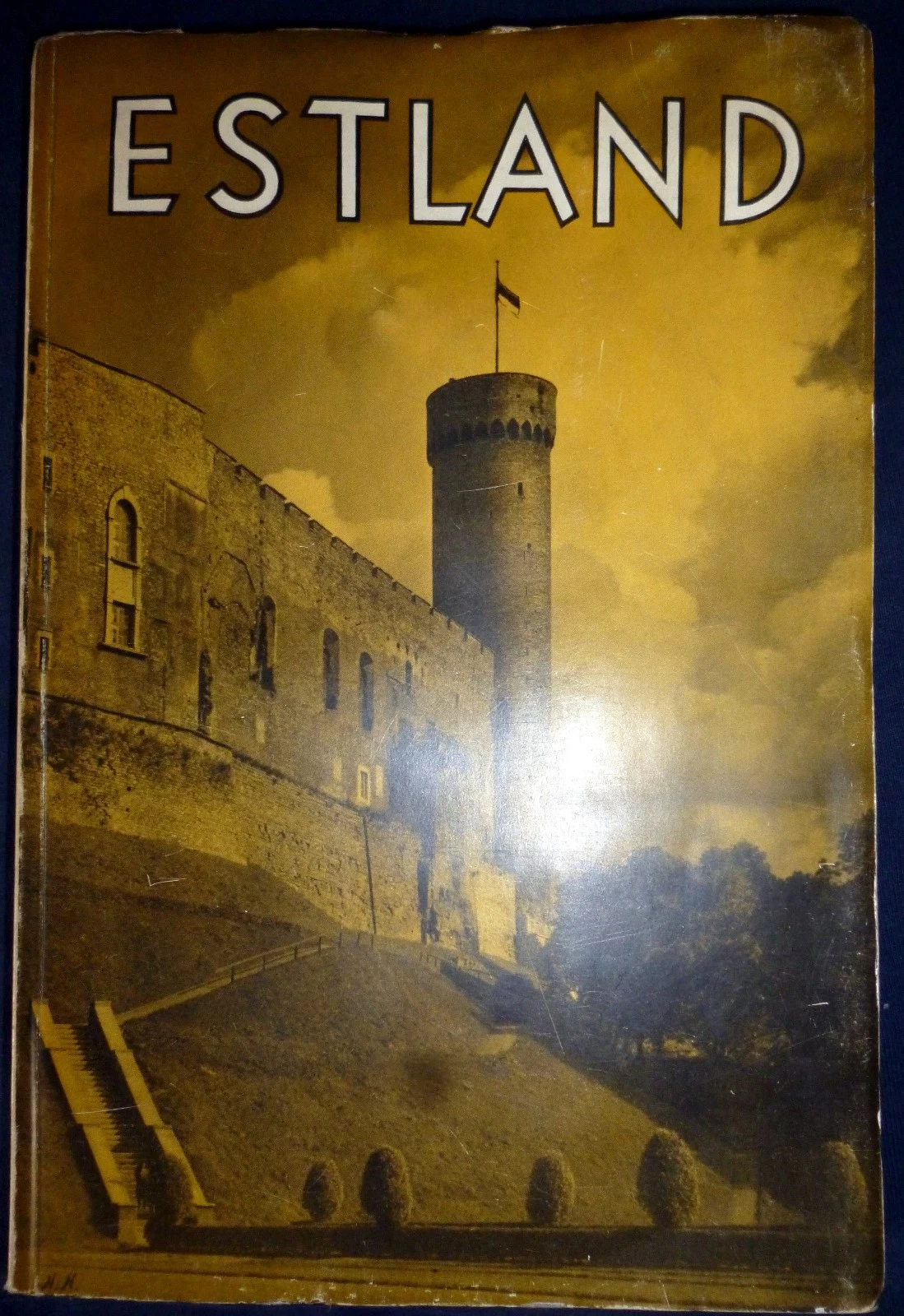
A 1938 Pullerits ESTLAND, 20 Years of Independence
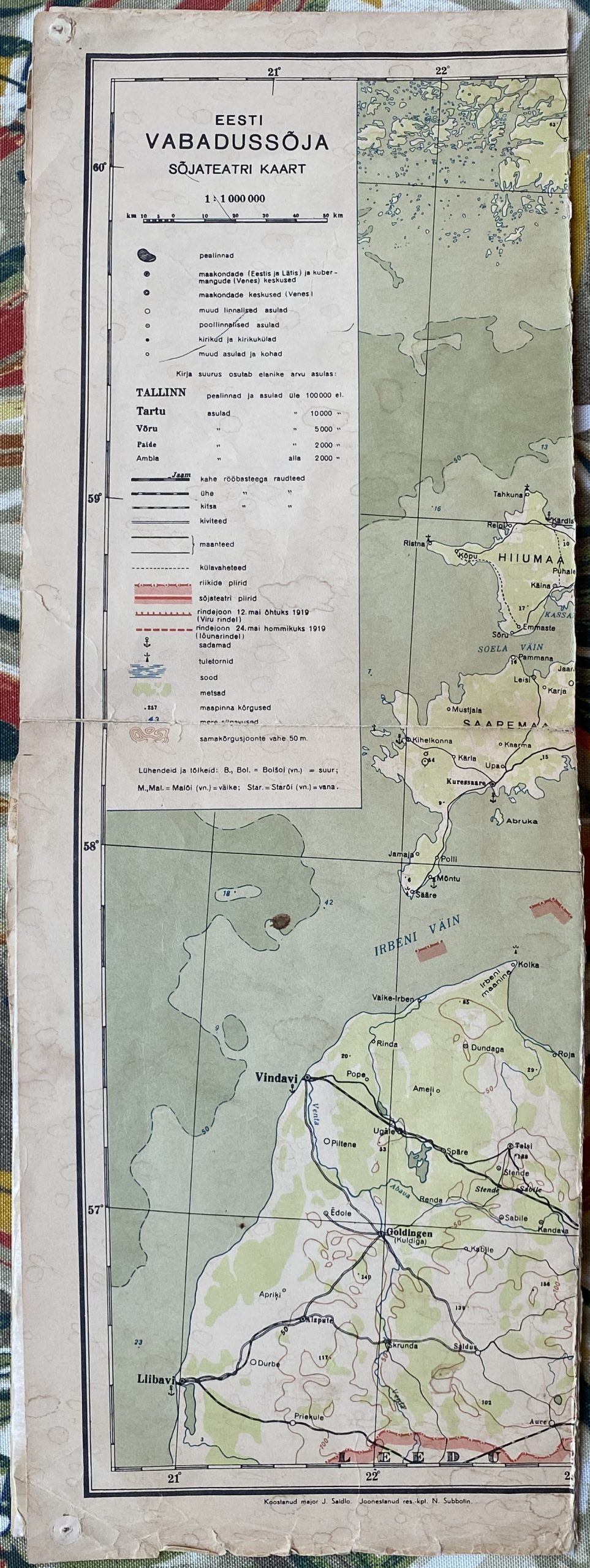
1939 Map of the Estonian War of Independence Theater of War From Volume II Of The Estonian war of independence, 1918-1920
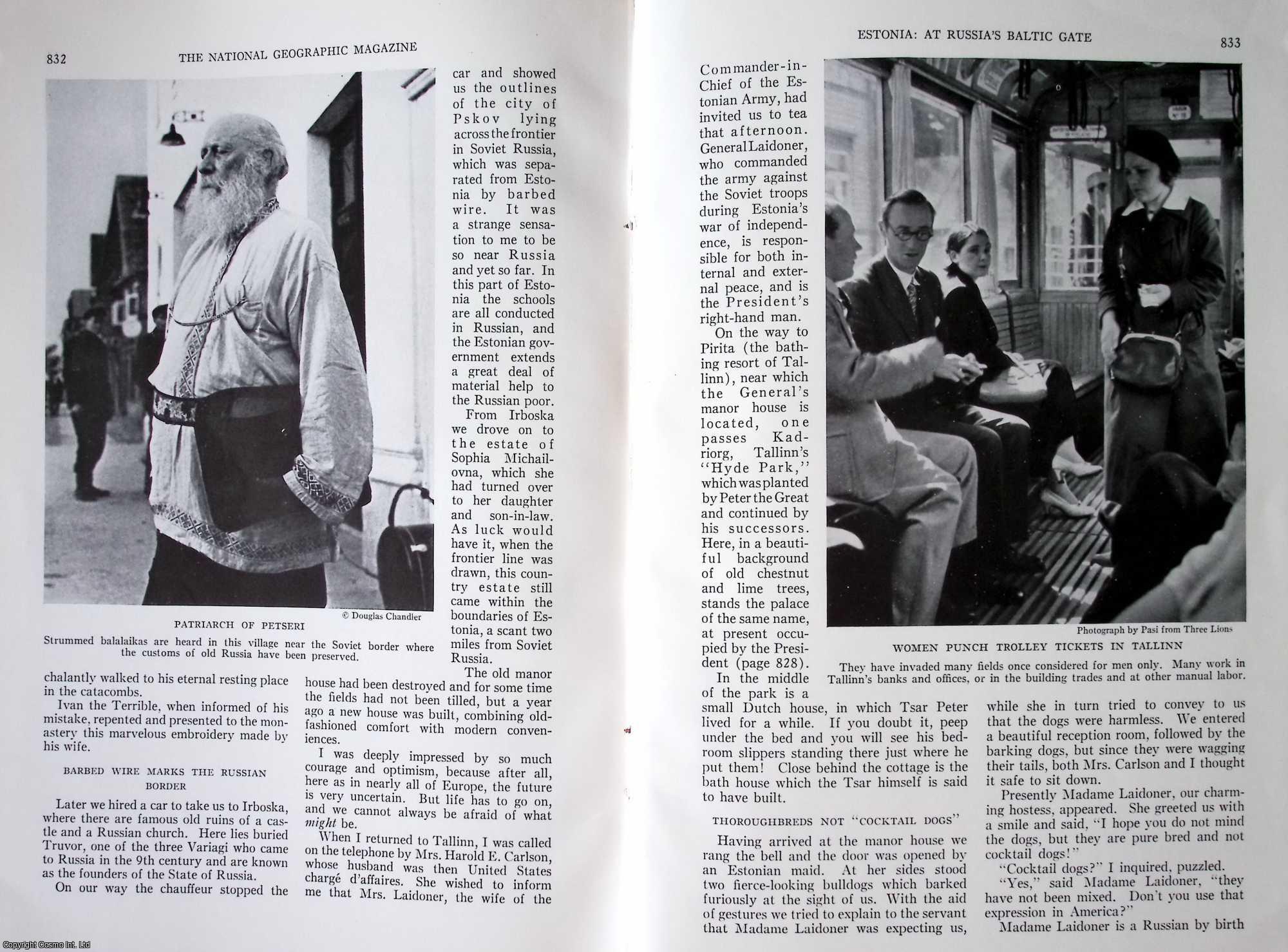
The December 1939 issue of National Geographic with "Estonia: At Russia's Baltic Gate", one of the last documentaries of Estonia before the Soviet invasion
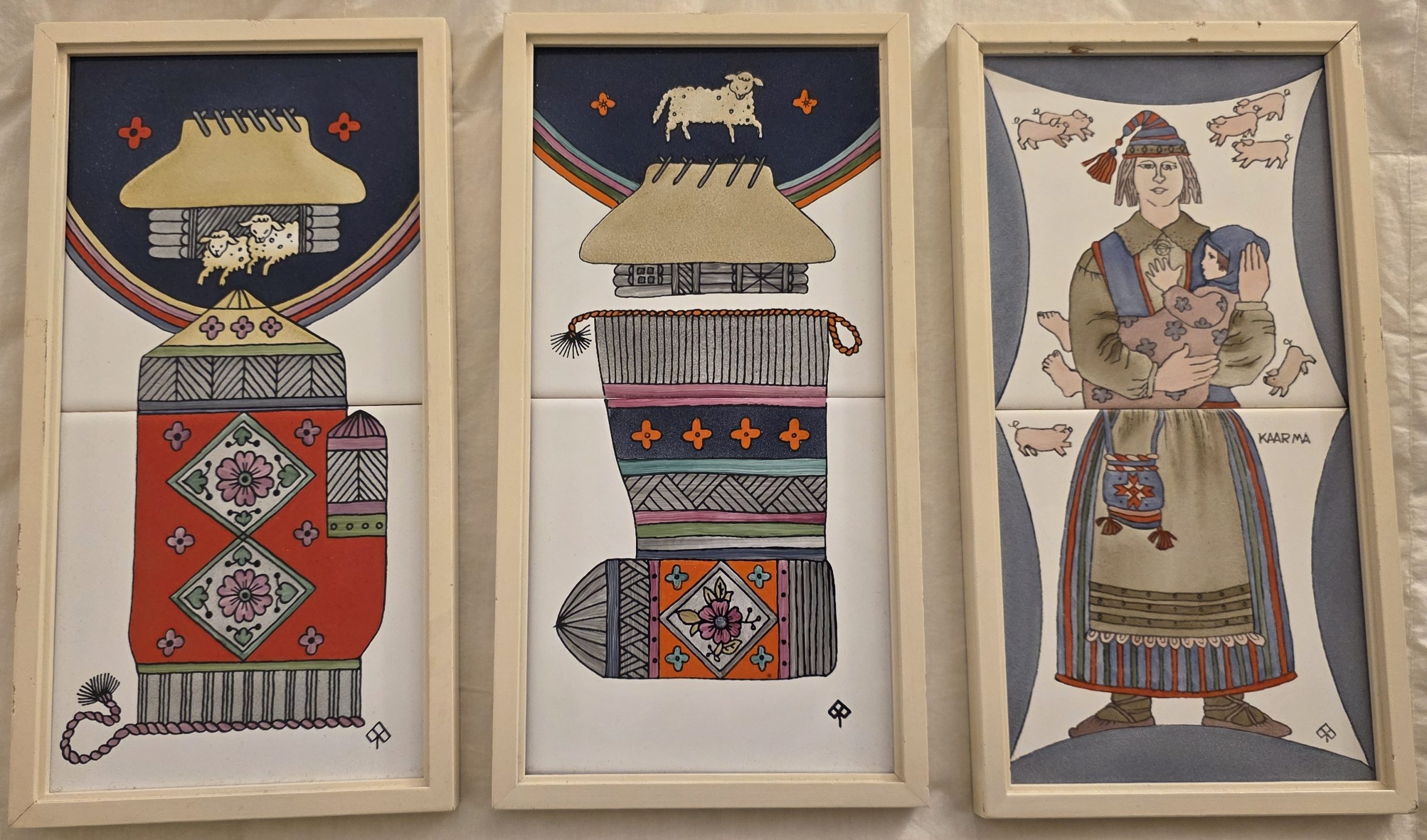
Trio Of 1960s-1970s Elgi Reemets Ceramic Wall Decorations from ARS Tallinn
For those interested in repeating these results on their own Estonian historical artifacts, this is the prompt we used with Gemini Deep Research for each of the items:
Give me a deeply researched history and context of [ITEM NAME HERE] and focusing on its background, context, significance, meaning to and place among Estonian history and rarity and what it teaches us about Estonia and its history.
For the collection as a whole, we used the following prompt, followed by copying and pasting the original LinkedIn post text into the prompt after:
Below is the description of a small Estonian history collection. Deeply research and contextualize this collection, focusing on the background, context and significance of each item and the combined story they tell of Estonian history and how they fit into the broader narrative of the formation and evolution of the nation. Write your report with an eye towards how a museum exhibit could curate all of these items together to tell the story of Estonia.