Over the last two weeks, we've used Gemini Deep Research to produce richly detailed historical background reports for a collection of foundational Americana and Estonian books. maps and other artifacts. Let's repeat this process for a seminal collection of some of the landmark picture Bibles of the past 500 years, including foundational works like Holbein's Icones, the Jode, Visscher Royal, Hondt/Picart, Sheits, Van Sichem, Merian and Dore, along with a few illustrated and textual Bibles that are also part of the collection for comparison. Here we focus only on the collection's Bible holdings, with future series covering its broader holdings of illuminated manuscripts and other religious works. For each of the works below, Gemini Deep Research was used to write a historical backgrounder using the prompt below. Given the uncommonness of all of the works on this page, the extreme rarity of several, the fact that most today are encountered only through disbound prints disconnected from the original work and the fact that the images of these works are far better known than their source books, there is likely an elevated amount of errors in these AI-created reports (though a spot check of each did not turn up any immediate major errors), so use these reports only as an entrance point to each work's rich history and background.
Give me a deeply researched history and context of [ITEM NAME HERE] and focusing on its background, context, significance, meaning to and place among picture Bibles and Biblical imagery and rarity.
Tell me about its artist, engraver, text, publisher, etc.
Estimate how many copies survive and especially how many complete copies are known.
Report should be entirely in English.
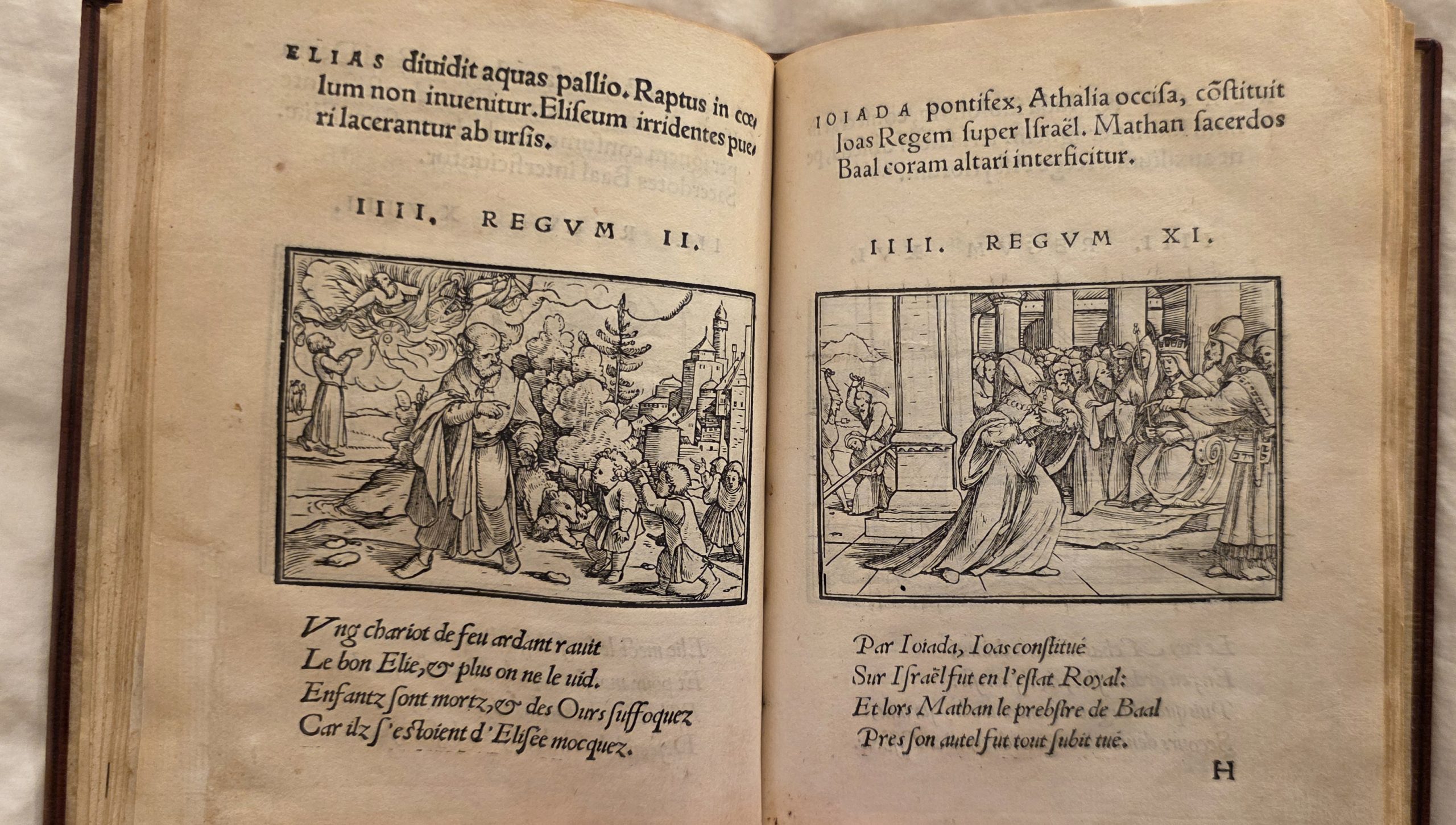
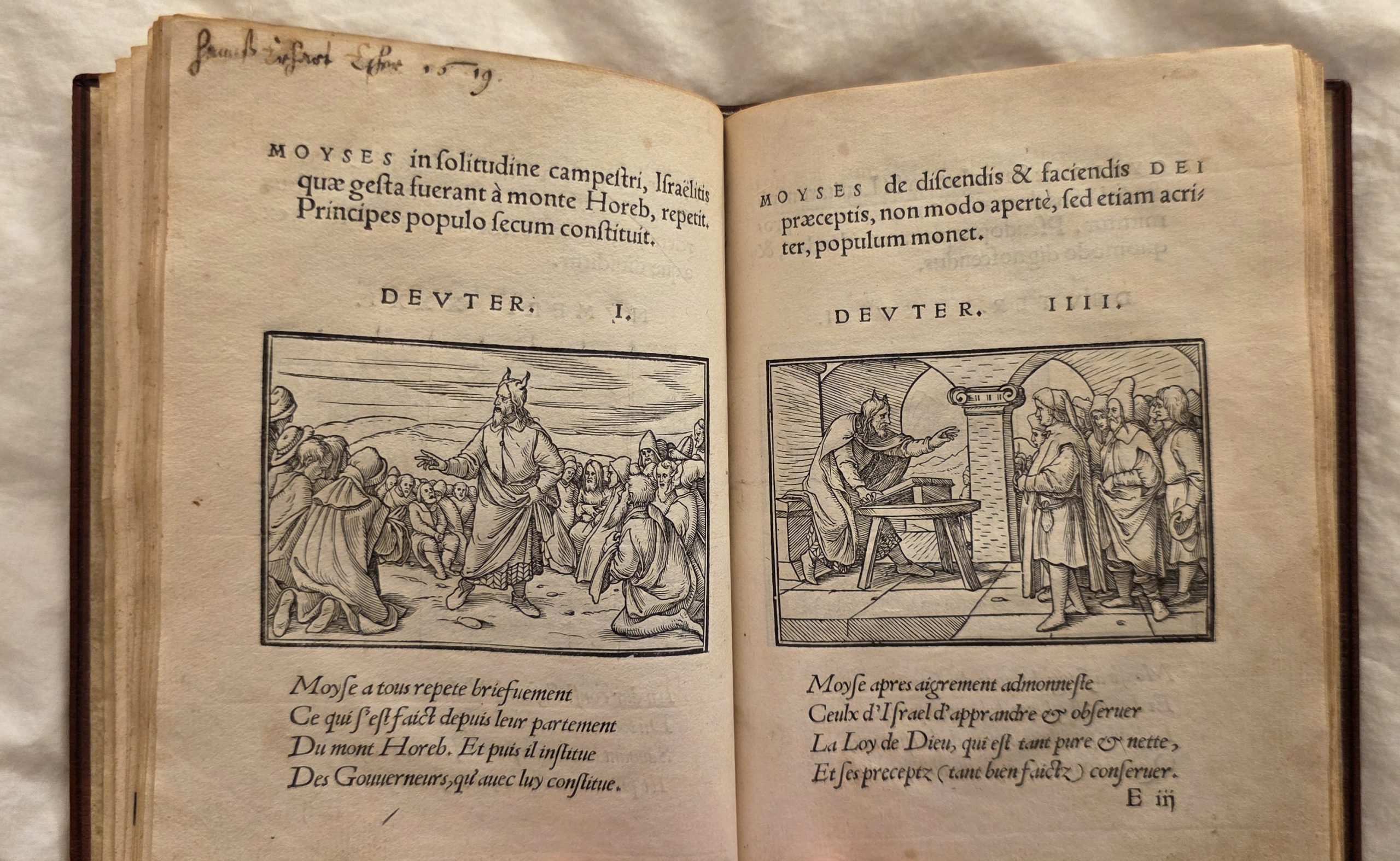
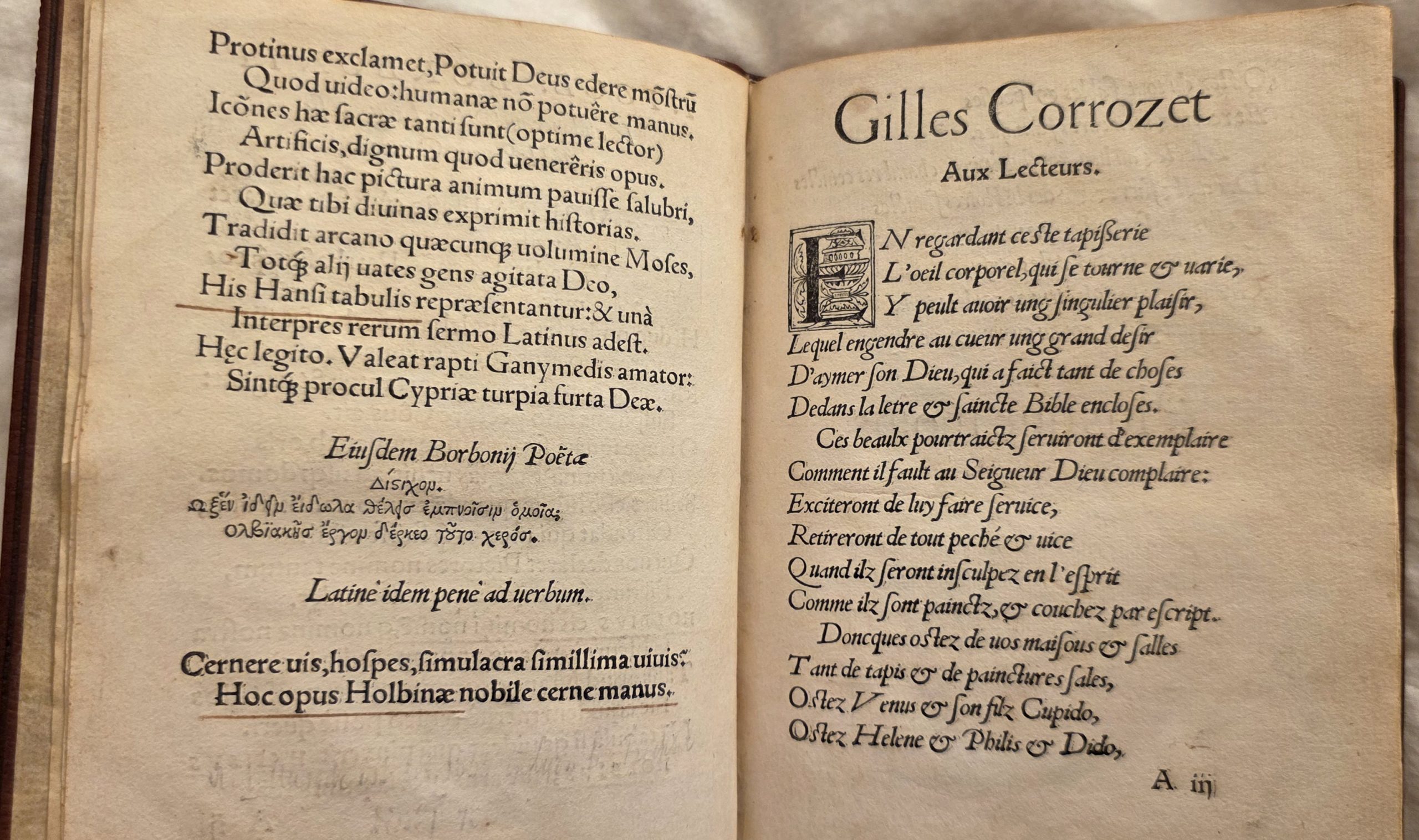
1539 Holbein's Icones (Second Edition / First Complete Edition)
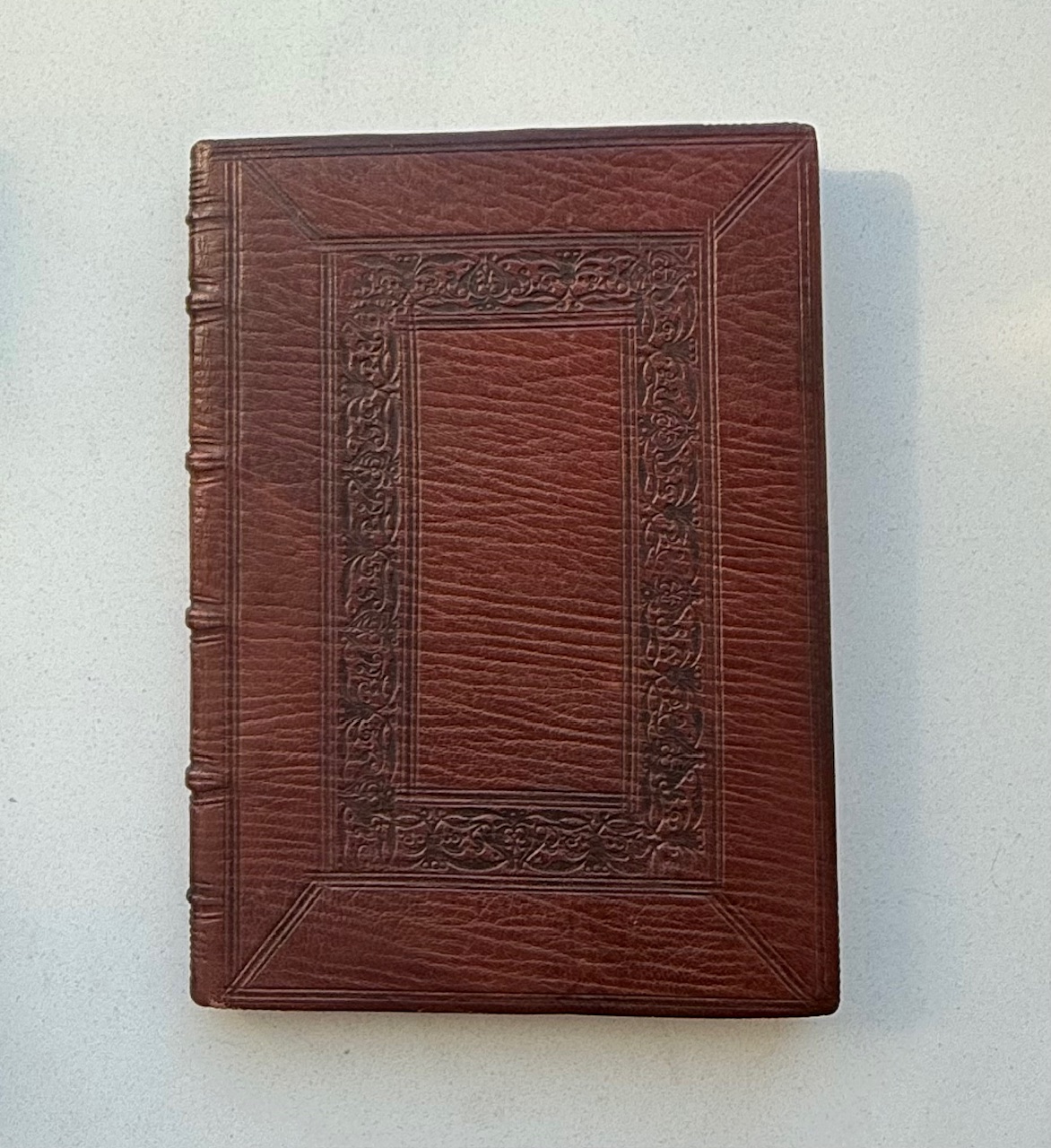
The genesis of the "picture Bible" and the definitive image-centric Bible of the woodcut era that established the imagery of the Bible for generations. Complete, with all images. Signature H is in corrected order, indicating it was not among the first prints of the 1539 run. An unusually crisp and clear copy, rebound in blind tooled Morocco by famed binder Bernard Middleton prior to the late 1980s.
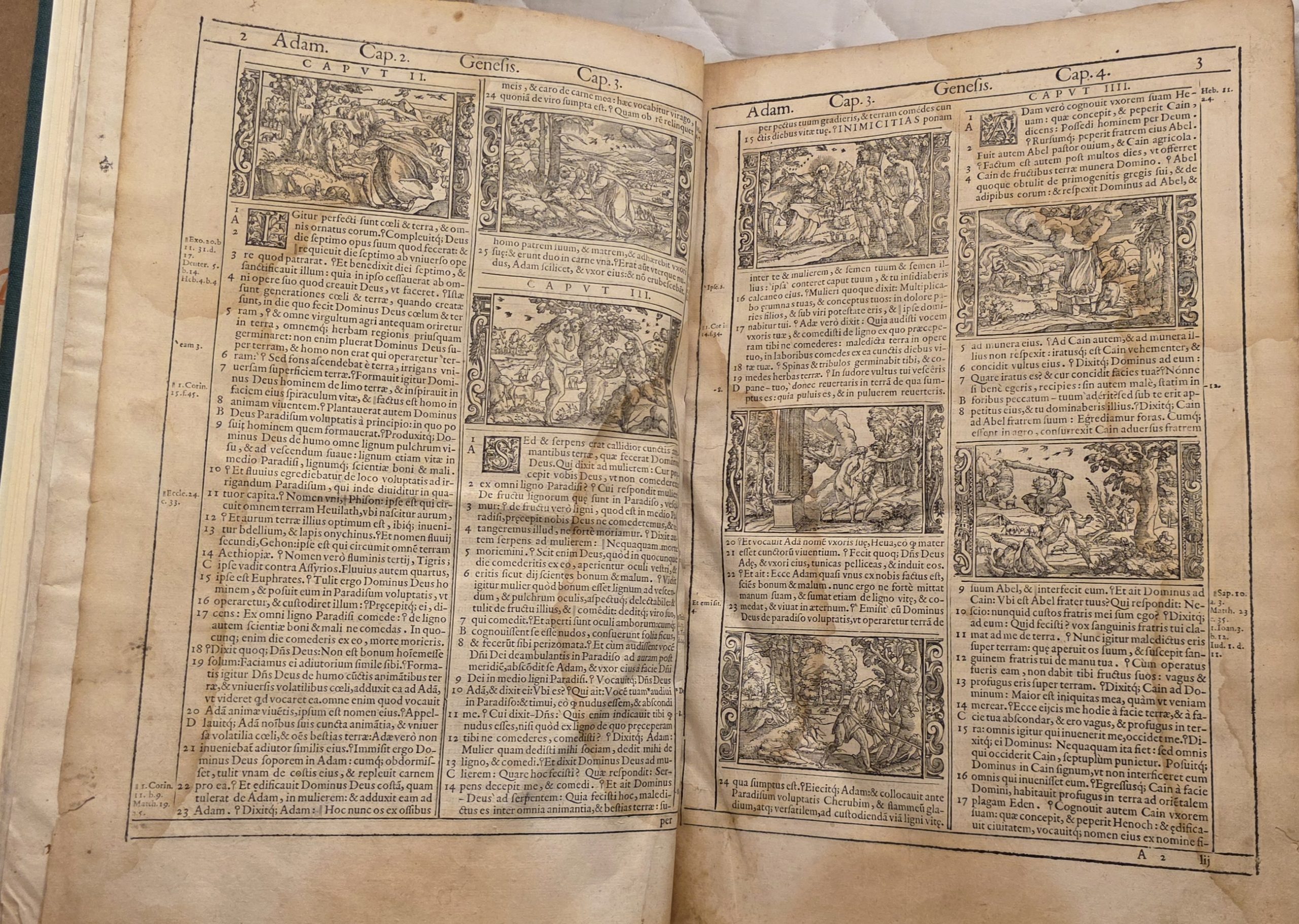
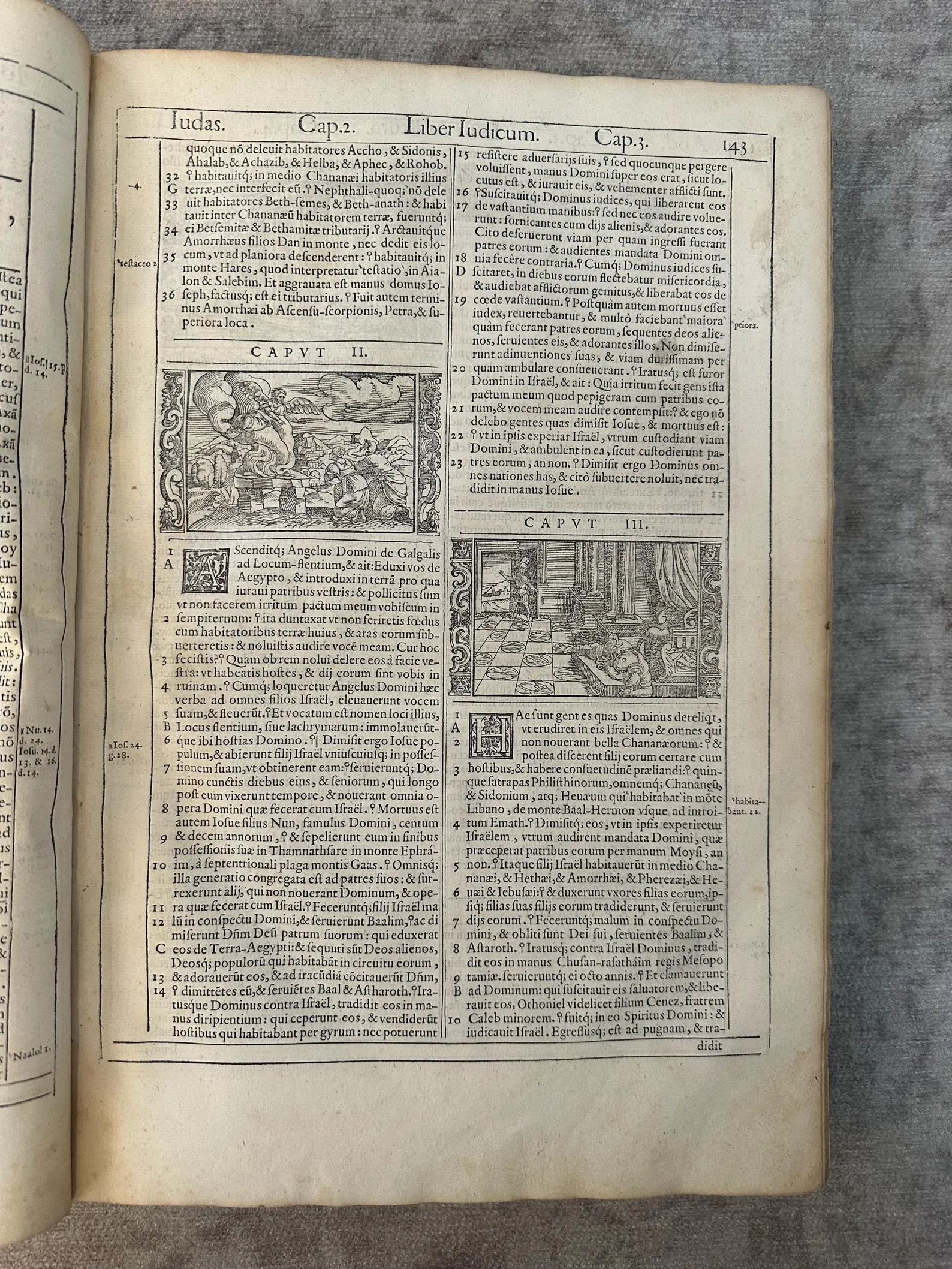
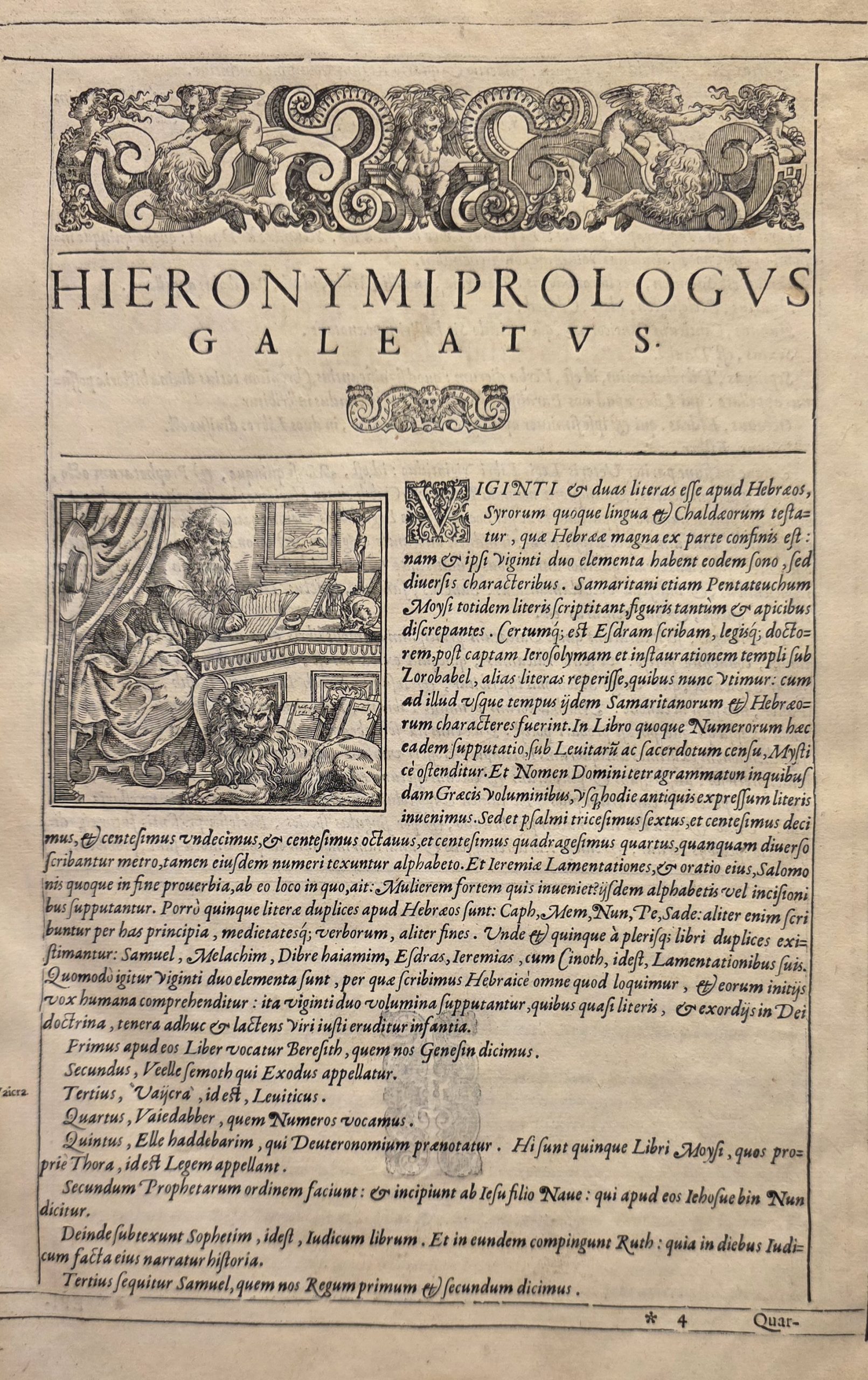
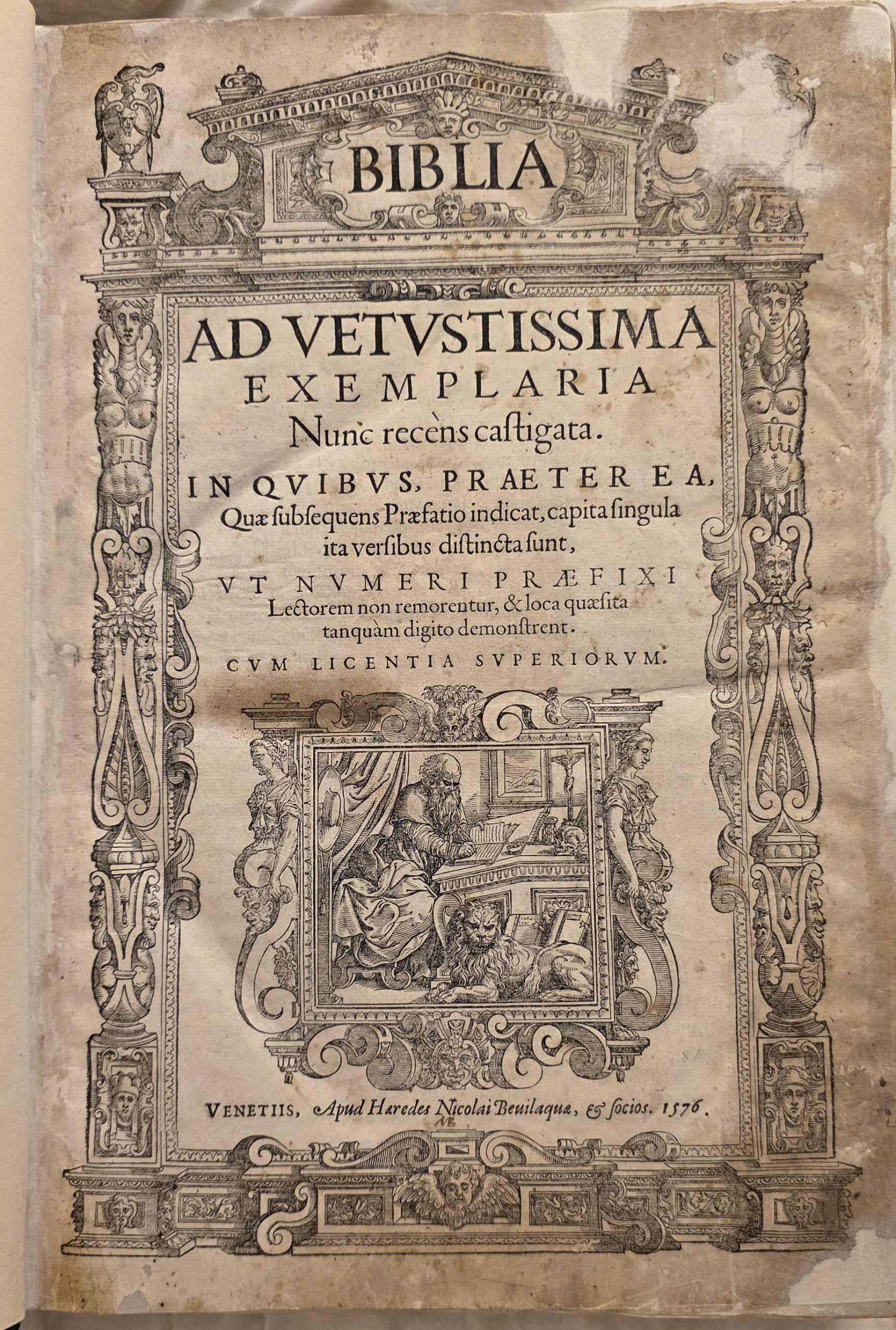
1576 – Biblia ad vetustissima exemplaria nunc recens castigata – [edited by Johannes Hentenius]. Venice: (Giacomo Vitale for) Heirs of Niccolò Bevilacqua
An "illustrated", rather than a "picture" Bible, since it incorporates the imagery into a textual Bible, this Bevilacqua Louvain offers an early example of the richness of woodcut-illustrated Bibles in which imagery and text were freely comingled. Complete, though water damage to earlier pages.
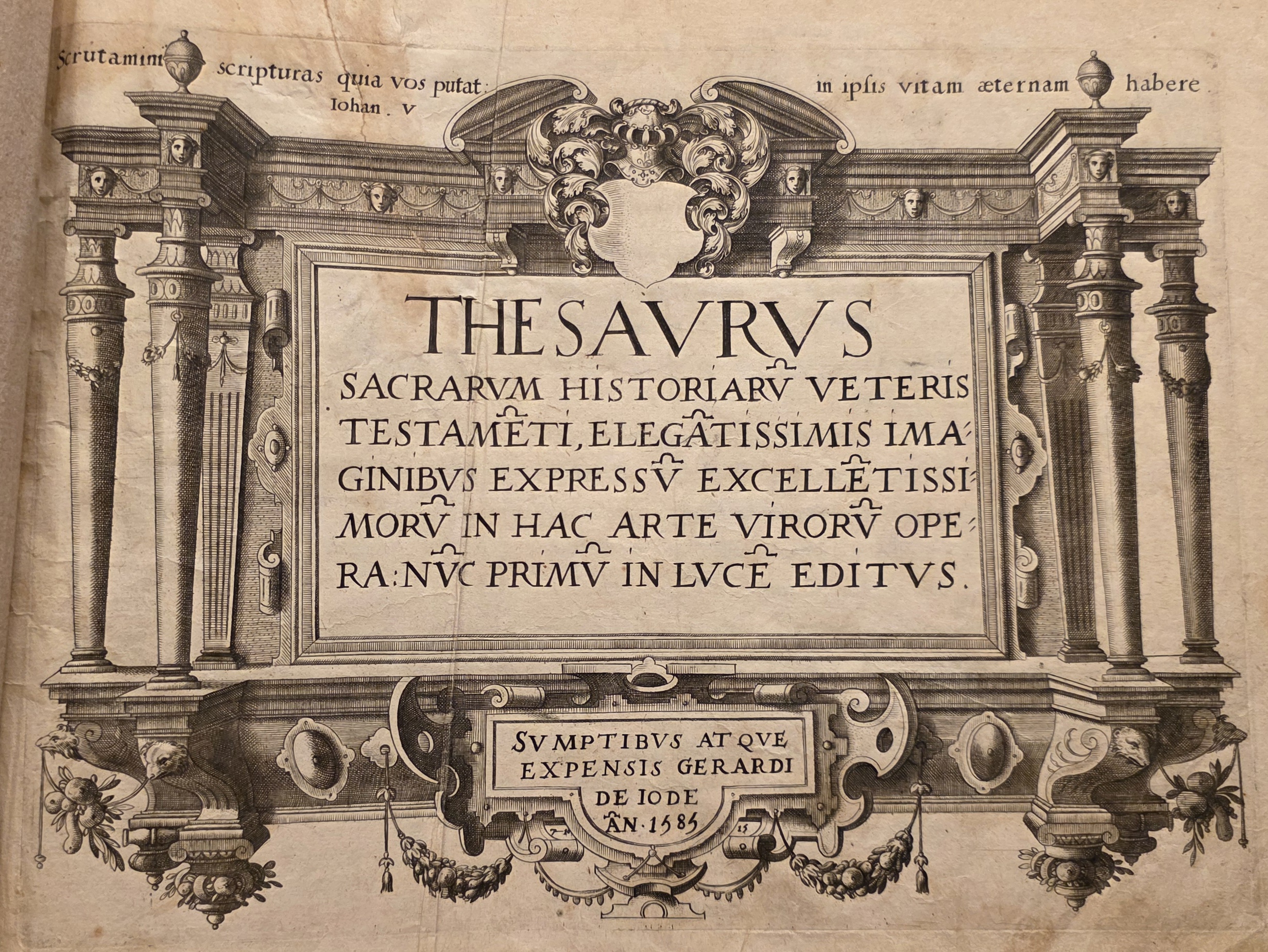
1585 Jode's Thesaurus
The first "true" picture Bible and one of the most influential books in the history of Biblical illustration. An exquisitely rare fully complete copy with all images, table of contents and one of the few copies to include the original 1579 preface text. Includes the optional "Nine Angels" series.
- The Genesis of the Visual Bible: A Comprehensive Analysis of Gerard de Jode's 1585 Thesaurus Sacrarum Historiarum
- View First 20 Pages At Internet Archive (Early Medium Resolution Digitization Test)
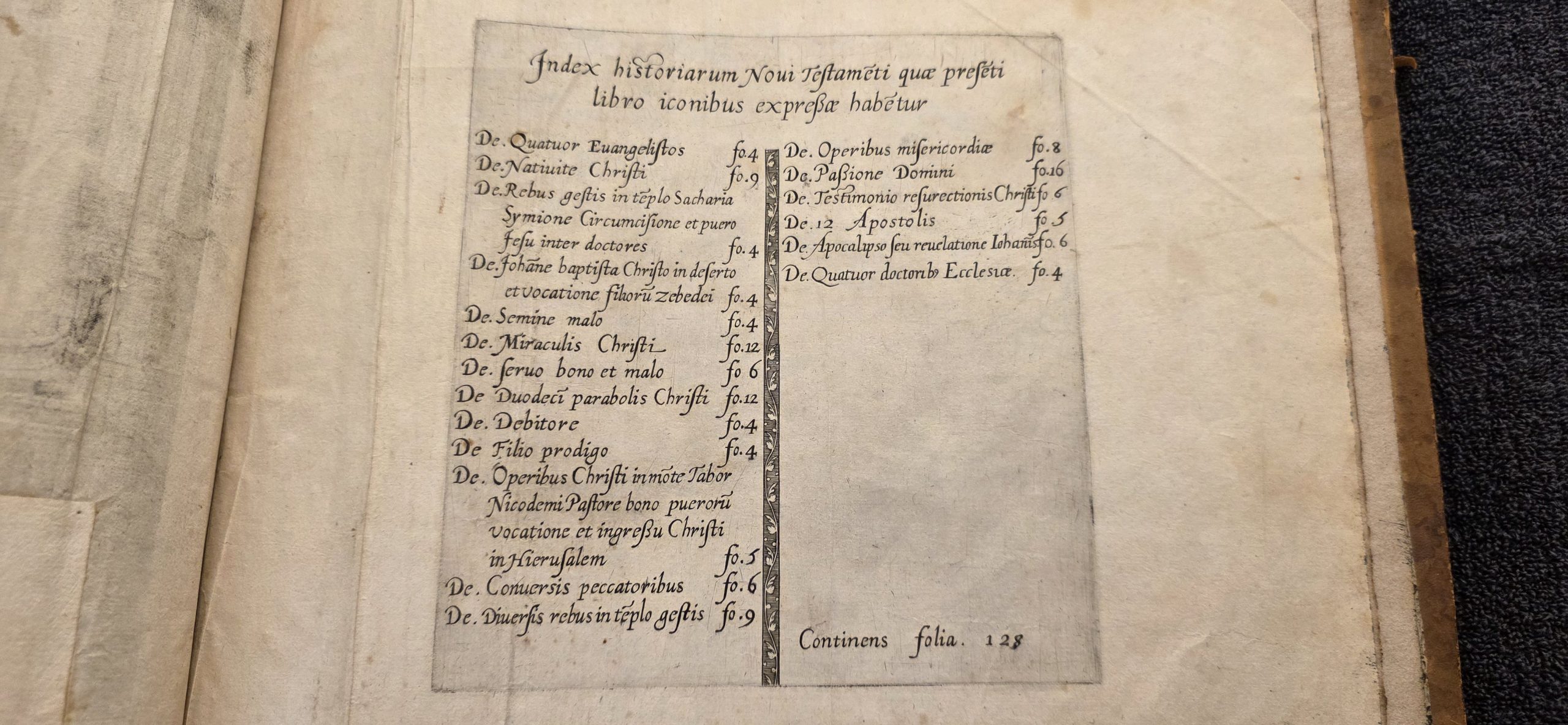
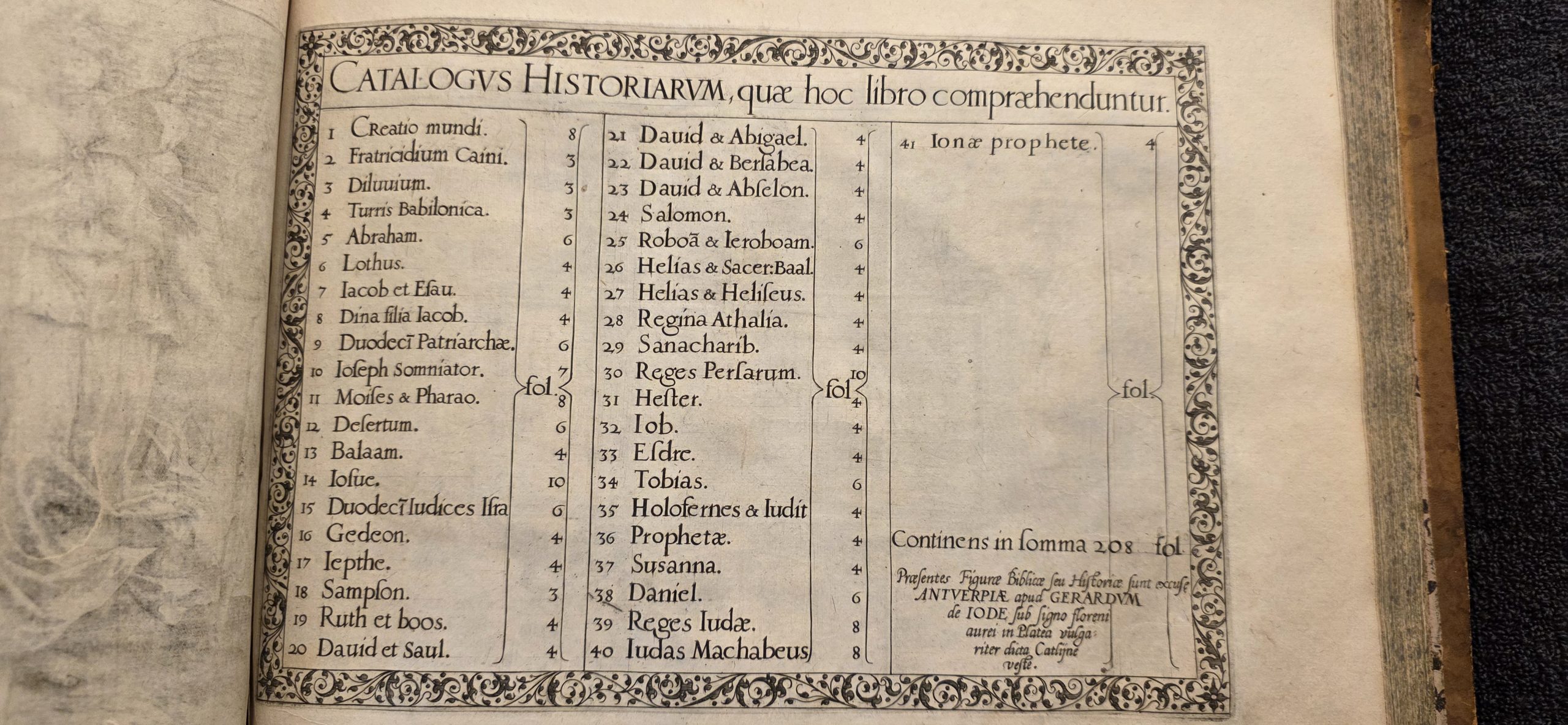
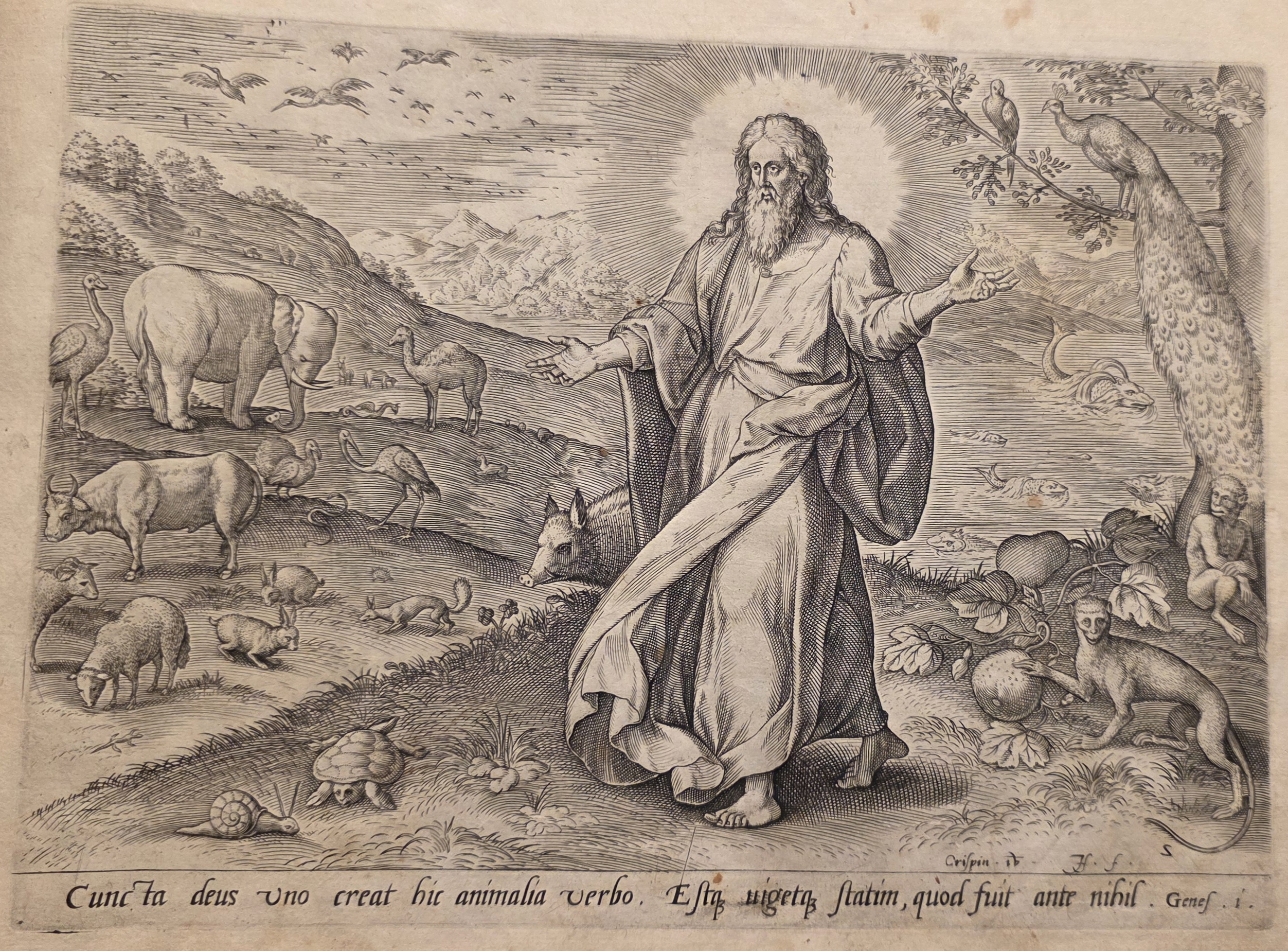
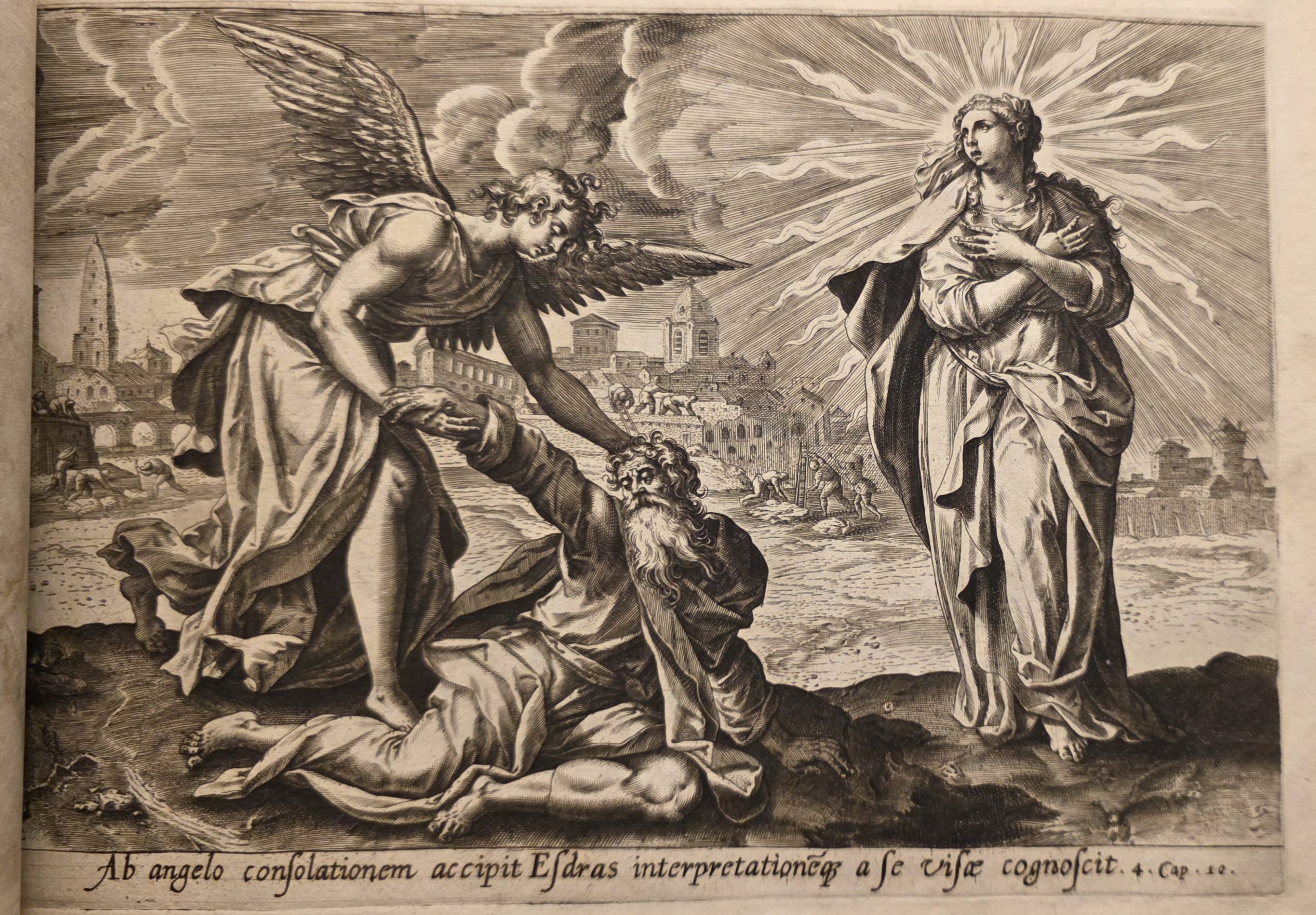
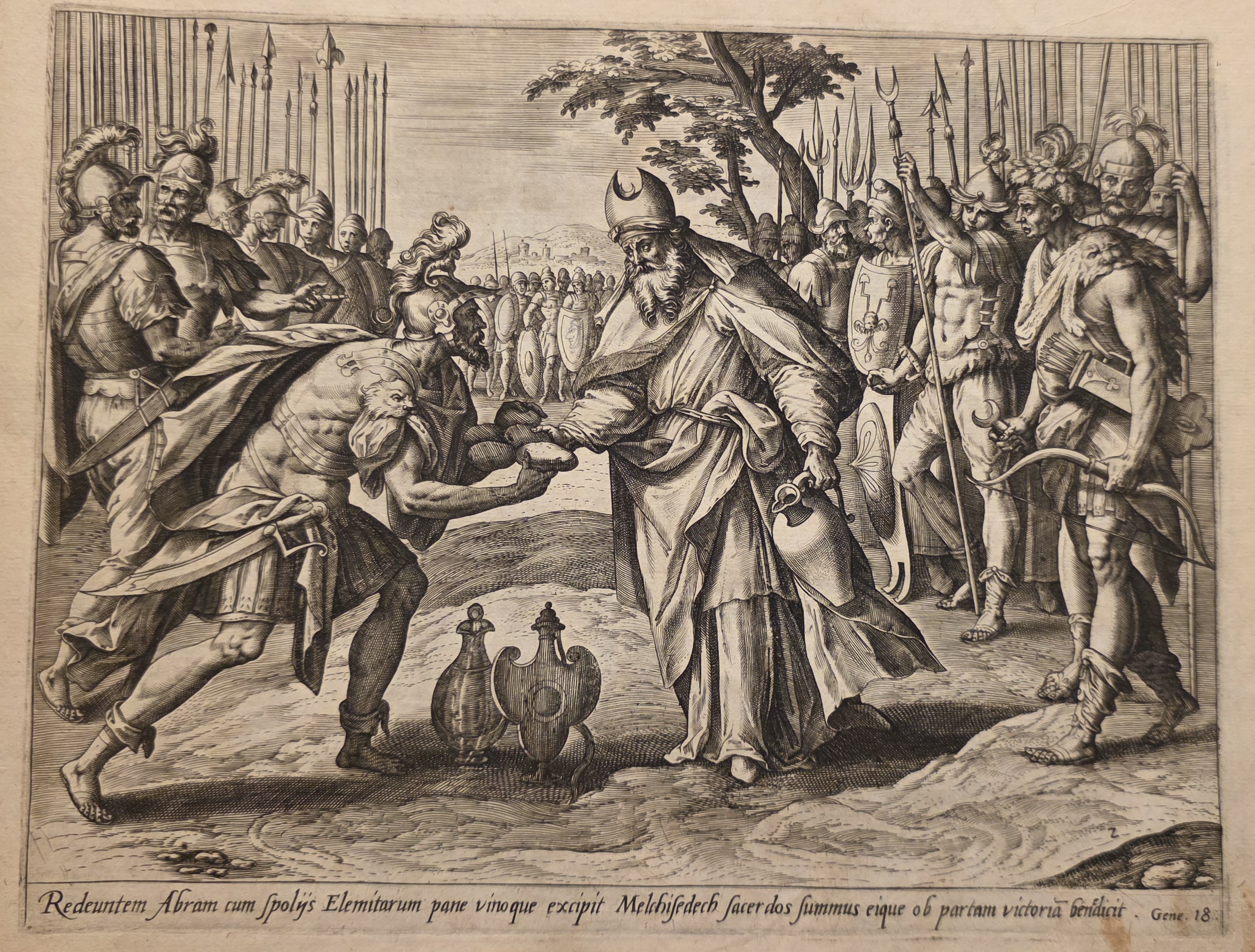
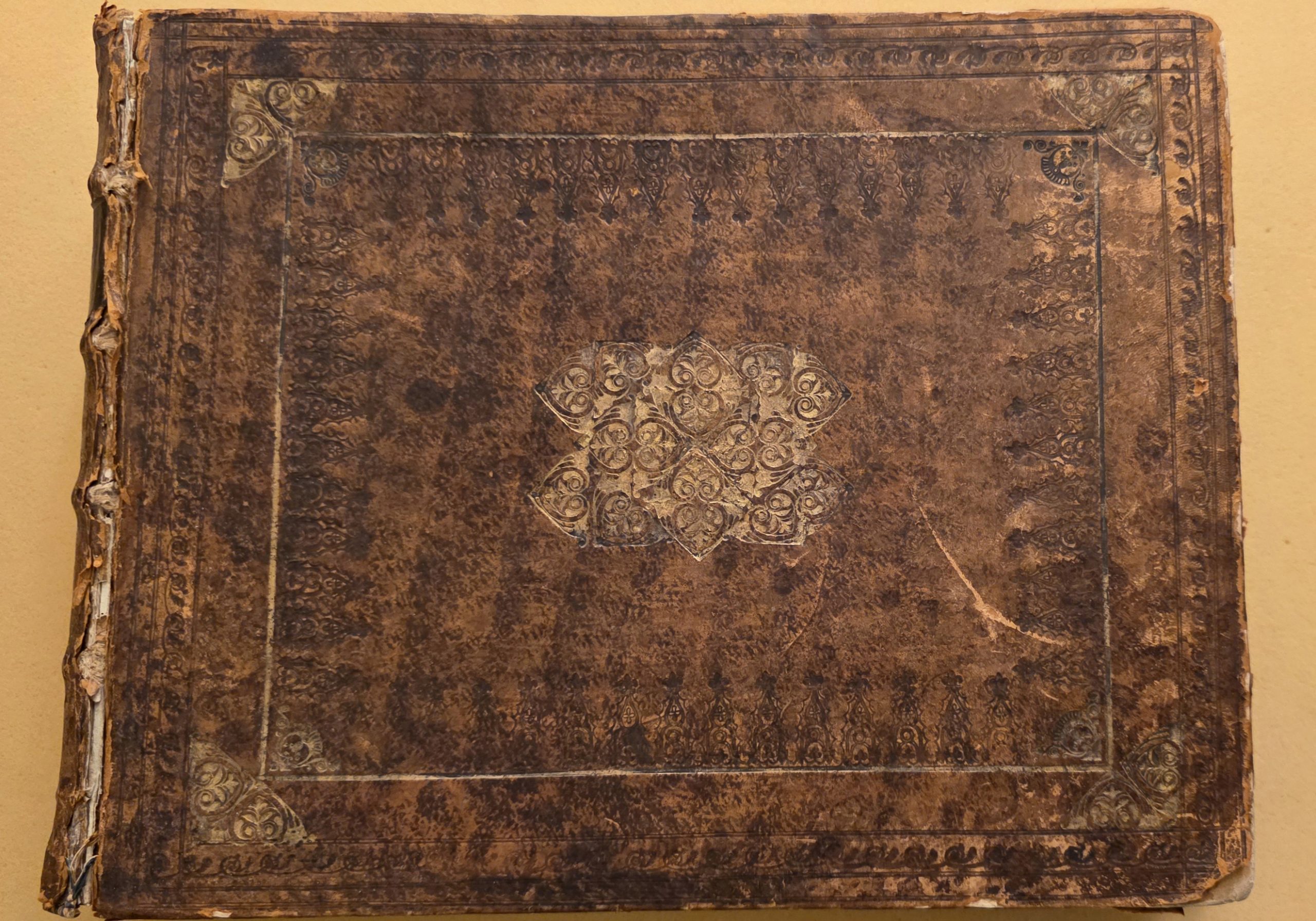
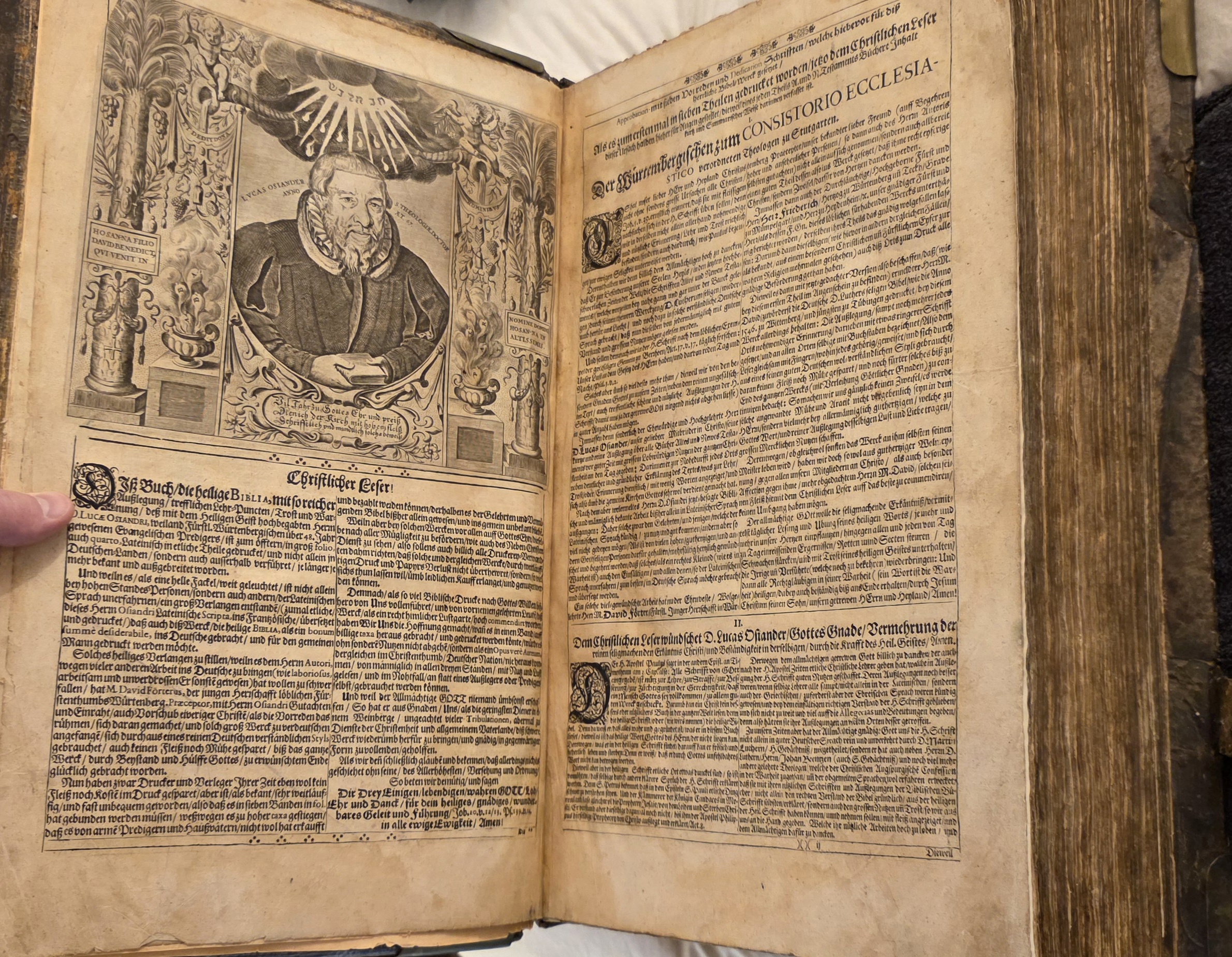
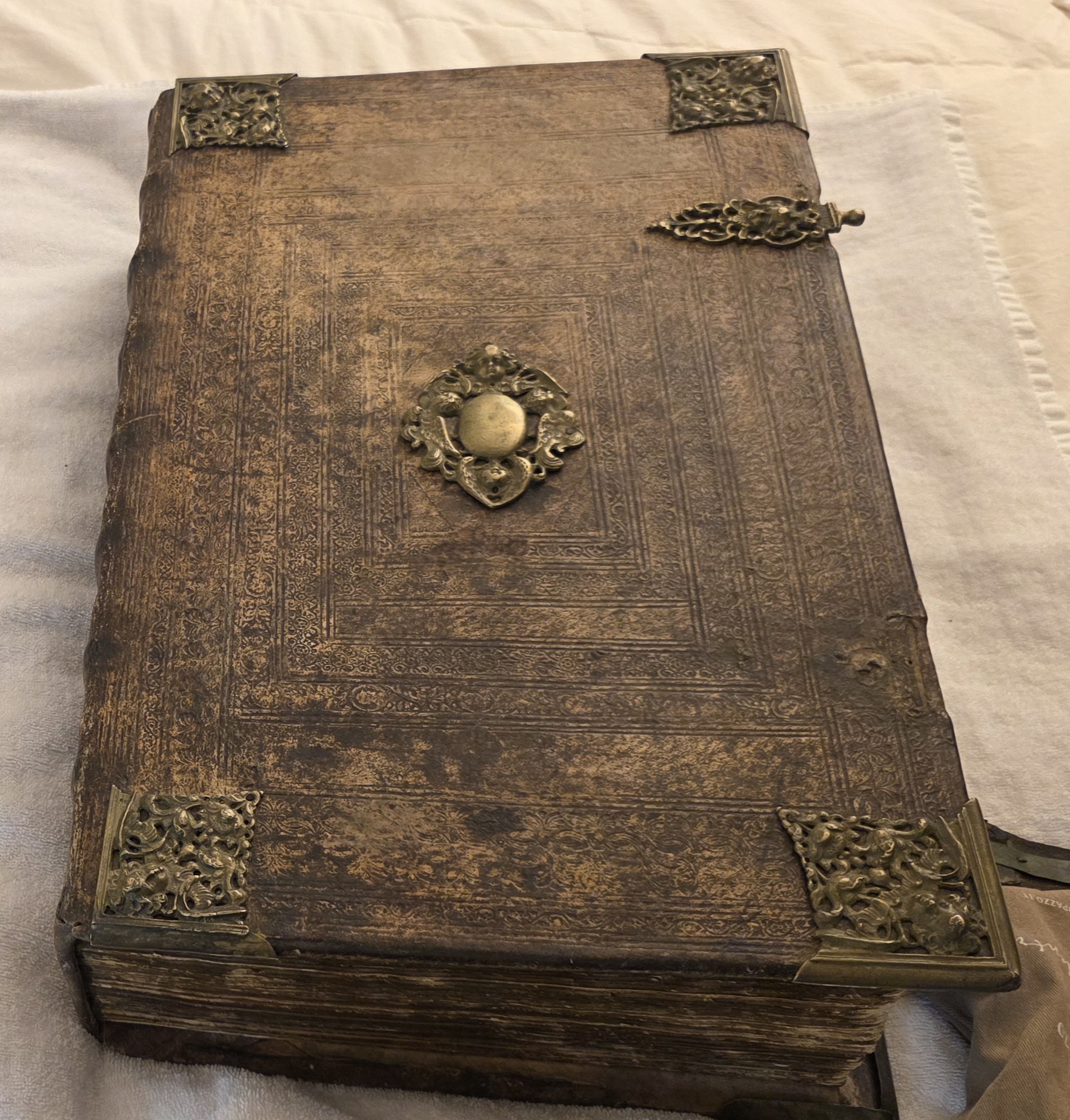
1650 – Lüneburger Osianderbibel / "Stern Bible" – BIBLIA, DAS IST: DIE GANTZE HEILIGE SCHRIFFT – Lüneburg: Sterne
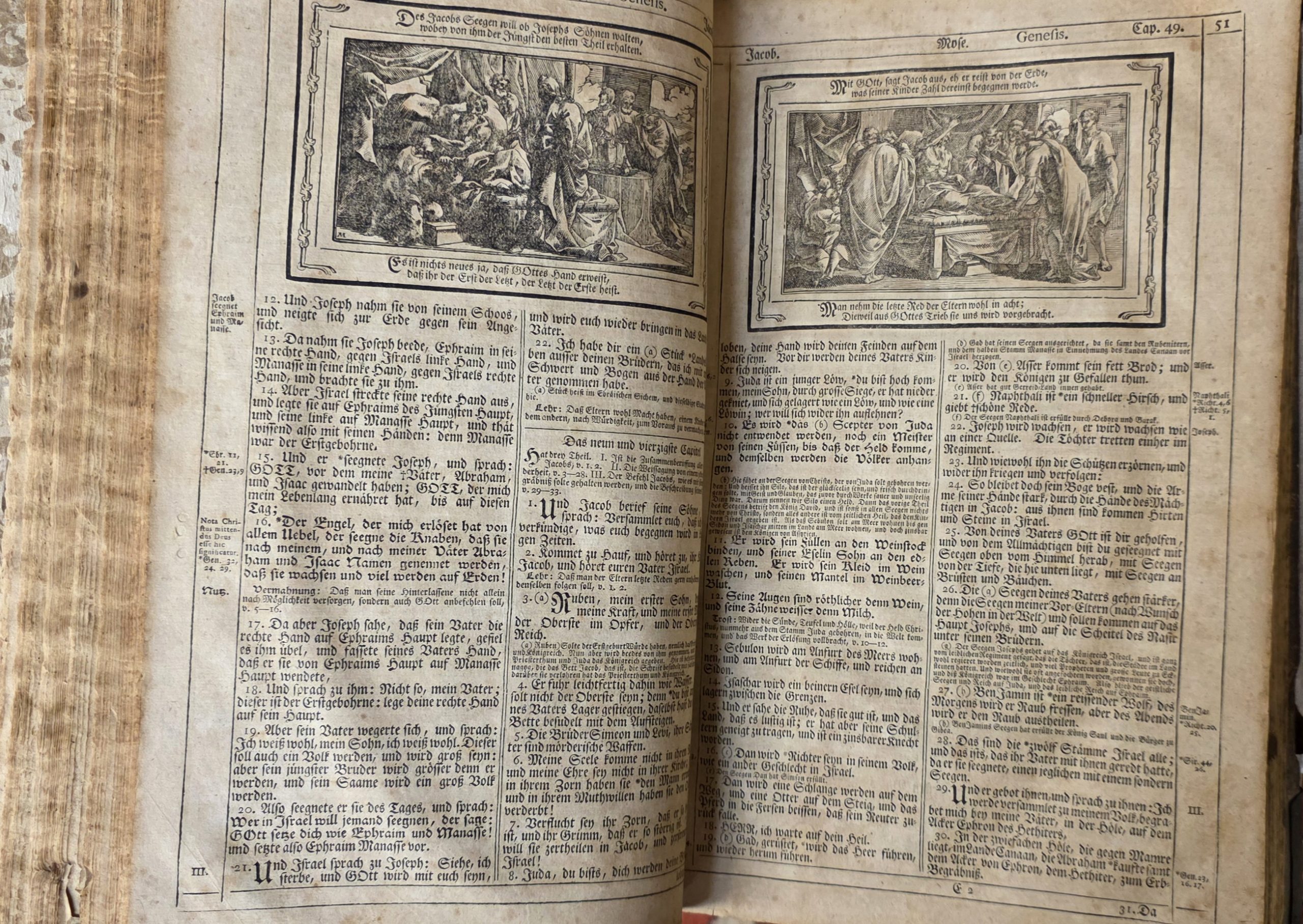
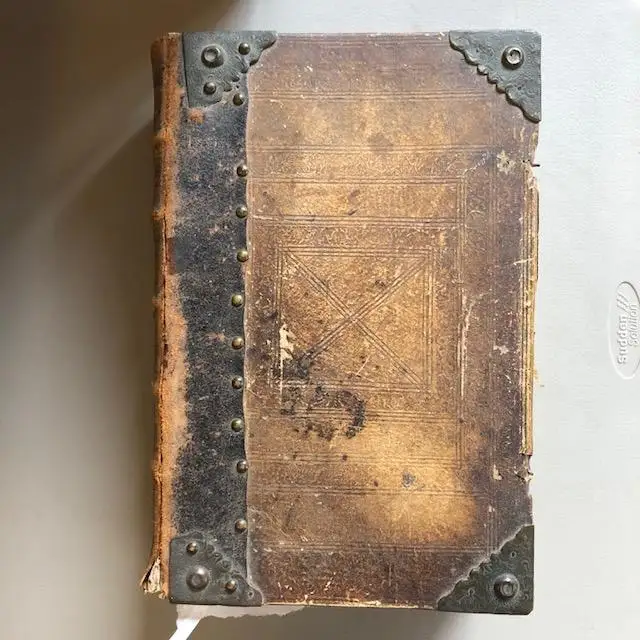
An extremely rare surviving mid-17th century "large pulpit folio" more than 18.5" tall, 12" wide and 5" thick. Sparsely illustrated, reflecting the focus on text over imagery. The text is the original Martin Luther translation. Example of monumental Bible size and austere text-centric presentation.
1657 – Paets Bible / Moerentorf Bible / Van Sichem Bible by Pieter Jacobsz in the Netherlands
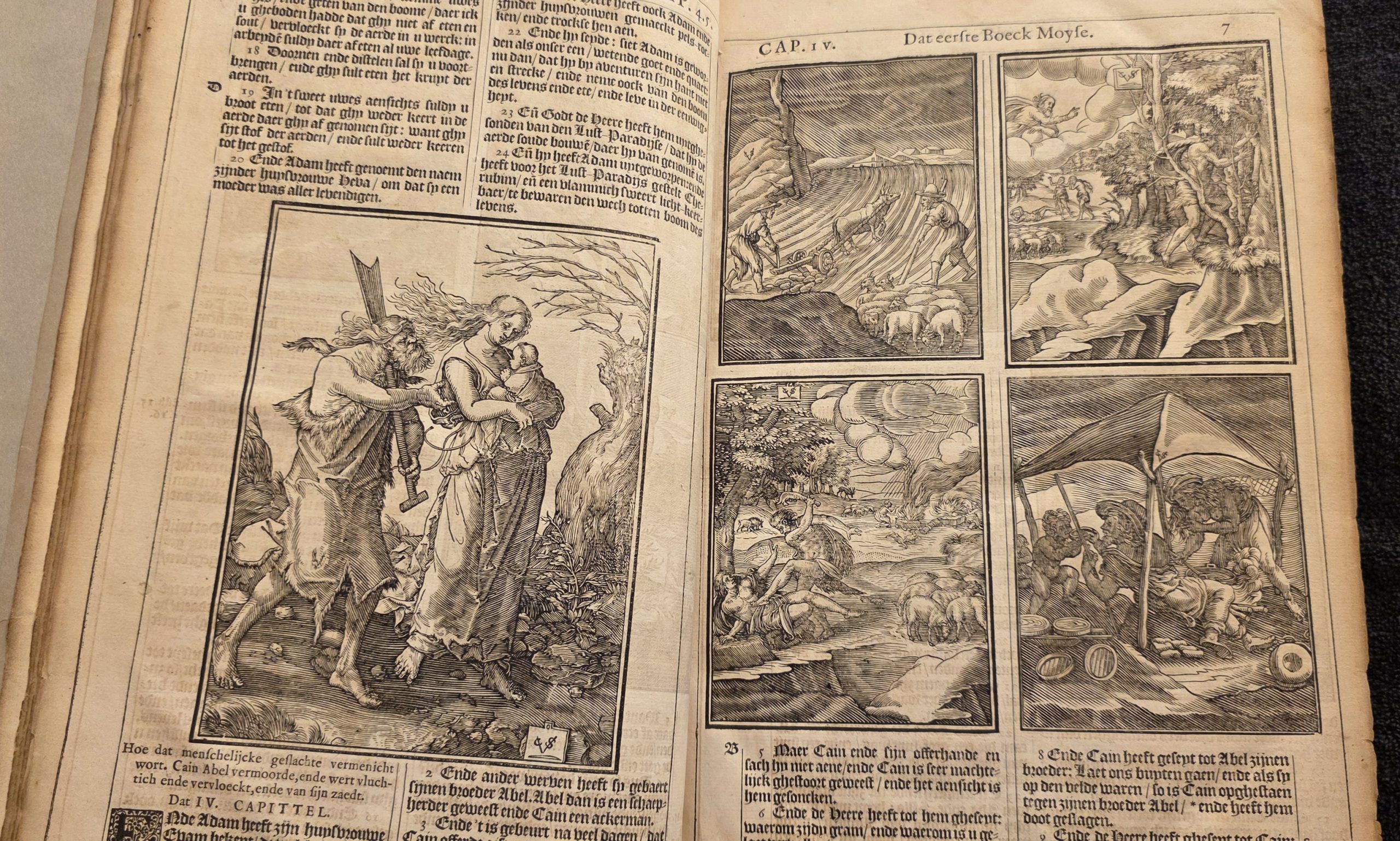
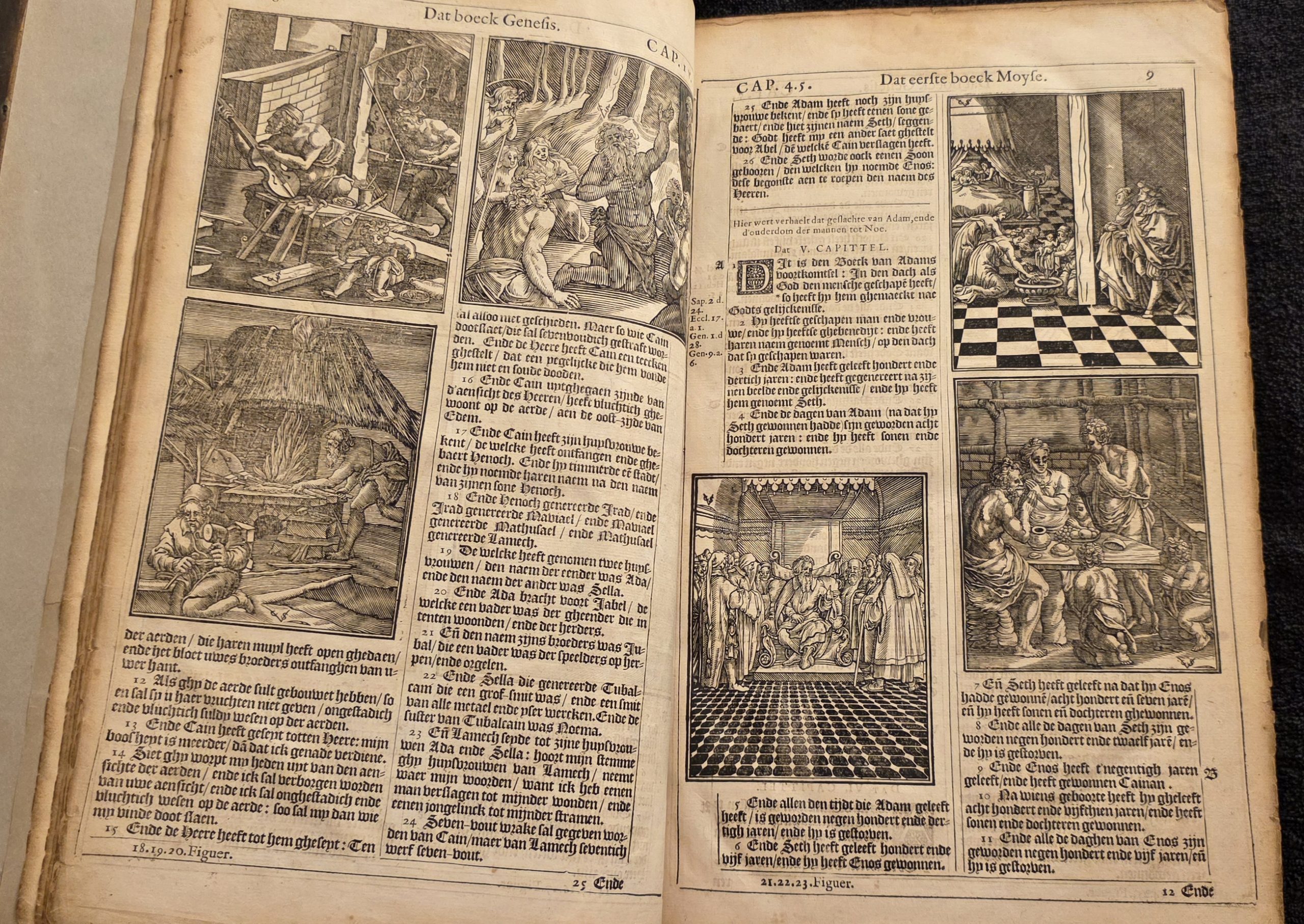
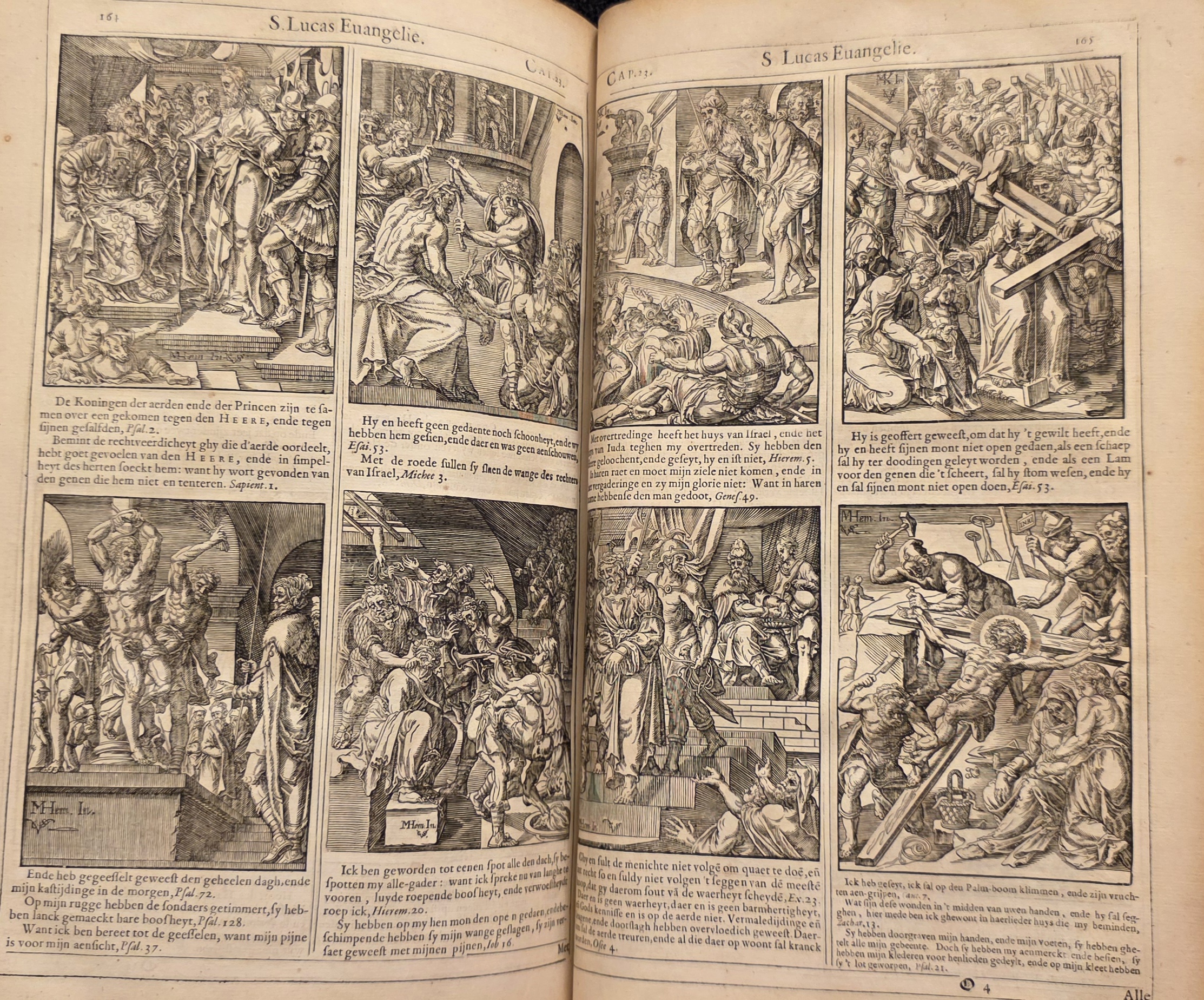
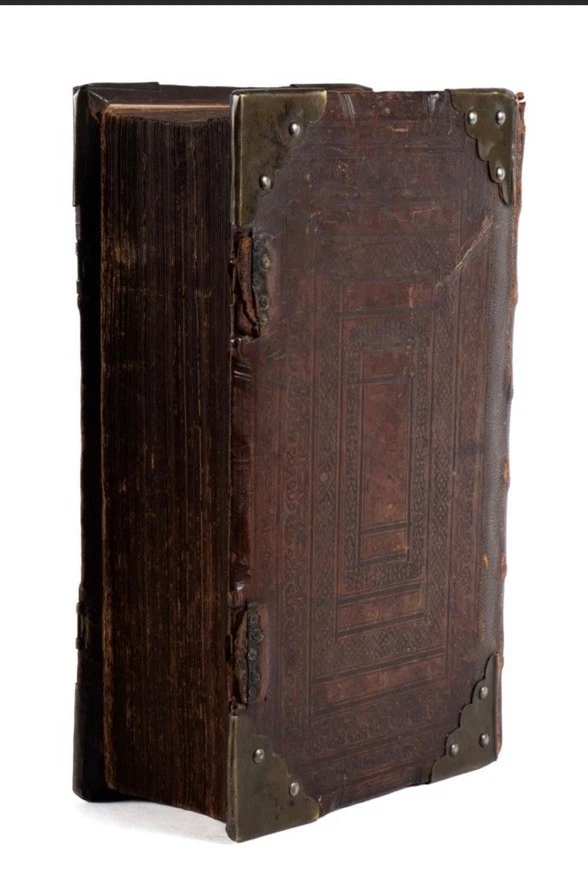
One of the most profusely illustrated woodcut Bibles of its era, with more than 1,200 woodcuts and thousands of woodcut decorated initials, including hundreds of large historiated initials and dozens of woodcut head- and tail-piece vignettes. Complete, with both the 1646 Leemputte New Testament and the 1657 Old Testament and both title pages.
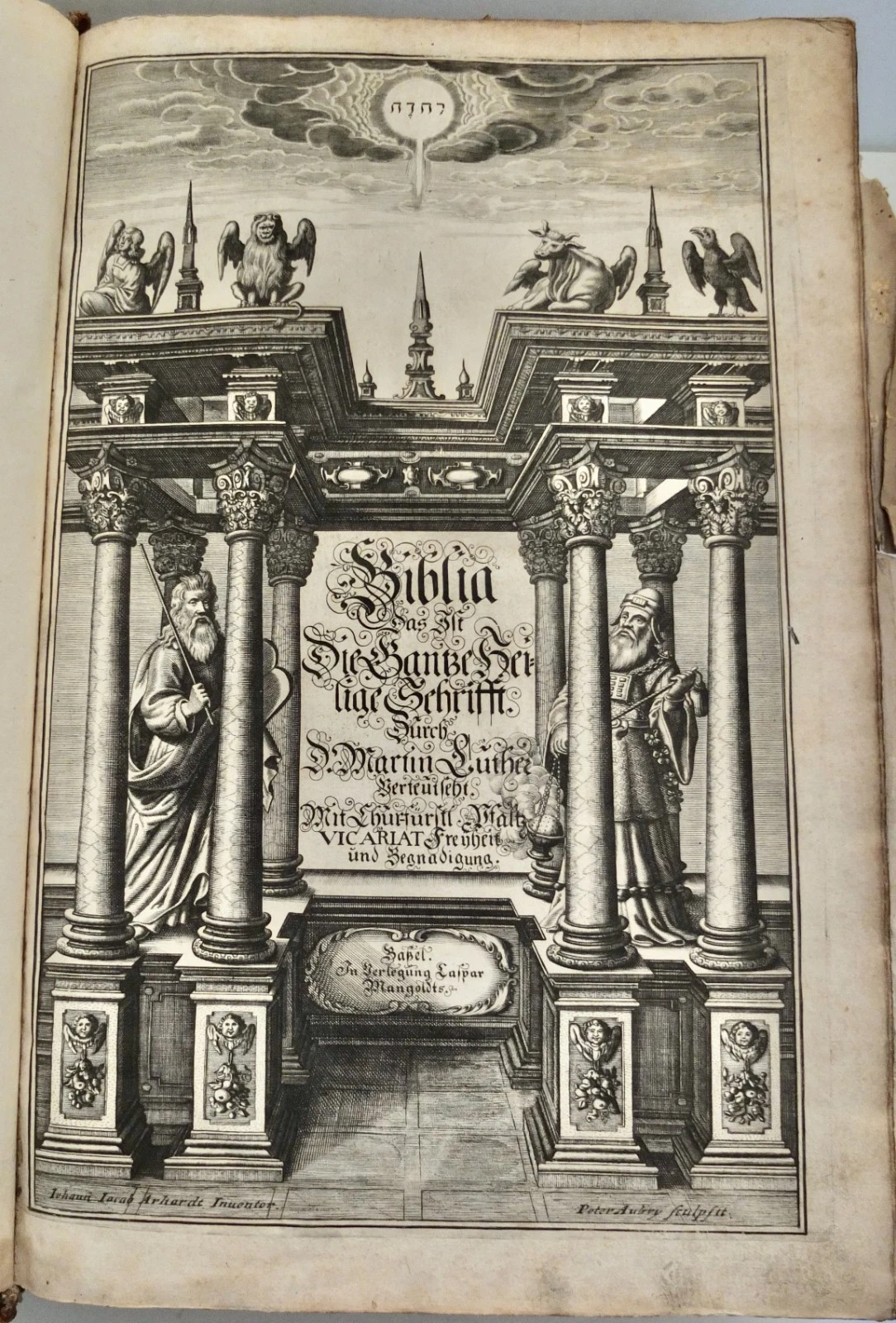
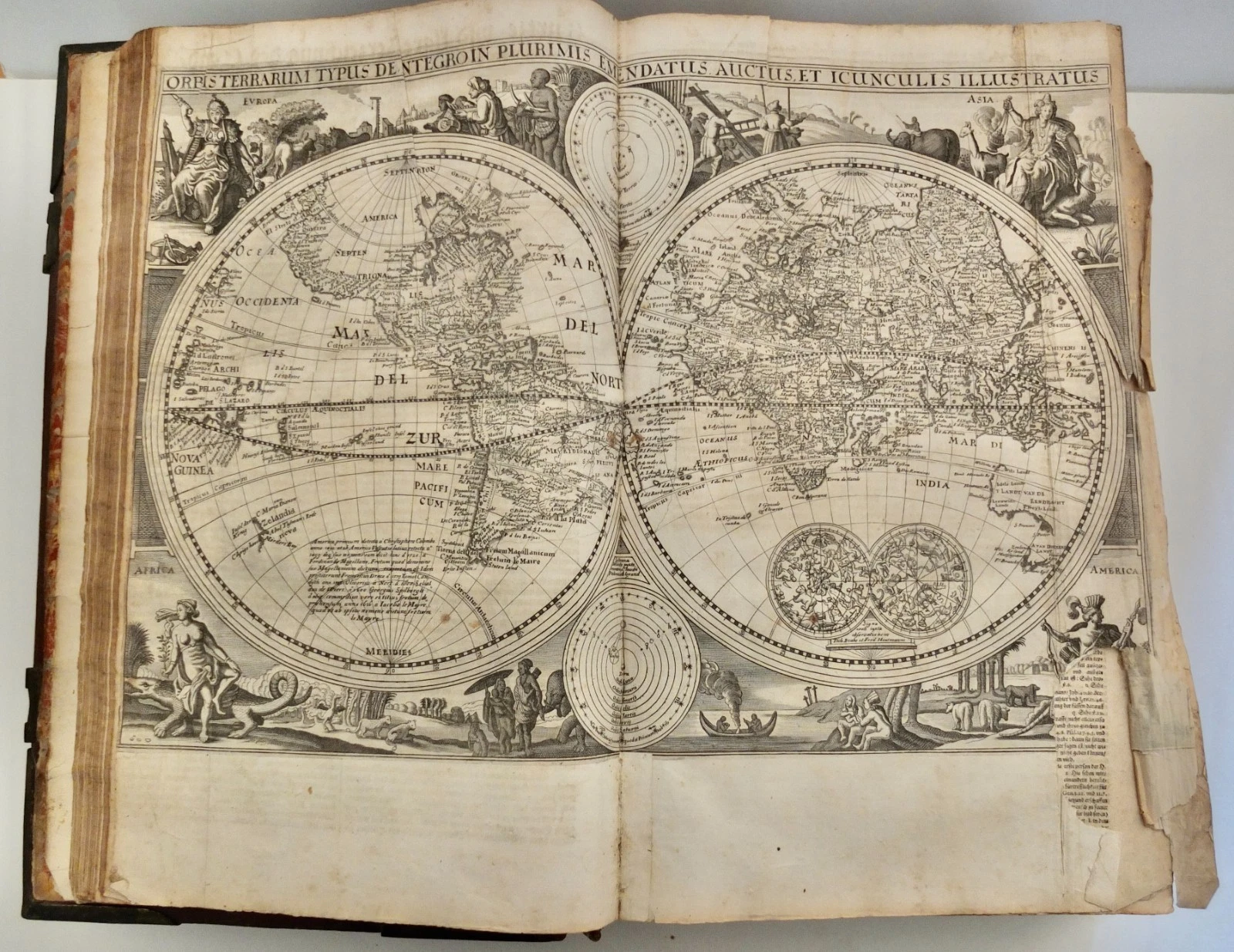
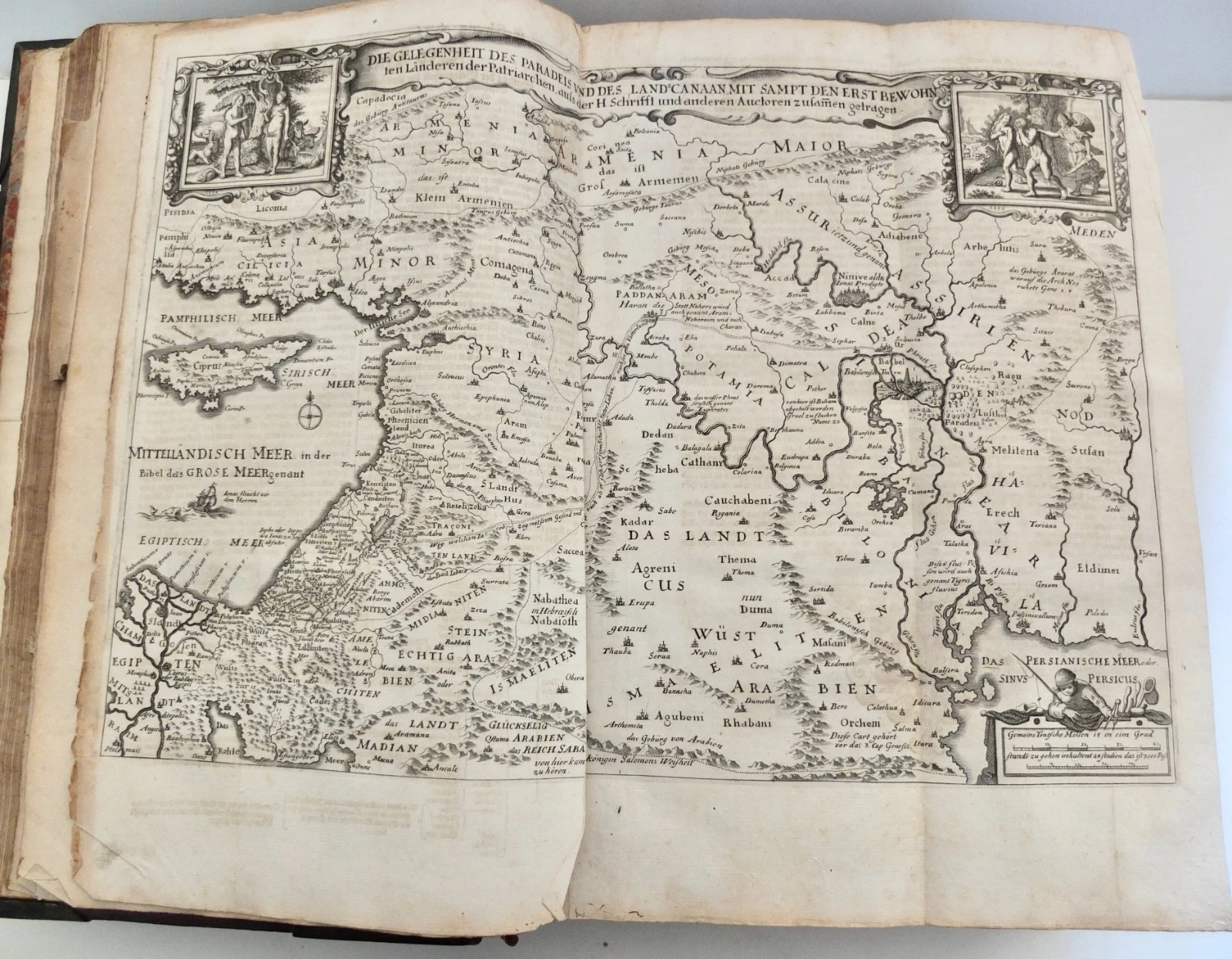
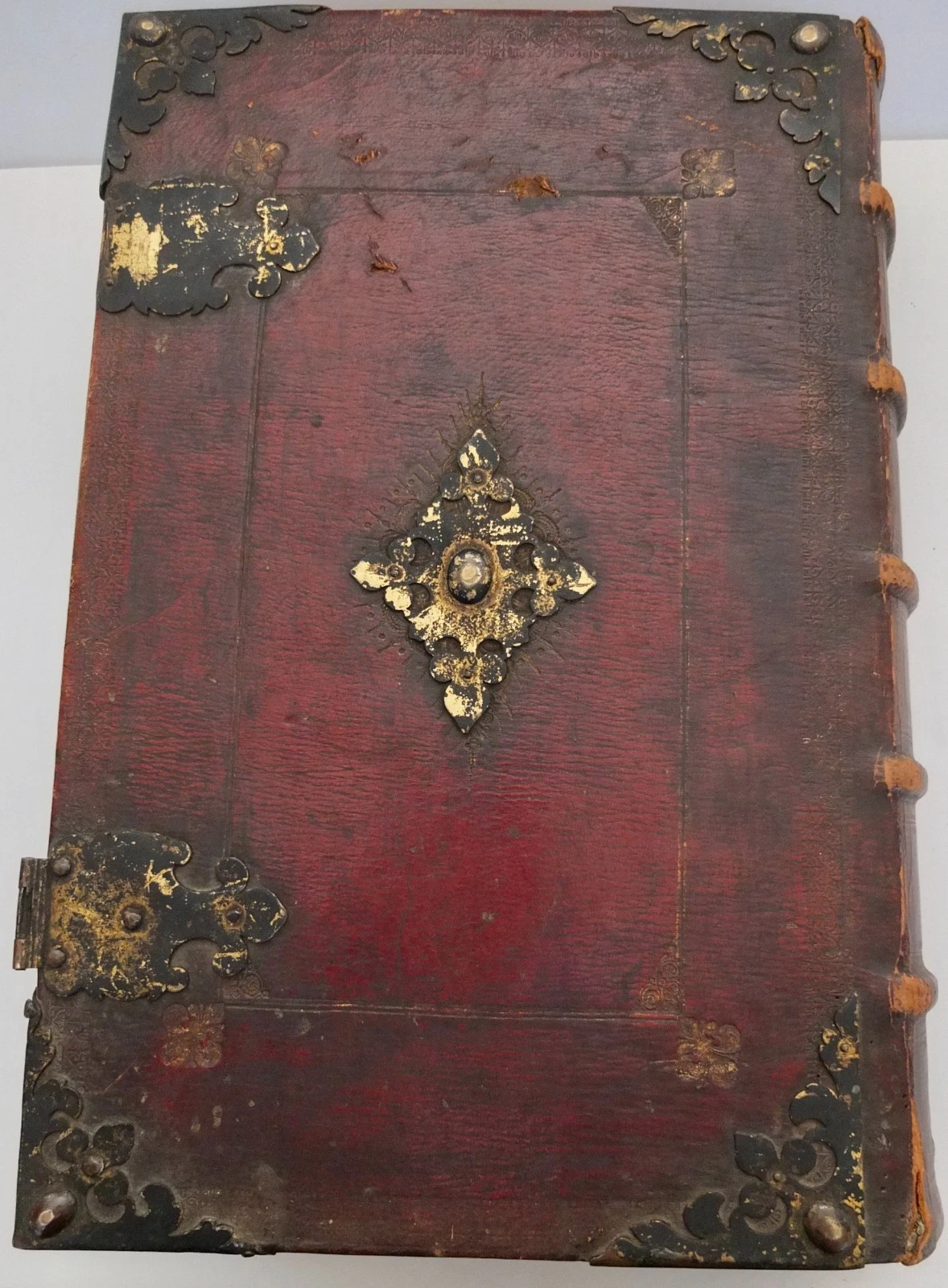
1665 – Biblia, Das ist: Die gantze Heilige Schrift, durch D. Martin Luther verteutschet by Caspar Mangoldt in Basel
Another minimally-illustrated Bible, showing most how most Bibles of its type included only an illustrated title page and a small selection of Biblical maps. Note how the world map shows California detached from the mainland of America.
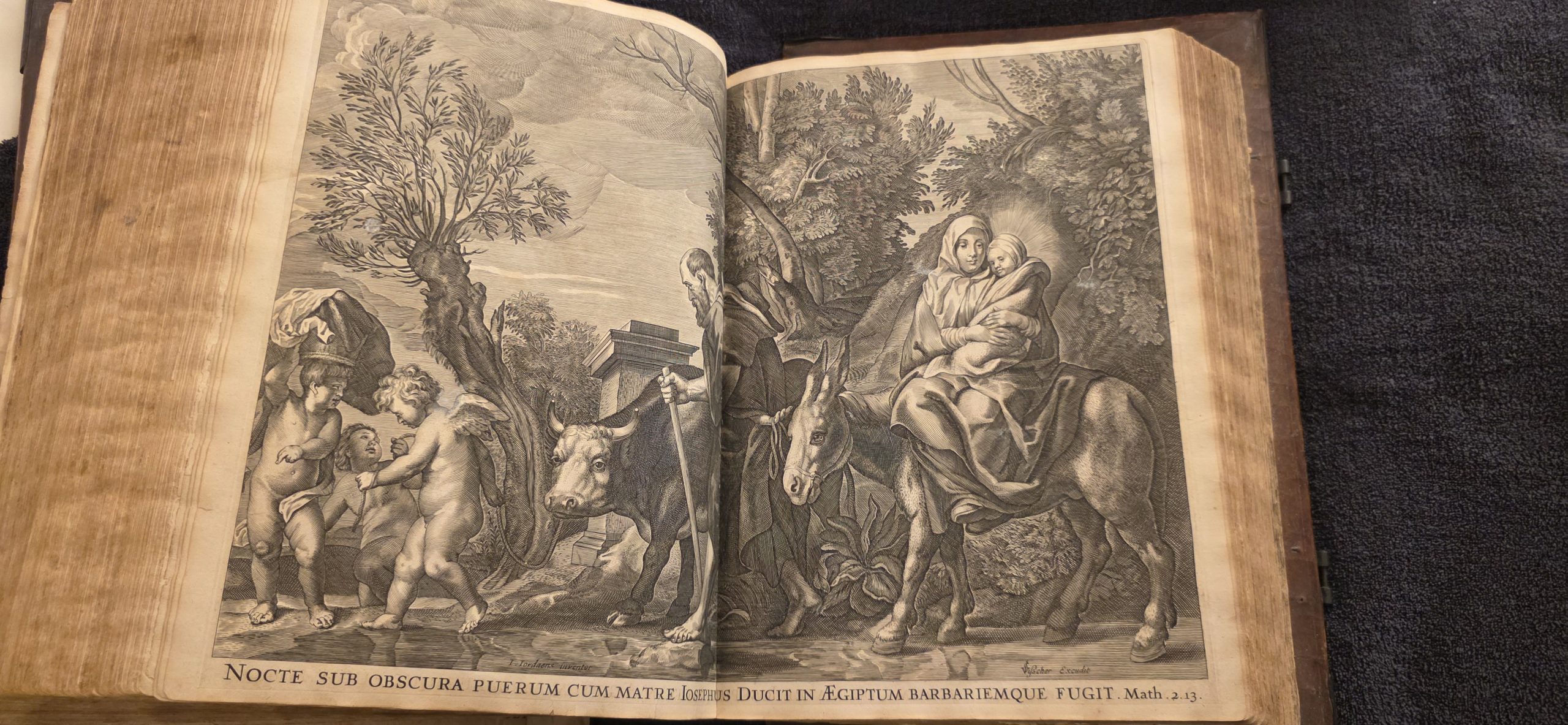
Visscher Royal bound in a 1672 Swart King James Bible
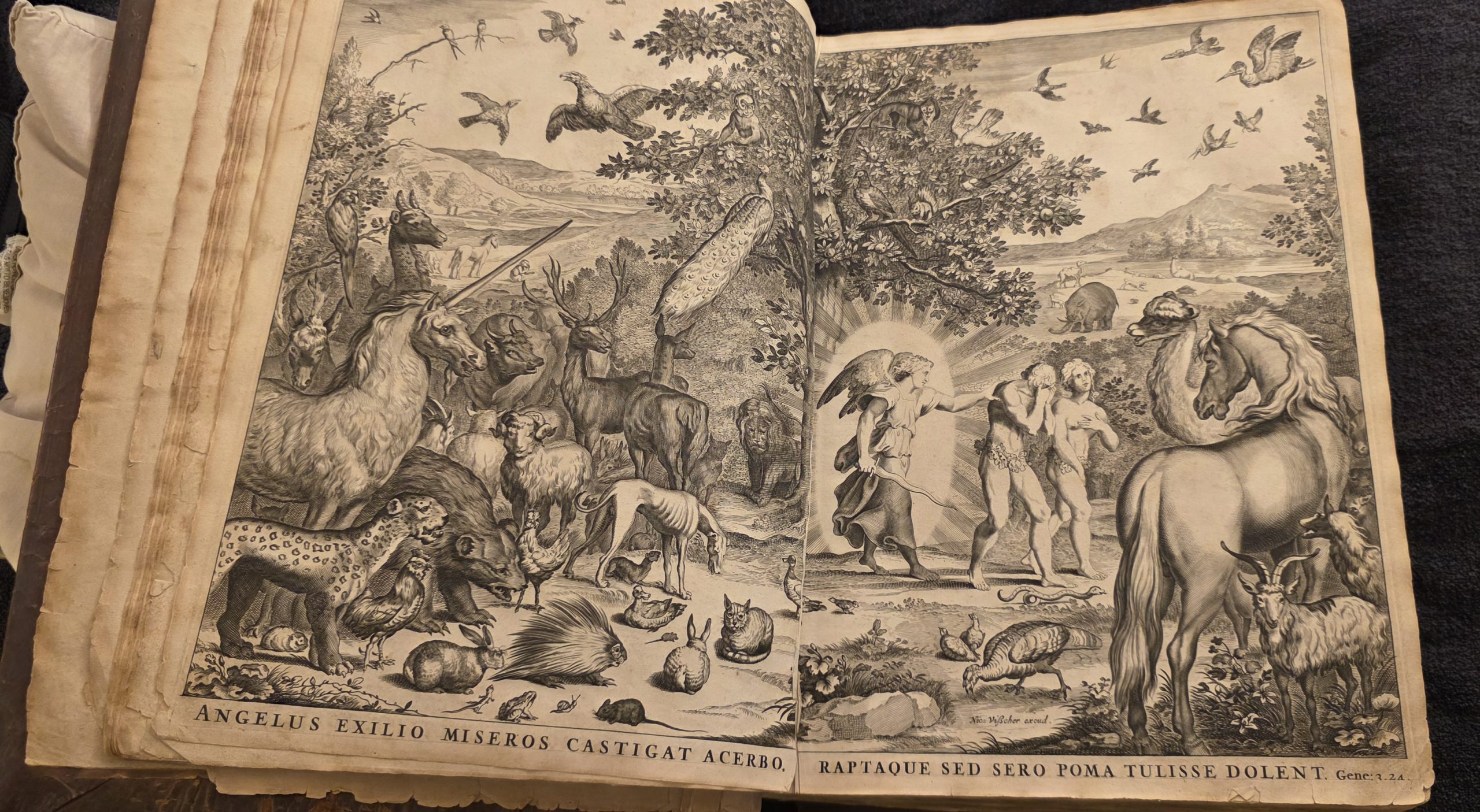
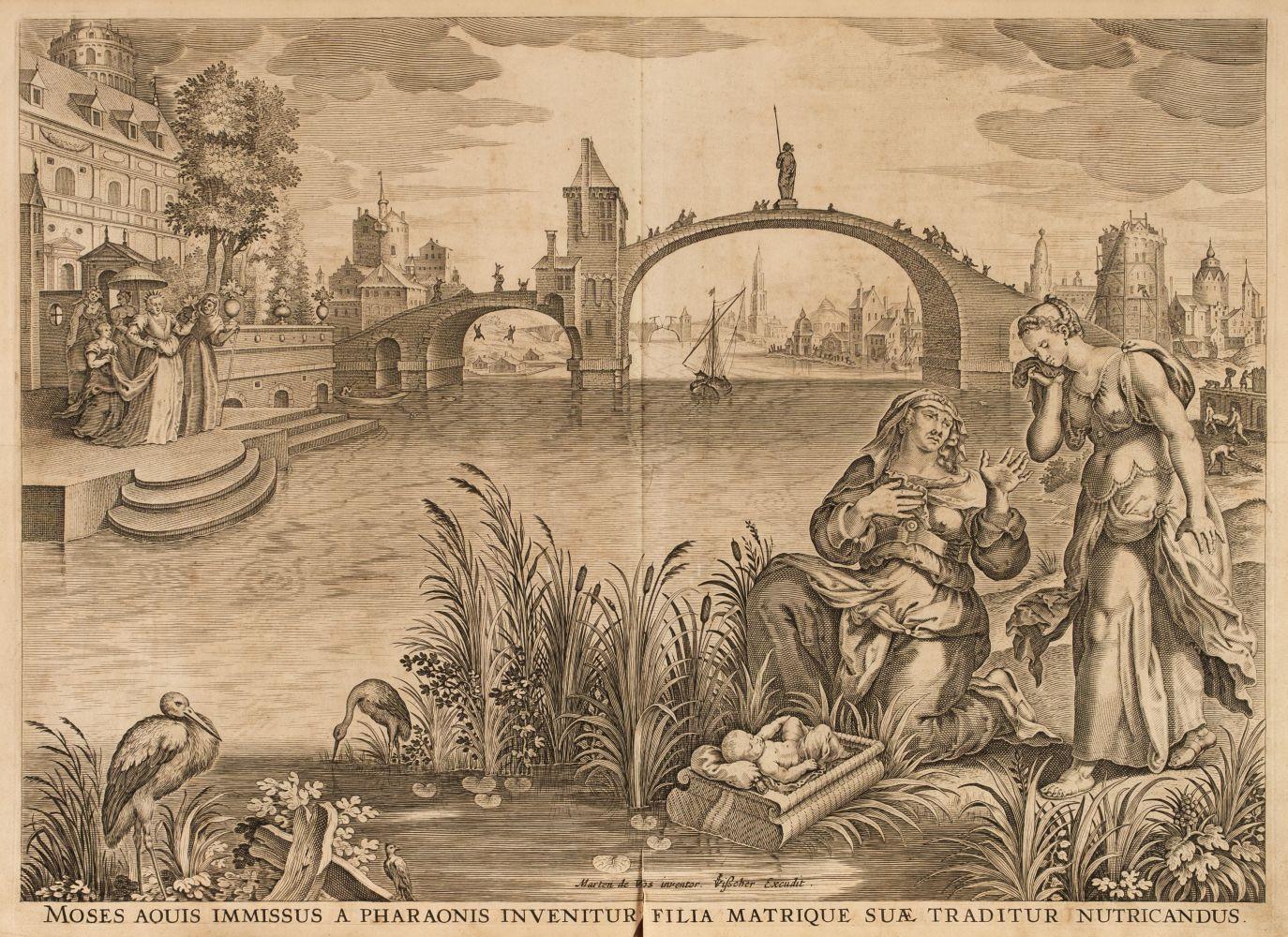
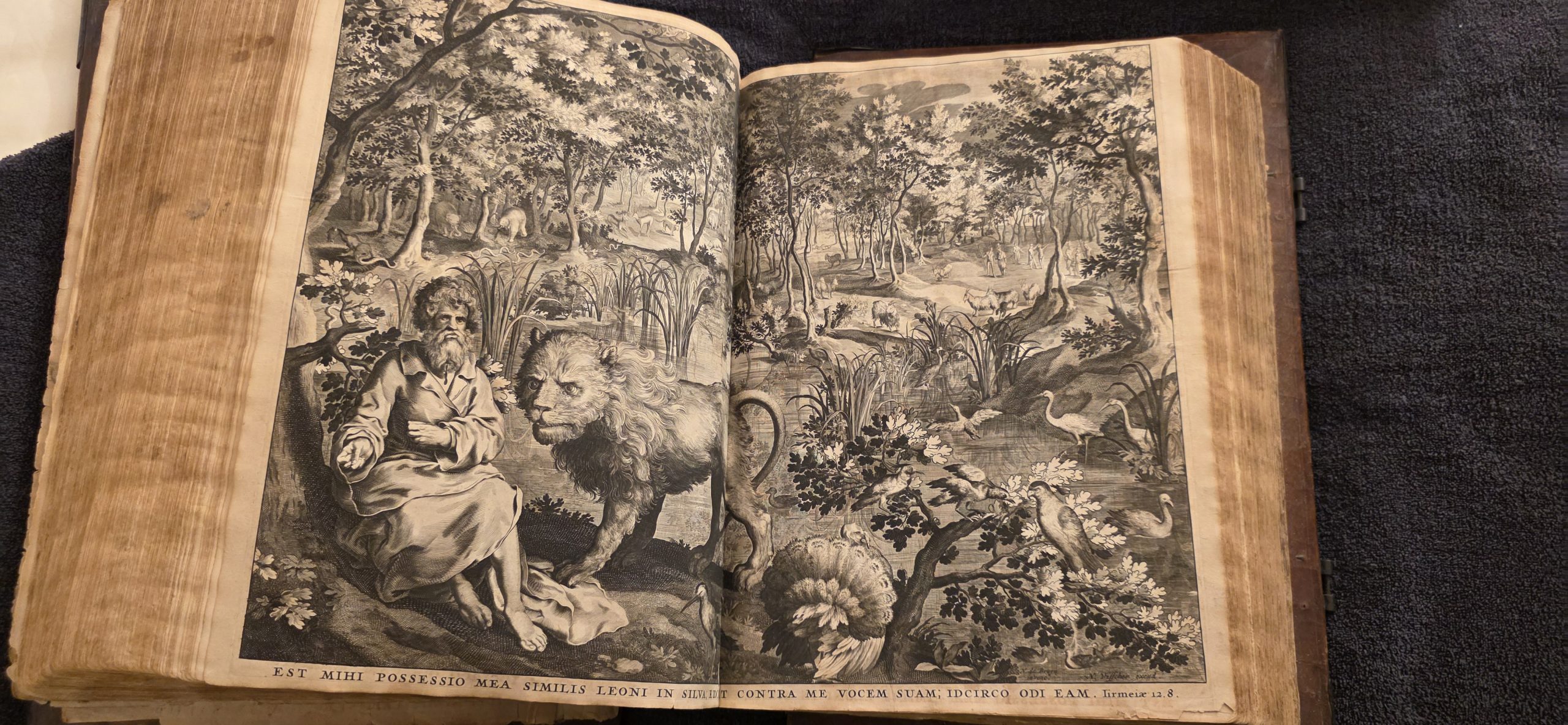
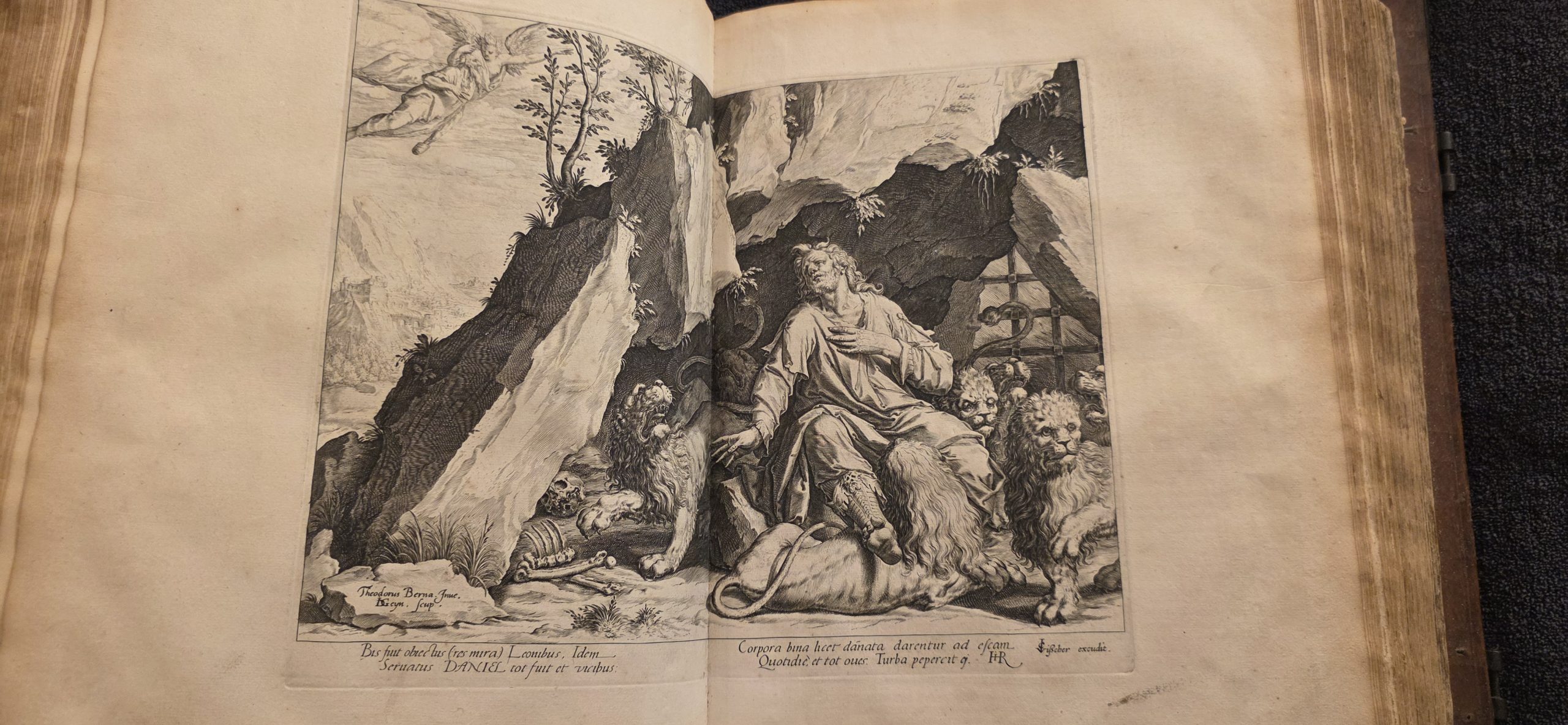
Like the Jode, this copy of the exquisitely rare and seminal Visscher Royal picture Bible contains 116 of the 130 double-page Visscher Royal plates bound inside a 1672 Swart, which is itself a fascinating and historically significant artifact of Biblical history.
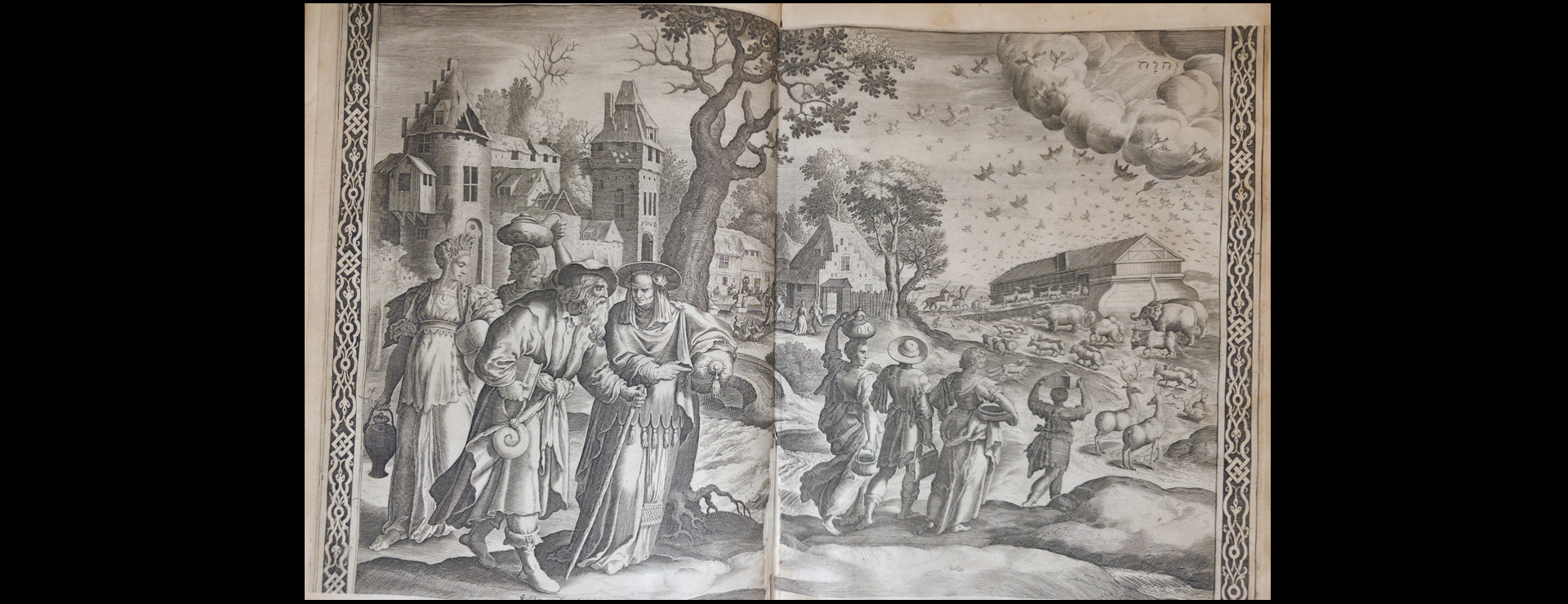
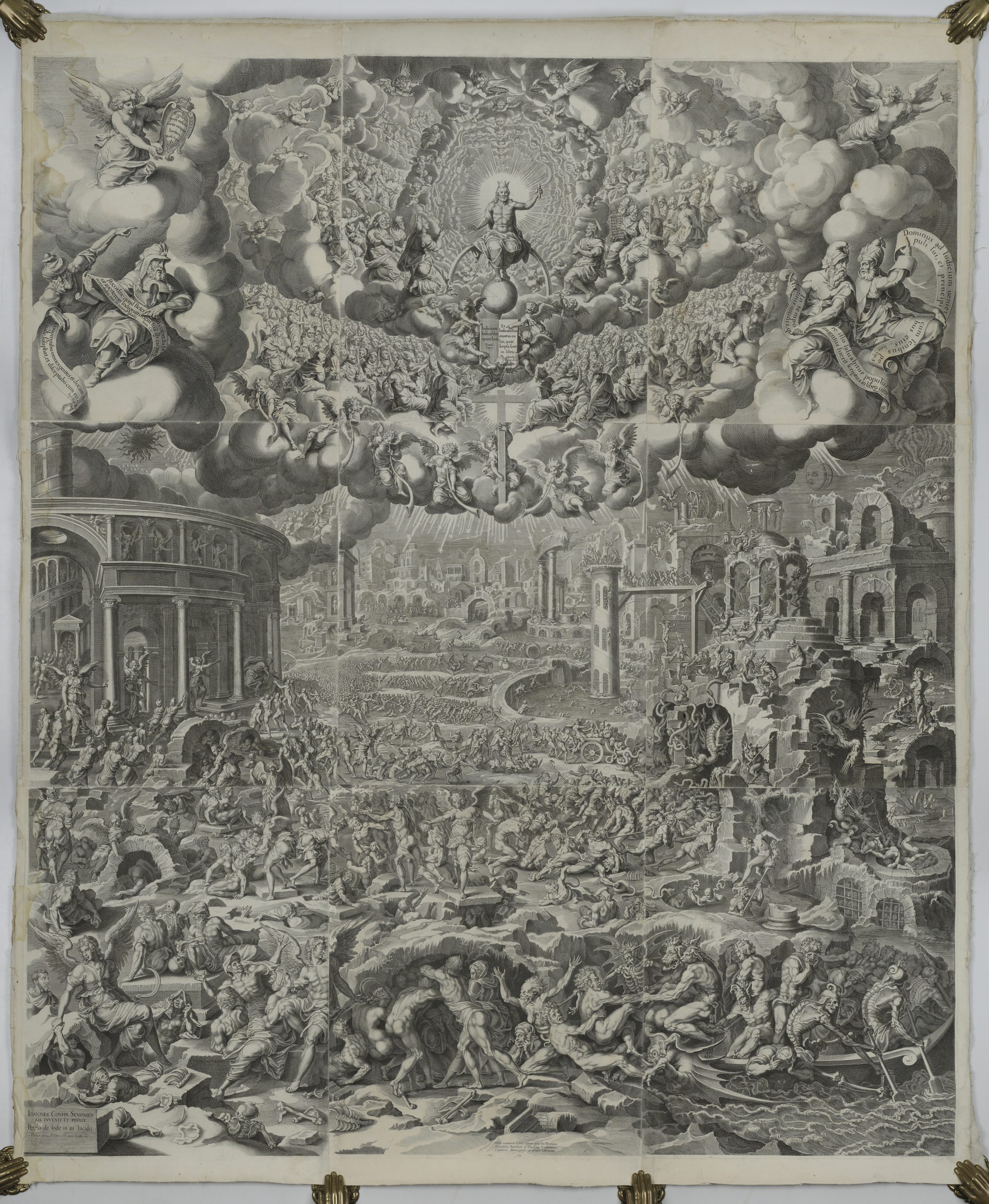
Late 1600s – Pieter de Jode I's Engraving Of Jean Cousin's Last Judgement
One of the largest and most detailed engravings ever produced, Pieter de Jode I's (whose father produced the first picture Bible, the Jode Thesaurus) massive 1615 engraving of Jean Cousin's 1585 The Last Judgement painting stands as a monumental work of art, measuring 56 x 48 inches (4 ft 8 in x 4 ft – totaling 18.6 square feet) and features detail so small it requires a magnifying glass in places to fully discern the extent of its detail. Absolutely breathtaking in person, even in digital form, the image depicts so many myriad scenes in so much detail everywhere the eye looks that it can be impossible to take it all in at once.
Little is known about the production of this massive work, with New Hollstein's description being perhaps the most detailed known: "De Jode hardly engraved any plates after 1600 for other publishers; of his engraved oeuvre of 157 prints only about twenty-six were made after 1600 outside his own firm. He engraved his most impressive work for someone else, the Last Judgement after a painting by Jean Cousin, made on nine plates, not including the three text plates (no. 26). Made about 1614-15, at a moment when De Jode was hardly active as an engraver anymore, the print is technically not his finest work but still shows his, at that time rather outdated, skills as an engraver from the Goltzius school, most notably in the bulging clouds in the upper part with the curved, strictly parallel lozenge shaped cross hatchings filled in with small dots and lines in the most shaded areas. The grand scale of the plates is his true forte. The large print was ‘spread’ [Lat. evulgavit] in 1615 by Guillaume Wittenbroot, an art dealer who organised lotteries of paintings and luxury items in France. He must have had a connection in France that supplied him with drawings of the painting, which was offered to the Convent of the Minims in Vincennes by king Henri III in 1584-85. Wittenbroot’s dedication to the French king Louis XIII undoubtedly had the purpose of promoting and securing his business deals in France. Eventually the plates ended up in Paris with the publisher Jean Leblond I, who obtained a royal privilege for publishing the large print. In the late 17ᵗʰ century the plates were republished by the French publisher Pierre Drevet, who reworked the plates ‘to make the dark parts stand out more’. The plates are preserved to this day at the Brussels printroom, where a modern impression is permanently on view in the studyroom to impress print researchers."
Gemini tracked down this fantastic reference on the underlying painting's history, as well as this statement by Mariette about the reengraving: "The great Last Judgment by Jean Cousin, the painting of which is at the Minimes in the park of Vincennes, engraved by Pierre de Jode the Elder, in 1615, in Antwerp, for a Fleming (Guil. Wittenbroot evulgavit Antuerpiae, 1615), who dedicated it to Louis XIII, on six large plates that form a single piece. The drawing in it is very good; but it is engraved somewhat dryly. The plates, having arrived in France, passed into the hands of Le Blond, from whom they were purchased by Drevet, who retouched them to make them more brilliant through the use of black and easier to sell. One can see in one of the bottom corners, at the foot of an angel, the bust of Jean Cousin."
- The Cosmological Theater of the End Times: A Definitive History of the Drevet Edition of Pieter de Jode I’s Last Judgement
- The Apocalypse in the French Renaissance: A Comprehensive Analysis of Jean Cousin the Younger’s Last Judgement
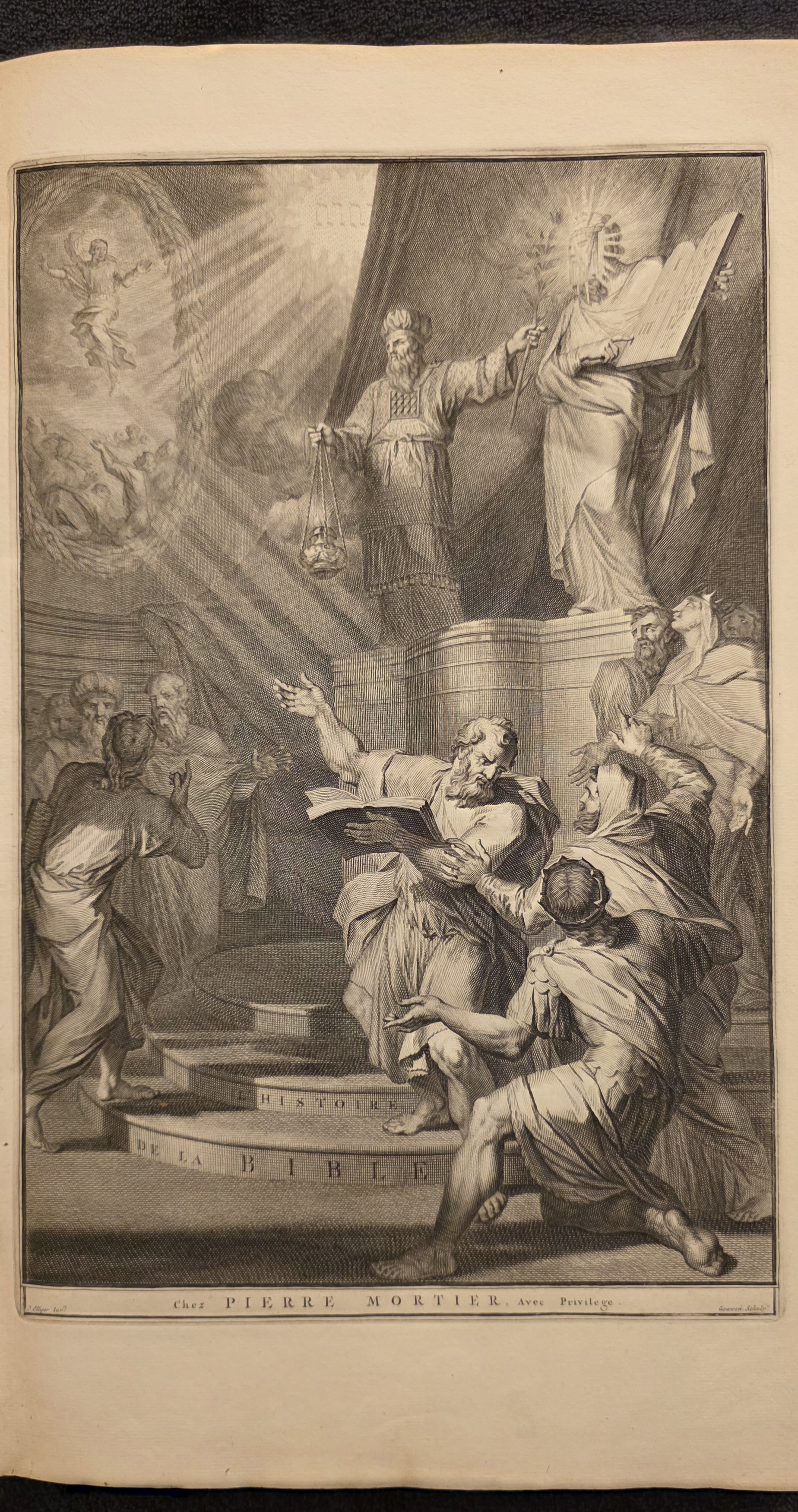
1700 – "The Great Mortier Bible" / "Large Mortier" – Historie des Ouden en Nieuwen Testaments
A nearly pristine first edition of the stunning "Large Bible of Mortier" with original full calf with gold lettering on spines, printed on 17.5 x 11" paper. Gilt borders on each board with large central gold ornament representing the Arc of Convenant. An absolute masterpiece of engraving, it contains 214 full-page engraved plates, each with two distinct images, yielding over 428 individual Biblical scenes, along with 29 oval vignettes, 2 title pages and 5 maps, all of which were custom commissioned for this monumental work. This grand copy has the large margins (444mm sheet size) and is a "before nails" ("avant les clous") copy.
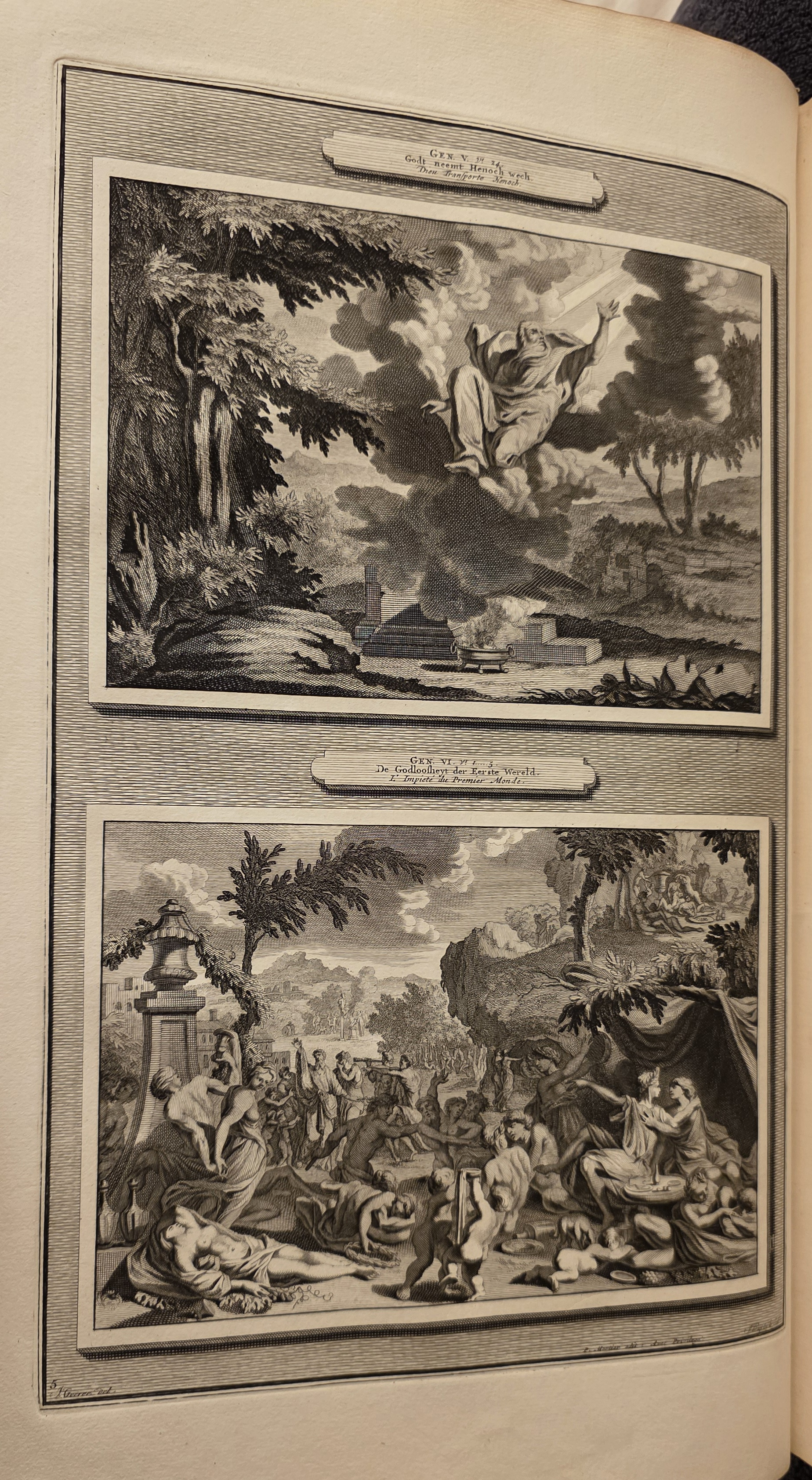
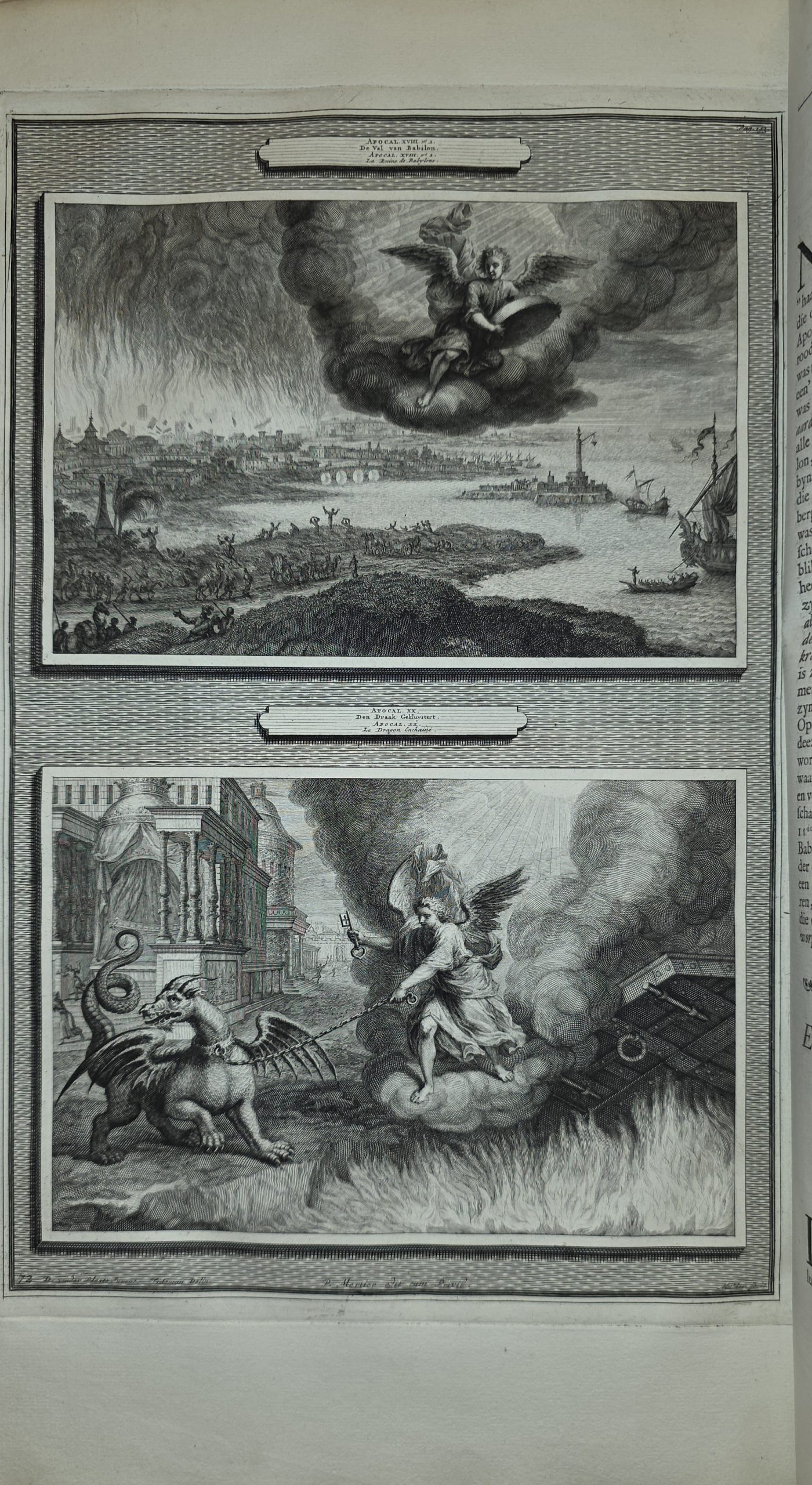
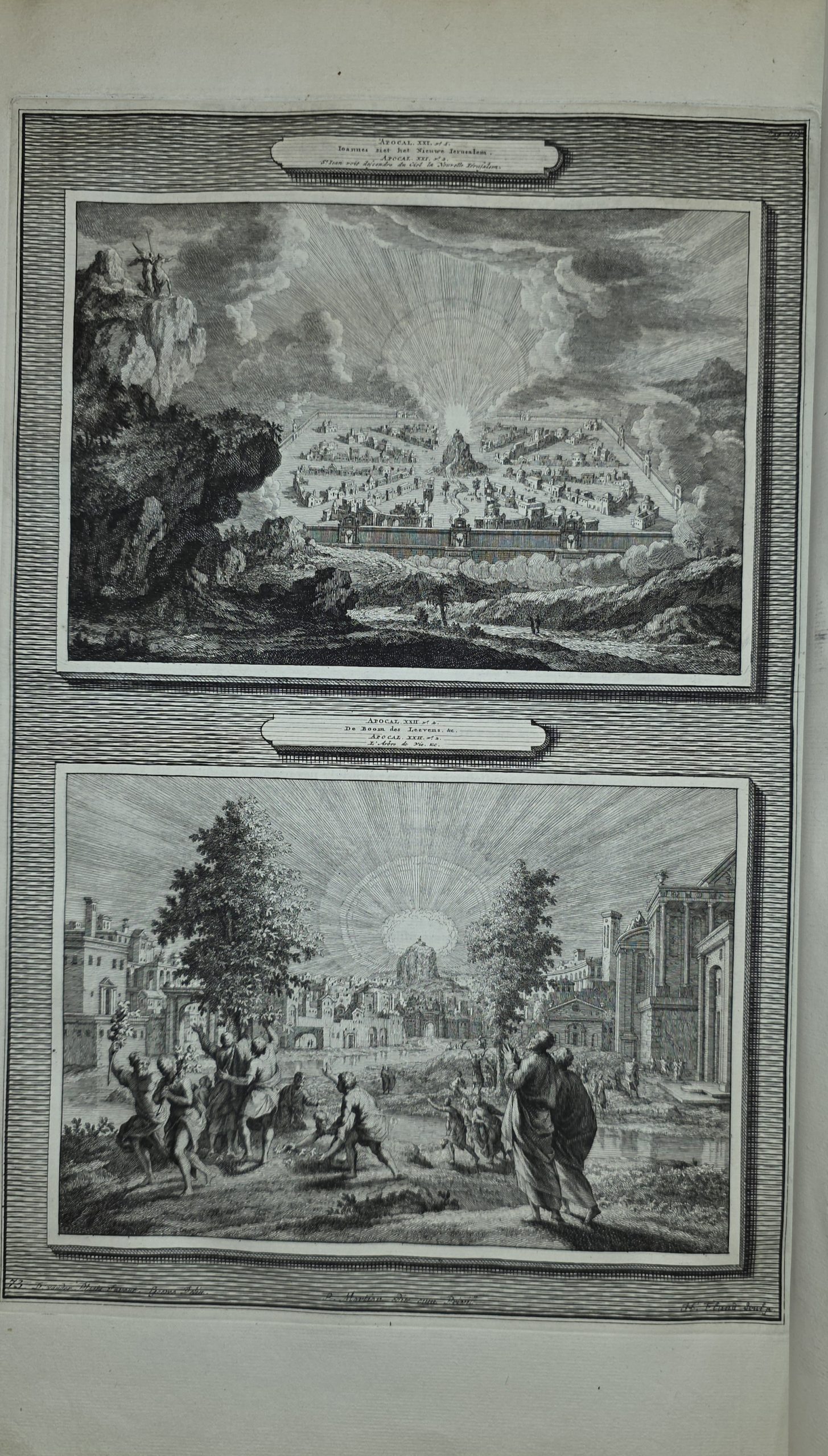
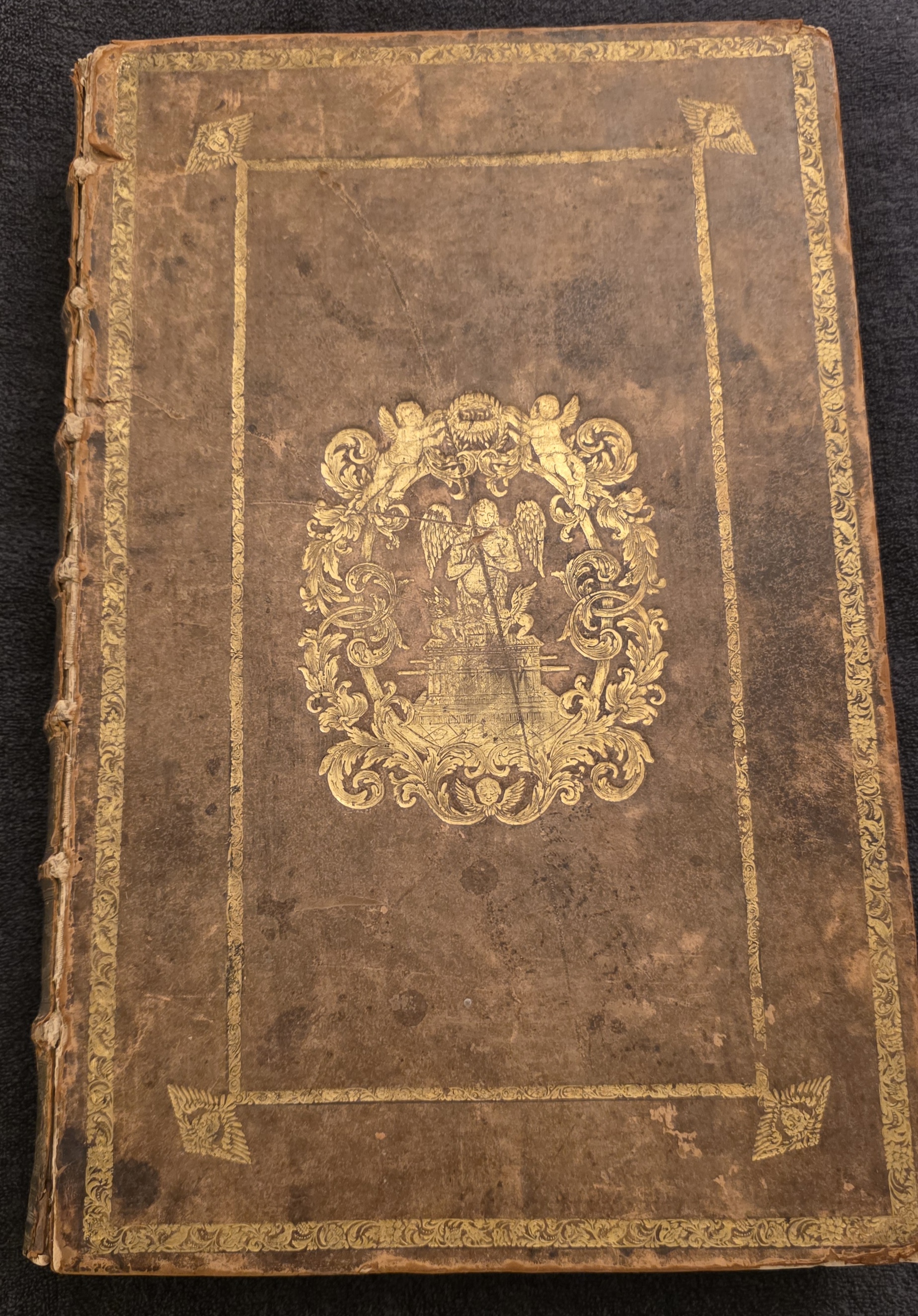
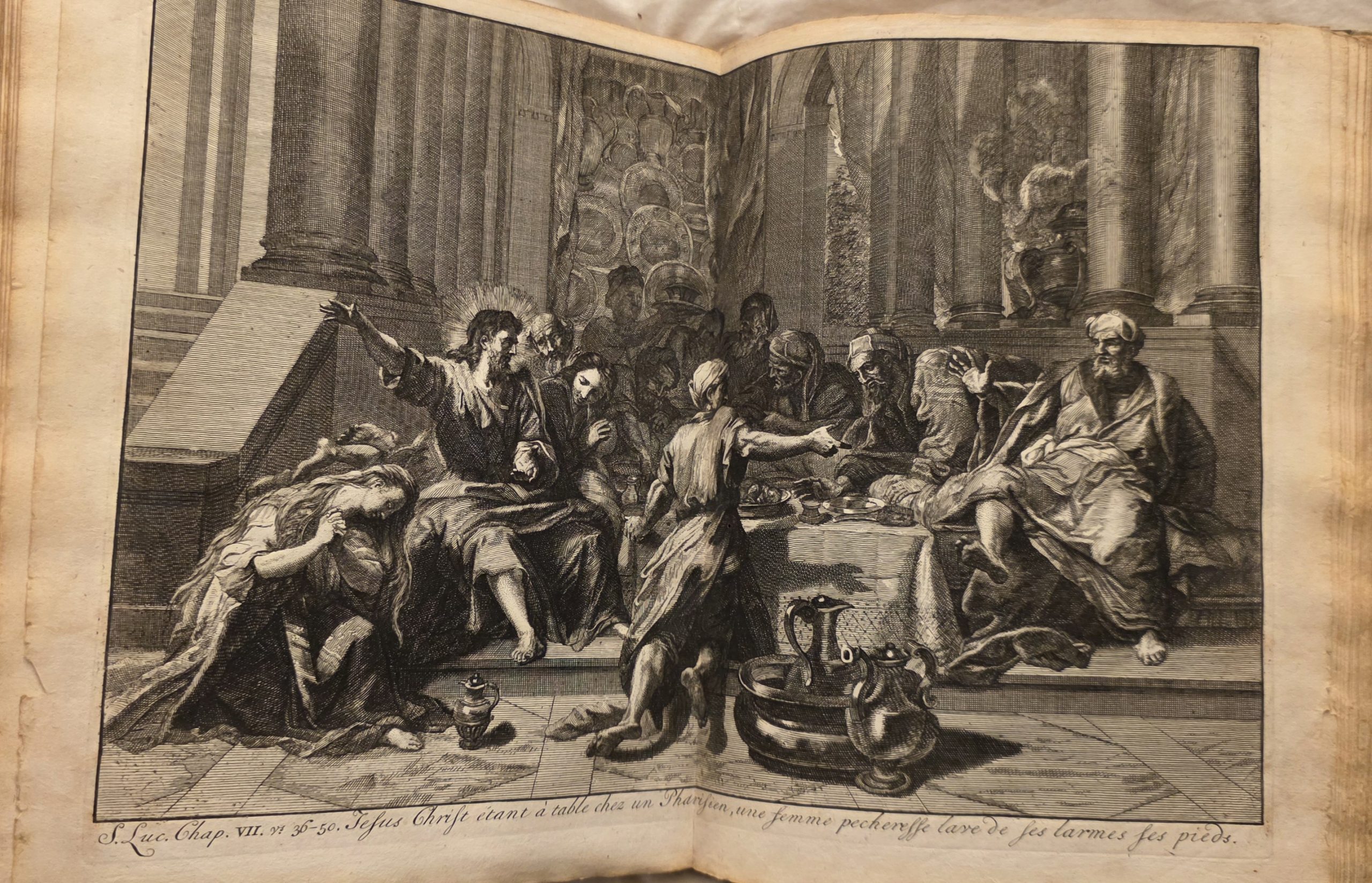
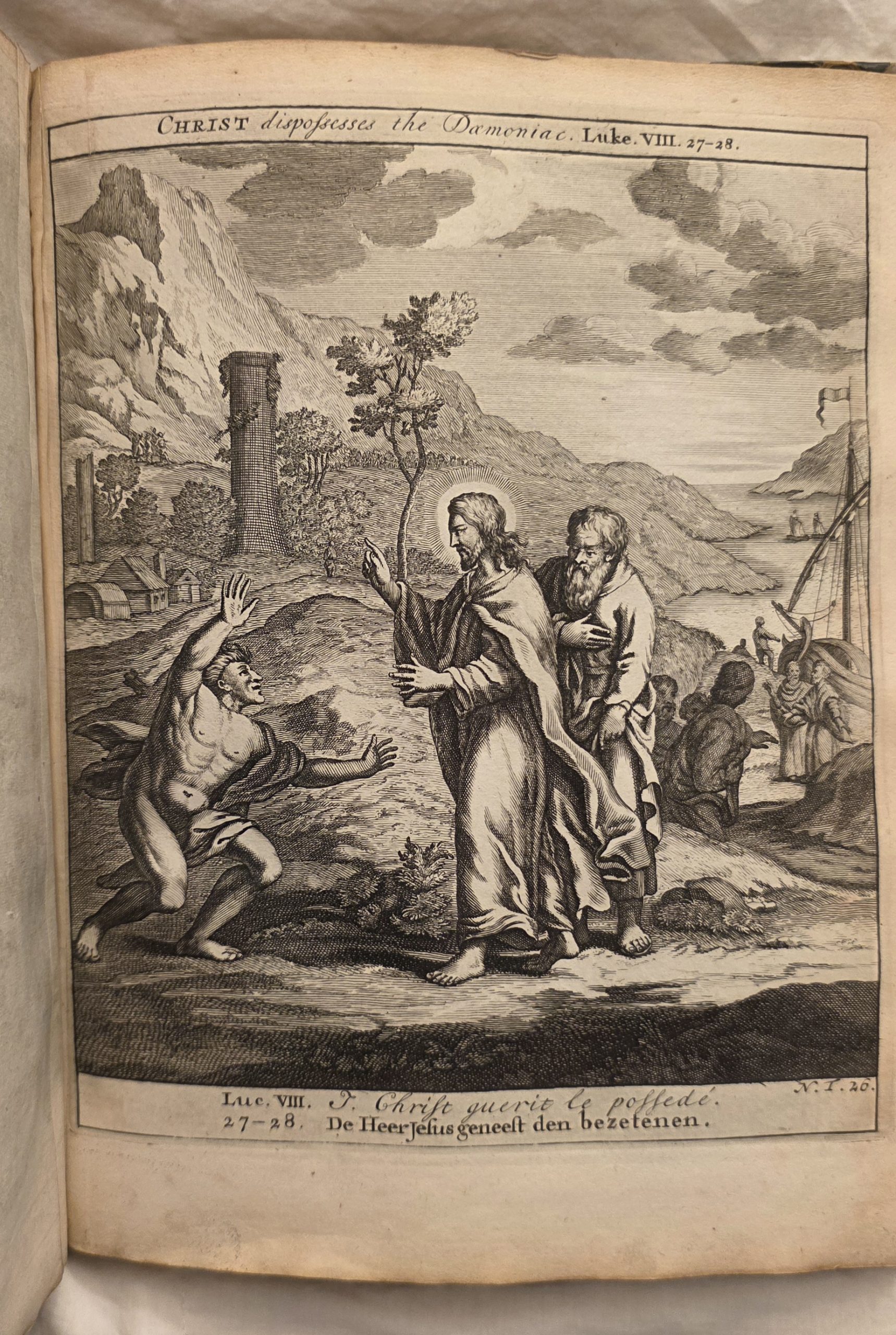
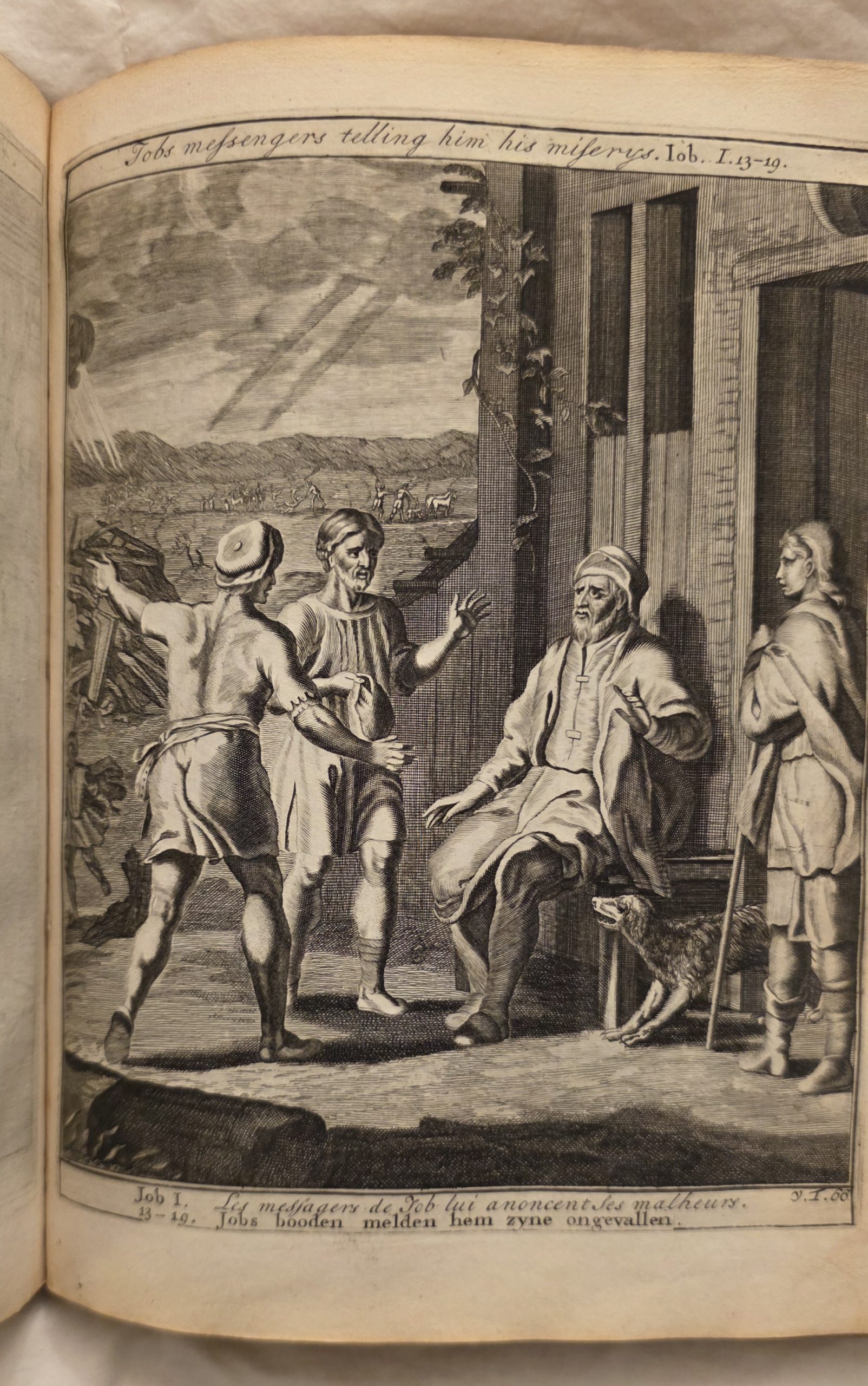
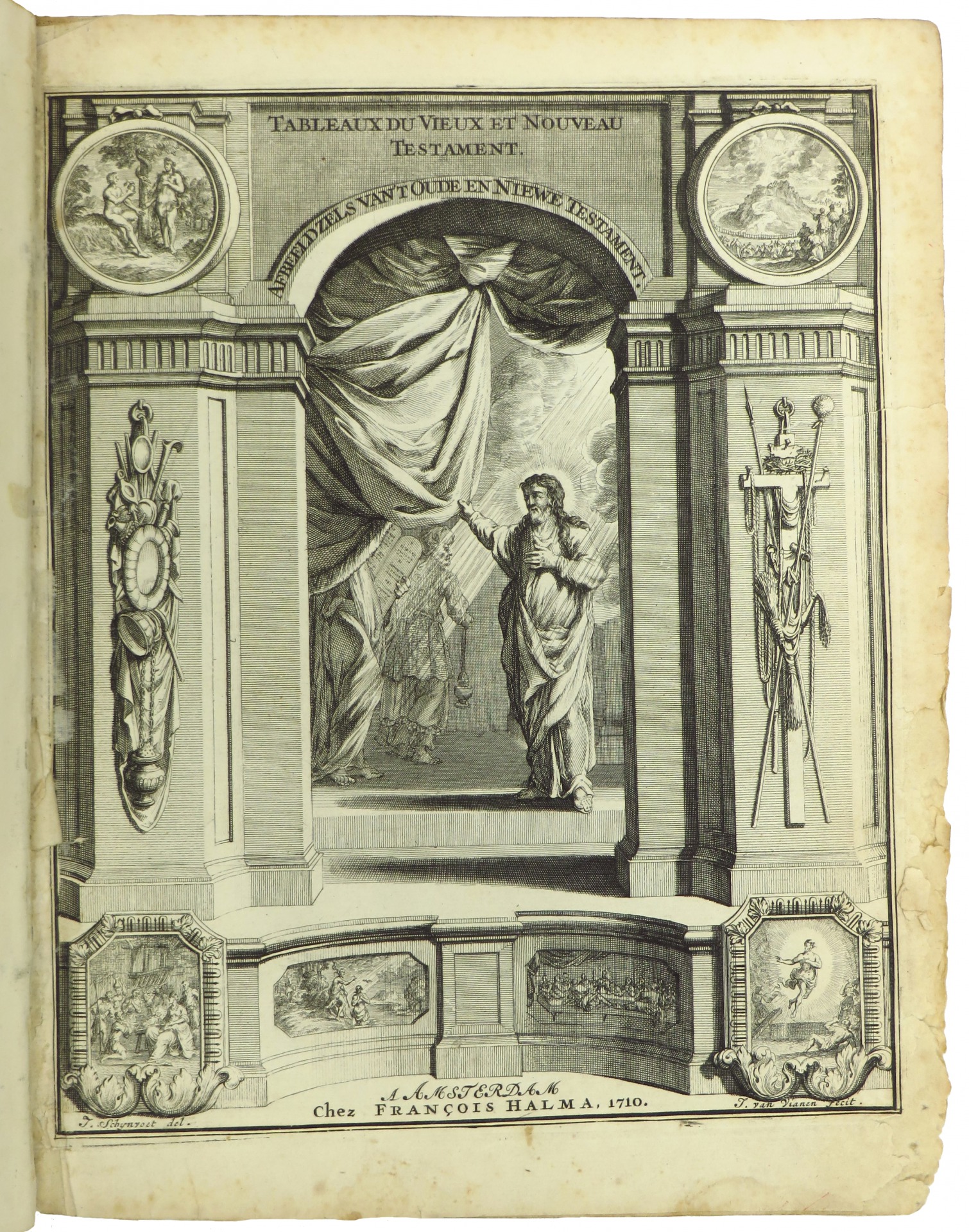
1710 – Halma's Reengraving Of The Scheits'sche Bibel – Afbeeldzels van 't Oude en Niewe Testament – Matthias Scheits (1754 Scheitsprentbijbel van Reinier en Josua Ottens – Tafereelen des Ouden en Nieuwen Testaments)
This stunning and intriguing book contains the title plate of Halma's reengraving of the "Scheits Bible" imagery with 164 plates (150 single-page prints with 82 Old Testament and 68 New Testament) and 14 double-page engravings (13 scenes and 1 map), but features the English captions at top, which would appear to indicate the 1754 Scheitsprentbijbel van Reinier en Josua Ottens. There is no other title plate so it is unclear what specific edition this is. According to Poortman (Bijbel en Prent vol 2, 1986, p. 142), "The double-page prints are not Scheits prints. Several of these prints are signed; for example, the print of the history of Esther was drawn by Arnold Houbraken and engraved by Jacob Folkema. … Above the Scheits prints we find the English text, and beneath the prints the French and Dutch text. … The double-page prints have a caption only in French. We do not know who produced the series of 150 Scheits prints and 12 double-page prints, or when they were produced. Nor is it known whether this series was originally engraved around 1720 for insertion into Bibles. … Only in 1760 did a picture Bible with these Scheits prints appear, without the double-page prints, from Reinier and Josua Ottens at Amsterdam. It is impossible that the prints in the three above-mentioned States Bibles were borrowed from this picture Bible. Most probably the Ottens firm acquired the copperplates of the Scheits prints, added a title engraving, a title page and text, and published the print series as a picture Bible." Poortman notes that these "Scheits prints" are not the same plates as appeared in the original 1672 Stern Bible, but rather the original plates (24 x 19cm) were reduced to 20x17cm, which is the size we see in this picture Bible.
Thus, given that Poortman finds that circa-1760 was the first issuance of a picture Bible with these prints and that that copy contains the Ottens titleplate and text on each page and that this one contains the 1710 Halma titleplate and no text, we see that this copy appears to be a previously unknown variant and does not appear in WorldCat.
Given that Halma commissioned his own copperplate engravings of the 1672 Scheits'sche Bibel / Sternsche Bibel, let's ask Deep Research to compare the two sets of engravings:
compare the engravings in the 1672 Scheits'sche Bibel and the Tableaux du Vieux et Nouveau Testament), published in Amsterdam by François Halma in 1710
In fact, it turns out that this is a far more fascinating copy:
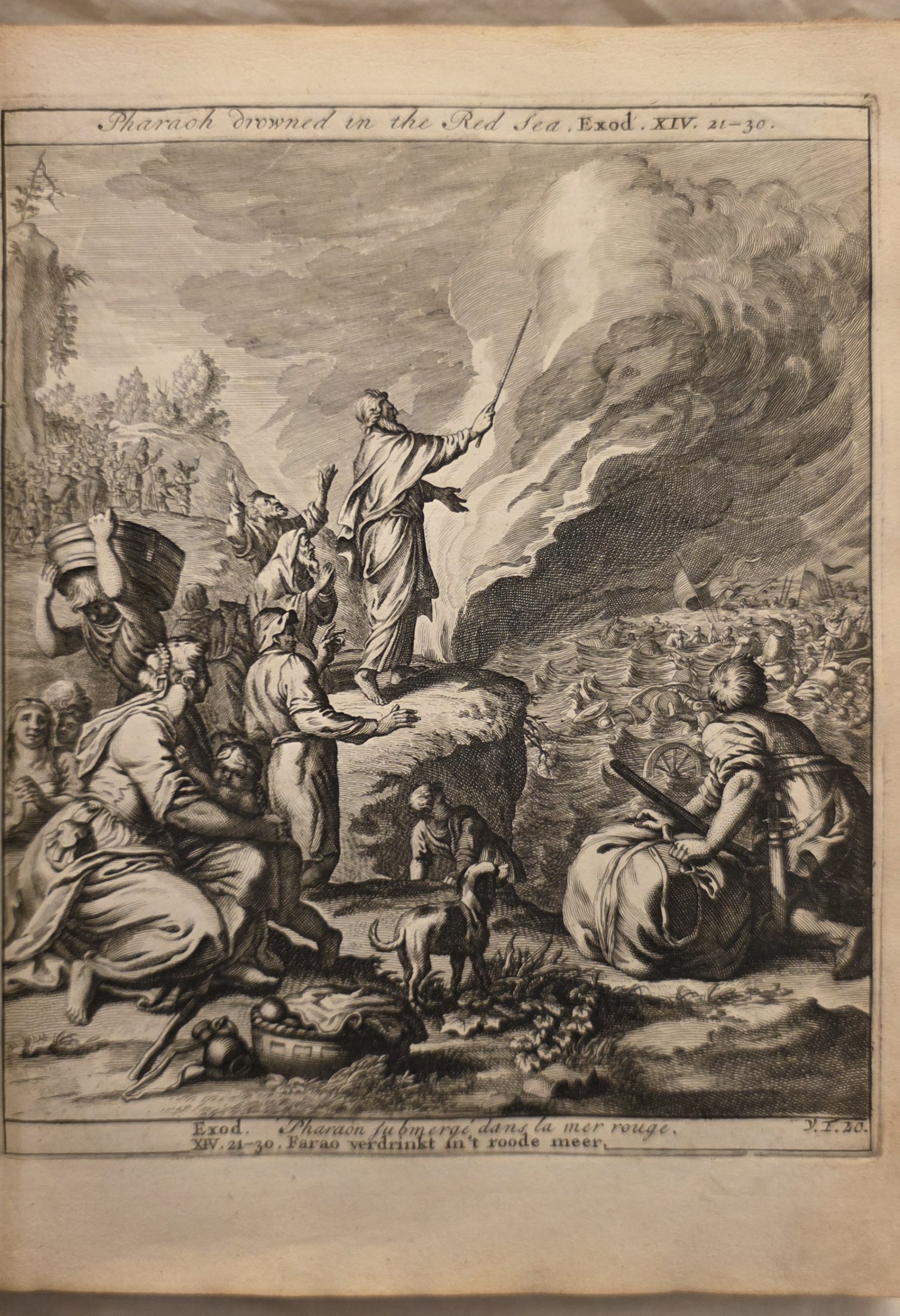
1729 – "Jan Luyken's Double Engravings" – Afbeeldingen der merkwaardigste geschiedenissen van het Oude en Nieuwe Testament (Images of the Most Remarkable Stories of the Old and New Testament). Published in Amsterdam by Johannes Covens and Cornelis Mortier
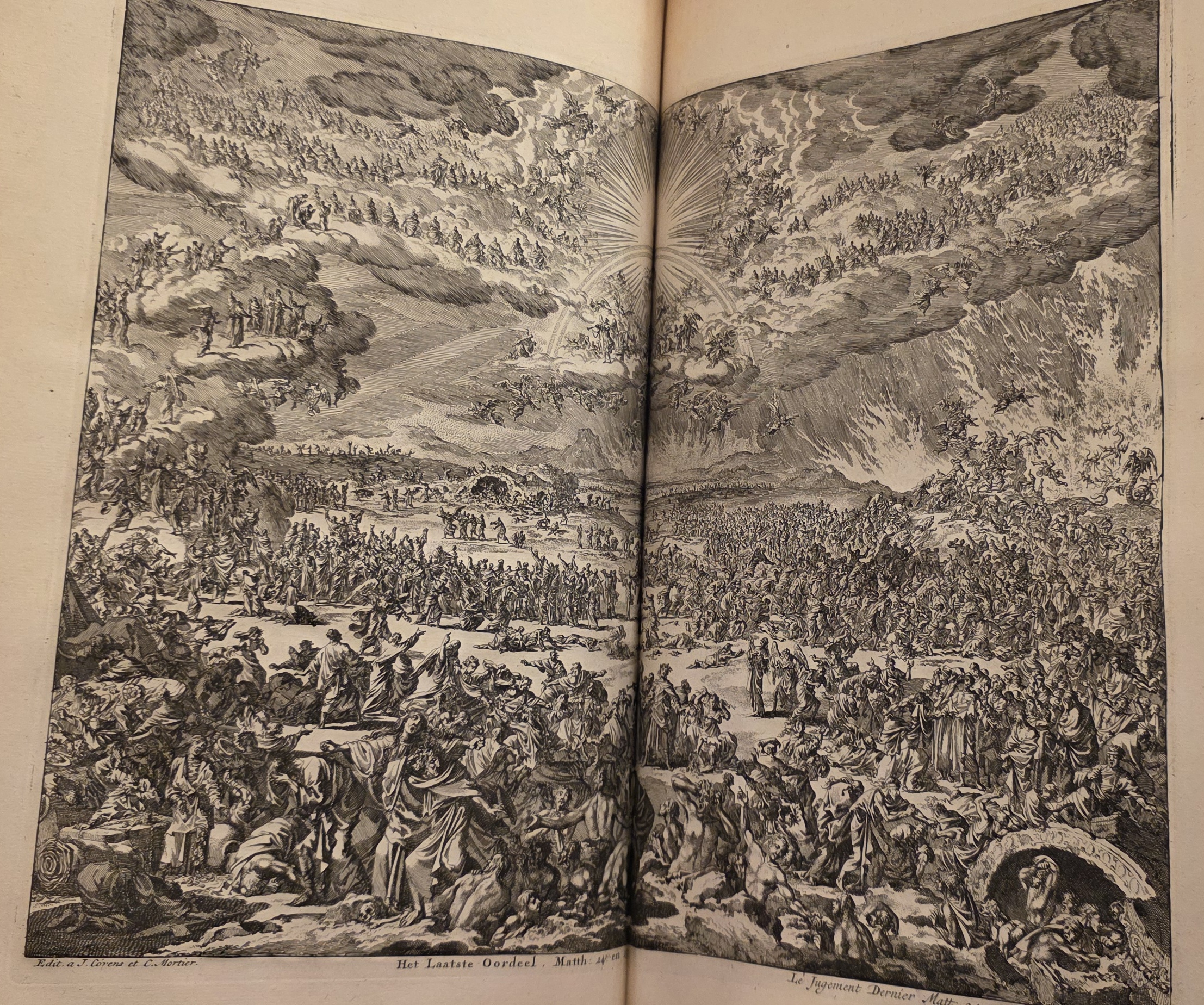
Jan Luyken's famous series of 61 monumental double-page engravings with equisitely detailed and complex crowd scenes and with accompanying descriptions by Pieter Langendijk, 1683-1756. Printed on large paper, the work is illustrated with 5 fold-out maps, 62 double-page engravings, 61 of which are by Jan Luyken, and 30 engraved vignettes by Jan Luyken. The large engravings are numbered and all have a caption in Dutch and most also in French. The first edition of this work appeared in 1708, this second edition has been augmented with the accompanying text for each engraving and 5 maps and 30 vignettes from Mortier’s ‘Grooten Bybel’ of 1700). Eeghen, P. van & Kellen, J.P. van der (1905). The Work of Jan and Casper Luyken Volume II, pp. 658-669, no. 429 / Poortman, W.C. (1983). Bible and Print. Part II: Book Room of the Dutch Bibles, p. 13
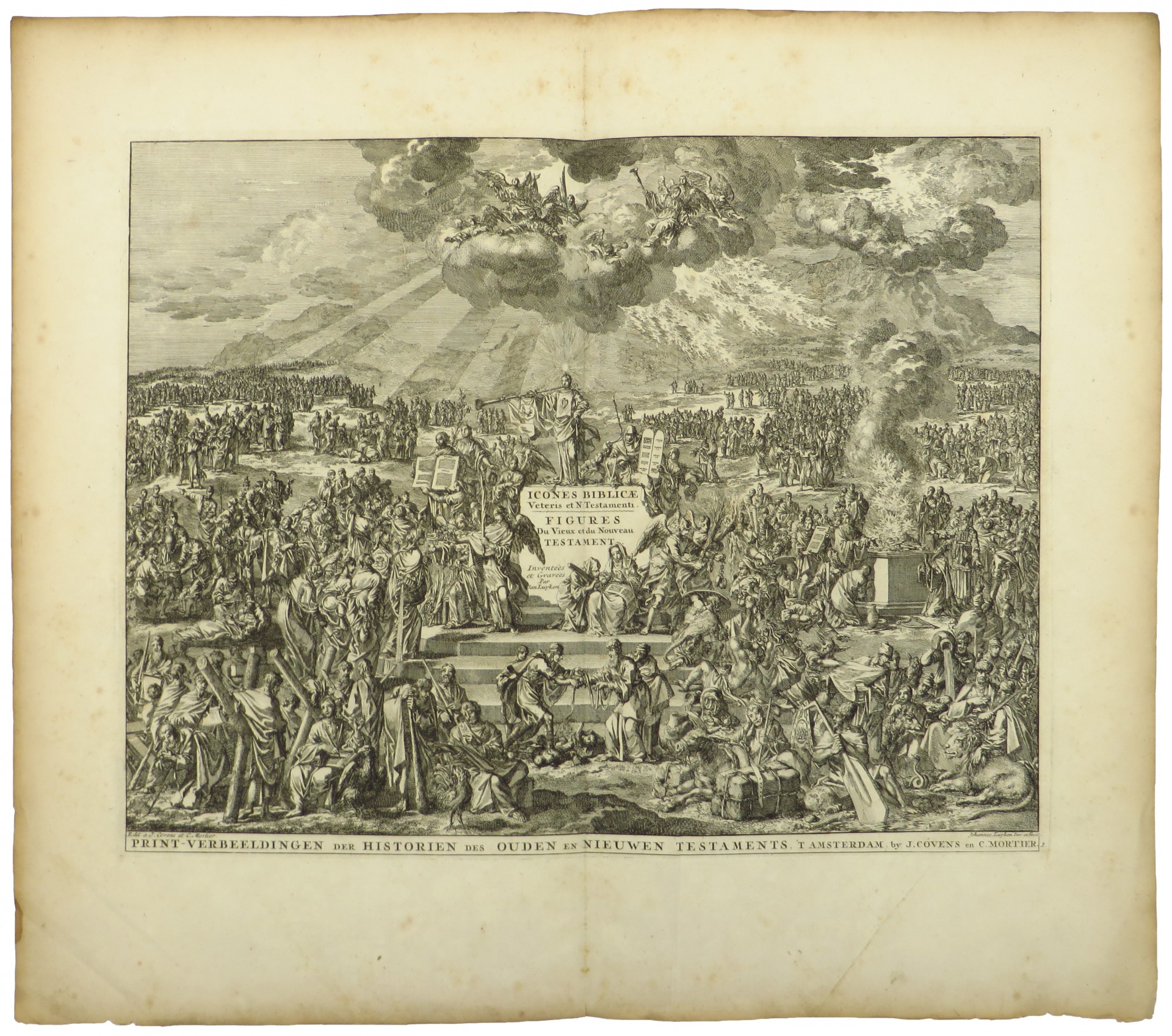
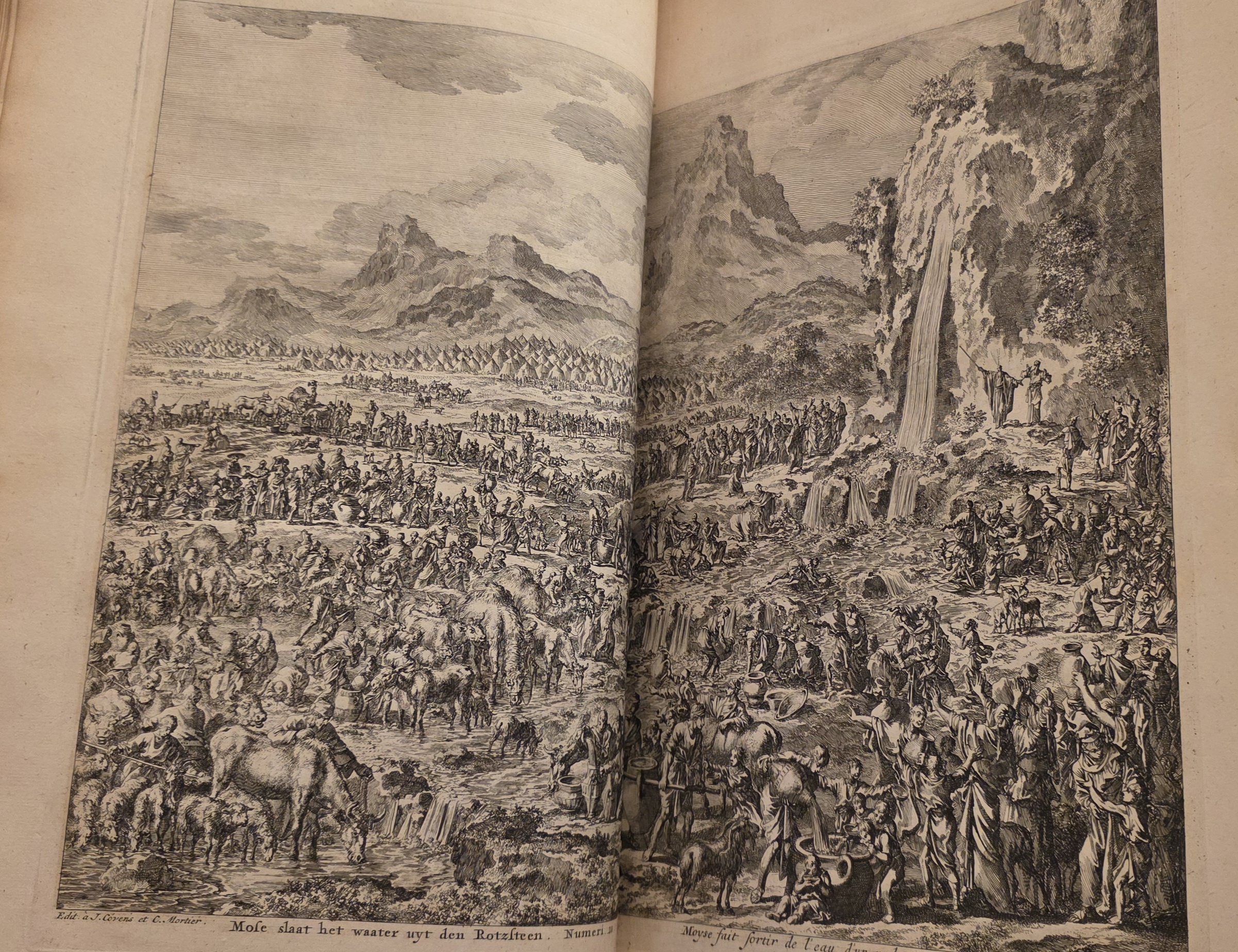
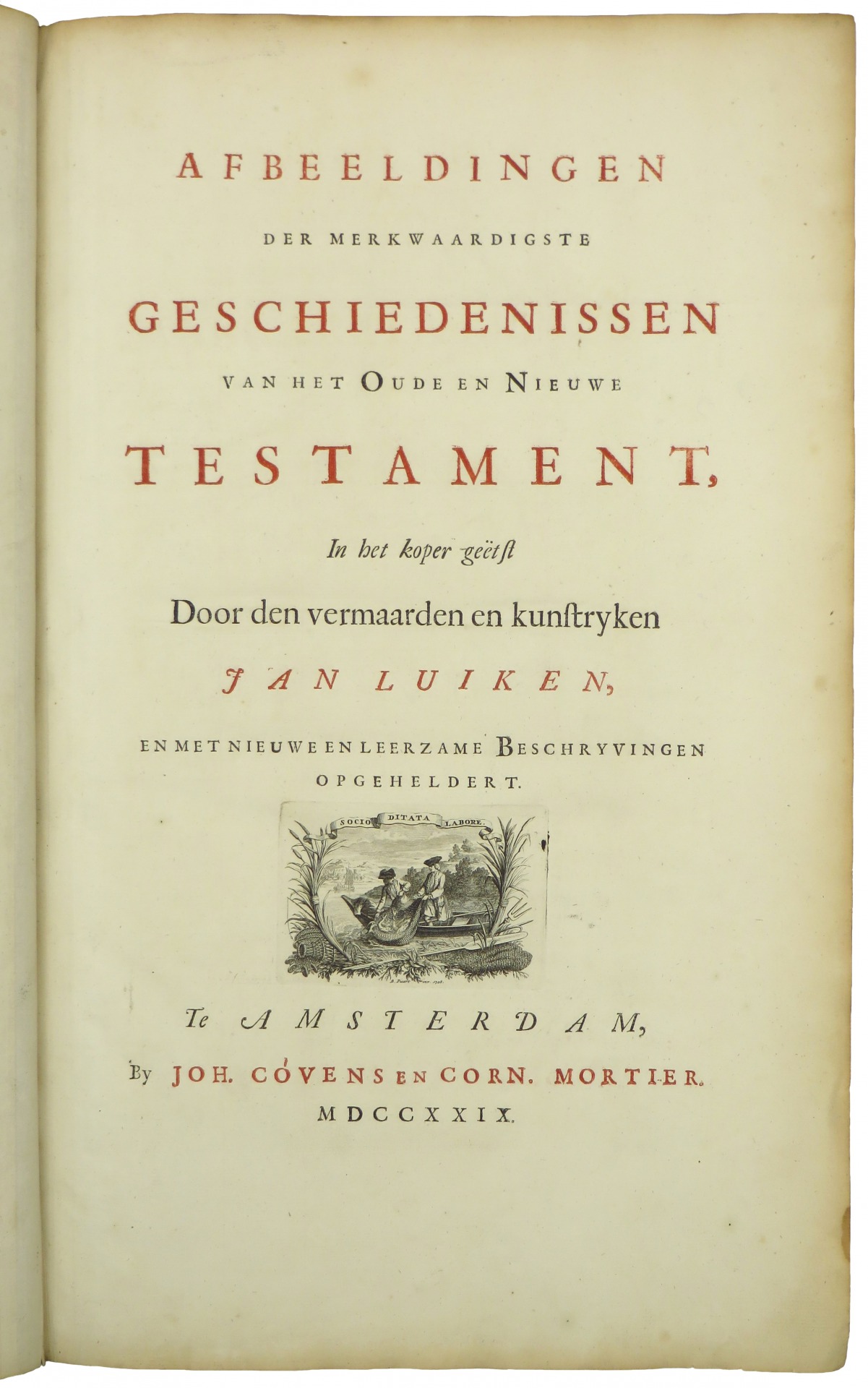
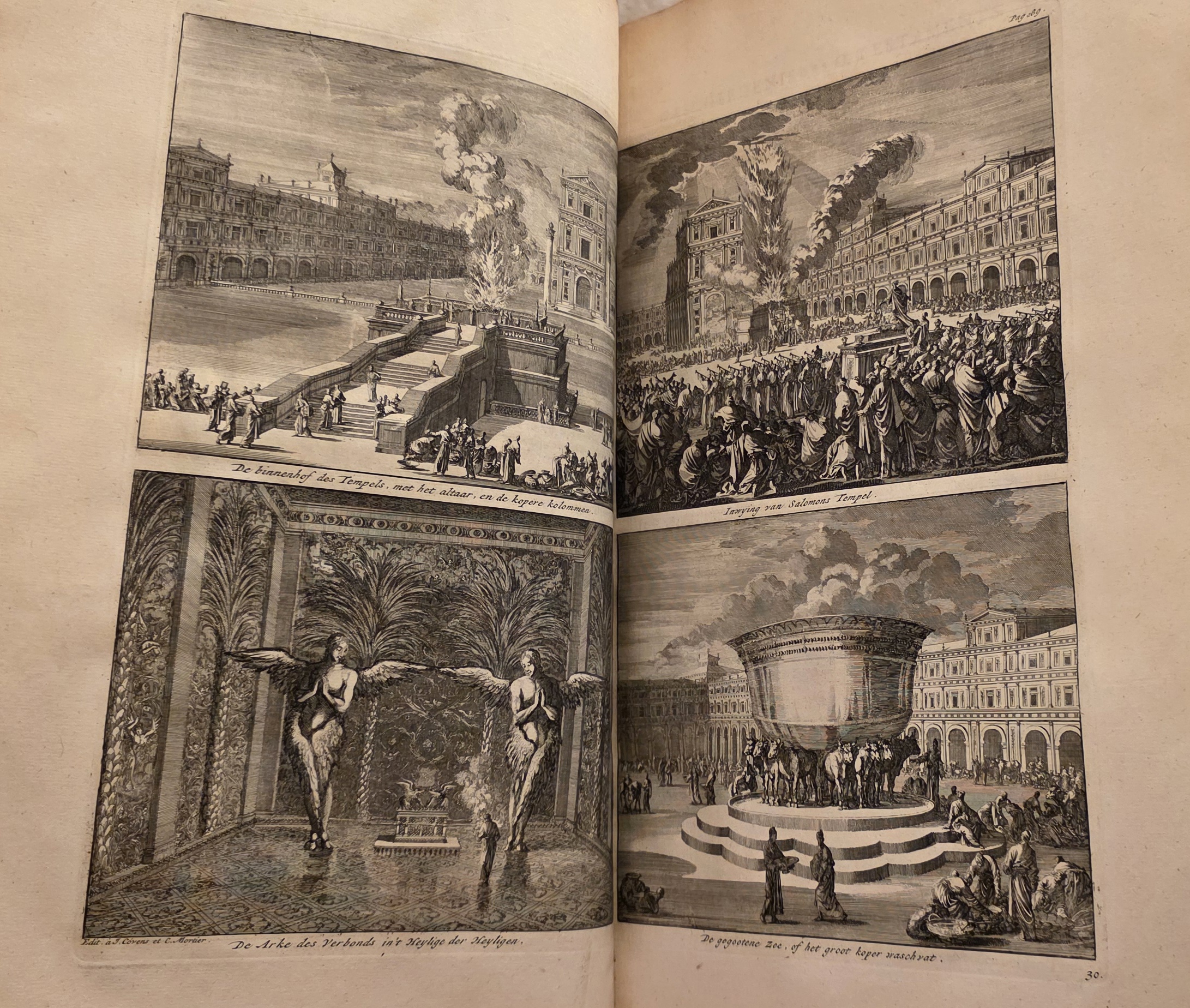
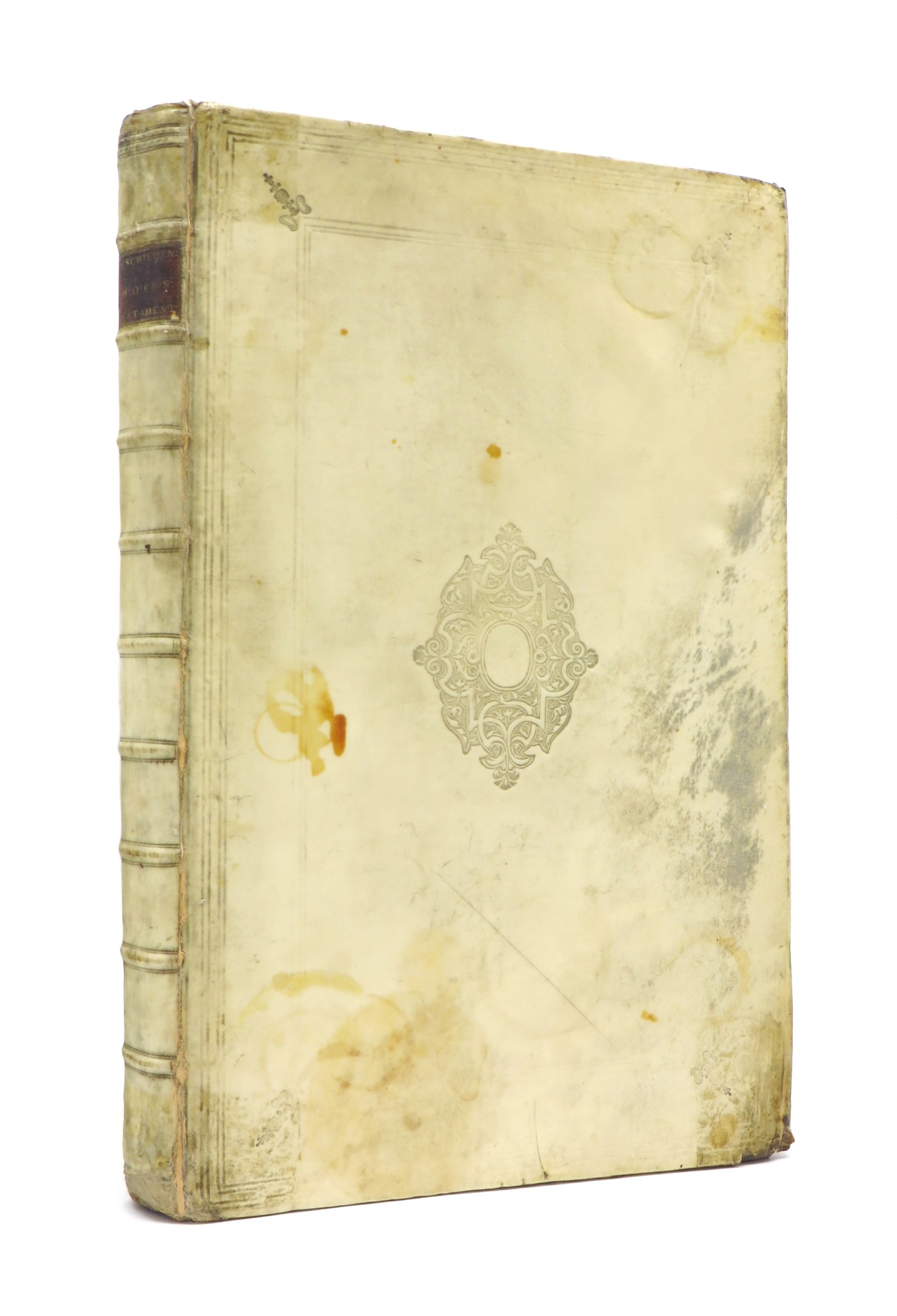
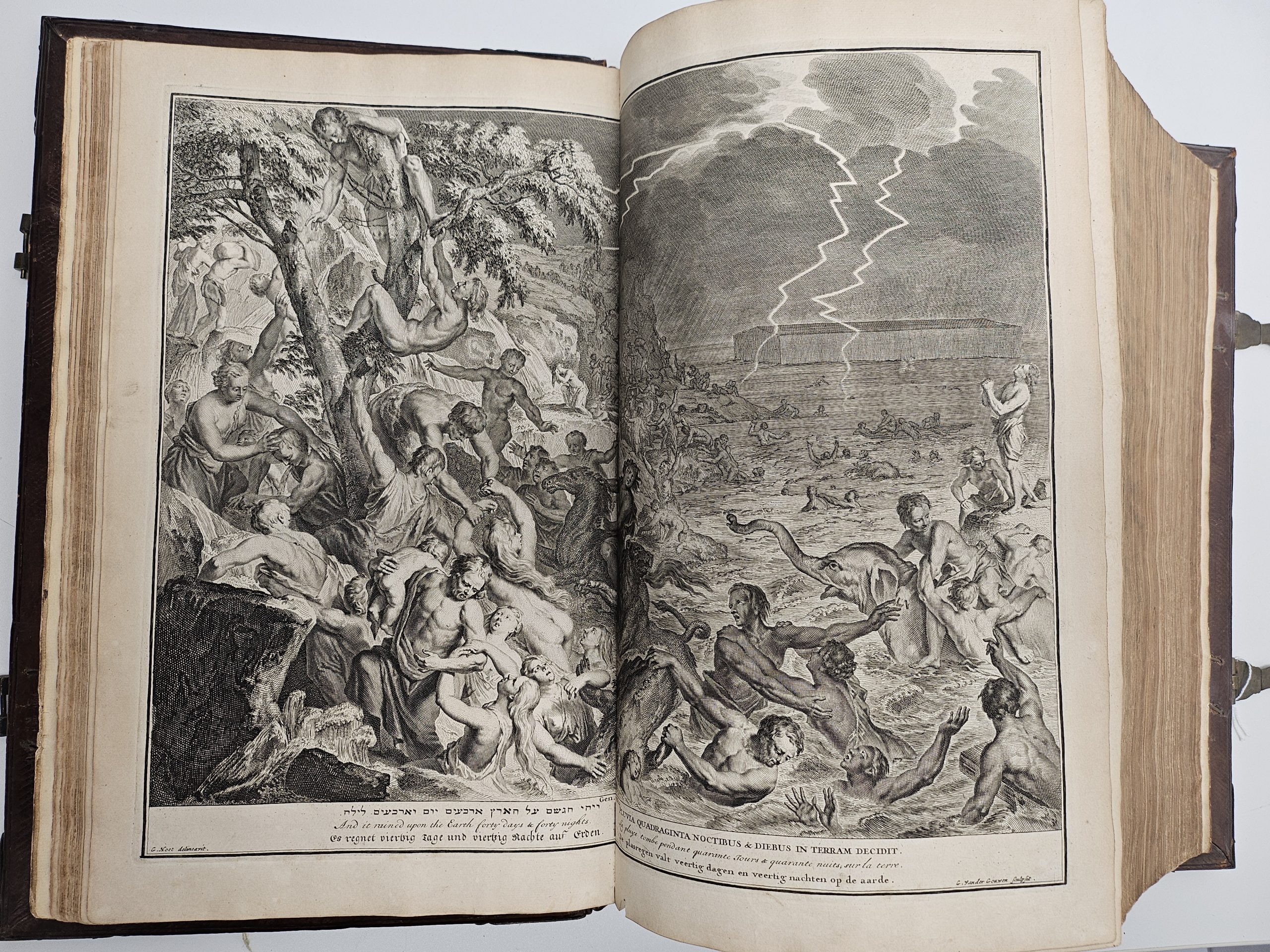
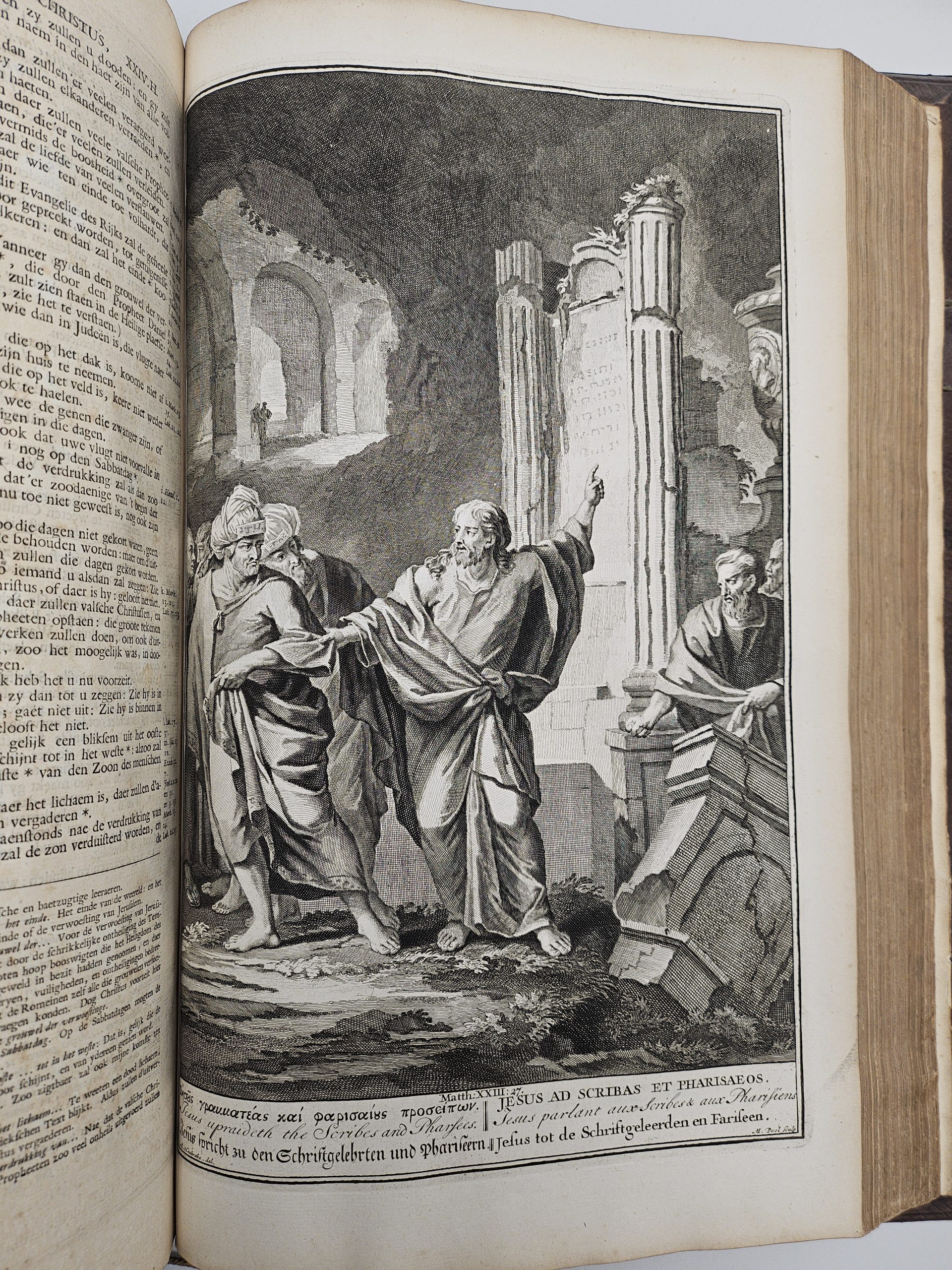
1732 – Pieter de Hondt’s illustrated Bible + First Bible of the Dutch Old Catholics
First edition of the Bible of the Dutch Old Catholics, interleaved with all 214 engravings from Pieter de Hondt’s 1728 illustrated Bible (this was the 1728 reprint of Picart's 1720 Bible – Marck van Leur engaged Pieter de Hondt after Picart's sales of the Bible were poor – Poortman p. 140). These comprise two engraved title pages and 212 engravings, 29 of which are double-page plates, engraved by Gerard Hoet and Arnold Houbraken (133 combined per Poortman), and Bernard Picart (79 per Poortman). All the engravings have captions in six languages: Hebrew, English, German, Latin, French, and Dutch. Poortman estimates that at the time of his writing several hundred copies were known of this plate series from the original printing of 2,500 copies.
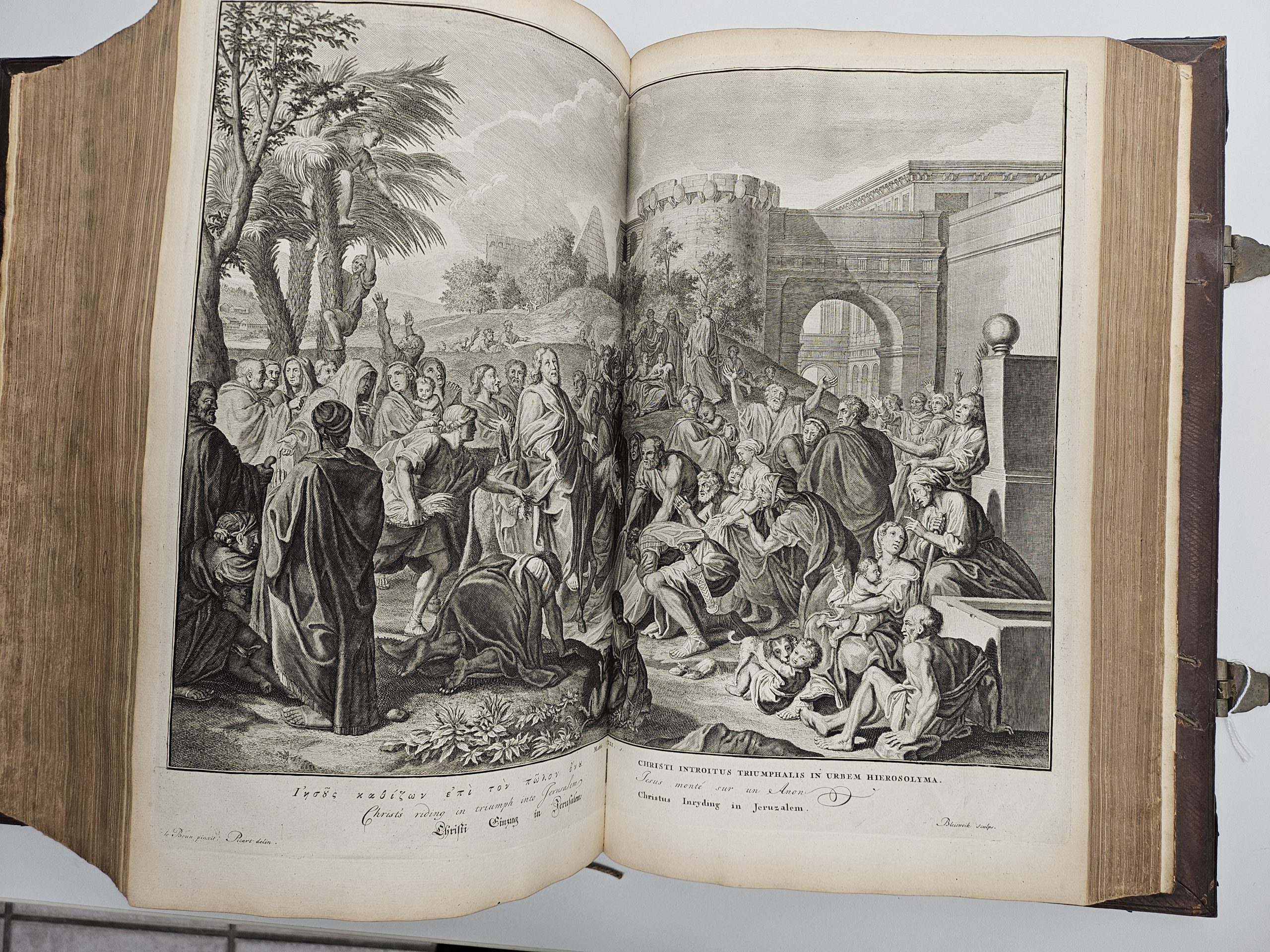
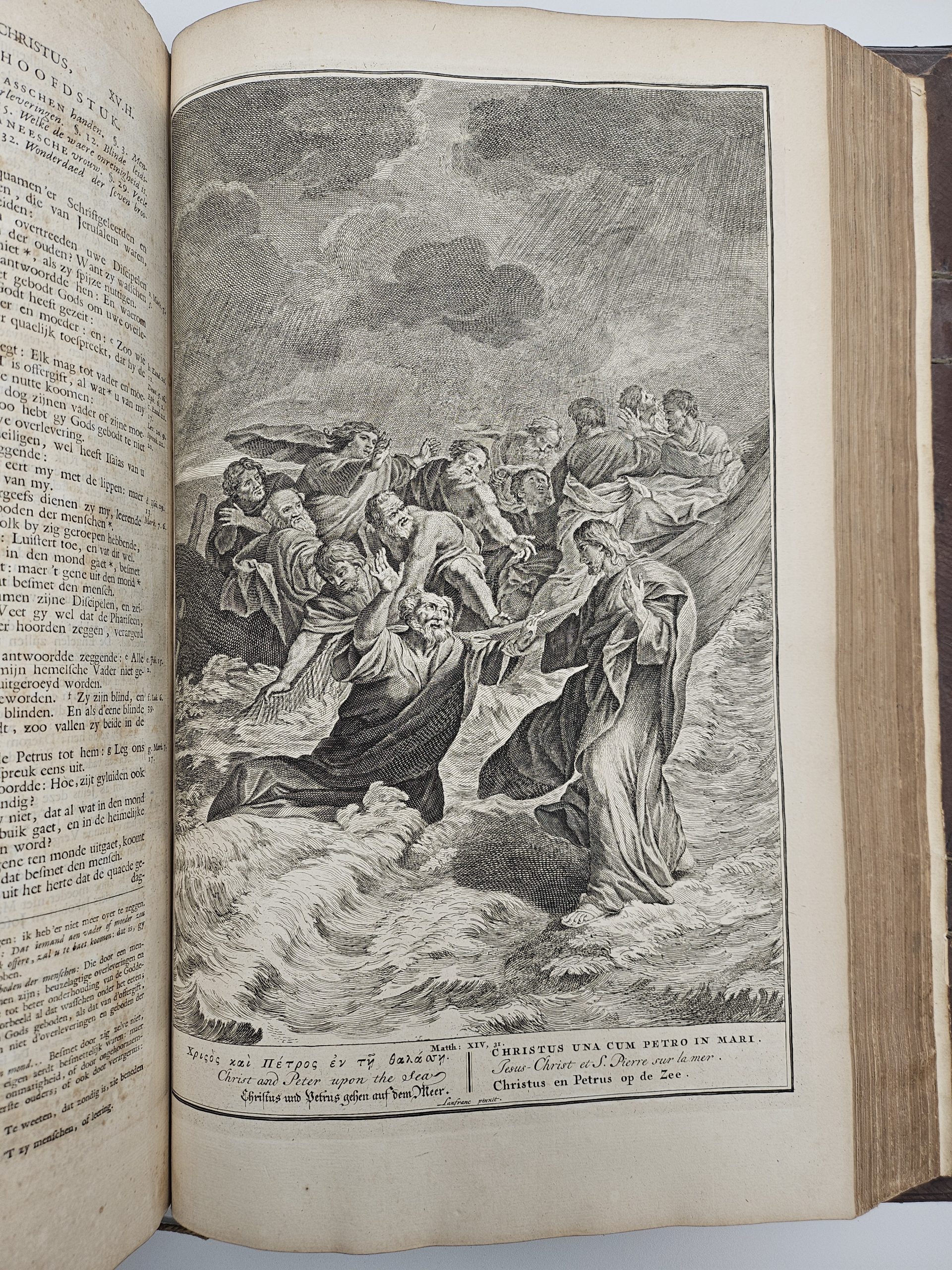
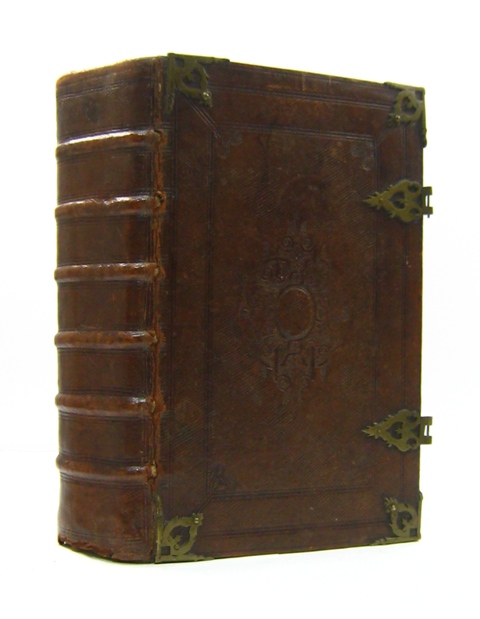
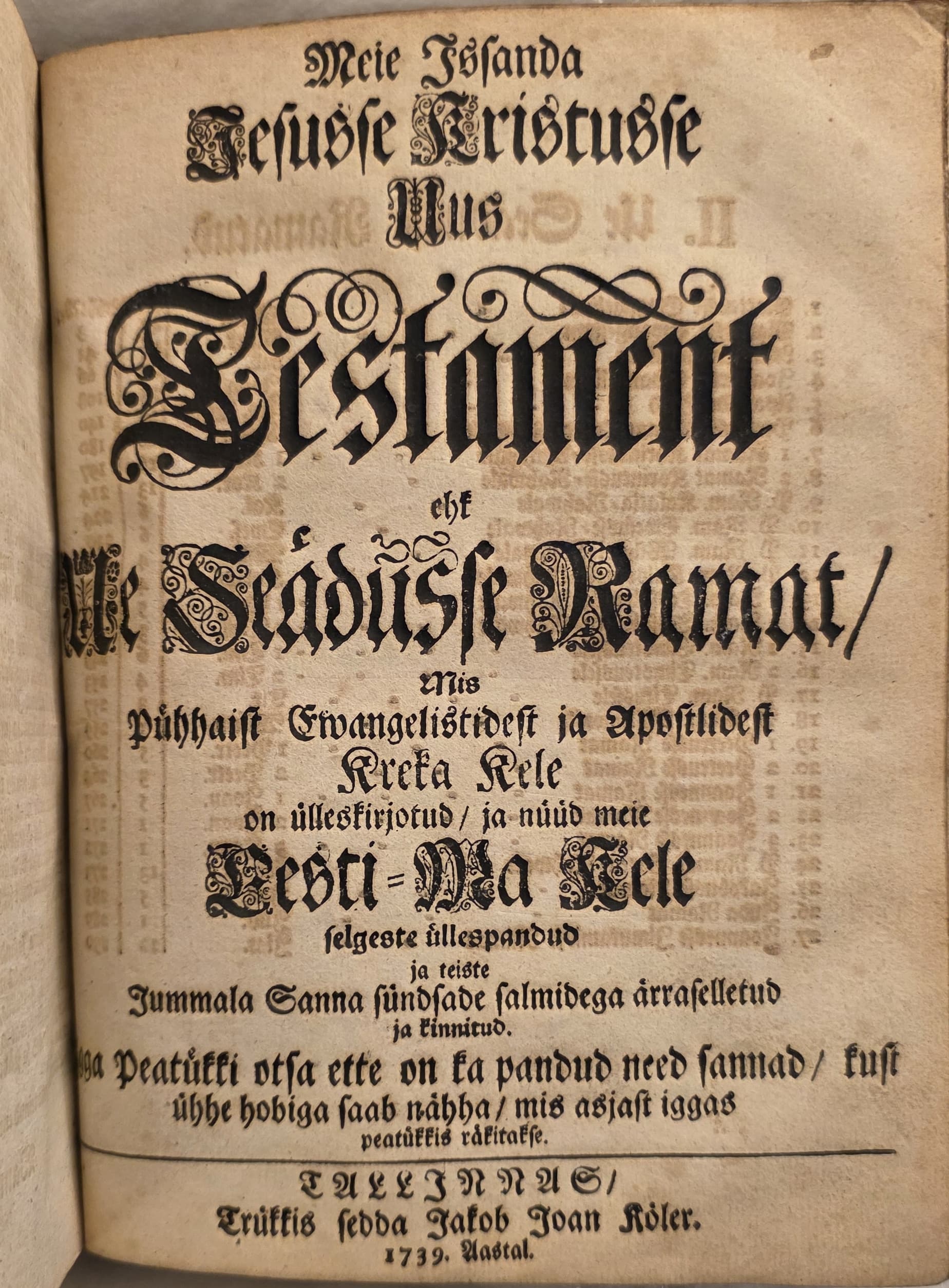
1739 – First Estonian Bible
Not a picture Bible and contains no illustrations, but included to represent the progression of Bible printing as the first Bible translation in Estonian and one of the oldest surviving books written in the Estonian language.
1740 – Catholische Mayntzische Bibel
Contains most of the 234 Merian copperplates.
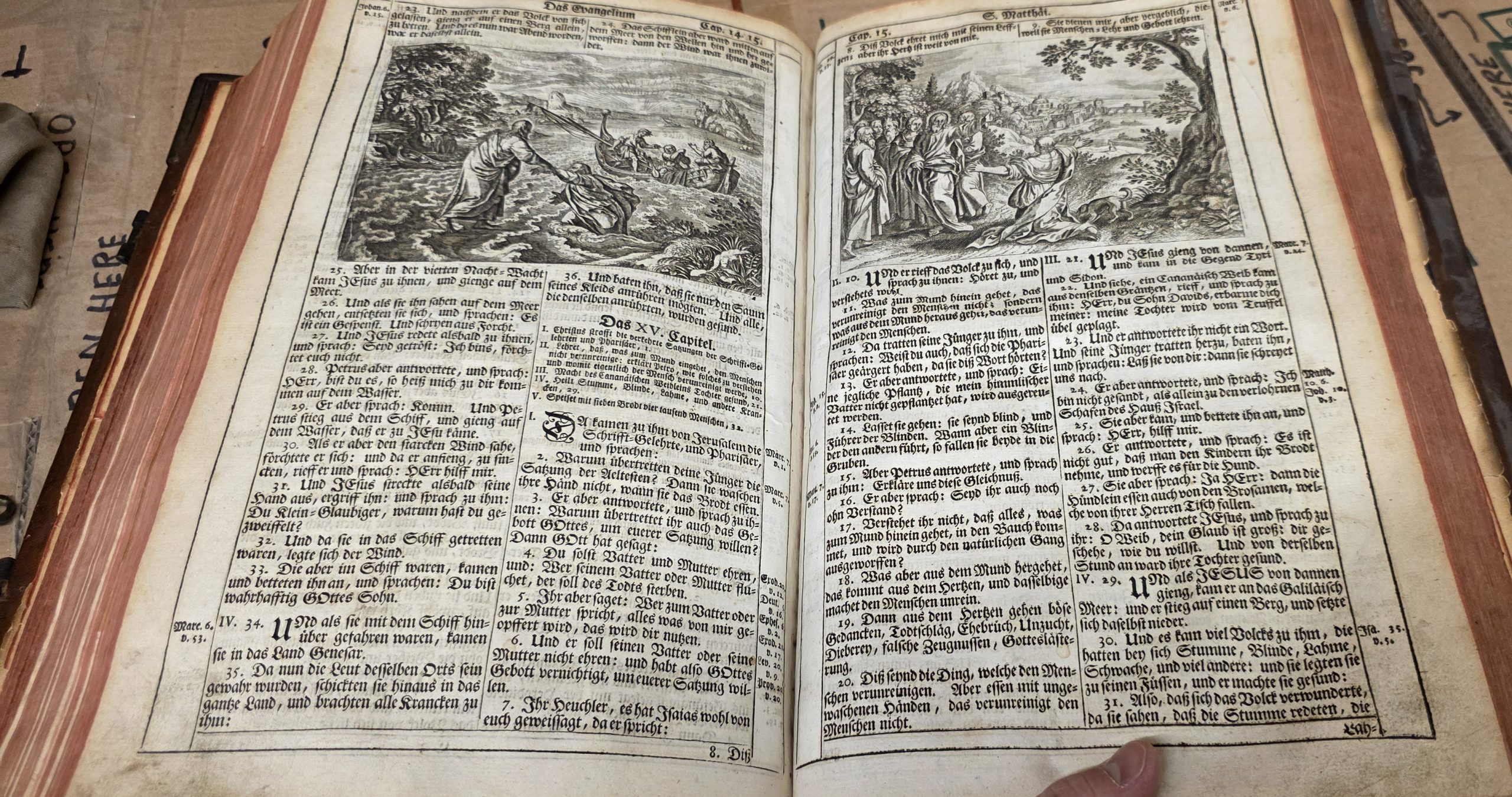
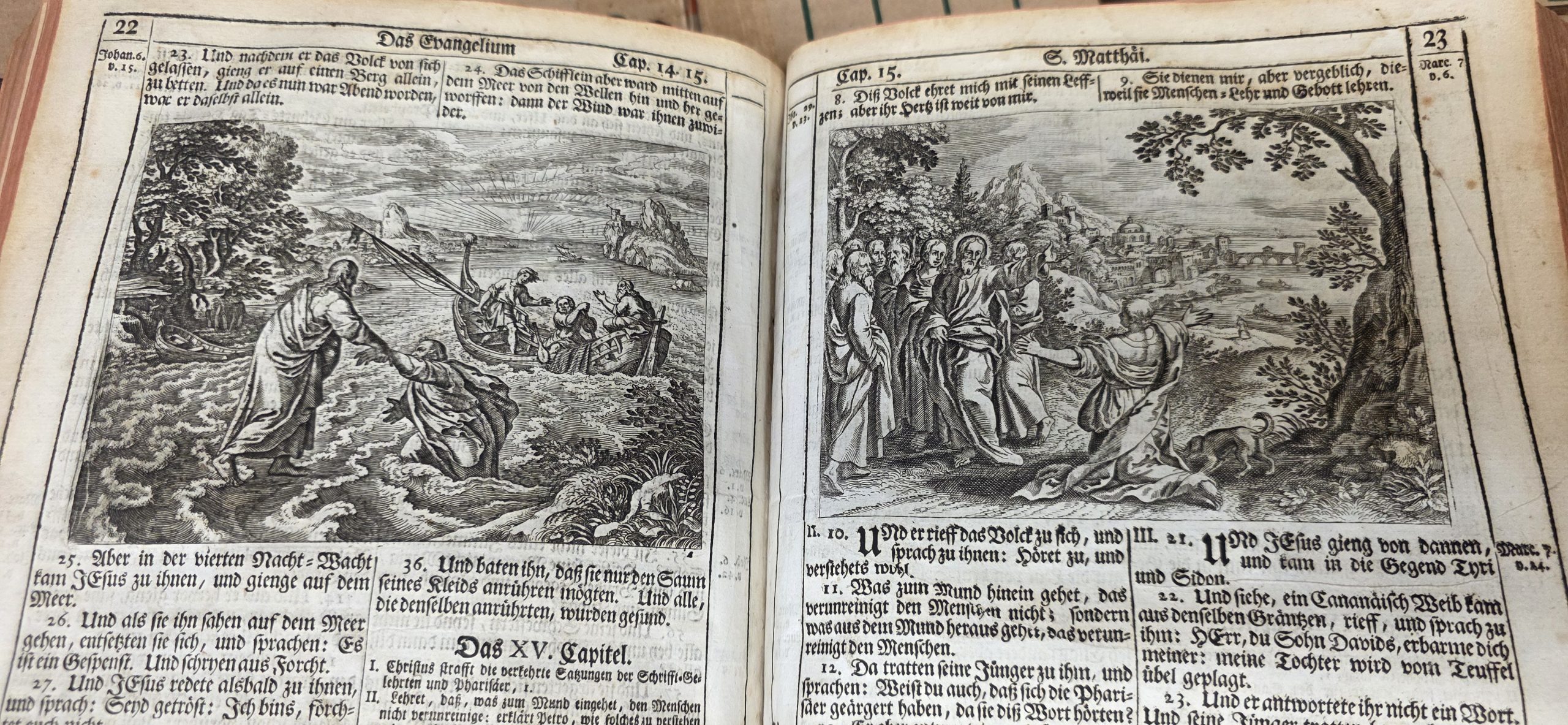
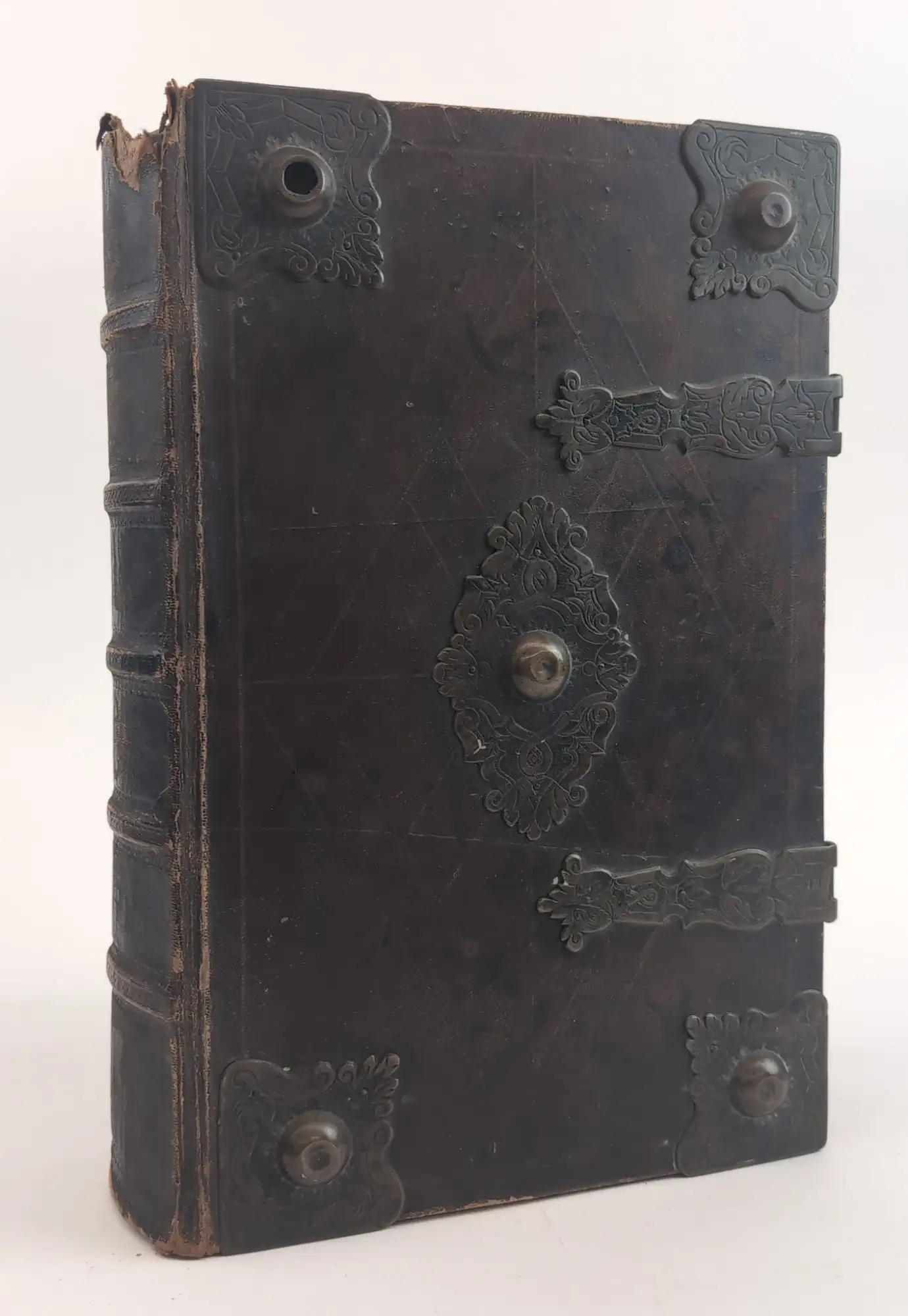
1773 – Second Estonian Bible
Not a picture Bible, but included to trace the progression of Bible printing and offer a counterpoint showcasing the austere text-only Bibles that were vastly more common than the richly illustrated ones focused on here.
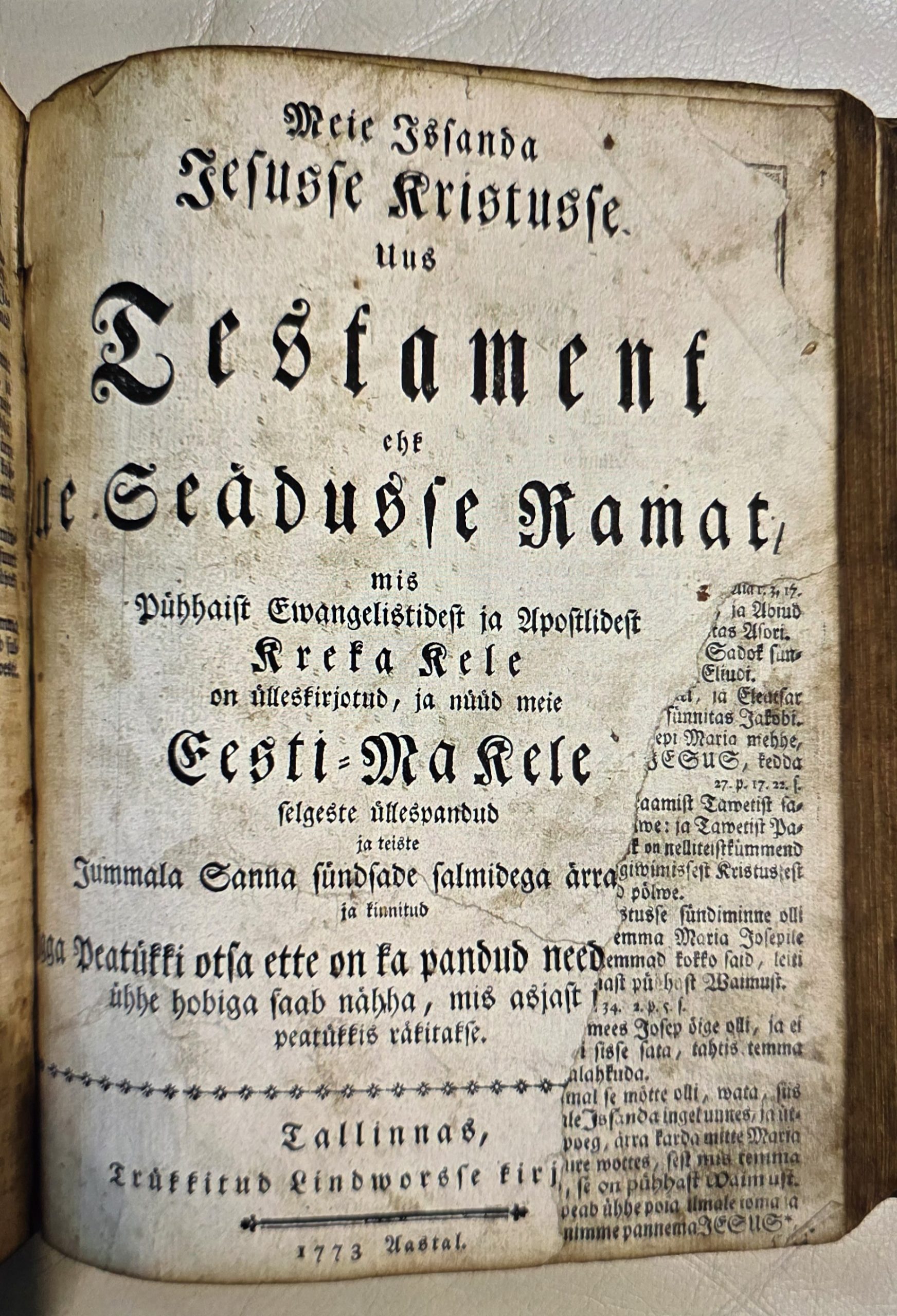
1788 – Dilherr Bible / Small Kurfürstenbibel
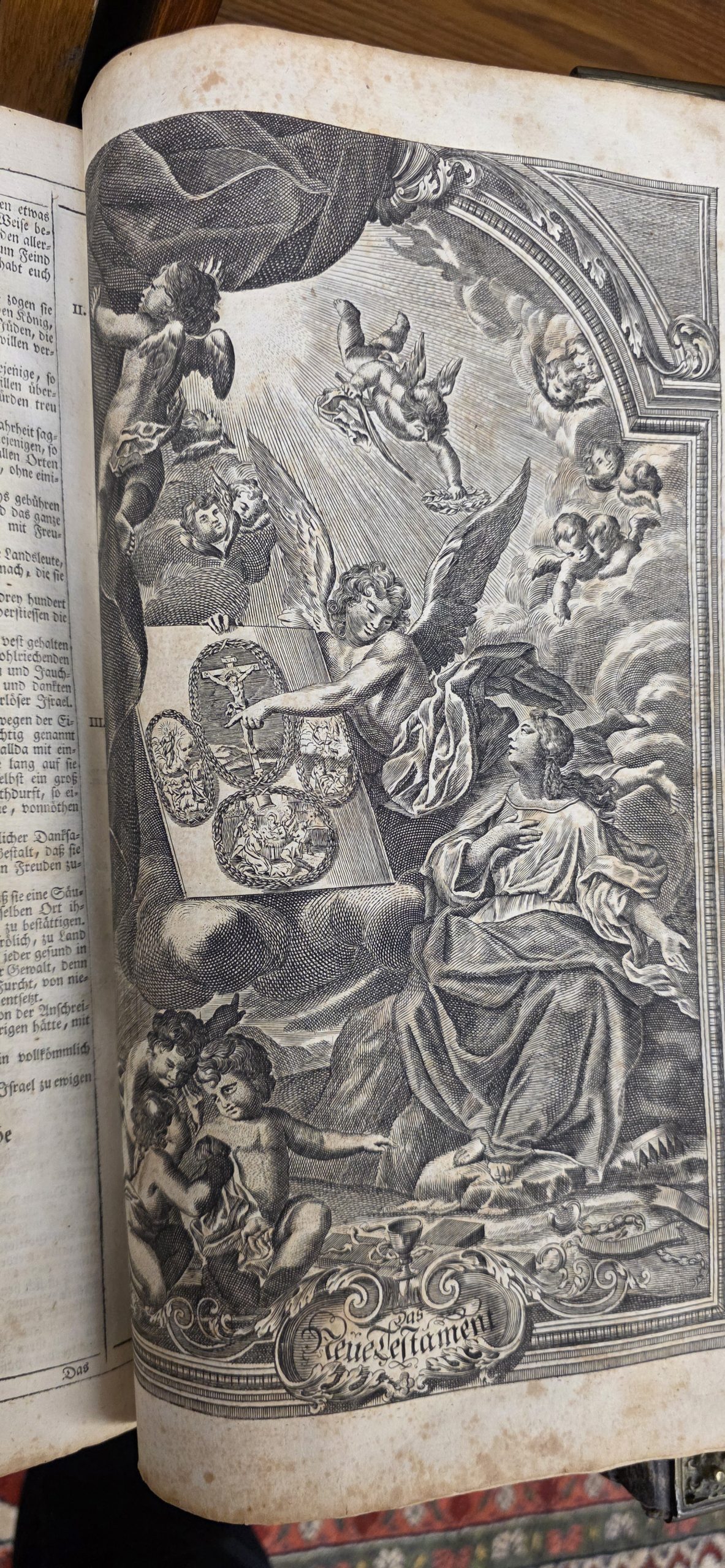
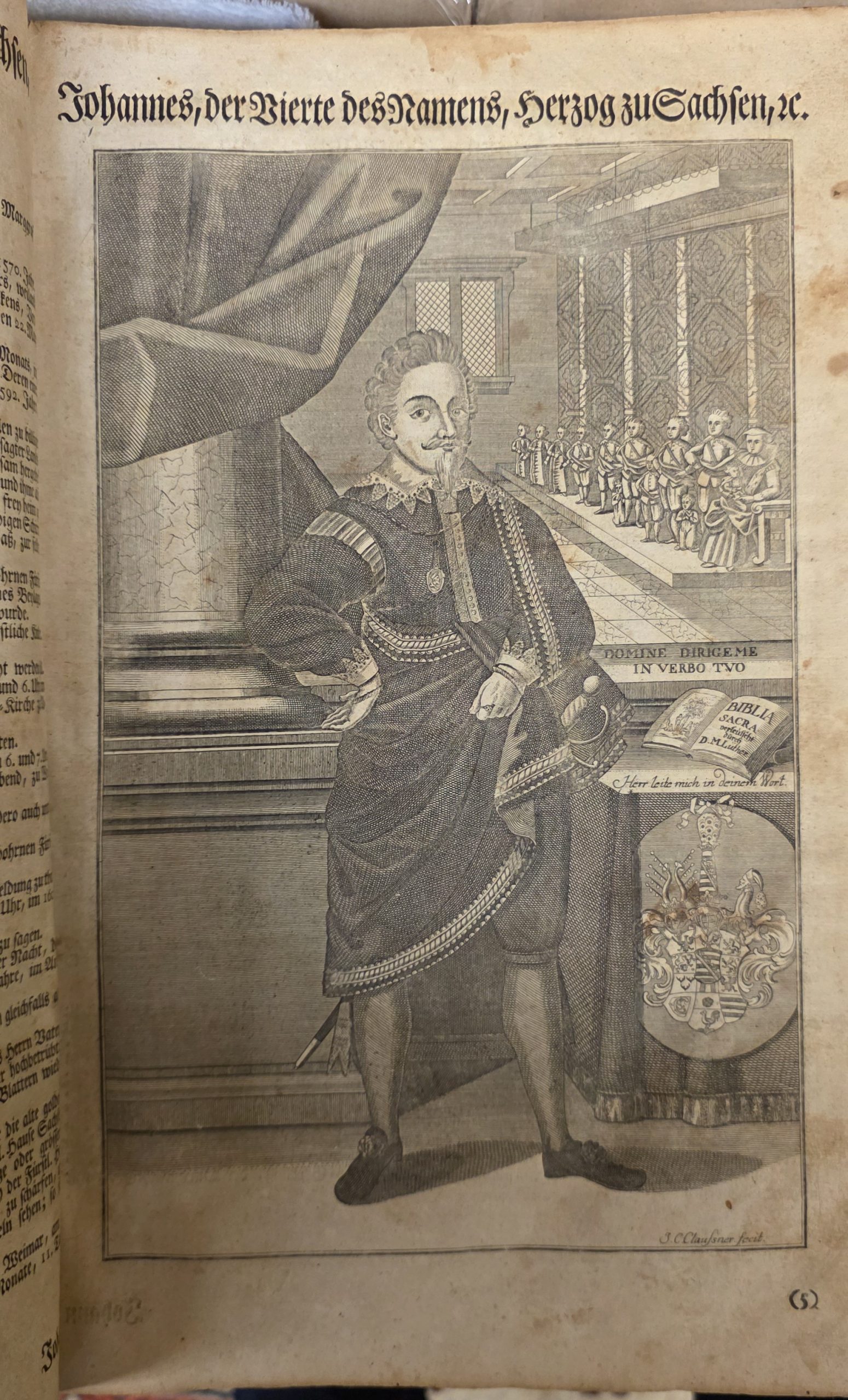
Richly illustrated with Sandrart woodcuts and includes the elector copperplates, making this a so-called "Small Kurfürstenbibel".
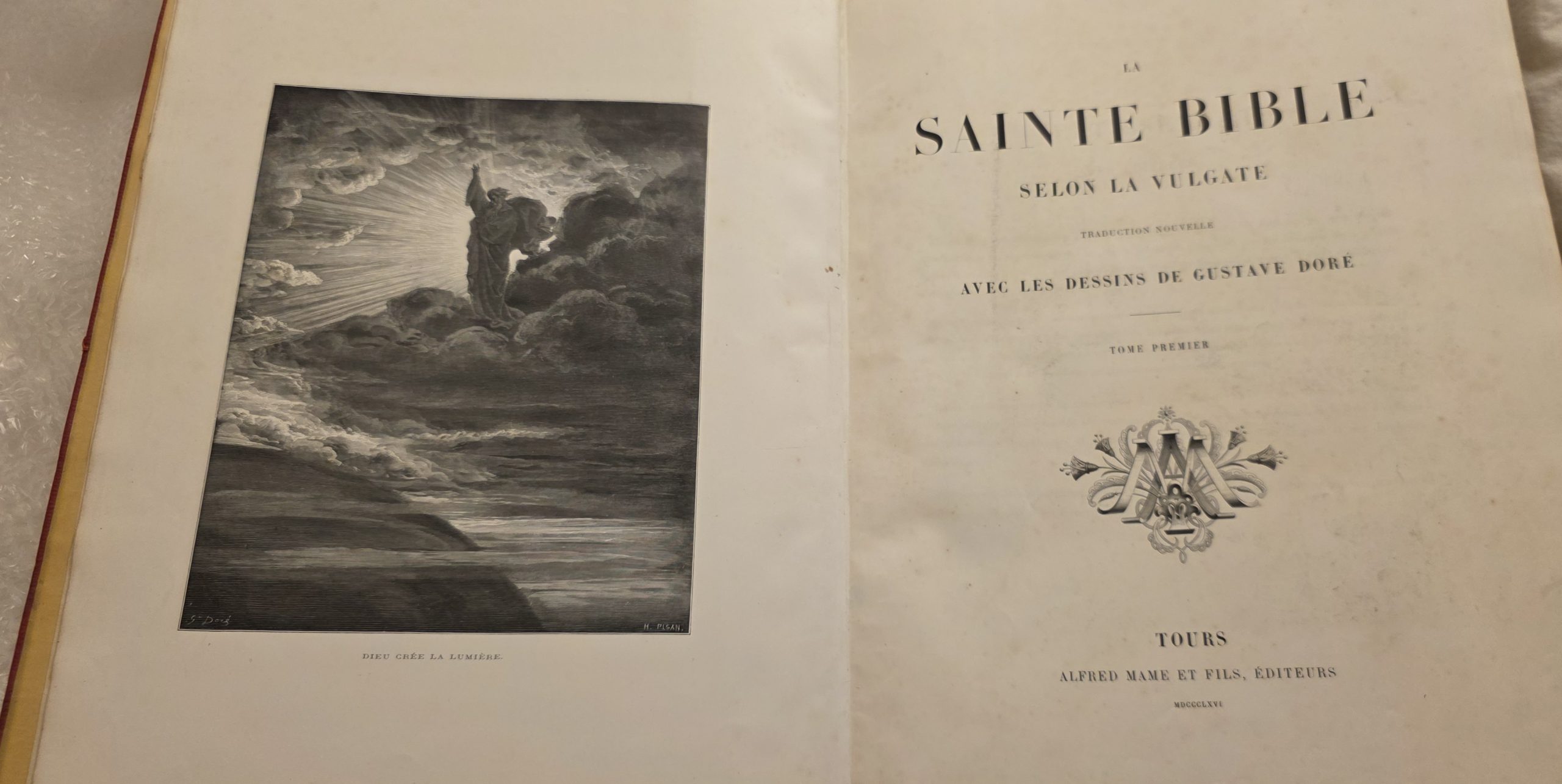
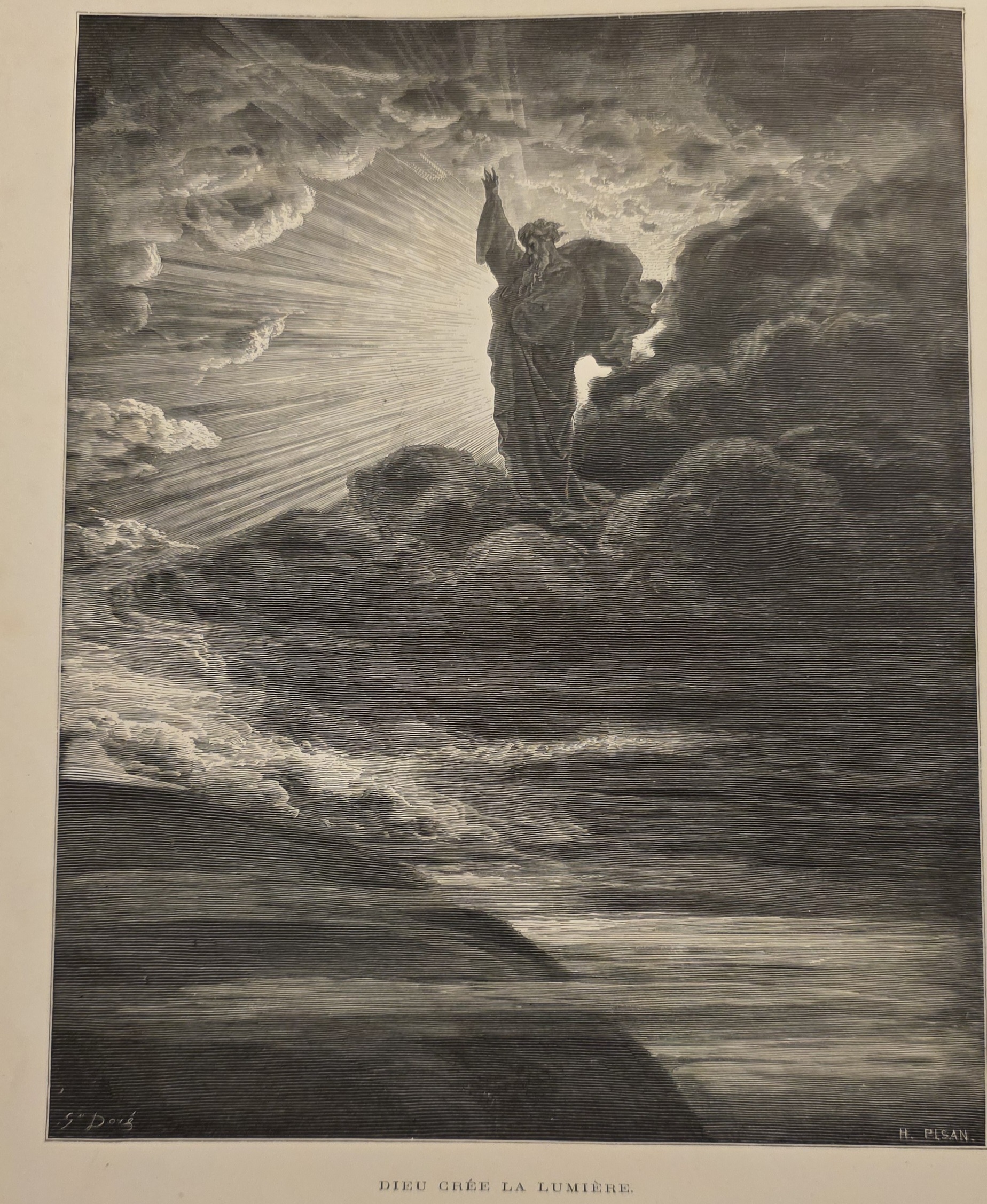
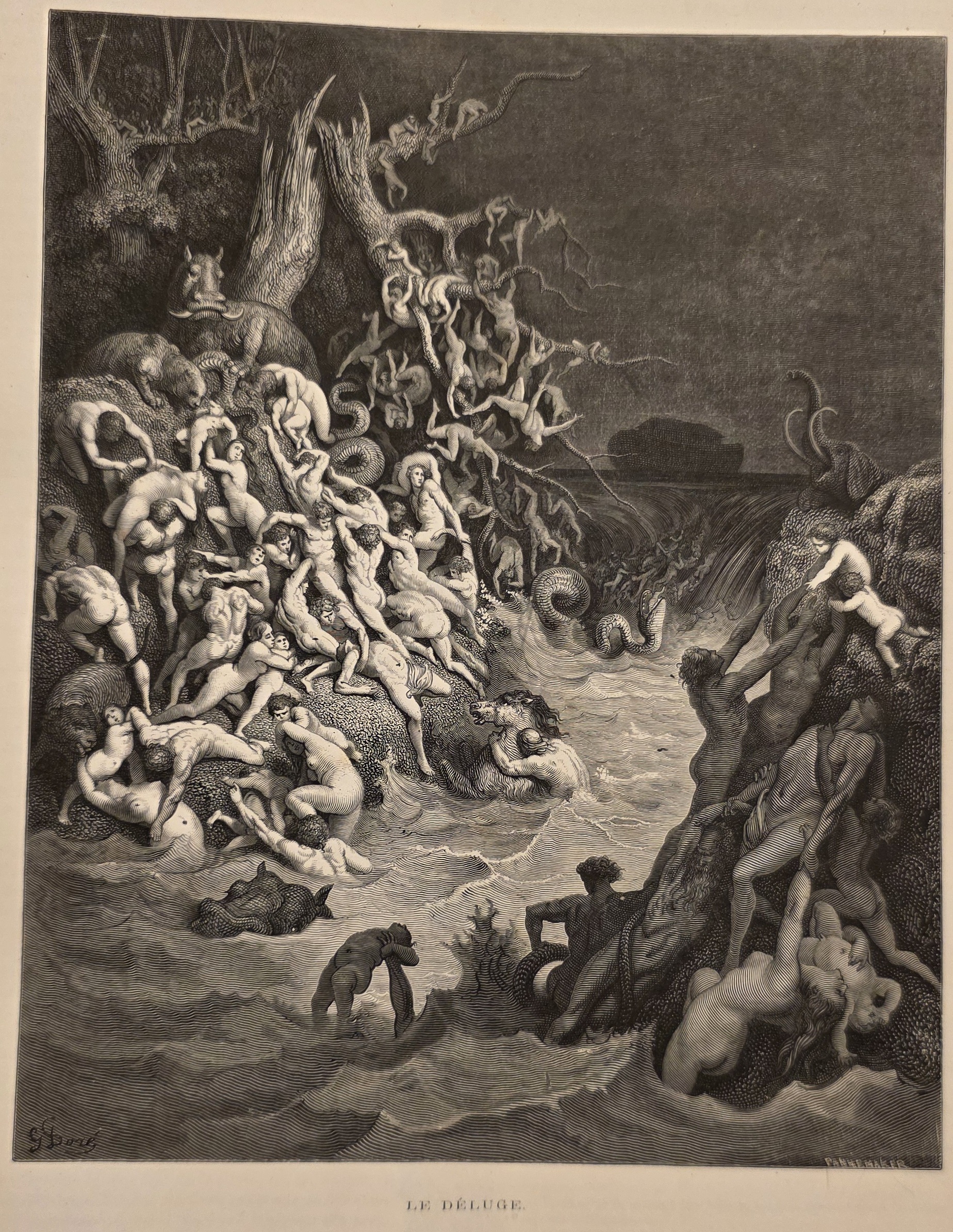
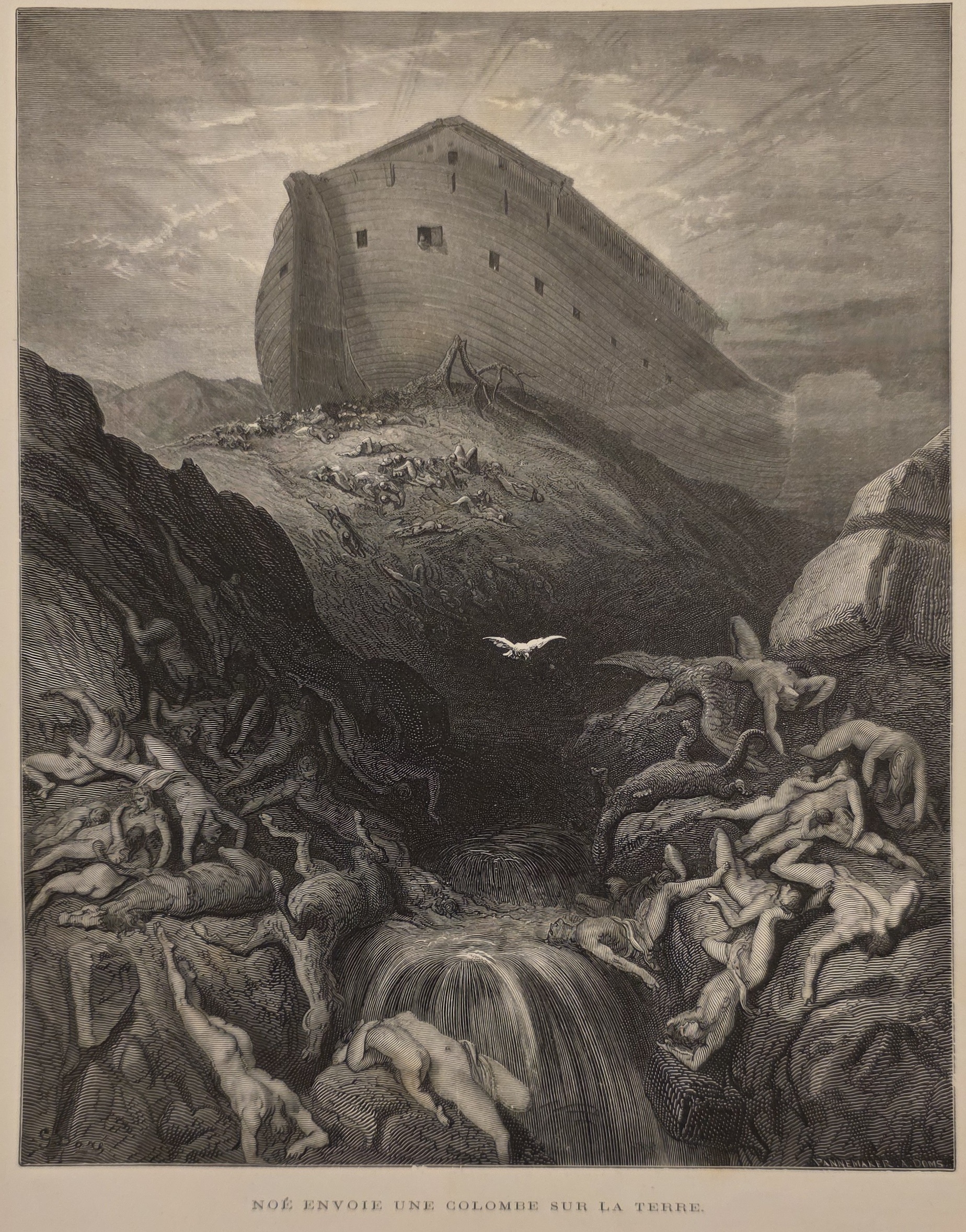
1866 – Dore Mame Bible
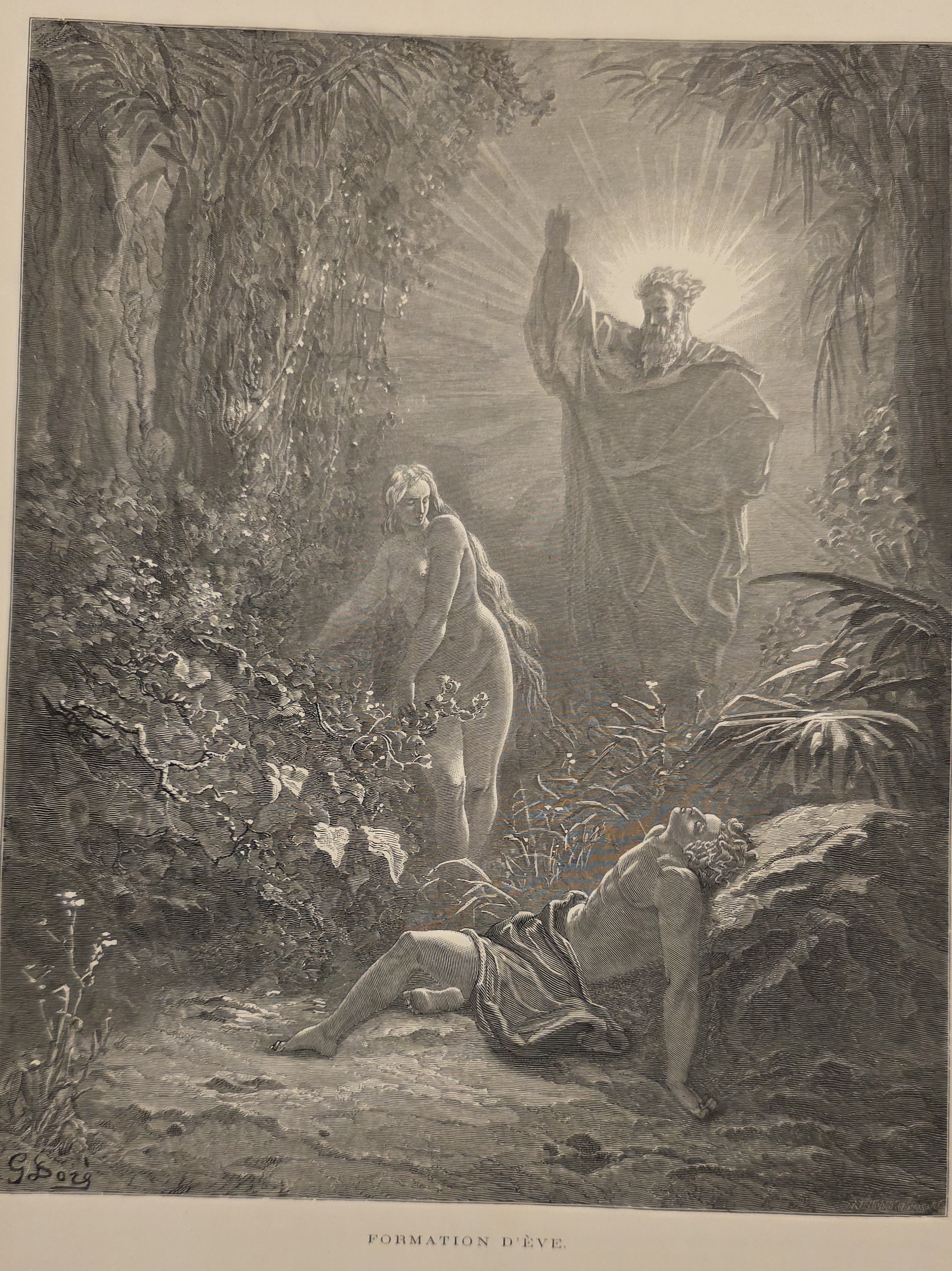
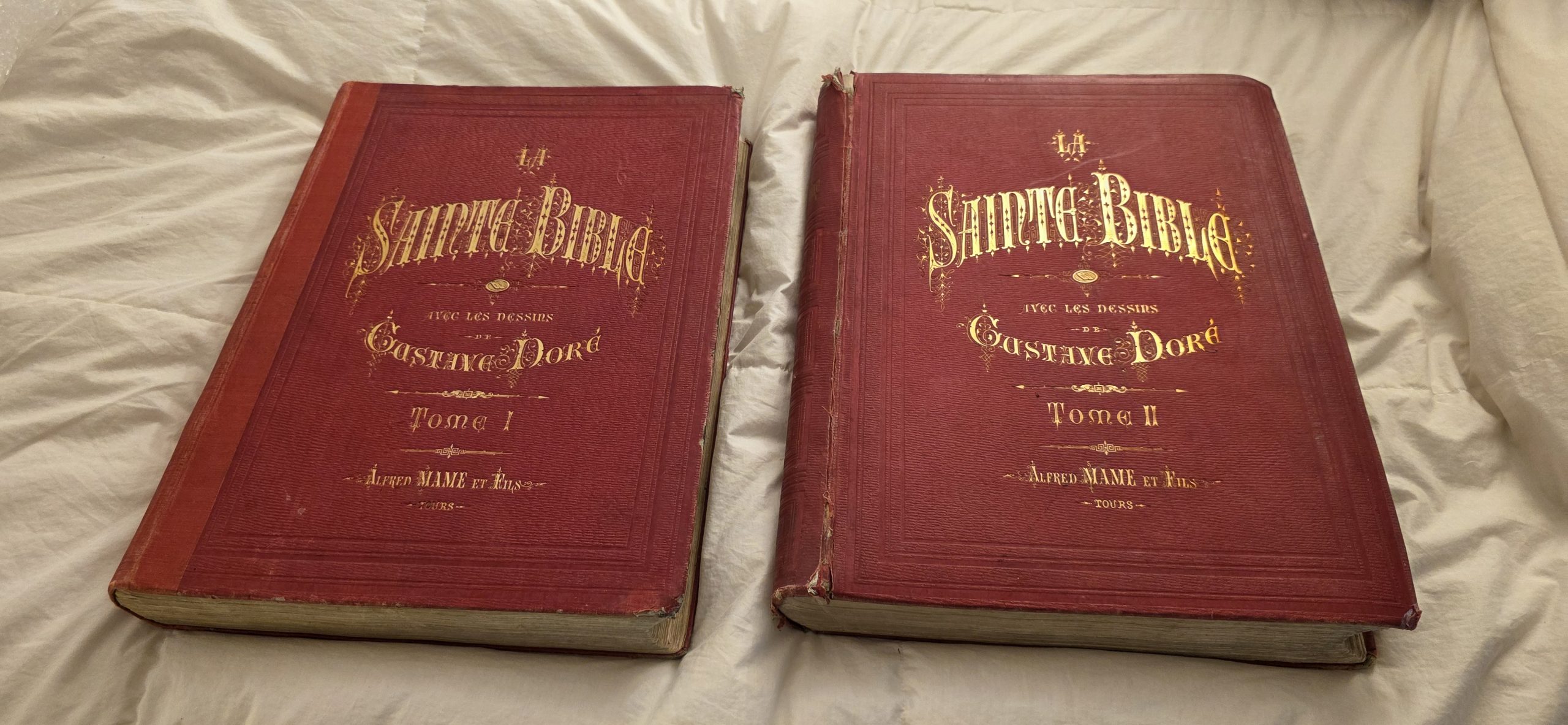
A first state first printing 1866 Mame with Adam covered by a robe in the Formation of Eve print (see example of second state and more details). One of just 3,200 copies ever printed of this first edition first state. In original publisher's red percaline binding with gilt lettering.