One of the greatest challenges in scaling AI-powered "deep research" analyses to complex global-scale topics is the limited size of their context windows. The limited input size of current SOTA models (which must be shared between input and thinking tokens) means that when asked to conduct global-scale research that involves reading and reasoning over vast amounts of information, the results tend to break down. For example, take the question of how the Strait of Hormuz blockade is impacting each country in the world: the vast amount of searching, reading and synthesis required to answer this question far exceeds the context window of even the most advanced models, yet is precisely the kind of at-scale research question that AI models are purpose-built to answer. Here, we explore the results of asking Gemini Deep Research to compile a detailed report on per-country impacts of the Strait of Hormuz blockade, showing how when asked for a global report it significantly underreports the impact on Europe, while when asked for a Europe-only report, it much more accurately captures the European impact, offering a powerful reminder that AI-powered analyses often must be broken into smaller reports that are more readily able to fit into model context. The sourcing list for the two reports also offers a critical reminder that rather than conduct original research over millions of input sources, current research models tend to favor synthesizing a relatively small number of existing compilation reports.
Let's start with this simple prompt, asking Gemini Deep Research to compile a country-level report on the impacts of the blockade on every country in the world:
Write me a 10+ page report that identifies the impact of the current Strait of Hormuz blockade on each country in the world.
Organize it with an initial overview opening and then list each country in the world impacted in any way at all by the blockade with a heading and a paragraph or two outlining the impact on that country.
Make a thematic list of common types of impacts and include a "IMPACT TYPES" comma-separated list at the end of each country overview that lists these, to make it easy to rapidly triage the kinds of impacts impacting each country.
At the end list the countries that don't appear to be impacted and explain why. List both the direct and indirect impacts on each country.
At the end include a giant world map that uses color coding or symbols to visualize the impact and kinds of impact on each country.
This yields the following report:
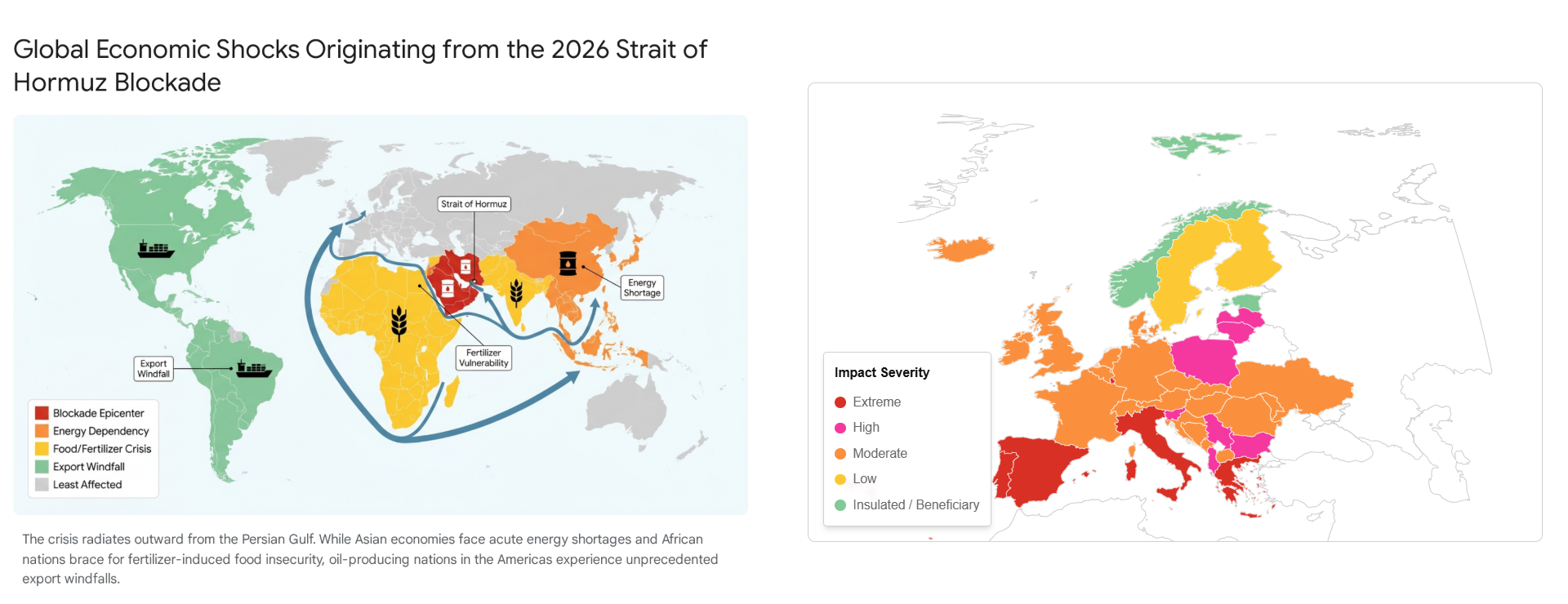
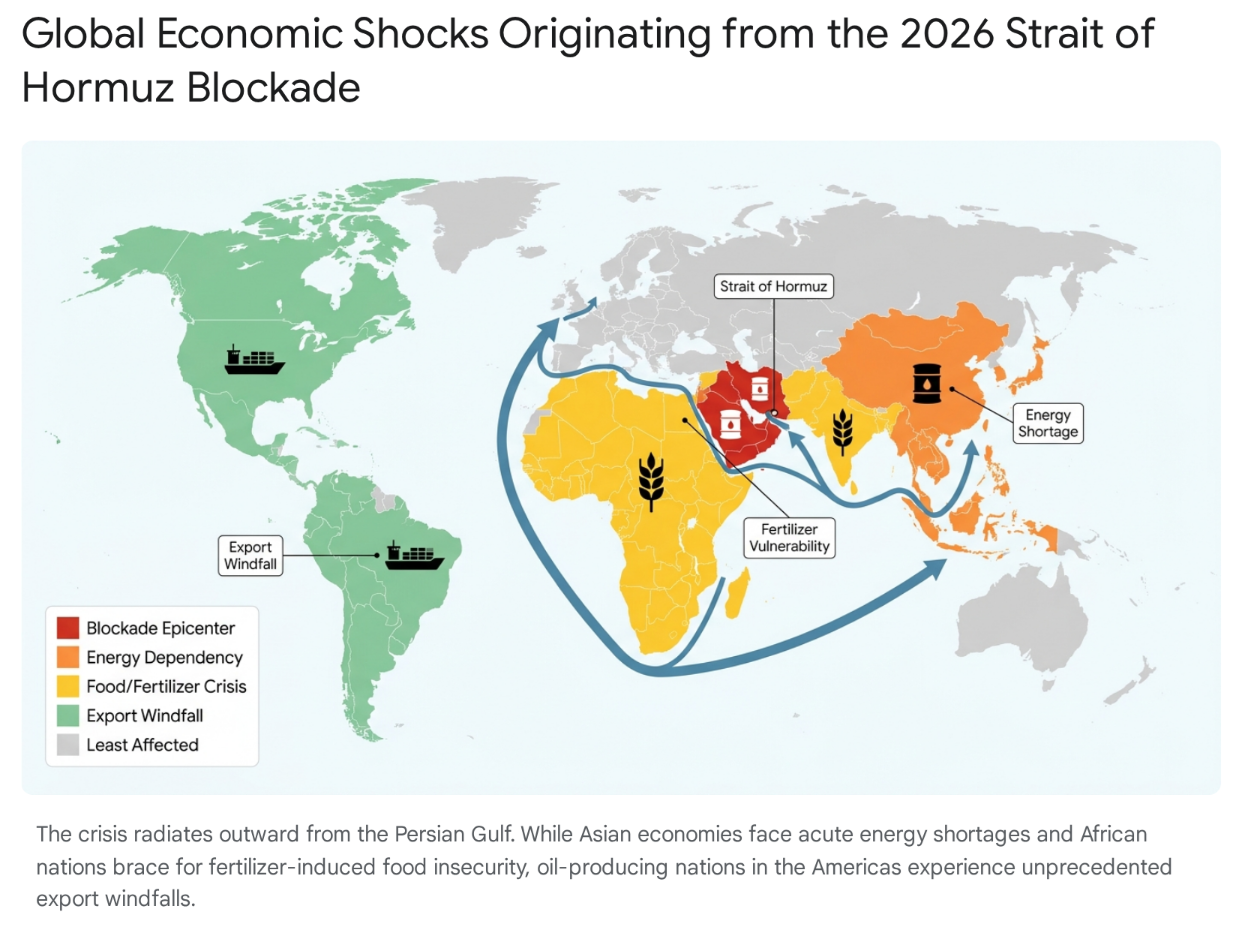
The report does a remarkable job of assessing the core impacts on many countries, but if you look at the sources list at the bottom of the report, it actually relied on a relatively small number of sources, many of which already compiled these details together. Thus, rather than conducting its own country-by-country original research, Gemini in this case largely simply summarized previously compiled impact reports. Most problematically, while the text does report impacts on several European nations, it misses many of the most significant impacts that have been widely reported in the press and government and trade announcements. The heavy coverage in recent weeks of an impending potential continent-wide jet fuel shortage is entirely absent. In fact, its overview map lists the entirety of Europe as "Least Affected", while most European nations are entirely missing from the report.
What if we ask Gemini to look only at Europe, rather than the entire world?
Write me a 10+ page report that identifies the impact of the current Strait of Hormuz blockade on each country in Europe.
Organize it with an initial overview opening and then list each country in Europe impacted in any way at all by the blockade with a heading and a paragraph or two outlining the impact on that country.
Make a thematic list of common types of impacts and include a "IMPACT TYPES" comma-separated list at the end of each country overview that lists these, to make it easy to rapidly triage the kinds of impacts impacting each country in Europe.
At the end list the countries in Europe that don't appear to be impacted and explain why.
List both the direct and indirect impacts on each country in Europe.
At the end include a giant map of Europe that uses color coding or symbols to visualize the impact and kinds of impact on each country.
This yields the following report:
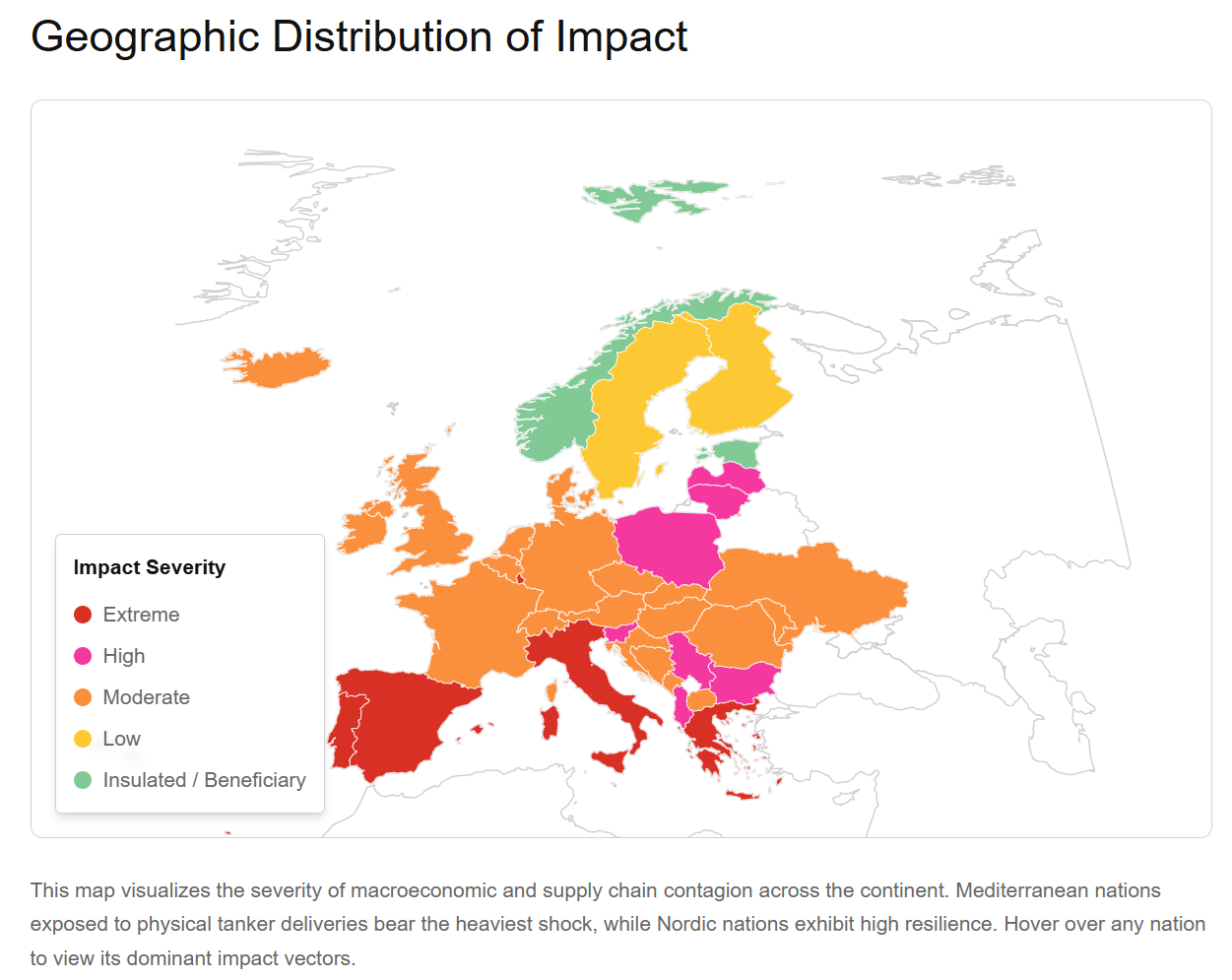
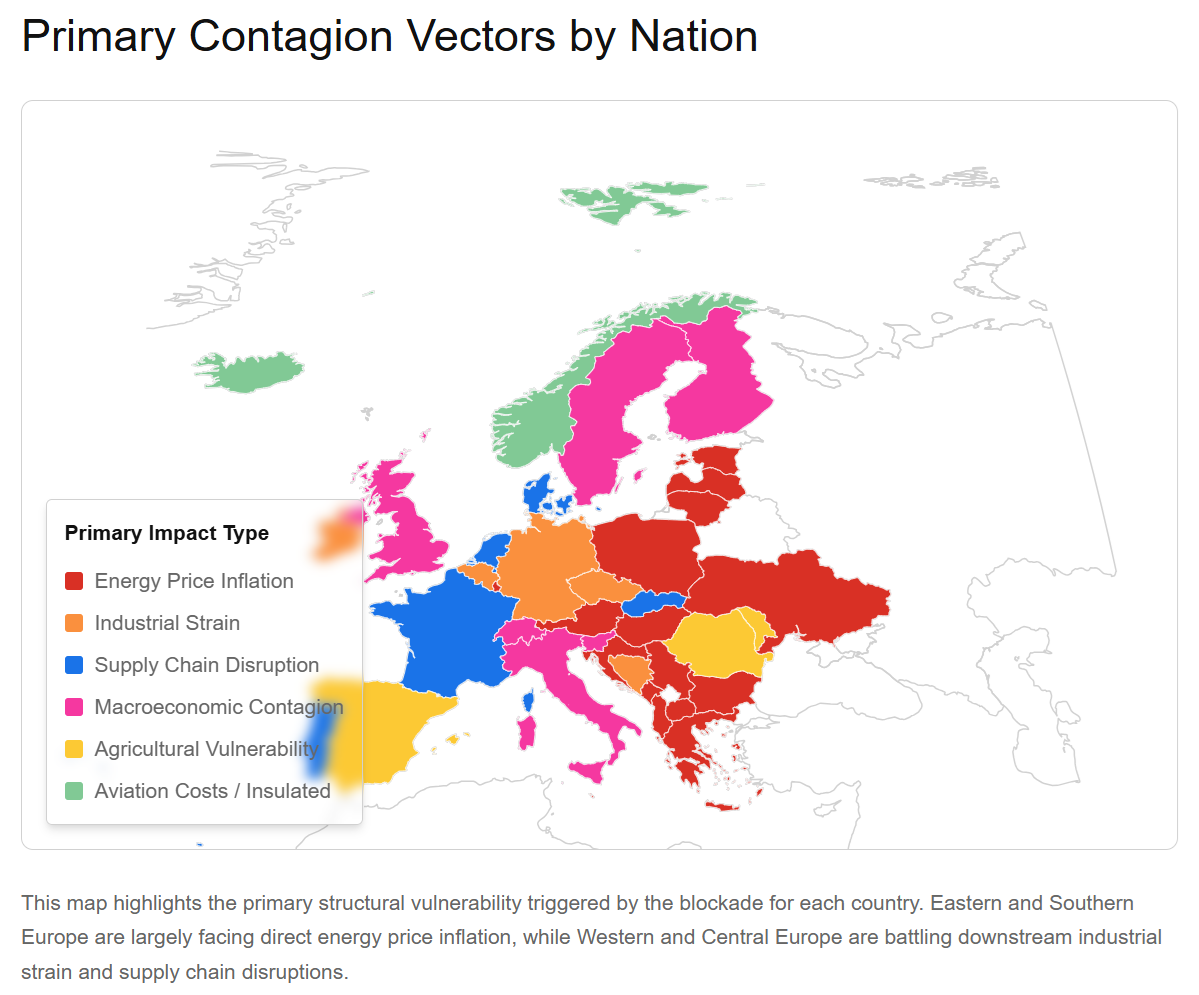
While Gemini still relies on a relatively small number of precompiled impact reports for its report, this time it does a vastly better job of capturing the impact on Europe, correctly identifying both the aviation impact that has received outsized attention and a far more detailed look at industrial, agricultural and energy impacts. Unlike the global report, the European report breaks out almost every European nation, providing vastly more detail.