


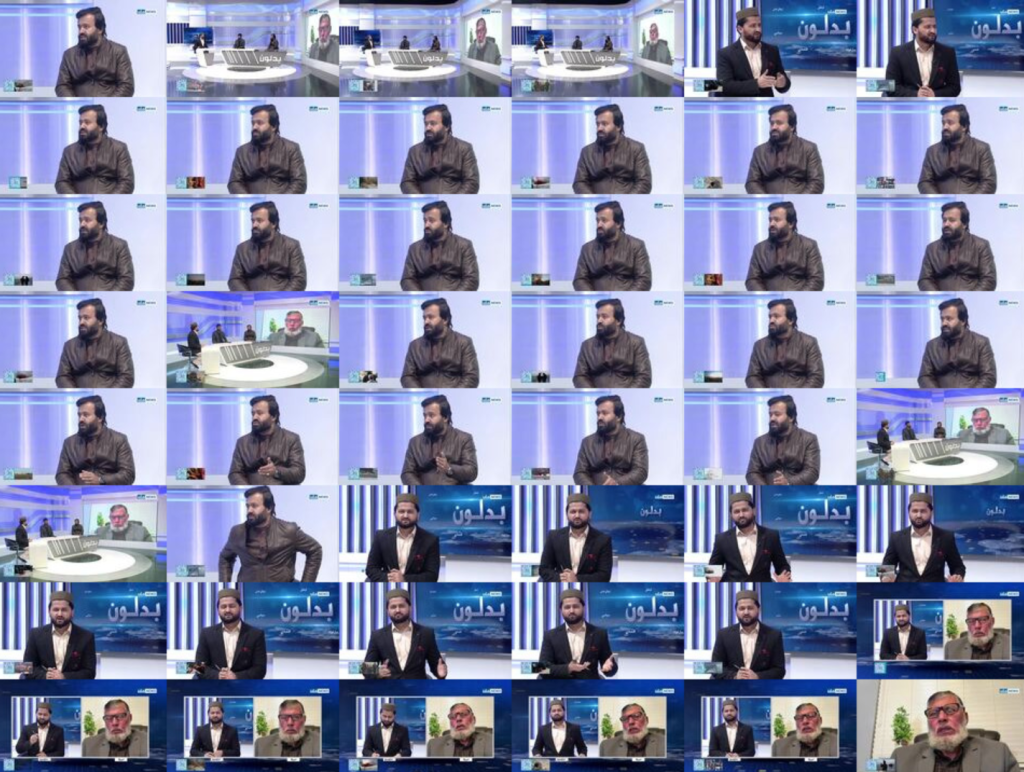
We are often asked why we continue to use Google's Chirp ASR model to transcribe each broadcast, despite the modern availability of massively more capable models. The answer is that while frontier models are capable of producing strong transcriptions of an incredible range of languages, when asked to produce timecoded transcripts, everything breaks down. Earlier today we took the first 10 minutes of this Pashto-language Afghan broadcast and asked Gemini 3.5 Flash Lite, 3.8 Flash, Neon and Carbon in Low, Medium and High thinking levels to transcribe it, using a variety of prompts. None of the models yielded stable results, with the timecodes associated with each statement varying wildly across runs. Below we can see the results of two runs using Carbon High Thinking (the transcripts have been subsequently translated into English to make them easier to follow). Both have the same ending line, but in the first run that line appears at nearly the 8 minute mark, while in the second run it appears at the 6 minute mark. Neither transcribed the entire 10 minute broadcast, despite clear speech up until the end of the file. Frontier models are exceptionally good at understanding audio, but even the latest most advanced models still struggle existentially with coding it in time.
For the two runs below we used the same prompt with the first 10 minutes of the broadcast above with Carbon High Thinking.
Give me diplomatic transcription with timecodes in 2 second resolution. Output format as \"[HH:MM:SS->HH:MM:SS] text\" for each 2 second chunk.
First Run
[00:00:00->00:00:01] ...cooperate with us in the extraction of the Qashqari [oil] field,
[00:00:01->00:00:02] if we have our own extraction,
[00:00:02->00:00:05] first of all, oil prices in the market will drop for us as well.
[00:00:05->00:00:07] Mr. Ahmadzai,
[00:00:07->00:00:11] now, the most important thing for a country is to keep domestic production high and have exports.
[00:00:11->00:00:13] Now, Afghanistan's domestic production—
[00:00:13->00:00:15] how can this be increased?
[00:00:15->00:00:18] Well, as I told you earlier,
[00:00:18->00:00:19] Mr. Sayel,
[00:00:19->00:00:23] we have very significant needs in the area of raw materials.
[00:00:23->00:00:25] Previously, the route through Pakistan was open;
[00:00:25->00:00:27] we did not have problems with Pakistan.
[00:00:27->00:00:33] The managers of our manufacturing factories could import these raw materials into the country easily, cheaply, and in a short time.
[00:00:33->00:00:38] Now, some problems have arisen along the route.
[00:00:38->00:00:40] But now, in this regard,
[00:00:40->00:00:44] Russia can, for our domestic production,
[00:00:44->00:00:47] provide facilities in the area of raw materials.
[00:00:47->00:00:49] Reduce customs tariffs.
[00:00:49->00:00:51] Furthermore,
[00:00:51->00:00:54] provide visa facilities for our traders.
[00:00:54->00:00:57] Hold exhibitions—
[00:00:57->00:01:00] both in Russia and in Afghanistan, so that we can have a joint exhibition with them,
[00:01:00->00:01:03] so that our traders know what raw materials we can obtain in Russia.
[00:01:03->00:01:05] Because,
[00:01:05->00:01:08] our manufacturing factories, thank God, are almost...
[00:01:08->00:01:12] consider that we are moving toward self-sufficiency and have achieved it in many areas.
[00:01:12->00:01:17] In particular, I can say that in the steel sector, thank God, we have reached 100% self-sufficiency.
[00:01:17->00:01:21] In the food sector, our problems and difficulties have been resolved.
[00:01:21->00:01:24] In footwear and various other [sectors], however, due to the lack of raw materials,
[00:01:24->00:01:28] we may face problems in the future.
[00:01:28->00:01:32] Therefore, if Russia truly wants [to maintain] its
[00:01:32->00:01:35] sincere relations that it wants with Afghanistan in the economic sector—just as in their remarks
[00:01:35->00:01:40] at that conference, it was said that we want to have good relations with Afghanistan and keep our trade
[00:01:40->00:01:42] channel active—
[00:01:42->00:01:45] then in this regard, they should create visa facilities for our traders and investors.
[00:01:45->00:01:48] They should solve their customs problems,
[00:01:48->00:01:50] and also in the area of raw materials,
[00:01:50->00:01:52] through those routes—
[00:01:52->00:01:56] the routes through which we can import raw materials into Afghanistan quickly and in a short time—
[00:01:56->00:01:59] if these facilities are provided, then God willing, we will transform into a manufacturing country.
[00:01:59->00:02:01] Thank you very much.
[00:02:01->00:02:04] Mr. Bayanzai, coming back to you,
[00:02:04->00:02:06] first of all, Mr. Ahmadzai pointed out very good points earlier.
[00:02:06->00:02:09] And that is also the issue of electricity.
[00:02:09->00:02:10] We always,
[00:02:10->00:02:13] whenever economic issues are discussed, when we come to the investment sector,
[00:02:13->00:02:16] when increasing exports or strengthening domestic
[00:02:16->00:02:19] production is discussed,
[00:02:19->00:02:22] one issue that is always raised is the lack of electricity.
[00:02:22->00:02:25] Even now, for example, we import electricity from other countries.
[00:02:25->00:02:28] We rely on other countries, while there are opportunities and capacity in Afghanistan.
[00:02:28->00:02:30] In your opinion now,
[00:02:30->00:02:34] if Russia wants to
[00:02:34->00:02:37] cooperate sincerely with Afghanistan, how good of an opportunity is this,
[00:02:37->00:02:40] and in electricity generation and building dams,
[00:02:40->00:02:43] what cooperation can Russia offer?
[00:02:43->00:02:48] Well, in my opinion, Russia can cooperate a great deal because Russia is a developed country,
[00:02:48->00:02:51] and especially in the energy sector, it has built many dams itself
[00:02:51->00:02:56] in its own country, as well as in the other Central Asian countries that were all under their control.
[00:02:56->00:02:59] For about 70 or 80 years,
[00:02:59->00:03:02] for example, they built many dams there,
[00:03:02->00:03:05] and even now, Russia has ties with those dams and the energy [grids]
[00:03:05->00:03:08] of these countries,
[00:03:08->00:03:10] in one way or another.
[00:03:10->00:03:14] So if they want to do the same in Afghanistan, and Afghanistan is also
[00:03:14->00:03:18] prepared [to work] with Russia—because we ourselves see now that
[00:03:18->00:03:22] Mr. Azizi, with an investment of 10 million [likely meant billion] dollars,
[00:03:22->00:03:25] I don't know if it's 10,000 megawatts or how much, that they will
[00:03:25->00:03:28] generate this much energy in Afghanistan,
[00:03:28->00:03:32] which almost meets our need,
[00:03:32->00:03:34] from what we've heard—
[00:03:34->00:03:38] whether it will be that much or not, anyway, the more it is the better, because Afghanistan
[00:03:38->00:03:41] has plenty of water, thank God, and many rivers,
[00:03:41->00:03:44] both in the north and in the west.
[00:03:44->00:03:48] There is the Helmand River, and the Khashrud and Farahrud rivers.
[00:03:48->00:03:52] The Kunar River, the Kabul River—all of these are [resources] that,
[00:03:52->00:03:55] if on one hand we do not have access to the sea,
[00:03:55->00:03:58] that is a shortcoming of ours, it causes us
[00:03:58->00:04:02] problems for exports and imports. However,
[00:04:02->00:04:05] alongside that, because we are located at a high elevation, from our mountains
[00:04:05->00:04:08] a lot of water and rivers flow. Pakistan and Iran do not have the kind of
[00:04:08->00:04:12] opportunities that we have. So, by taking advantage of these opportunities,
[00:04:12->00:04:15] this must be managed well.
[00:04:15->00:04:18] This water, first of all, sometimes even causes casualties/losses,
[00:04:18->00:04:22] because it has not been properly contained so that,
[00:04:22->00:04:25] in the places where they should be built,
[00:04:25->00:04:28] dams are built for them, so that is also right.
[00:04:28->00:04:31] One is hydroelectric power and its capacity;
[00:04:31->00:04:33] we also have provinces where
[00:04:33->00:04:36] we can generate wind power, as well as
[00:04:36->00:04:38] solar power—many provinces of Afghanistan
[00:04:38->00:04:41] are places where
[00:04:41->00:04:43] there is sun, so solar energy can also be utilized.
[00:04:43->00:04:46] So what help can they provide in these areas?
[00:04:46->00:04:48] In every area, even
[00:04:48->00:04:52] from wind—turbines, as there is a lot of wind in Herat, Farah, and those areas.
[00:04:52->00:04:56] And for that, wind turbines can be built, and
[00:04:56->00:04:59] solar [power] from the sun, for example, can be built, and they have already started.
[00:04:59->00:05:03] Many projects, even in various places, even our domestic investors, Afghanistan's
[00:05:03->00:05:08] private sector has also invested in this and opened up some sectors,
[00:05:08->00:05:11] but from major countries like Russia,
[00:05:11->00:05:14] if they launch a project here, whether it's about solar, wind, or...
[00:05:14->00:05:16] The main point, Mr. Bayanzai, is that technical equipment is needed,
[00:05:16->00:05:18] is also necessary.
[00:05:18->00:05:22] Russia, in all areas, can either give us this equipment and machinery, or itself
[00:05:22->00:05:26] use this machinery, come here, and carry out some projects itself,
[00:05:26->00:05:28] just as America,
[00:05:28->00:05:32] for example, in countries with which America has agreements and
[00:05:32->00:05:35] has projects; similarly, Russia here in Afghanistan, and on the other hand, also encourage the Central Asian countries themselves,
[00:05:35->00:05:38] not only in the commercial
[00:05:38->00:05:41] sector, but also encourage them toward official recognition.
[00:05:41->00:05:45] Now, with Russia's recognition, they should also start doing this; on one hand there is Russia's recognition, and on the other hand, the Islamic Emirate itself...
[00:05:45->00:05:48] Mr. Bayanzai, one is Russia, and Afghanistan also has good relations with China.
[00:05:48->00:05:50] Now,
[00:05:50->00:05:53] what is China's responsibility here, and in turn,
[00:05:53->00:05:56] how can Afghanistan benefit from China?
[00:05:56->00:05:58] In these areas with them,
[00:05:58->00:06:01] how beneficial can discussions be?
[00:06:01->00:06:04] With China, naturally, there is one issue,
[00:06:04->00:06:07] and that is the British engineering that divided Greater India into two parts:
[00:06:07->00:06:11] one is present-day India, for which they created some border disputes and problems with China,
[00:06:11->00:06:15] such as a part of Kashmir being in China's hands while India claims it,
[00:06:15->00:06:19] or there are some areas around Nepal and Bhutan
[00:06:19->00:06:23] that either China has taken or China claims India has taken. So, for this reason, instead of India, China
[00:06:23->00:06:26] has chosen Pakistan.
[00:06:26->00:06:31] That is, China provides both financial and military aid to Pakistan against India.
[00:06:31->00:06:35] And on the other hand, Afghanistan was also occupied by the Americans.
[00:06:35->00:06:39] Meaning it had no route; it could only find this route through Pakistan.
[00:06:39->00:06:43] It built this Karakoram Highway at very heavy expense,
[00:06:43->00:06:47] with the costs borne by China—several billion dollars.
[00:06:47->00:06:50] China built this so that at least it could
[00:06:50->00:06:54] get Chinese goods to Arab and Western countries via Karakoram, and because of this, Pakistan
[00:06:54->00:06:57] took great unfair advantage of it. It forced China to even [fund]
[00:06:57->00:07:01] other projects as well, like Chabahar Port [misspoken] and similar
[00:07:01->00:07:04] others—Gwadar Port, take that, and other similar projects—
[00:07:04->00:07:07] they also made them build dams on rivers. In any case, now that Afghanistan has been liberated,
[00:07:07->00:07:11] the Wakhan route has opened up, and on the other hand, Pakistan
[00:07:11->00:07:14] has again been forced and tasked by America to destabilize this region.
[00:07:14->00:07:18] So this is to stagnate China's economy so that China cannot,
[00:07:18->00:07:22] for example, move its economy forward normally.
[00:07:22->00:07:25] Therefore, China has now realized this as well, because on one hand, the Wakhan route is open to it.
[00:07:25->00:07:28] It no longer needs Pakistan's Karakoram route as much
[00:07:28->00:07:31] as it used to. And it may have also realized that
[00:07:31->00:07:34] with Pakistan creating this insecurity, now
[00:07:34->00:07:38] among the three countries—Qatar, Saudi Arabia, and
[00:07:38->00:07:42] Turkey—China has also involved itself in this, so I think if China cannot do this
[00:07:42->00:07:45] and China realizes that Pakistan actually has
[00:07:45->00:07:48] hostility toward me, [and] America is against me, then Russia will also...
Second Run
[00:00:00->00:00:02] ...of the Qashqari mine, in its extraction
[00:00:02->00:00:04] they cooperate with us; if we have our own extraction,
[00:00:04->00:00:06] one benefit will be that for us too,
[00:00:06->00:00:08] fuel prices in the market will decrease. Exactly, Mr. Ahmadzai, now
[00:00:08->00:00:10] for a country, the most essential thing
[00:00:10->00:00:12] is that domestic production
[00:00:12->00:00:14] be high and it have exports. Now,
[00:00:14->00:00:16] Afghanistan's domestic production, how can it
[00:00:16->00:00:18] be increased? Well, as I told you earlier,
[00:00:18->00:00:20] Mr. Sahil, because of this, we have very great needs in the area of raw materials.
[00:00:20->00:00:22] Earlier, the
[00:00:22->00:00:24] Pakistan route was open; with Pakistan,
[00:00:24->00:00:26] we had no problems. Imports—
[00:00:26->00:00:28] the officials of our manufacturing factories, easily, cheaply,
[00:00:28->00:00:30] and in a short time, could import into their country
[00:00:30->00:00:32] those raw materials. Now, along the route,
[00:00:32->00:00:34] some problems have been created.
[00:00:34->00:00:36] However, in this regard, Russia
[00:00:36->00:00:38] can, for our domestic production,
[00:00:38->00:00:40] provide facilities in the area of raw materials,
[00:00:40->00:00:42] reduce customs tariffs, and likewise
[00:00:42->00:00:44] provide opportunities for our traders in terms of visas,
[00:00:44->00:00:46] organize exhibitions
[00:00:46->00:00:48] both in Russia and
[00:00:48->00:00:50] in Afghanistan, so that we have a joint exhibition
[00:00:50->00:00:52] with them, so that our traders may
[00:00:52->00:00:54] understand what materials we can obtain in Russia in the area of raw materials,
[00:00:54->00:00:56] because our
[00:00:56->00:00:58] manufacturing factories, thank God, are almost—
[00:00:58->00:01:00] imagine, we are moving toward self-sufficiency
[00:01:00->00:01:02] and have reached it in many areas. In particular,
[00:01:02->00:01:04] I can say that in the steel sector, thank God,
[00:01:04->00:01:06] we have reached one hundred percent self-sufficiency.
[00:01:06->00:01:08] In the foodstuff sector, those
[00:01:08->00:01:10] problems have been solved, footwear and various other things.
[00:01:10->00:01:12] However, due to the lack of raw materials,
[00:01:12->00:01:14] it is possible that we may face problems
[00:01:14->00:01:16] in the future. Therefore, if Russia wants
[00:01:16->00:01:18] to genuinely, in its sincere
[00:01:18->00:01:20] relations that they want with Afghanistan in the economic sphere,
[00:01:20->00:01:22] just as it was said in their remarks at that conference
[00:01:22->00:01:24] that "we want to have good relations with Afghanistan
[00:01:24->00:01:26] and keep our trade channel active,"
[00:01:26->00:01:28] then in this regard, they should
[00:01:28->00:01:30] create visa facilitation for our traders and our investors,
[00:01:30->00:01:32] solve their customs problems,
[00:01:32->00:01:34] and likewise, in the area of raw materials,
[00:01:34->00:01:36] through those routes by which we can
[00:01:36->00:01:38] quickly and in a short time import
[00:01:38->00:01:40] raw materials into Afghanistan, if these facilities are provided, then
[00:01:40->00:01:42] God willing, we will turn into a producing country.
[00:01:42->00:01:44] Bless you, thank you very much. Mr. Bayanzai,
[00:01:44->00:01:46] I come back to you. First, earlier
[00:01:46->00:01:48] Mr. Ahmadzai pointed to very good points,
[00:01:48->00:01:50] one of which is the issue of electricity. Whenever we
[00:01:50->00:01:52] discuss economic matters,
[00:01:52->00:01:54] if we come to the investment sector, increasing exports,
[00:01:54->00:01:56] or strengthening domestic production,
[00:01:56->00:01:58] when we discuss these, one
[00:01:58->00:02:00] issue that is always raised is the lack of
[00:02:00->00:02:02] electricity. Even now, for example, we
[00:02:02->00:02:04] import electricity from other countries and rely on other countries.
[00:02:04->00:02:06] Yet in Afghanistan there are opportunities,
[00:02:06->00:02:08] there is capacity. In your view now,
[00:02:08->00:02:10] if Russia wants to sincerely cooperate
[00:02:10->00:02:12] with Afghanistan, what a good opportunity is this,
[00:02:12->00:02:14] and in the field of electricity generation, in building dams,
[00:02:14->00:02:16] what cooperation can Russia
[00:02:16->00:02:18] provide?
[00:02:18->00:02:20] Well, in my view, Russia can cooperate
[00:02:20->00:02:22] a great deal, because Russia is a developed
[00:02:22->00:02:24] country, and especially regarding energy,
[00:02:24->00:02:26] they themselves have built many dams in their own country
[00:02:26->00:02:28] and also in the Central Asian
[00:02:28->00:02:30] countries, which were all in their hands
[00:02:30->00:02:32] for about eighty or ninety years; there
[00:02:32->00:02:34] they built many dams, for example, and even now
[00:02:34->00:02:36] Russia has ties with them, with those dams,
[00:02:36->00:02:38] with the energy of those countries
[00:02:38->00:02:40] in one way or another. So if it wants
[00:02:40->00:02:42] to do the same in Afghanistan, and Afghanistan also
[00:02:42->00:02:44] has the readiness with Russia—
[00:02:44->00:02:46] because look at us ourselves now, Mr. Azizi,
[00:02:46->00:02:48] with an investment of ten billion dollars,
[00:02:48->00:02:50] I don't know if it's ten thousand megawatts or how much, that
[00:02:50->00:02:52] they will produce that much energy
[00:02:52->00:02:54] in Afghanistan, which almost fulfills our
[00:02:54->00:02:56] need, from what we hear;
[00:02:56->00:02:58] whether it will be that much or not, anyway, the more
[00:02:58->00:03:00] it increases beyond that, because Afghanistan has abundant water,
[00:03:00->00:03:02] thank God, it has many rivers, both in the north
[00:03:02->00:03:04] and in the west—there is the Helmand River,
[00:03:04->00:03:06] the Khashrud and Farah Rud rivers, the Kunar River,
[00:03:06->00:03:08] the Kabul River—all of these are such that,
[00:03:08->00:03:10] that is, while on one hand we do not have access to the sea,
[00:03:10->00:03:12] which is a shortcoming for us
[00:03:12->00:03:14] and causes problems for our exports and
[00:03:14->00:03:16] imports, on the other hand, because we are located at a high elevation,
[00:03:16->00:03:18] abundant water and rivers flow down from our mountains,
[00:03:18->00:03:20] which Pakistan and Iran do not have, whereas
[00:03:20->00:03:22] we have those opportunities. So by utilizing
[00:03:22->00:03:24] these opportunities, this water must be managed in a good way;
[00:03:24->00:03:26] first of all, sometimes it even causes casualties
[00:03:26->00:03:28] because it has not been properly contained
[00:03:28->00:03:30] in those places where— Exactly, Mr. Bayanzai,
[00:03:30->00:03:32] one is hydroelectric power, there is capacity for that;
[00:03:32->00:03:34] another is that we have provinces where
[00:03:34->00:03:36] we can generate wind power, and likewise
[00:03:36->00:03:38] solar power—Afghanistan
[00:03:38->00:03:40] has many provinces where there is sun,
[00:03:40->00:03:42] and the sun can also be utilized. So in these areas,
[00:03:42->00:03:44] what assistance can they provide?
[00:03:44->00:03:46] Well, in every area—even from wind,
[00:03:46->00:03:48] turbines, like in Herat and in Farah and in those regions
[00:03:48->00:03:50] there is strong wind, and for that,
[00:03:50->00:03:52] turbines can be built using wind; from the sun,
[00:03:52->00:03:54] solar power, for example, can be built, and they have already started—
[00:03:54->00:03:56] many projects even in various places,
[00:03:56->00:03:58] even our domestic investors, Afghanistan's
[00:03:58->00:04:00] private sector, have also had a hand in this and
[00:04:00->00:04:02] have launched some of these. However, major countries
[00:04:02->00:04:04] like Russia, if they launch a project here,
[00:04:04->00:04:06] whether in solar, or in wind, or
[00:04:06->00:04:08] in coal or others— Modern technology is needed, Mr. Bayanzai,
[00:04:08->00:04:10] technical equipment is also required.
[00:04:10->00:04:12] There is a great need for this, that Russia
[00:04:12->00:04:14] in all areas either give us this equipment,
[00:04:14->00:04:16] give us this machinery, or use this machinery themselves
[00:04:16->00:04:18] and come here and carry out some projects themselves,
[00:04:18->00:04:20] just as America, for example, in those countries with which
[00:04:20->00:04:22] America has agreements and with which it has
[00:04:22->00:04:24] projects; likewise Russia here in Afghanistan,
[00:04:24->00:04:26] and on the other hand, encourage the Central Asian countries themselves
[00:04:26->00:04:28] not only in the commercial sphere, but also
[00:04:28->00:04:30] encourage them toward official recognition. Now,
[00:04:30->00:04:32] there is Russia's recognition; they too should start this work—on one hand
[00:04:32->00:04:34] there is Russia's recognition, and on the other hand they themselves are Islamic countries.
[00:04:34->00:04:36] Mr. Bayanzai, on one side is Russia, and on the other, Afghanistan also has
[00:04:36->00:04:38] good relations with China. Now,
[00:04:38->00:04:40] what is China's responsibility here, and in turn,
[00:04:40->00:04:42] how can Afghanistan benefit from China?
[00:04:42->00:04:44] How fruitful can talks with them in these areas
[00:04:44->00:04:46] turn out to be?
[00:04:46->00:04:48] With China, there is only one problem,
[00:04:48->00:04:50] and that is the engineering of the British, who divided Greater India
[00:04:50->00:04:52] into two parts—today's India, which
[00:04:52->00:04:54] created certain border problems and disputes with China,
[00:04:54->00:04:56] such as a part of Kashmir being in China's hands
[00:04:56->00:04:58] and India claiming it, or around Nepal and
[00:04:58->00:05:00] Bhutan there are some areas that either
[00:05:00->00:05:02] China has taken or China claims India has taken.
[00:05:02->00:05:04] Because of this, China chose Pakistan instead of India;
[00:05:04->00:05:06] that is, China, against India,
[00:05:06->00:05:08] provides both financial and military assistance to Pakistan.
[00:05:08->00:05:10] And on the other hand, because Afghanistan was also
[00:05:10->00:05:12] occupied by the Americans, China had no route;
[00:05:12->00:05:14] it could only find a route through Pakistan.
[00:05:14->00:05:16] This is the Karakoram Highway, at very heavy costs,
[00:05:16->00:05:18] whose costs China also bore—billions of dollars
[00:05:18->00:05:20] China spent so that it could at least
[00:05:20->00:05:22] get Chinese goods to Arab and Western countries via
[00:05:22->00:05:24] the Karakoram. And because of this, Pakistan took very
[00:05:24->00:05:26] unfair advantage of it, forcing China to even
[00:05:26->00:05:28] take on other projects as well, such as Chabahar
[00:05:28->00:05:30] Port—excuse me, Gwadar Port—and similar other projects,
[00:05:30->00:05:32] and made them build dams on rivers as well.
[00:05:32->00:05:34] In any case, now that Afghanistan has been freed,
[00:05:34->00:05:36] the Wakhan route has opened up, and on the other hand,
[00:05:36->00:05:38] America has again forced Pakistan and tasked it with
[00:05:38->00:05:40] destabilizing this region in order to stagnate China's economy,
[00:05:40->00:05:42] so that China cannot, for example, move its economy
[00:05:42->00:05:44] forward in a normal way. Therefore, China has now realized this too,
[00:05:44->00:05:46] because on one hand the Wakhan route is open to it, and it no longer
[00:05:46->00:05:48] needs Pakistan's Karakoram route as much
[00:05:48->00:05:50] as it needed it before; and it may also have
[00:05:50->00:05:52] realized that Pakistan is creating this insecurity—now,
[00:05:52->00:05:54] among the three countries, which are Qatar, Saudi Arabia, and Turkey,
[00:05:54->00:05:56] China has also involved itself. So I think if China
[00:05:56->00:05:58] cannot do this, China will realize that Pakistan
[00:05:58->00:06:00] actually holds enmity toward me, America is against me, if Russia also...