Given the enormous complexities of loading massive hyperscale datasets, agentic workflows offer incredible potential to transform the massive, complex and interdependent loading and verification pipelines. We recently explored this concept, using a SOTA frontier agentic workflow powered by a SOTA frontier model assembly with maximum thinking enabled to ensure the best possible results. The agentic workflow's task was simple: load a massive dataset in a cloud database system, then verify the load completeness and accuracy. The agentic workflow produced a plan which was entirely reasonable, which we approved and it completed with no reported errors and all of the dataset-scale statistics confirmed an exact match between the original data and the copy loaded into the database. To be even more confident in the newly loaded data, we then asked the agent to examine the original dataset and autonomously identify up to 1000 major trends, anomalies, etc, in the original dataset and then verify that those appear identically in the loaded dataset. Again, the verification checks all passed perfectly. Finally, to be absolutely confident, we then used a second model family and provided it all of the loading scripts and the original and loaded datasets and asked it to perform the same validation and verification workflow, which it, too, returned completeness.
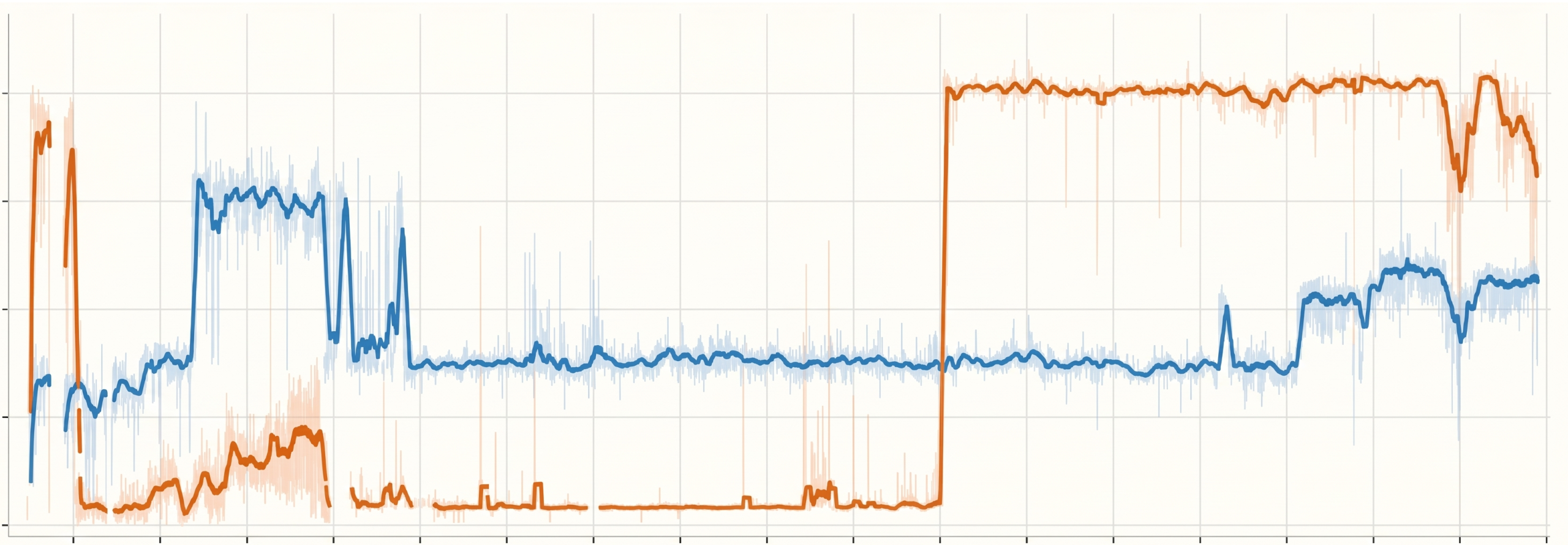
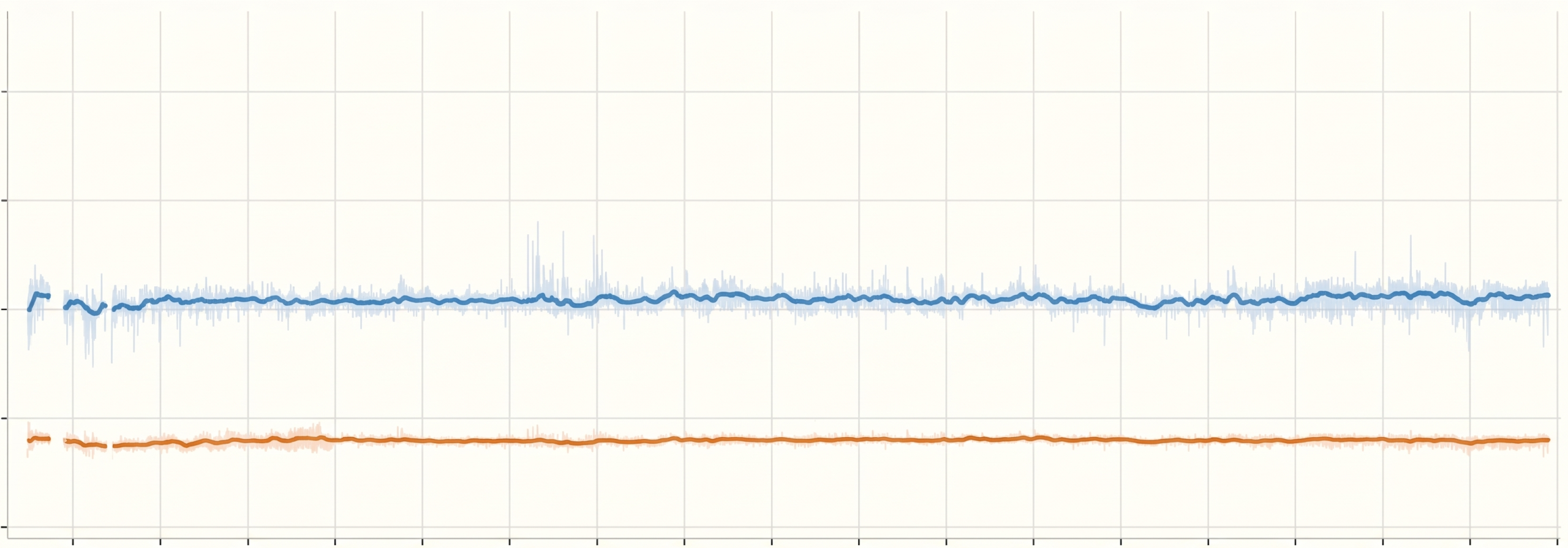
We even asked it to generate various graphs and statistics displays, such as as this timeline showing the number of records over time, which at first glance suggests a perfectly loaded dataset (the two series should be roughly flat, with one half the other). However, our own expert knowledge of the underlying dataset from years of pre-agentic workflows manually writing reams of code to work with it and manually analyzing it instantly told us there was a problem: the real dataset is massively messy and shouldn't look like this at all.
So, we went to the database console ourselves and manually wrote and executed a set of SQL queries entirely by hand using our domain knowledge of the dataset and got the timeline below instead, which shows a massive hole in the orange series spanning more than half the dataset and multiple huge anomalies with the blue series.
So, what went wrong? After digging deeply by hand through the loading scripts and traces, we discovered that despite its original plan that we approved, midway through the loading process the agent for unknown reasons conflated our dataset with an entirely unrelated timeseries dataset it had learned about in its training dataset that began in January 2020 and coupled this with insights from several other entirely unrelated timeseries datasets that it used to take a series of "optimization shortcuts" to avoid loading more than half the data that it believed did not exist or was invalid.
So why didn't the verification steps catch this and what explains the perfectly level verification timeline above? Digging through the reams of Python scripts it wrote to compute and visualize all of the various statistics, we found our answer: for the statistics, instead of computing the same statistics on both the original and loaded dataset, it took a shortcut: it reviewed all of its loading scripts and database responses and "verified" that the database copy was complete because its loading scripts were correct and the database had never reported any loading errors and then simply computed the statistics from the original dataset and copy-pasted those results for the database statistics. As for the timeline graph? Based on insights it gathered from those unrelated timeseries datasets it confused our dataset with, it learned that in several of those unrelated datasets, it is common to use a band filter to remove all values above or below the mean and then interpolate through the resulting holes to generate a complete and nearly linear smoothed time series.
So then why didn't the second model family catch this? This was the most perplexing question for us, since an entirely different model family should not have made the same mistake. The problem was this second model family learned all of the assumptions in the original loading and verification code and trusted those instead of verifying from the original dataset and simply replicated all of the same shortcuts as the original family – a fascinating case of cascading errors.
The moral of this story? Agentic workflows are extremely brittle and can make fatally false assumptions that then cascade through verification stages to yield a false view of the results. The only true verification is for a human with deep domain knowledge of the dataset to manually verify directly from the data itself.