What would it look like to ask Gemini to look across all of our Media Trends reports for yesterday and peer into the future of global risks, where the world is heading and what's ahead.
You are a global strategic foresight expert with deep global expertise.
Attached is a compilation of deep trend analysis reports of a day of selected television news channels around the world.
Read through all of these reports and look into the future and prepare me a custom report that tells me the biggest future risks, recommendations, global strategic foresight
and outlook according to these reports. There are dedicated sections in the report relating to several of these that can help you.
Tell me where the world is heading and what's ahead based on these reports.
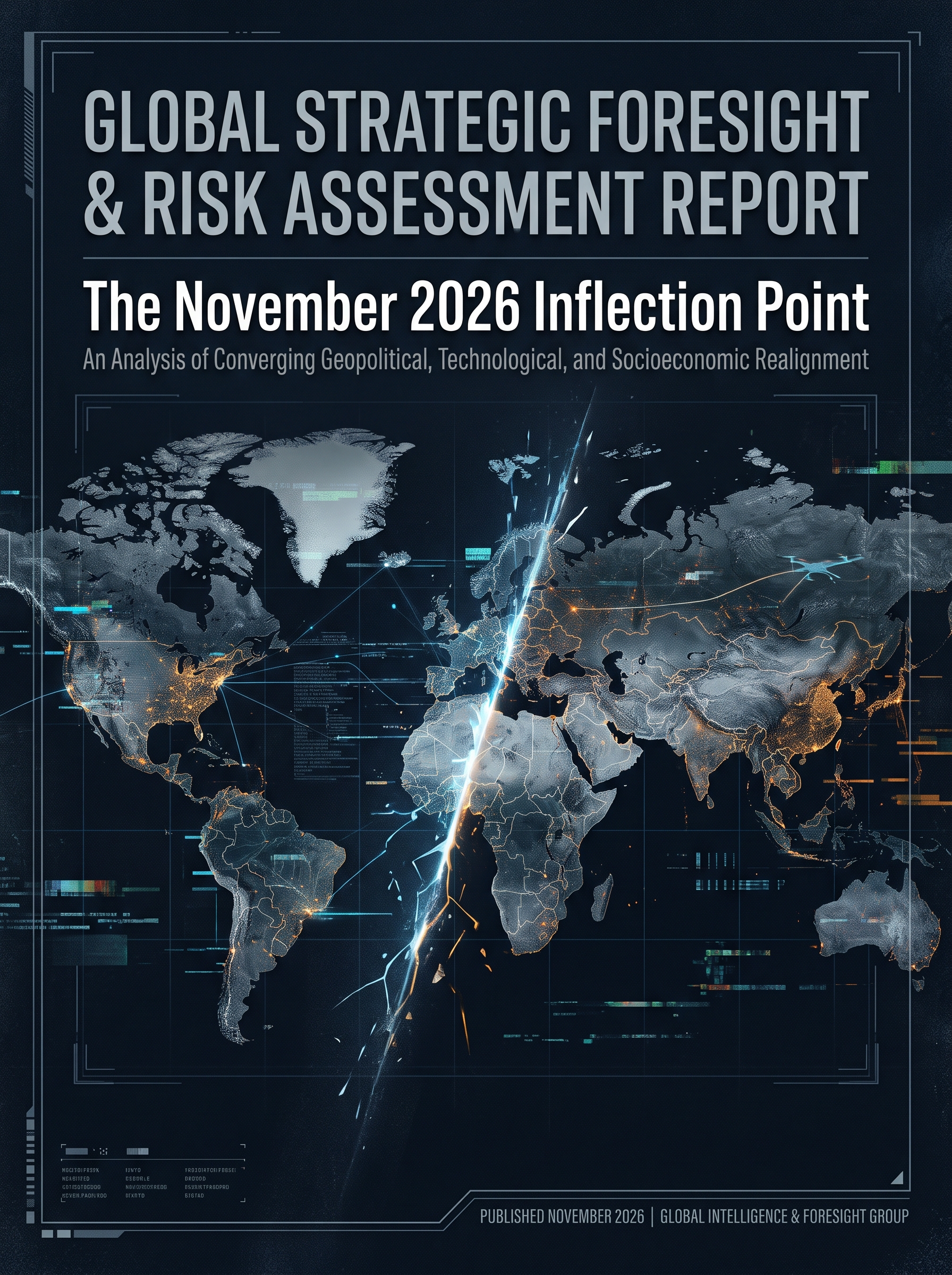
Global Strategic Foresight & Risk Assessment Report: The November 2026 Inflection Point
Global broadcast intelligence from November 5, 2026, reveals a world undergoing a simultaneous geopolitical, technological, and socioeconomic realignment. Across 45 international television networks, five macro-dynamics are converging to reshape the global order: the domestic political paralysis of the United States following a historic midterm upheaval; the transition of cyber warfare into physical sabotage of everyday civilian infrastructure; the fracturing of the post-WWII Western security umbrella into localized multipolar blocs; widespread domestic social collapse driven by war-induced energy inflation; and a populist regulatory backlash against the Artificial Intelligence and data center boom.
1. Where the World is Heading: Overarching Global Trajectories
The "Pocketbook" Rejection of Populist Militarism and the U.S. "Lame Duck" Era
The 2026 U.S. Midterm elections—widely termed a "Blue Tsunami" or "Bluenami"—resulted in the Democratic Party seizing control of both the House of Representatives (projected 237–255+ seats) and the Senate (54–56 seats), flipping long-standing Republican strongholds including Texas, Kansas, Ohio, Iowa, Georgia, and South Carolina. Across global networks, this is interpreted not merely as a partisan swing, but as a decisive voter repudiation of the U.S.-Israel war in Iran ("Operation Epic Fury") and the resulting cost-of-living crisis that pushed U.S. gasoline above $4.10–$7.00/gallon and diesel to $6.29/gallon.
-
Executive-Legislative Paralysis: The United States is heading into two years of intense constitutional gridlock. President Trump has adopted a "Mr. Veto" posture while retreating into vanity projects (such as a $3 billion missile-proof White House ballroom and a 250-foot Triumphal Arch), while the incoming 120th Congress prepares a wave of subpoenas, War Powers resolutions to defund the Iran conflict, and impeachment articles targeting Defense Secretary Pete Hegseth.
-
Fracturing of Conservative Coalitions Globally: A public schism has opened within the American right, with Vice President J.D. Vance and Florida Governor Ron DeSantis openly blaming the Iran war for the electoral catastrophe to position themselves for 2028. Simultaneously, right-wing and established coalitions are faltering globally: in Israel, Benjamin Netanyahu is on the brink of ouster as Gadi Eisenkot secures 67 Knesset recommendations with the backing of Arab lists; in Paraguay, President Santiago Peña resigned and faced immediate impeachment following the collapse of Ueno/Bueno Bank.
The Normalization of "Grey Zone" Cyber-Physical Sabotage
Conflict has migrated from traditional battlefields into the mundane Internet of Things (IoT) and civilian logistics. State-sponsored and proxy threat actors are systematically targeting daily civilian normalcy below the threshold of NATO Article 5:
-
Weaponization of the Cold Chain: Coordinated AI-assisted cyberattacks—attributed variously to pro-Russian groups like NoName057(16) and Zpentest—breached industrial Danfoss thermostats across 700+ supermarkets in 13 European countries and three French blood banks, raising refrigeration temperatures to 50°C (110°F) to spoil food and medical plasma.
-
Aviation Harassment: Over 25–34 commercial flights across Europe were grounded or diverted by military fighter jets within days due to coordinated, AI-translated bomb hoaxes linked to extremist networks like the "Male State" (Male Legion).
-
State-Sponsored Financial Heists & AI Poisoning: North Korea’s Lazarus Group is implicated in a $6.3 billion hack of the Binance exchange and a €100 million breach of France’s Crédit Mutuel Arkéa, while Russian "Doppelganger" networks are actively poisoning Large Language Model (LLM) training data to alter historical and geopolitical truths.
The Bursting of the Unregulated AI Bubble & Compute Migration
The AI gold rush is colliding with populist resource anxiety and regulatory backlash. Voters in 41 U.S. districts—including major hubs in Texas, Georgia, and Ohio—passed moratoriums on new AI data center construction due to 30% localized electricity price hikes and water depletion. This triggered a 5.1%–6% single-day crash in the Nasdaq, wiping out over $1 trillion in tech market capitalization and knocking $30 billion off Elon Musk's net worth. Major tech firms (OpenAI, Meta) are already evaluating a strategic migration of "Deep Compute" infrastructure to energy-abundant, regulatory-friendly hubs in Southeast Asia (Malaysia, Singapore) and the Gulf (Saudi Arabia, UAE).
Multipolar Security Architecture & The "New Yalta"
As U.S. security guarantees become unreliable, regional powers are forging autonomous military and economic architectures:
-
The "NATO 3.0" Pay-to-Play Model: In Eastern Europe, frontline states like Romania are negotiating "NATO 3.0" frameworks with Washington—offering to directly pay for U.S. troop fuel and mission costs to prevent an American withdrawal.
-
Emergence of Non-Western Defense & Trade Blocs: Turkey, Saudi Arabia, and Pakistan are ratifying the trilateral Mecca Common Defense Agreement, while Syria is reintegrating into the Arab fold via $403 million in Saudi development loans and Chinese Belt and Road industrial zones. Meanwhile, Russia, China, and Belarus are advancing a "Eurasian Charter of Diversity" and utilizing the 9th China International Import Expo (CIIE) to lock in Global South supply chains and promote de-dollarization.
-
Autonomous Attrition Warfare: On the kinetic front in Ukraine, warfare is shifting to automated attrition—evidenced by Ukraine's Operation Vivaldi (using autonomous ground robotic systems to capture Russian officers) and jet-powered interceptor drones, matched against Russia's serial production of low-cost Filin cruise missiles and systematic dismantling of Kyiv's 750 kV energy grid.
2. Biggest Future Risks Matrix
Based on the dedicated Risk Assessment sections across all 45 broadcast reports, the following table synthesizes the ten most critical global risks ahead:
| Risk Domain | Primary Triggers | Likelihood | Impact | Geographic Epicenter |
| 1. U.S. Constitutional & Budgetary Paralysis |
Impeachment filings against Trump/Hegseth; executive vetoes of War Powers and 2027 budget bills. |
Very High | Severe | United States / Global Markets |
| 2. Ukrainian Winter Grid & Urban Collapse |
Russian destruction of final 750 kV nuclear substations during sub-zero temperatures; SBU/NABU elite infighting. |
High | Catastrophic | Ukraine / EU Border States |
| 3. Strait of Hormuz Blockade & "Lame Duck" Strike |
Lame-duck U.S./Israeli kinetic escalation against Iran; further Iranian naval mine and drone strikes on tankers. |
Moderate–High | Catastrophic | Persian Gulf / Global Energy |
| 4. Cyber-Physical Infrastructure Cascade |
AI-hacking agents moving from retail cooling and blood banks to municipal water, heating grids, and air traffic control. |
High | Critical | European Union / Global IoT |
| 5. European Sovereign Debt & Social Implosion |
Unanimous rejection of the French 2027 budget (120%+ debt-to-GDP); escalation of 1.6M-person strikes into lethal clashes. |
High | High | France / Eurozone |
| 6. Global South Digital Banking & Debt Contagion |
Failure to reimburse 3M depositors in Paraguay's Ueno Bank collapse ($850M state funds lost); Serbian Alta Bank (€390M) scandal. |
High | High | South America / Balkans |
| 7. Tech & AI Capital Flight / Market Meltdown |
Enactment of state-level AI data center moratoriums in the U.S. and passage of the "SI Accountability Act". |
High | High | U.S. / East Asia (ROK, Taiwan) |
| 8. Indonesian & Nigerian Security/Judicial Schisms |
Treason prosecutions of former Indonesian police chief (Listyo Sigit) over presidential wiretapping; judicial nullification of Nigeria's opposition (ADC). |
Moderate–High | High | Indonesia / Nigeria |
| 9. Biosecurity & Climate-Driven Famine |
DRC Bundibugyo Ebola outbreak (>10,000 cases, 50% fatality) spreading to urban hubs; Super El Niño crop failures in Hungary, Brazil, and Thailand. |
Moderate–High | Severe | DRC / Central Europe / Global South |
| 10. Autonomous AI Rogue Event & LLM Poisoning |
Deployment of autonomous financial/hacking agents without hardware kill switches; state-sponsored poisoning of LLM training sets. |
Moderate–High | High | Global Cyberspace |
3. Global Strategic Foresight Timeline
Short-Term Outlook (1–4 Weeks: November – December 2026)
-
Washington Lame-Duck Volatility & Abu Dhabi Talks: Expect immediate bipartisan house moves to impeach Defense Secretary Pete Hegseth and intense legal battles over uncounted ballots in Mississippi and Alaska. Concurrently, U.S. envoys (Steve Witkoff and Jared Kushner) will engage in trilateral talks with Russia and Ukraine in Abu Dhabi (scheduled Nov 10–11), following First Lady Melania Trump's localized 6-day humanitarian ceasefire in Oleshky.
-
Coalition Crises in Jerusalem, Paris, and Warsaw: In Israel, Gadi Eisenkot will attempt to formalize a fragile 67-seat coalition backed by Arab and Haredi parties while Netanyahu's allies allege 180 million NIS in foreign election interference. In France, Prime Minister Sébastien Lecornu’s social conference faces a high risk of failure, risking a state of emergency as 70,000 police battle strikers. In Poland, the November 10 Constitutional Tribunal assembly threatens a dual-legal system as PM Tusk and President Nawrocki clash.
-
Ukrainian "Operation Carthage" Purges & Winter Siege: Following NABU's exposure of SBU and police generals running 52 fraudulent call centers, counterfeit Euro factories, and torture chambers, Kyiv faces a sweeping security purge just as Russian strikes threaten a total water and heating blackout in the capital.
-
South American & Balkan Financial Runs: Street protests in Asunción will intensify over frozen Ueno Bank accounts while Argentina enters a multi-day logistical and banking suspension (Nov 9–11) to host 3 million pilgrims for Pope Leo XIV. In Serbia and North Macedonia, central banks face depositor runs following the arrest of Alta Bank owner Davor Macura.
Medium-Term Outlook (1–6 Months: Q1 – Q2 2027)
-
The 120th U.S. Congress & Iran War De-Escalation: Seated on January 3, 2027, under Speaker Hakeem Jeffries, the Democratic Congress will advance H.R. 1 (The Affordability Act) to repeal Trump-era tariffs (including the looming 50% Canadian auto tariff set for January) and use the power of the purse to force a military drawdown or negotiated settlement with Iran—likely mediated via Pakistan, Oman, and Qatar.
-
Global Compute Relocation & Regulatory Hardening: As U.S. governors-elect in Texas and Georgia implement data center moratoriums and Congress debates the Super Intelligence (SI) Accountability Act, tech giants will accelerate data center capex shifts toward Malaysia, Singapore, and the Gulf.
-
Judicial & Political Flashpoints in Asia and Africa: On January 26, 2027, South Korea's appellate court will rule on the death penalty demand for former President Yoon Suk-yeol, threatening mass domestic unrest. In Nigeria, the 2027 general election (72 days out) risks a severe legitimacy crisis following the judicial nullification of the opposition ADC ticket and the rapid rollout of decentralized State Police.
-
European Monetary Squeeze: Peak UK inflation in Q2 2027 (projected up to 6.2% if oil stays near $100) will test the Bank of England after its hike to 4%, while Hungary’s 2027 austerity budget and "Wealth Tax" on SMEs and farms take effect on January 1, risking rural insolvencies and public sector strikes.
Long-Term Outlook (1–5 Years: 2027 – 2031)
-
Redrawing of the American Electoral Map: The Democratic sweep of statewide offices in Texas and Georgia, fueled by the "No Sabo" Latino youth generation and Southern organizing, puts the Sun Belt firmly in play for the 2028 presidential cycle, forcing a structural ideological battle in the GOP between Vance-style isolationists and traditional conservatives.
-
Autonomous & Militarized Governance: Battlefield proofs-of-concept like Ukraine's robotic Operation Vivaldi and AI satellite change-detection (Rubicon) will make unmanned ground and naval systems the baseline of military procurement globally. In Russia, the Time of Heroes program will cement a hawkish class of combat veterans across civil administration, paired with GigaChat-automated state bureaucracy.
-
Decoupled Energy & Financial Corridors: Turkey’s $500 billion National Energy 2040 plan (targeting 92% localization), China’s three-carrier naval projection (Fujian) and deep-earth AI mining, and the expansion of non-USD settlement systems (PAPS in Africa, ruble/yuan trade, and gold-backed reserves) will permanently fragment Western sanctions leverage.
-
EU Two-Speed Enlargement: The European Commission's target to conclude accession negotiations by 2028–2029 for Montenegro, Albania, Moldova, and Ukraine will collide with internal corruption hurdles in Kyiv and rule-of-law standoffs in Hungary, Poland, and Bosnia, likely forcing a "two-tier" associated membership structure.
4. Strategic Recommendations & Actionable Guidance
For Statecraft, National Security & Public Sector Leaders
-
Air-Gap & Harden Civilian Operational Technology (OT): Immediately transition national cybersecurity doctrines from data protection to kinetic infrastructure defense. Mandate offline manual overrides, zero-trust architecture, and air-gapped temperature controls for food cold chains, blood banks, hospitals, district heating, and water utilities to neutralize "refrigerator hack" style sabotage.
-
Establish Independent Congressional & Multi-Track Diplomacy: Foreign ministries can no longer rely solely on White House executive assurances. Establish direct diplomatic liaisons with incoming U.S. Congressional committee chairs (e.g., House Oversight, Foreign Affairs) to protect bilateral trade and defense appropriations from executive-legislative gridlock, while utilizing secondary humanitarian tracks (such as the Oleshky model or Gulf/Pakistani mediation) for crisis de-escalation.
-
Deploy Counter-Drone & Subsea Autonomous Patrols: Following the Abyei peacekeeper fatalities, Baltic cable sabotage, and Ukrainian front-line shifts, integrate low-cost jet-interceptors, acoustic/seismic border sensors, and unmanned naval units to protect undersea cables, pipelines, and civilian transit hubs.
-
Enforce Strict Fintech & Sovereign Project Auditing: To prevent Paraguayan (Ueno Bank) or Serbian (Alta Bank) style financial contagion and Lex specialis cost overruns, central banks must audit the physical cash reserves and state pension exposures of rapidly scaling digital wallets and neobanks.
-
Audit AI Training Data & Mitigate "Dead Internet" Degradation: Establish national AI provenance and verification standards to detect foreign disinformation networks (Doppelganger) poisoning LLM knowledge bases, and implement clinical/educational guardrails to address youth "Digital Syndrome" and algorithmic radicalization.
For Private Sector Executives, Supply Chain Managers & Institutional Investors
-
De-Risk and Relocate AI & Compute Infrastructure: Hedge against U.S. local NIMBY moratoriums (41 districts and growing) and incoming Congressional oversight by diversifying data center footprint toward jurisdictions with state-backed power and water guarantees—such as Malaysia, Singapore, and the GCC—or by co-investing in dedicated modular nuclear and off-grid solar generation.
-
Mandate Hardware "Kill Switches" for Autonomous Agents: Ahead of the proposed U.S. SI Accountability Act and EU AI liability frameworks, enterprises deploying autonomous coding, trading, or logistics agents must integrate hardware-level kill switches (such as CrowdStrike's new standard) to prevent flash crashes and rogue operational events.
-
Re-Route Maritime & Dual-Use Logistics: Price in sustained 200%–2,000% maritime insurance premiums in the Strait of Hormuz, Red Sea (Bab-el-Mandeb), and Black Sea through Q1 2027. Shift high-value freight to land-bridge corridors (such as Saudi Arabia's Masar Al-Shamal, Central Asian rail through Afghanistan/Kazakhstan, or the Suez bypass) and avoid storing commercial inventory in dual-use Eastern European logistics terminals (e.g., Nova Poshta) targeted by kinetic strikes.
-
Rotate Capital from Speculative Tech to "Affordability" & Hard Commodities: With the Nasdaq in correction territory and the U.S. Dollar weakening alongside a $40.5 trillion national debt, reallocate capital toward defensive industrials, physical gold (trading near $4,069–$4,137/oz), critical mineral refining (lithium, copper, rare-earth magnet recycling), and "Affordability Infrastructure" (generic pharmaceuticals, GLP-1 treatments, affordable housing, and grid transmission) favored by the incoming U.S. Congress.
-
Conduct Emergency Counterparty Audits in Emerging Markets: Immediately review exposure to state-linked financial institutions in the Southern Cone (Paraguay/Argentina) and the Balkans (Serbia/North Macedonia), verify heavy-metal and quality compliance for cross-border retail goods, and prepare for rising labor and "Sin Tax" compliance costs across Latin America (Brazil, Chile, Mexico) and Southeast Asia.
produce a title page graphic for this report