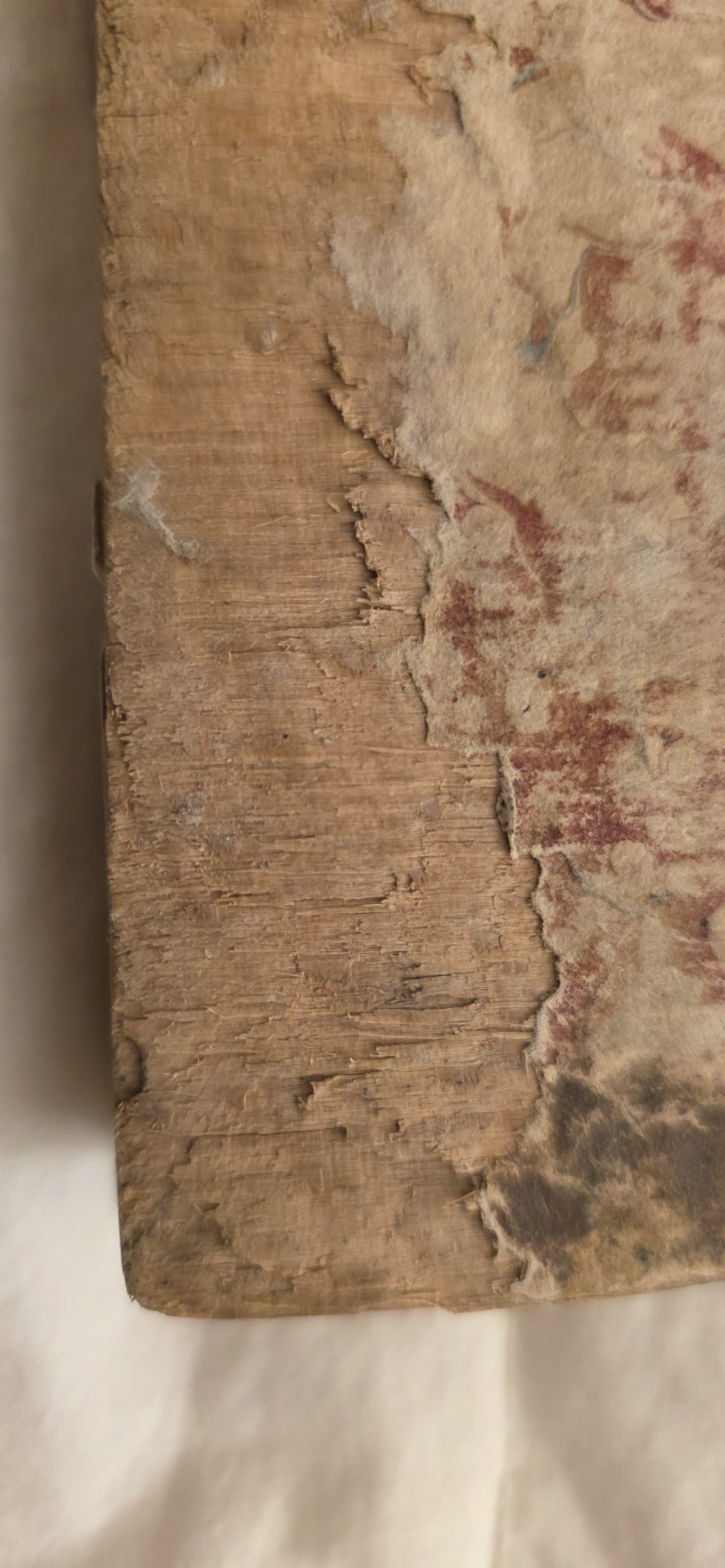
The Collection holds a tremendous range of original contemporary bindings spanning from the early 1500s through the middle of last century. Historically, all of our bindings with wooden boards were large heavy thick works, yet recently we found ourselves accessioning a small light quarto book published in Riga in 1689, which was the capital of Swedish Livonia at the time. The binding was allegedly original, with marbled papers over wooden boards, which piqued our curiosity, since all of our books of this size back to the early 1500s all have pasteboard or similar bindings. Why does this have wooden boards? Once again, Gemini tracked down an answer for us in a matter of seconds.
To better understand this binding, we provided Gemini with photographs of the binding and title page and the prompt below. Gemini not only pointed us to references like the American Institute for Conservation (AIC)'s boards reference, it incorporated knowledge of the book's origin into its explaination!
Why is this book have wooden boards? Could this be the original contemporary binding?
Thin wooden boards (often called scaleboard, German Holzdeckel, or Swedish spånpärmar) on a small quarto from this period are a classic regional hallmark of Baltic, Scandinavian, and German bookbinding—and they make particular sense given the text and its original owner.
1. Regional Tradition and Material Economics
While binders in France, Italy, England, and the Low Countries had largely replaced wood with pasteboard for smaller formats (quartos and octavos) by the late 16th century, binders across the German-speaking lands, Sweden, and the Baltic provinces (like Swedish Livonia) continued using thin wooden boards well into the 18th and early 19th centuries.
-
-
Abundance of Timber vs. Rag Scarcity: Pasteboard and millboard required steady supplies of waste paper, rags, and specialized milling—resources that were relatively scarce and expensive in the Baltic around 1700 (especially with the outbreak of the Great Northern War in 1700, which began with the Siege of Riga). Conversely, straight-grained hardwood—typically beech, birch, or oak—was abundant and could be easily riven (split along the grain) and planed into sheets just 2 to 3 millimeters thick.
-
The "Scaleboard" Hybrid: Notice how thin and flat your boards are compared to heavy, beveled medieval wooden boards. By the late 17th and early 18th centuries, Baltic and Swedish binders used thin wooden laminates in the exact same manner as pasteboard—covering them in fashionable contemporary materials like French or Dutch marbled paper and half calf so the book looked modern on the shelf while retaining a rigid core.
-
2. Durability for a Working Legal Text
Even where pasteboard was available, binders intentionally chose wooden boards for books subjected to heavy, daily handling or travel:
-
-
Administrative Utility: The Lieffländische Landes-Ordnungen wasn't a leisure book for a heated drawing room; it was the active statutory law code of Swedish Livonia.
-
Climate Resistance: In the damp, unheated estates, courtrooms, and carriages of the Baltic region, pasteboard was prone to absorbing moisture, warping, and delaminating at the corners. Thin wooden boards stayed rigid and protected the text block far better during transport.
-
3. The Owner on Your Title Page
The provenance on your title page ties directly into why this copy was bound for heavy duty. The signature flanking the Livonian griffin coat of arms—"Gustaff Ad: Strömfelt"—belongs to Gustaf Adolf Strömfelt (1640–1717).
Strömfelt was a major landowner in Livonia and served as the Swedish Ståthållare (Royal Governor/Bailiff) of the Tartu (Dorpat) and Pärnu (Pernau) districts during the 1690s and 1700s. For a high-ranking provincial magistrate actively enforcing Swedish royal ordinances across Livonia, this book was a daily administrative tool that needed a tough, utilitarian binding built from local Baltic materials. Later, when Strömfelt's descendants returned to Sweden following the Russian conquest of Livonia in 1710, the volume made its way into the famed aristocratic library at Ericsberg Castle in Södermanland.
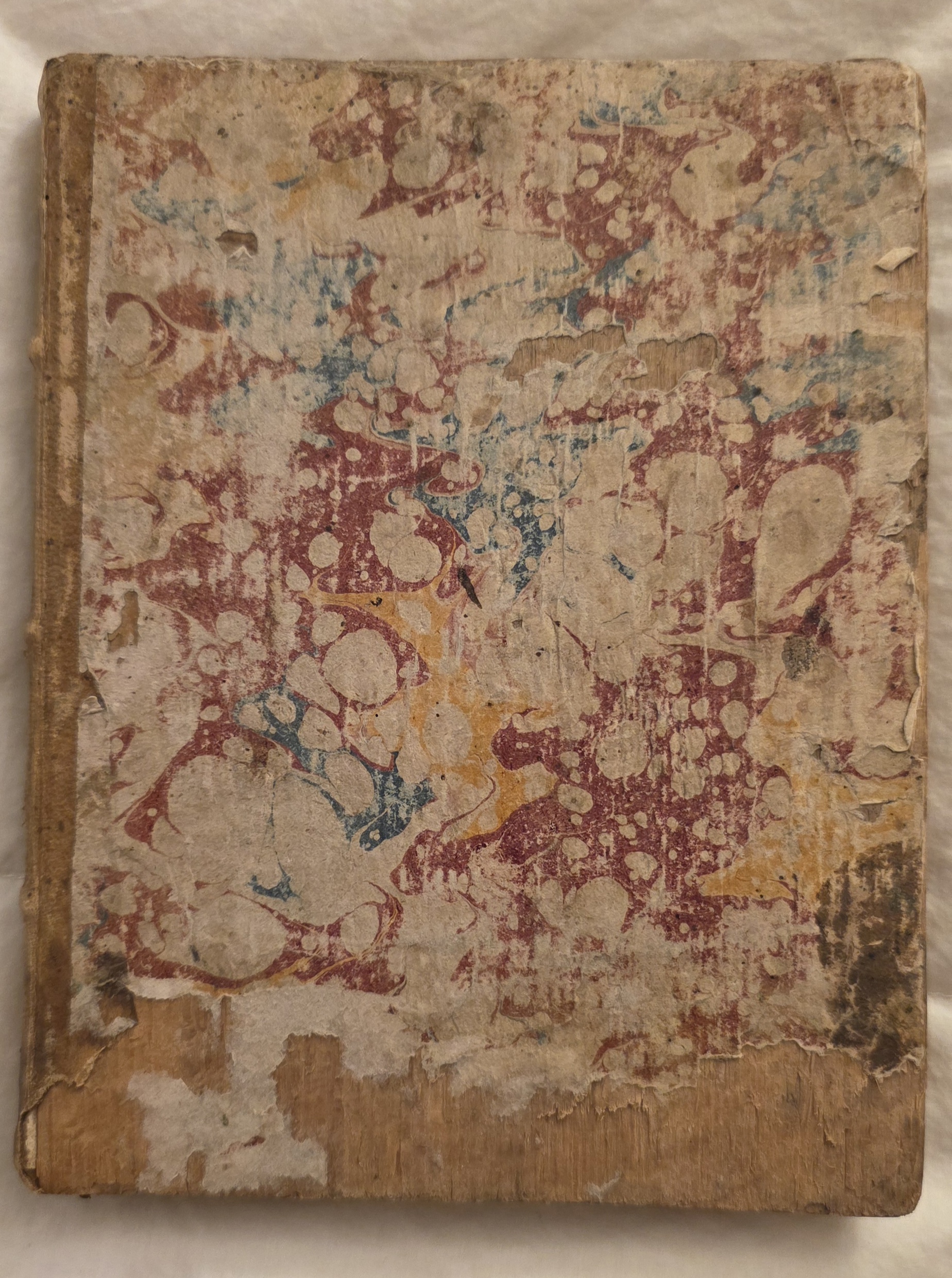
You can see a closeup of the board below: