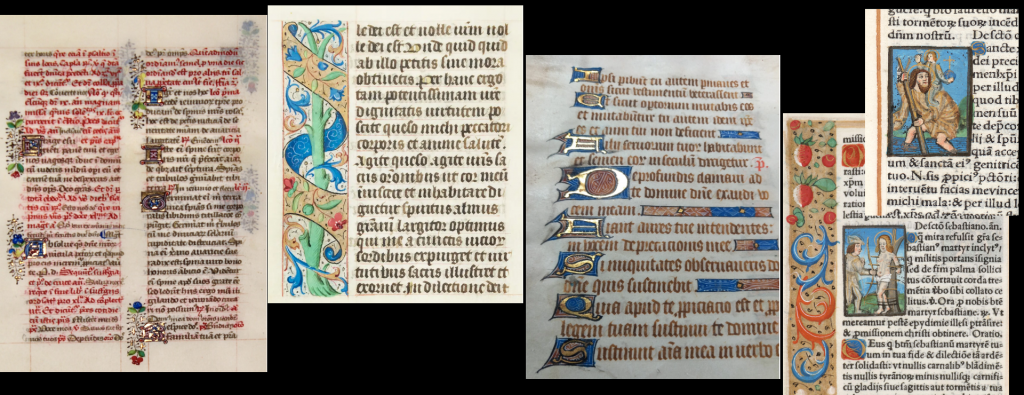
Earlier this week we demonstrated Gemini Deep Research's ability to correctly catalog and describe a trio of 800-year-old manuscript leaves. Let's see how it performs on a set of six book of hours leaves representing a range of styles, visuals, artistry and form. Amazingly, Gemini correctly matches the previous human assessment for each of the six leaves. Remarkably, it even correctly identifies the hybrid printed/hand-illuminated leaf at the end, identifying the distinctive regularity and style of its text as indicative of hybrid printed books of hours.
For those interested in replicating these results for your own collections, this is the prompt we used:
Give me a deeply researched history and context of the attached leaf and focusing on its background, context, significance, meaning to and place among its peer works and rarity.
Tell me about its contents, their importance, its construction, materials used, format, dimensions, author/artist/engraver/publisher/illuminator/etc.
Think very carefully about the text and tell me precisely what the text is.
Perform a paleographic analysis of the writing.
If there is music, tell me precisely what the music is.
This is a single leaf from a larger work. Try to identify the source work it comes from.
If there are illuminations or illustrations, describe them and tell me about their meaning and purpose.
Look carefully for later marginalia that might give clues as to its provenance, previous ownership or other information.
Look carefully for damage and wear and tell me what that damage/wear might suggest or mean.
Estimate its age as precisely as possible.
Estimate how many copies survive.
Report should be entirely in English.
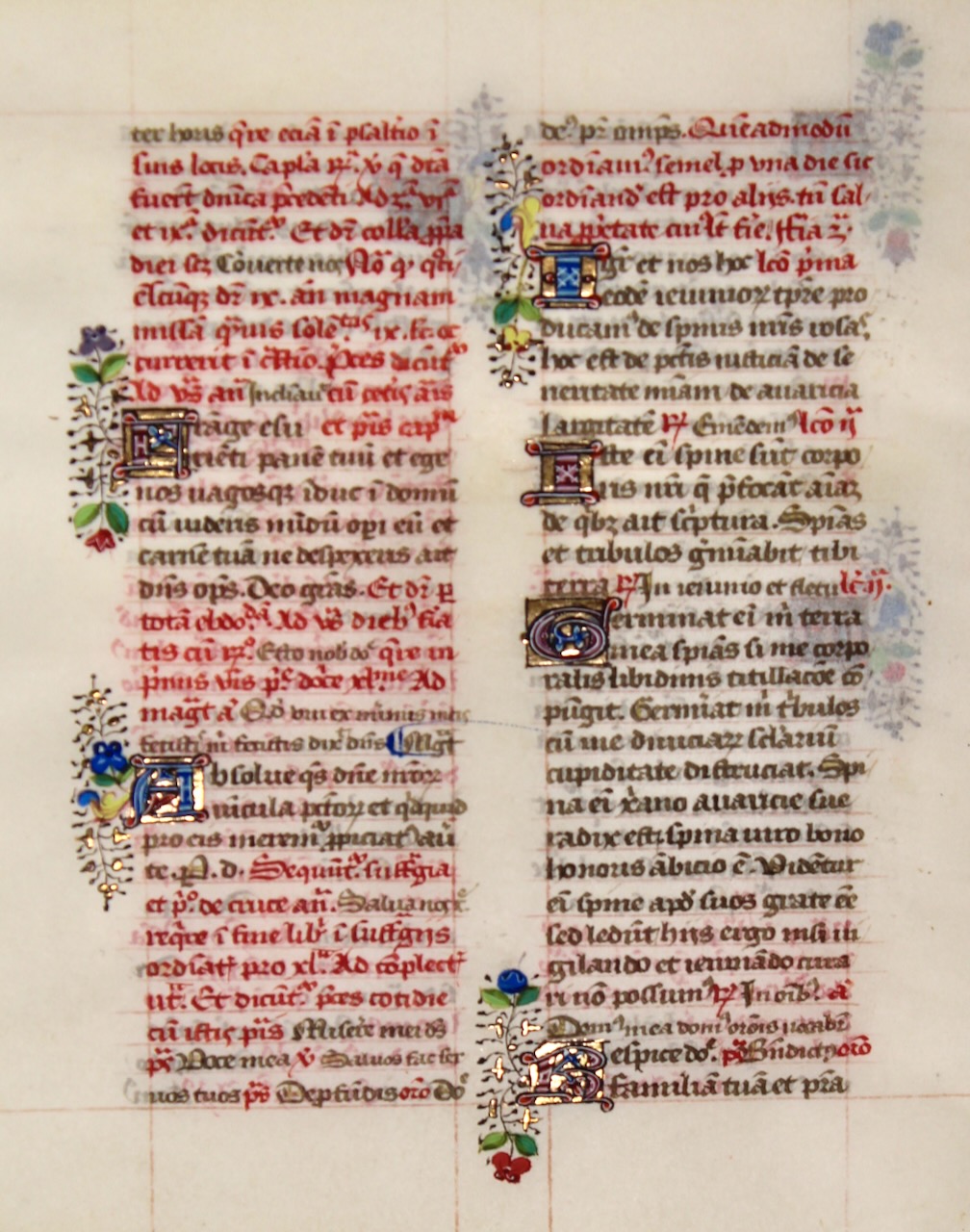
A Manuscript Book Of Hours Circa 1400-1450
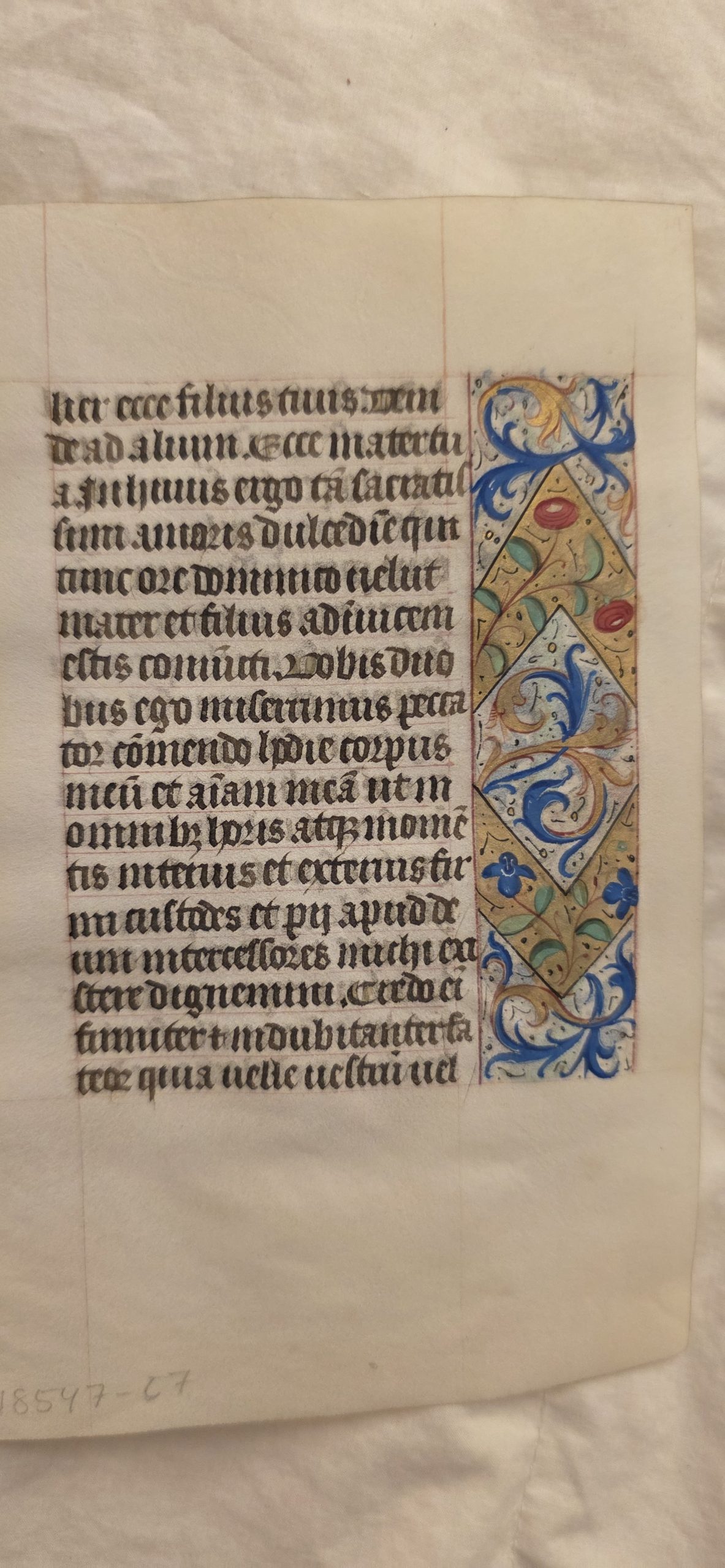
A French Manuscript Book Of Hours Circa 1470-1489
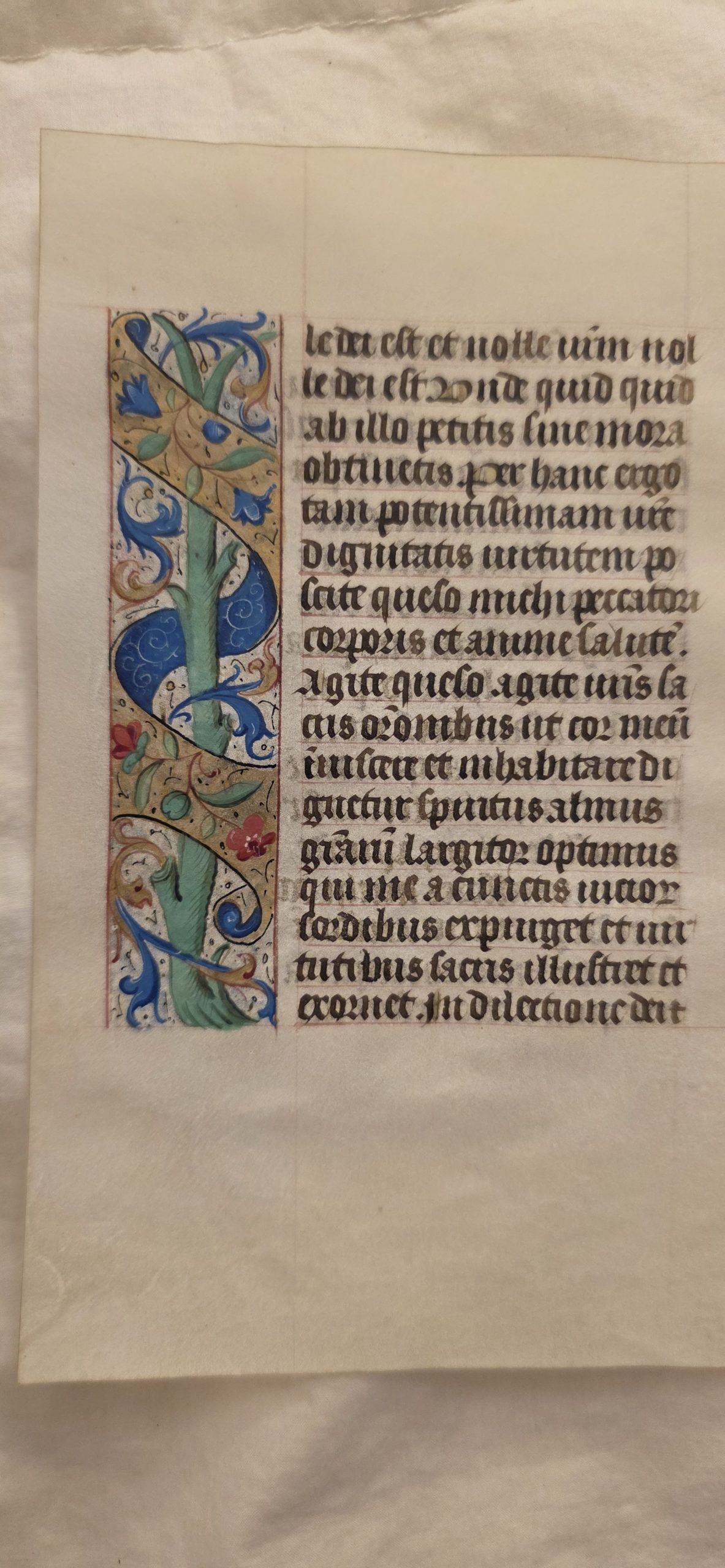
A Manuscript Book Of Hours Circa 1450-1475
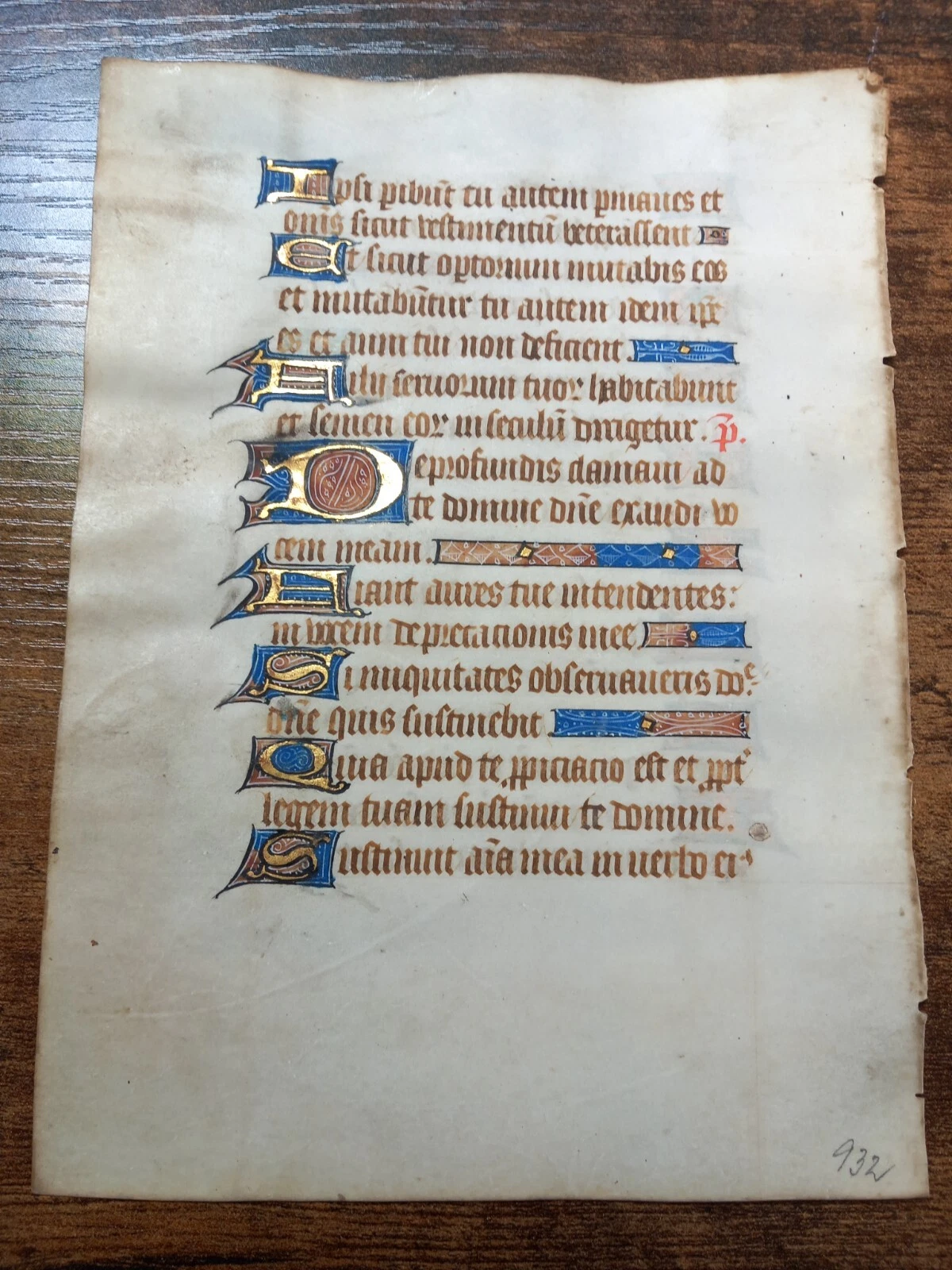
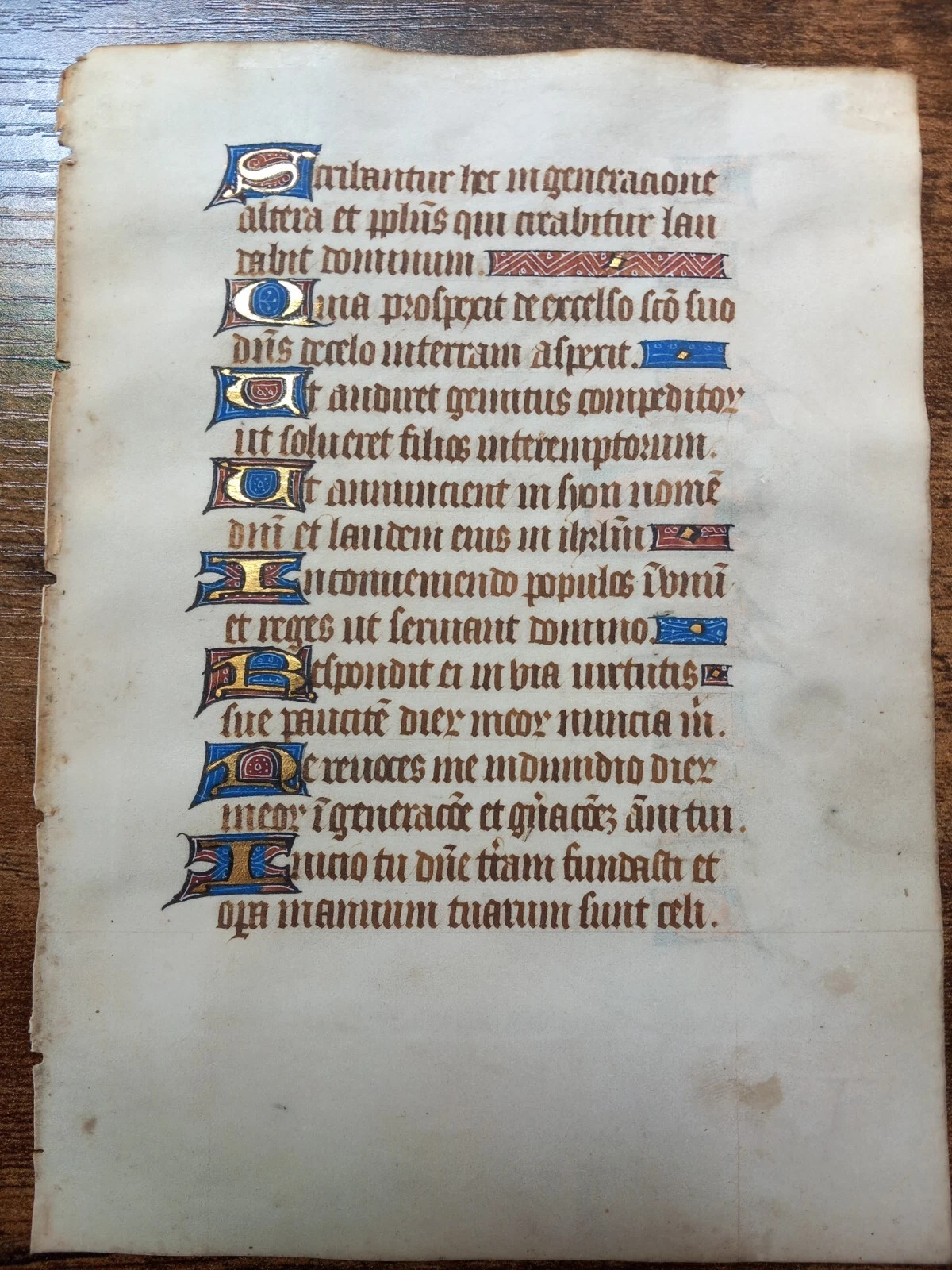
A Manuscript Book Of Hours Circa 1450-1470
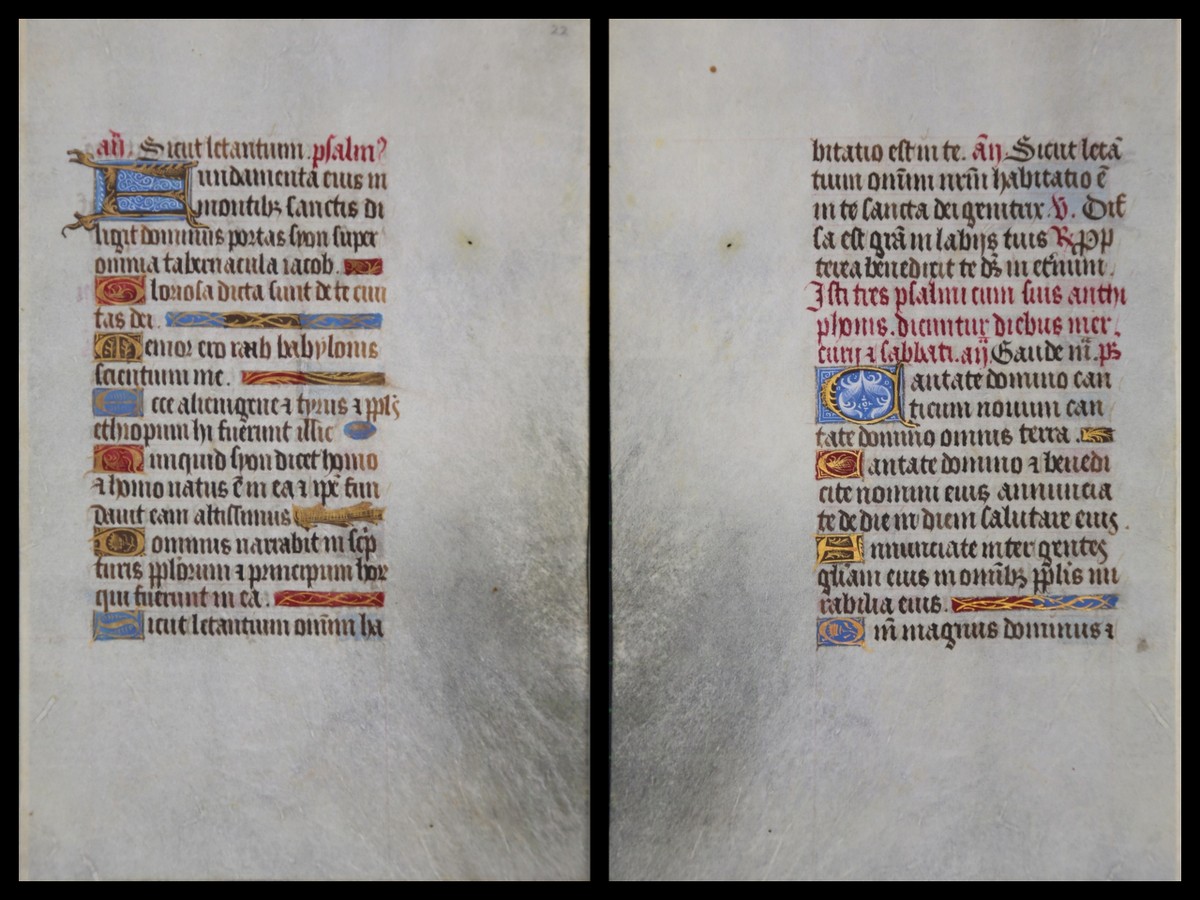
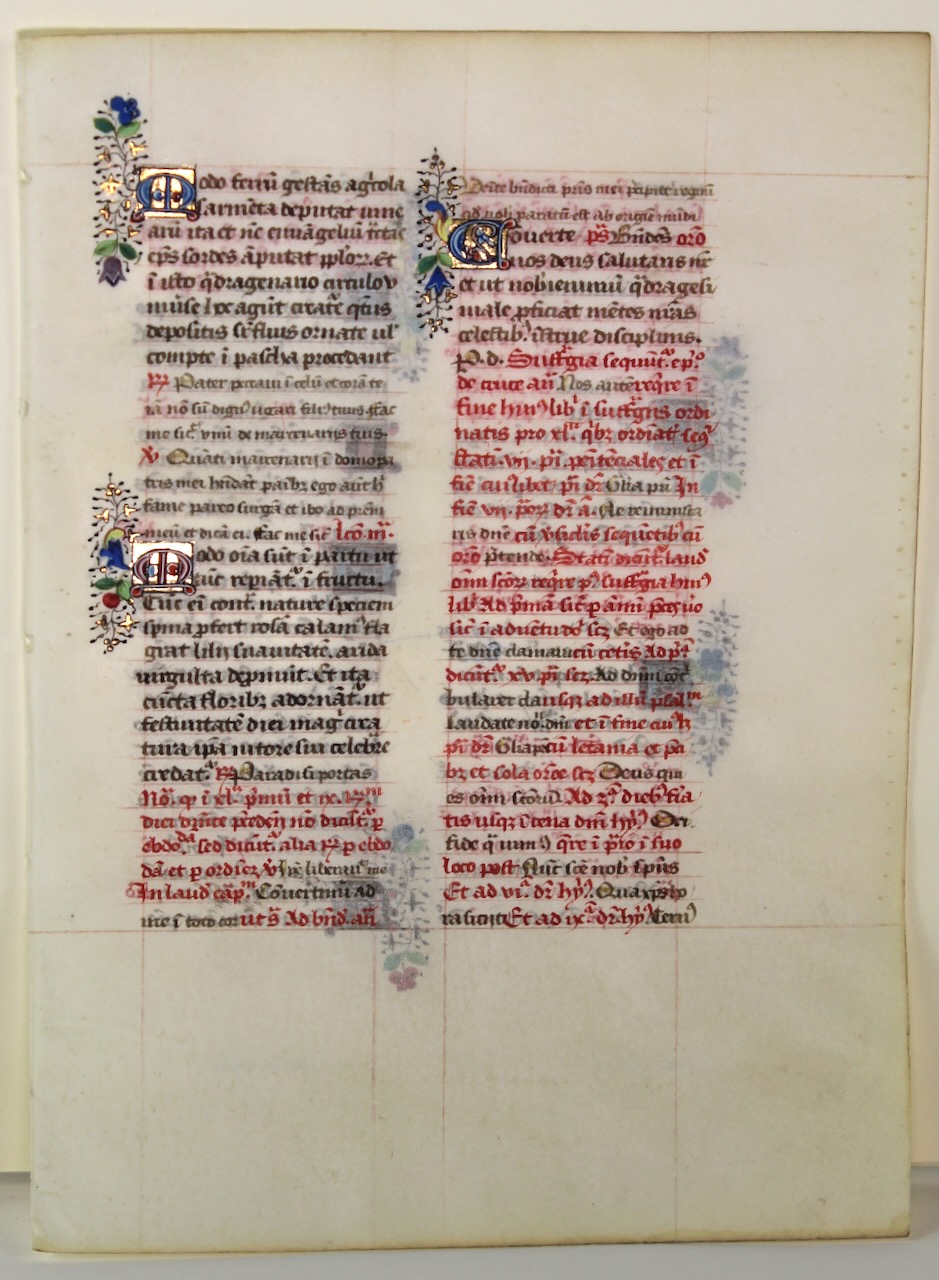
A Manuscript Book Of Hours Mid-Late 1400s
Note how Gemini fails to connect the large red initial "L" on line eight of the first page, believing the sentence begin "Auda" rather than "Lauda".
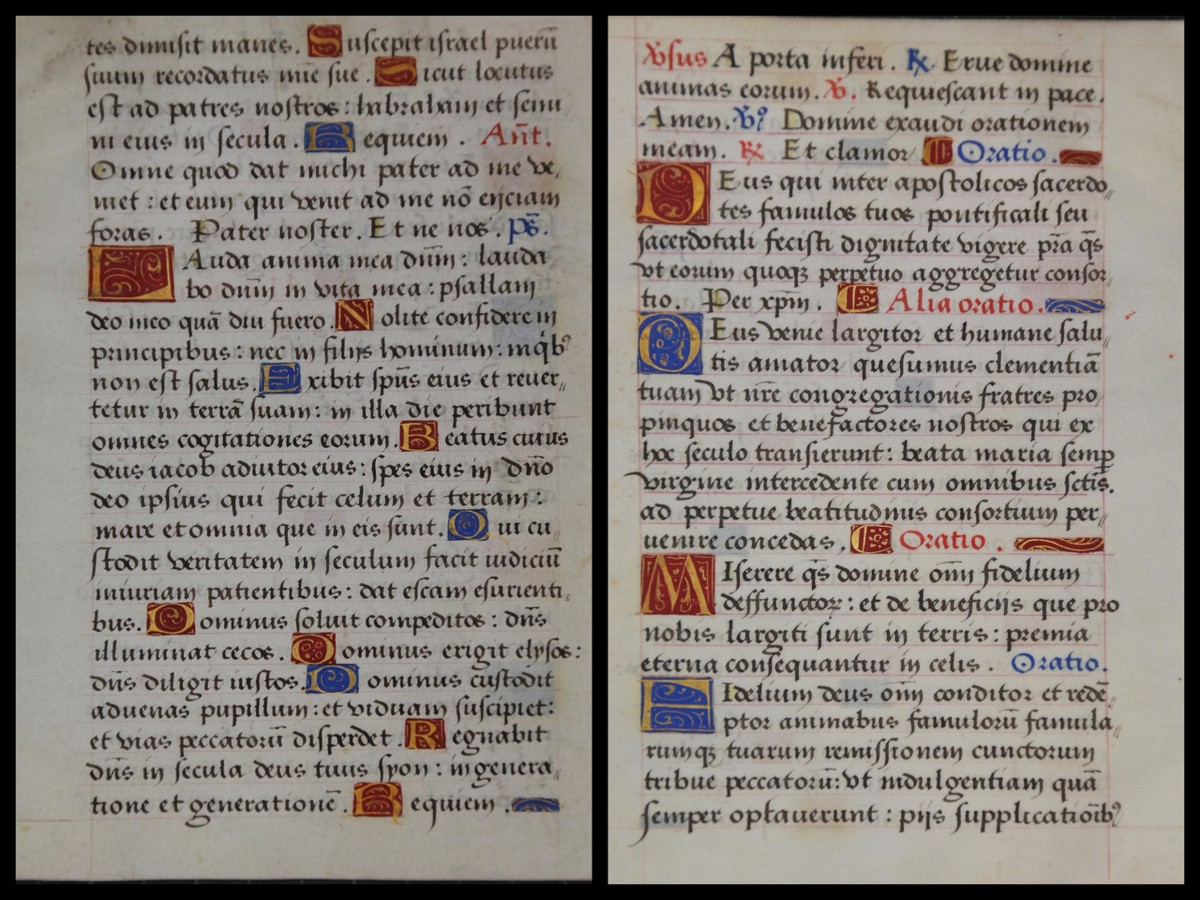
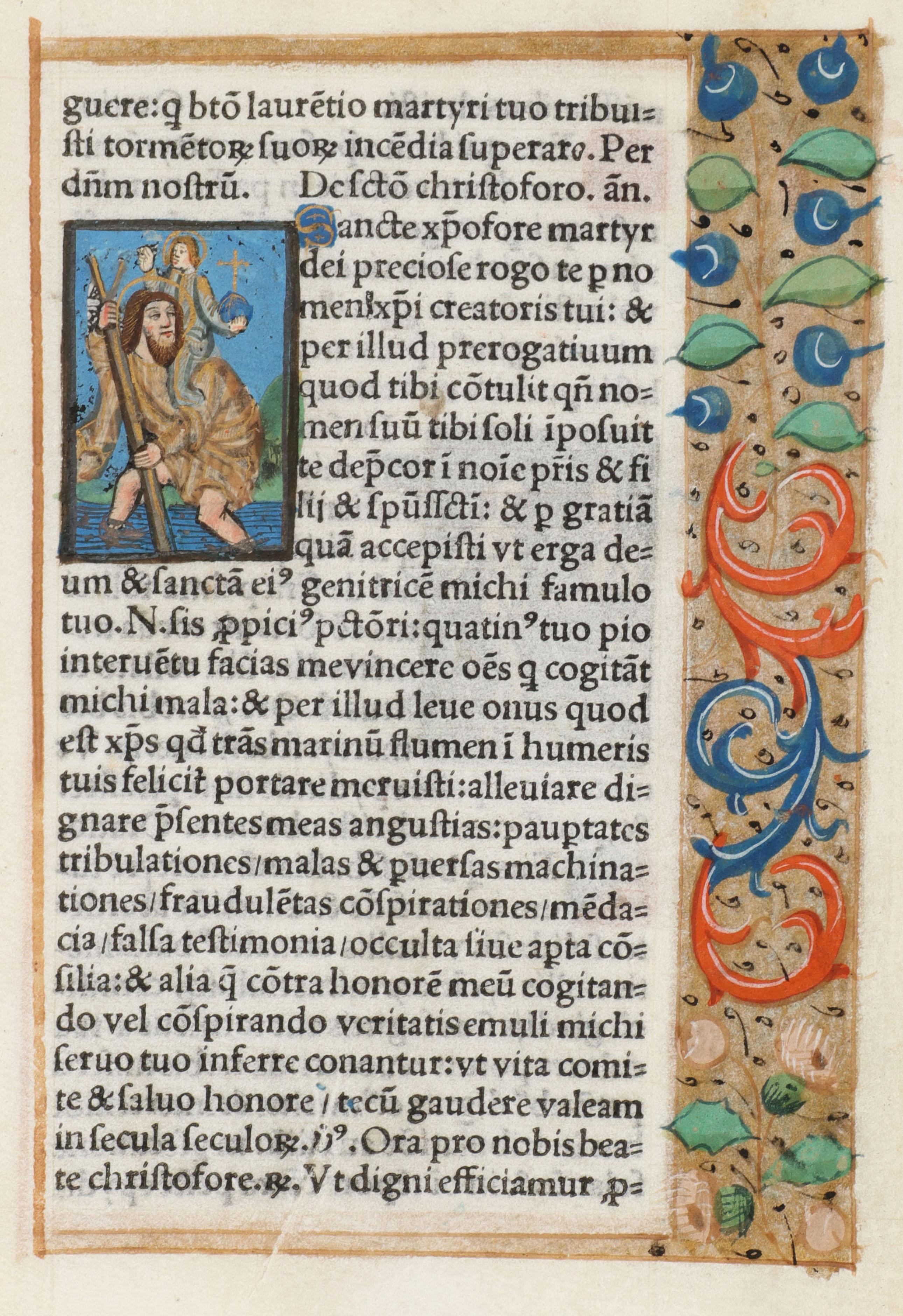
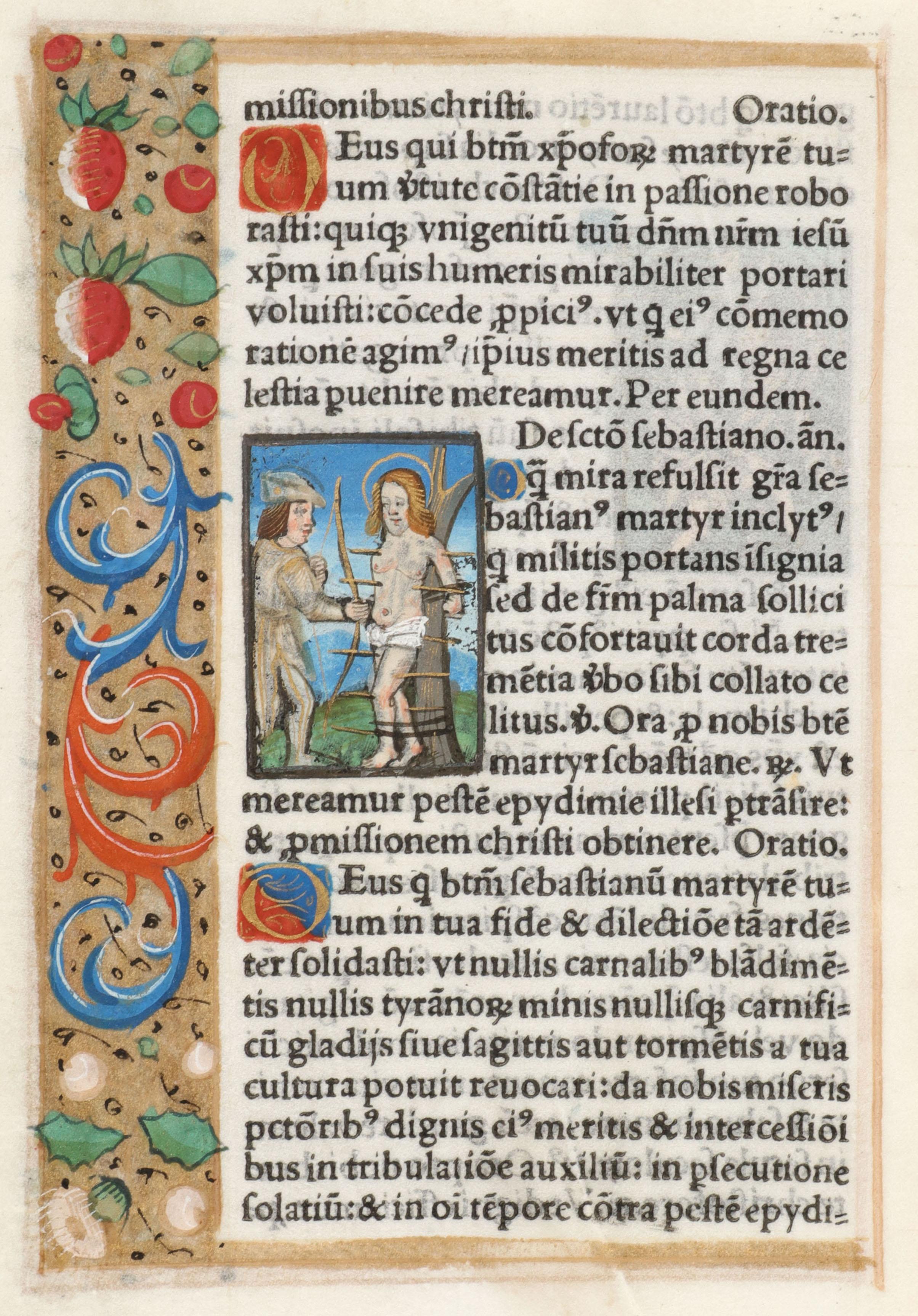
A Printed Book Of Hours Circa 1513
Incredibly, Gemini correctly identifies this hybrid printed/illuminated leaf and the likely publisher.
Below is a brief excerpt of Gemini's thought process during its initial analysis of the leaf, showing its identification of the text as highly indicative of printed leaves.
In analyzing the digital leaves of the manuscript, I am synthesizing the visual style and script characteristics. The pages display incredibly vibrant miniatures depicting the martyrdom of Saint Sebastian and Saint Christopher carrying the Christ Child. The highly regular gothic script, surrounded by lush gold-ground borders filled with strawberries, flowers, and acanthus leaves, suggests this may not be a purely manuscript leaf, but rather an exceptional example of a late 15th- or early 16th-century printed Book of Hours on vellum, likely produced in Paris by a renowned publisher such as Hardouyn, Pigouchet, or Kerver.
Investigating the Hybrid Production Technique
I am closely analyzing the visual traits of the leaf to distinguish between a hand-drawn manuscript and an early printed book. The remarkable consistency of the text column and the subtle alignments of the illustrations strongly point to a hybrid production. In late 15th- and early 16th-century Parisian workshops, publishers often printed metalcut outlines onto high-quality vellum, which were then meticulously hand-painted with opaque pigments and liquid gold. I am focusing on detecting any underlying printed outlines beneath the miniatures of Saint Sebastian being shot with arrows and Saint Christopher crossing the river with the Christ Child.
Planned Actions for Identification
To pinpoint the precise edition and publisher of this leaf, I am initiating targeted searches using key Latin phrases from the transubstantiated suffrages. By cross-referencing these specific textual variants and the stylistic details of the strawberry-and-acanthus borders with known French imprint databases, I aim to attribute this leaf to a specific Parisian publisher and narrow down its date of creation.