


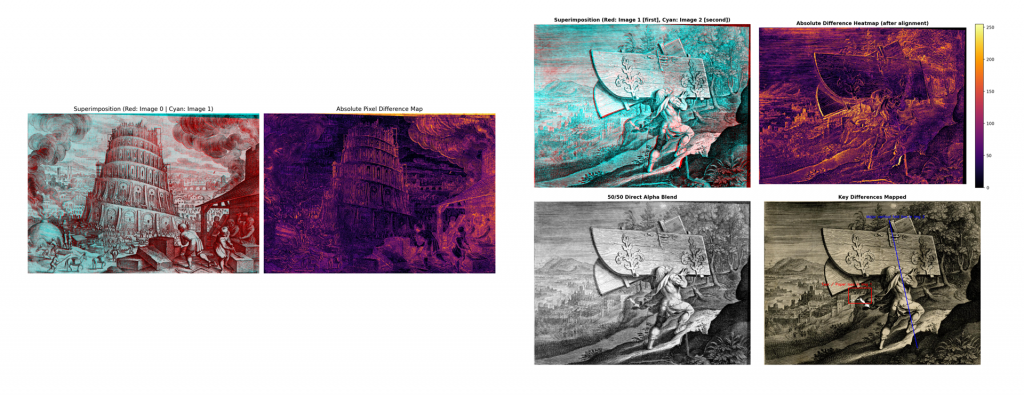
We had long assumed that the beautiful engravings in our 1740 Catholische Mayntzische Bibel were "after Merians": expert copies of the original circa-1630 suite of Biblical engravings by Matthäus Merian the Elder. The vast majority of "Merian suites" published in Bibles of the 1600s and 1700s were such copies – in fact some are even copies of copies and nearly even Bible containing Merian-like imagery is claimed to be the original Merian suite. Yet, after spending considerable time comparing the engravings to the originals and to the most famous "after Merians", the ones in our 1740 Bible just looked too perfect – so exacting that even a tracing of the original copperplates would not have yielded such a perfect match. This got us wondering, how might Gemini help us answer this question? After Gemini Deep Think repeatedly attested that photos of the engravings in our Bible were absolute matches for the British Museum's original 1630 Merian prints, we asked Gemini 3.7 Flash Code Execution to superimpose them for us and, without any further guidance from us, it actually wrote a sequence of Python scripts that layered the two images and performed pixel-level image comparison to confirm that they were an exact pixel-level match. Armed with this information, we were able to ultimately confirm this finding by having Gemini identify and translate the passage in Poortman from the original Dutch while we sat in the Library of Congress Main Reading Room last week! The ability of Gemini to entirely automate away all of the time and effort it traditionally took to perform one-off analyses like precisely comparing two images through pixel analysis offers an incredible glimpse of the potential of AI models to perform vastly accelerate such traditionally time-consuming analyses in human-machine scholarly collaborations.
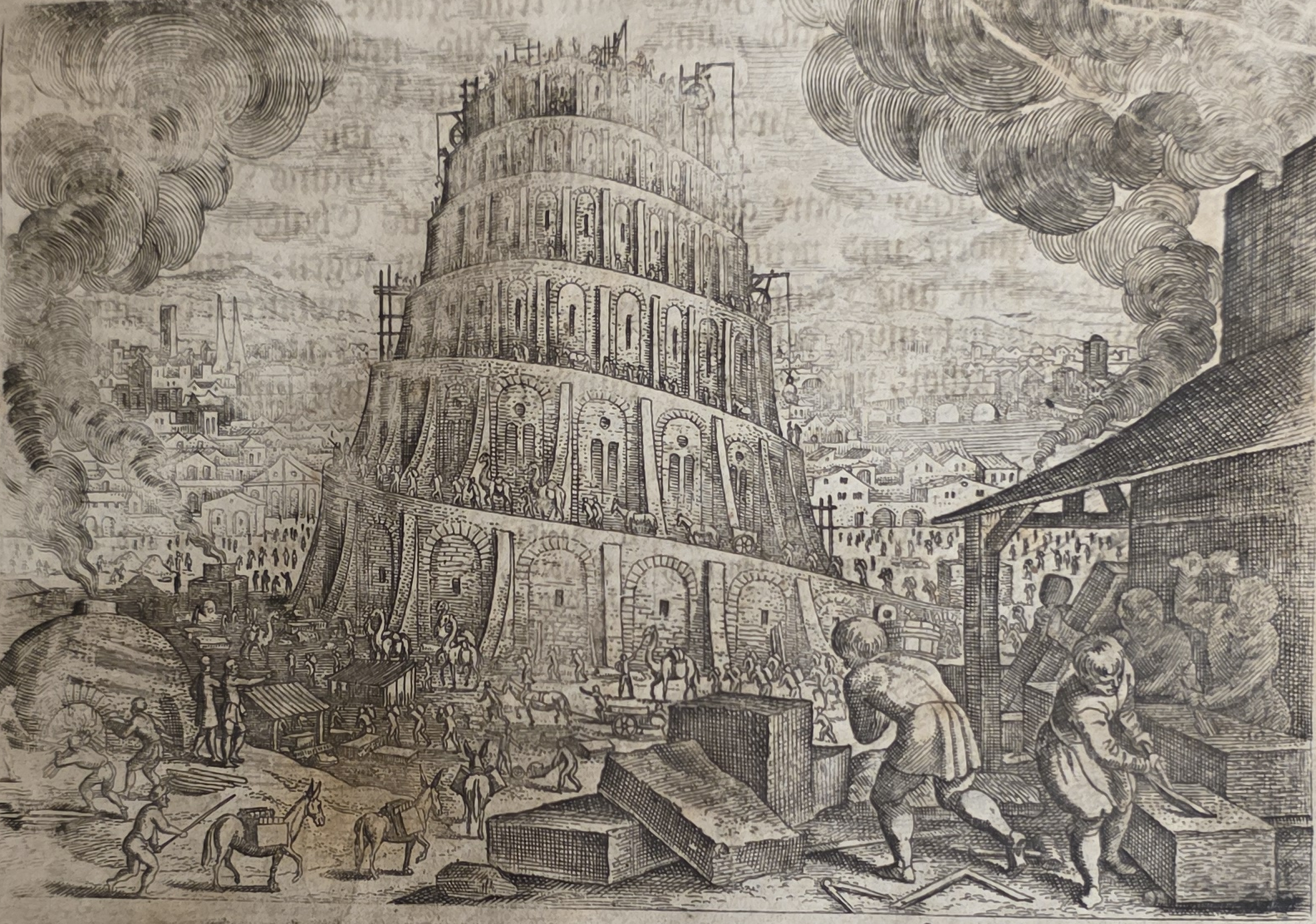
Let's start with The Tower of Babel. This is our copy, which shows very poor inking, some page damage and some plate cracks to upper right:
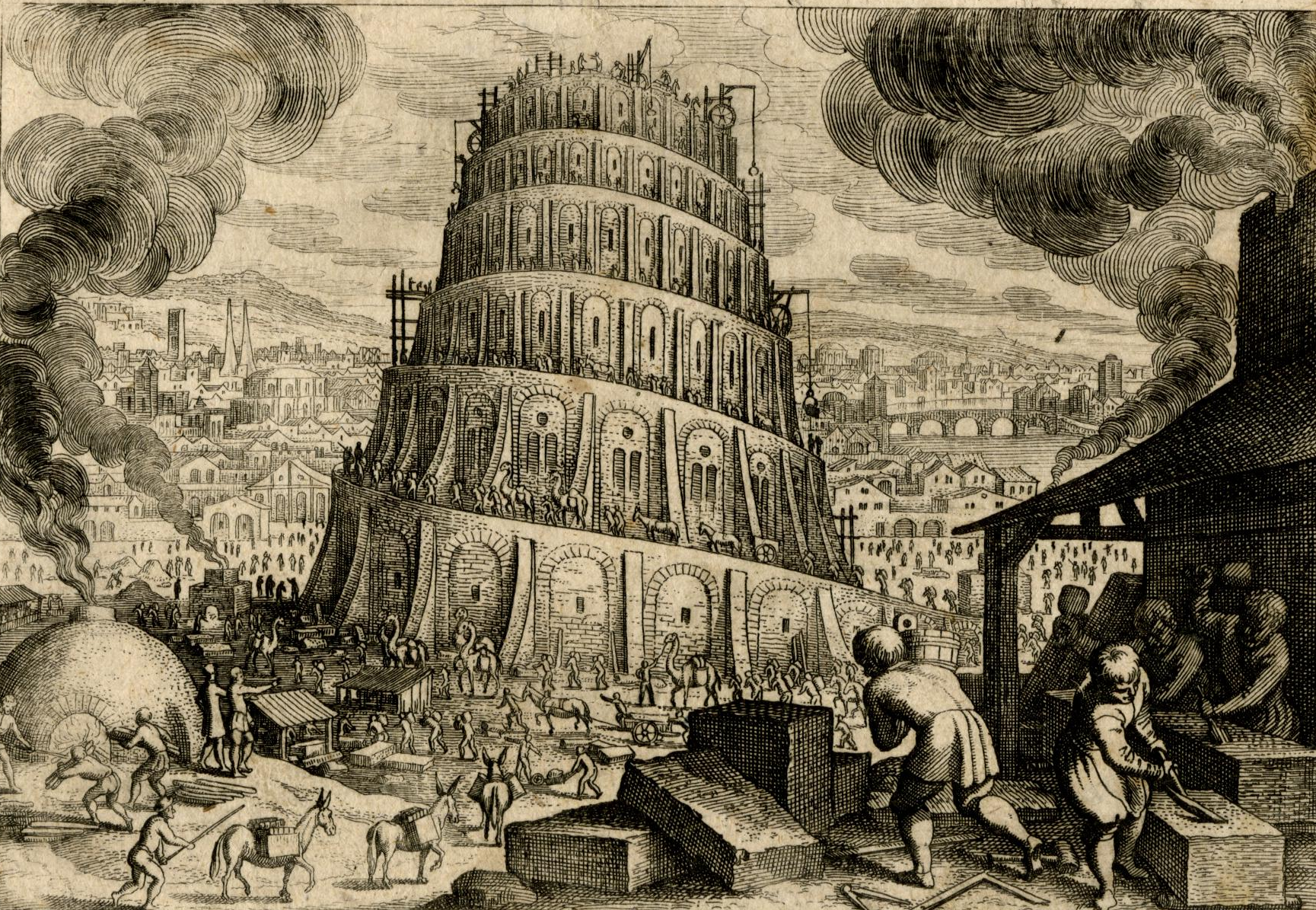
This is the original 1630 Merian held by the British Library:
Let's ask Gemini to compare the two:
Attached are two engraving prints that are almost identical.
Look incredibly carefully and compare them in extremely careful detail.
IGNORE differences in cropping, margins, coloring, paper, bleed through from the reverse and the the poor printing quality of the second.
Focus only on the image details.
Identify key differences that help distinguish them and examine whether they originate from the same plate or one is a copy of the other.
Other than the plate damage, Gemini identified not a single distinguishing difference between the two and confirmed that even the smallest details matched. Incredibly, it even accounted for the poor inking and recognized that such poor inking likely suggested multiple prints per inking and accounted for this.
Assuming Gemini was simply overlooking things, we wanted to examine the gold standard of comparison: superimposition (layering the two images on top of one another semi-transparently) and computing a pixel difference map. So, we asked Gemini 3.7 Flash with Code Generation to superimpose the two images. Gemini wrote a sequence of Python commands to render one image as blue and one as red and superimpose them, then compute a pixel difference map, all using cv2, Python's OpenCV interface. Note how we didn't tell it what libraries to use or how we wanted it to generate the superimposition or even write a single line of code ourselves – we just told Gemini to superimpose them and it figured out the rest and wrote and executed all of the code entirely on its own:
Superimpose these two images to show any tiny differences in them.
Yielding this comparison below. Incredibly, the only differences identified are the faded areas where our print was poorly inked:
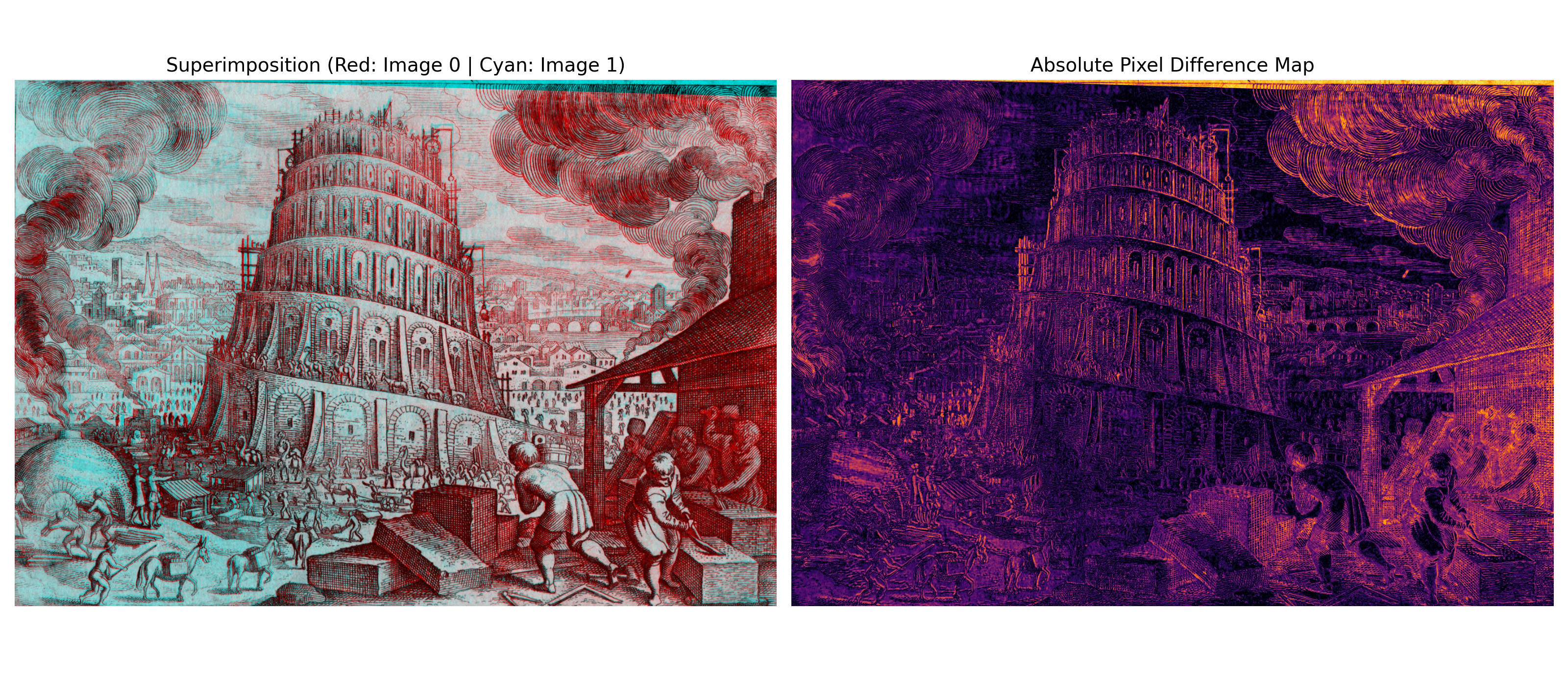
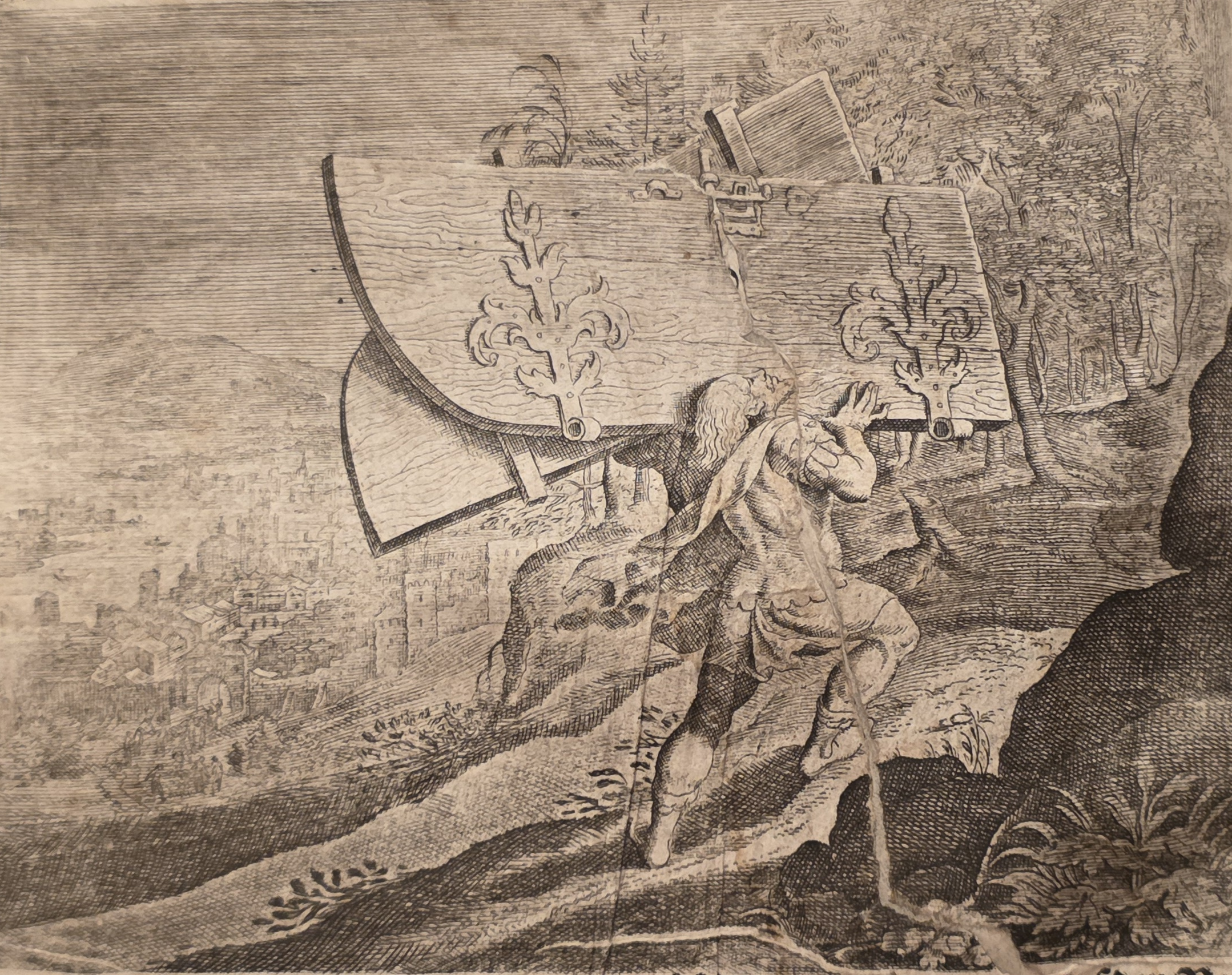
Let's repeat the process with Samson carrying the gates. Our copy is again very poorly inked and extremely faint, and has several large tears through the page that have been restored:
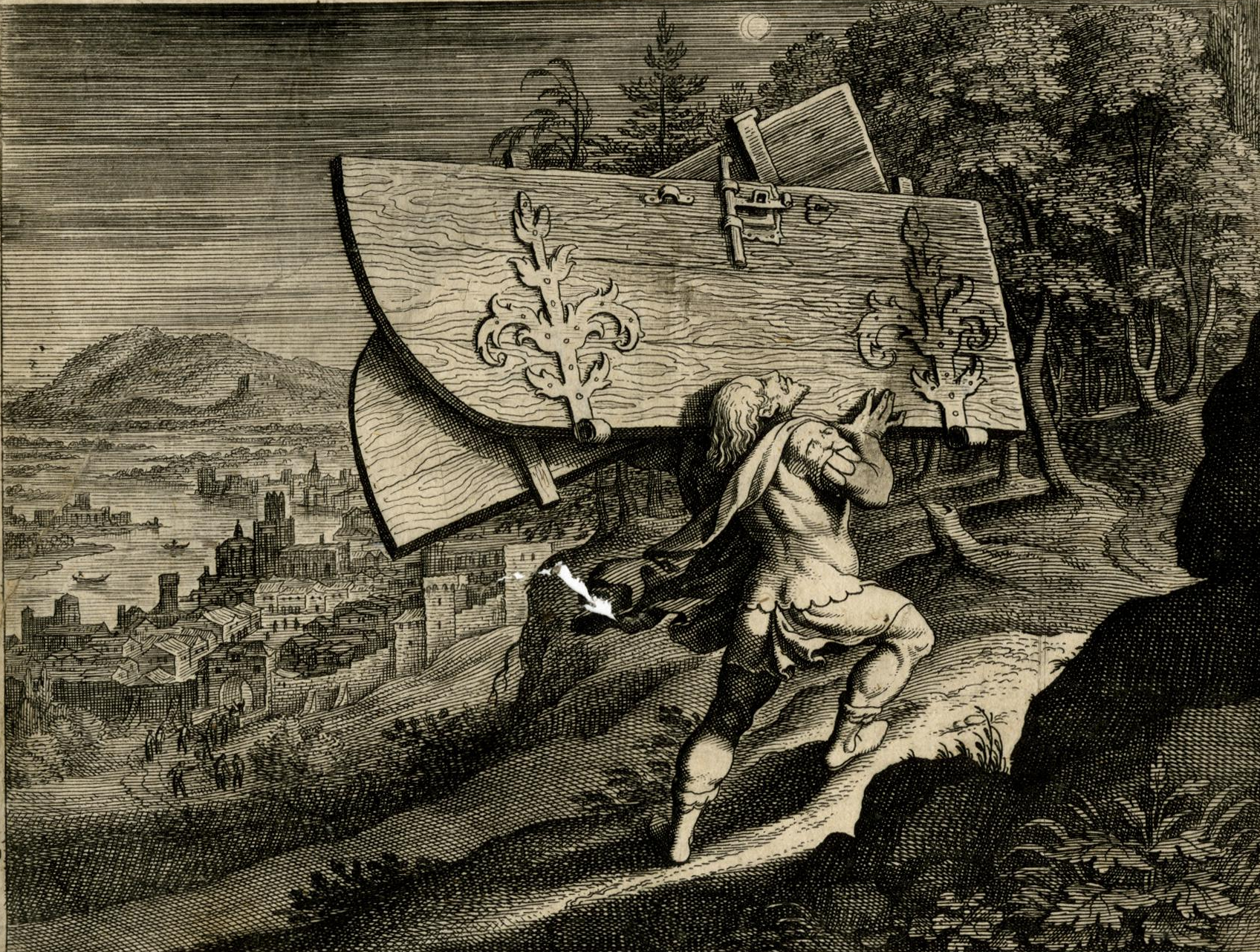
This is the original 1630 Merian held by the British Library:
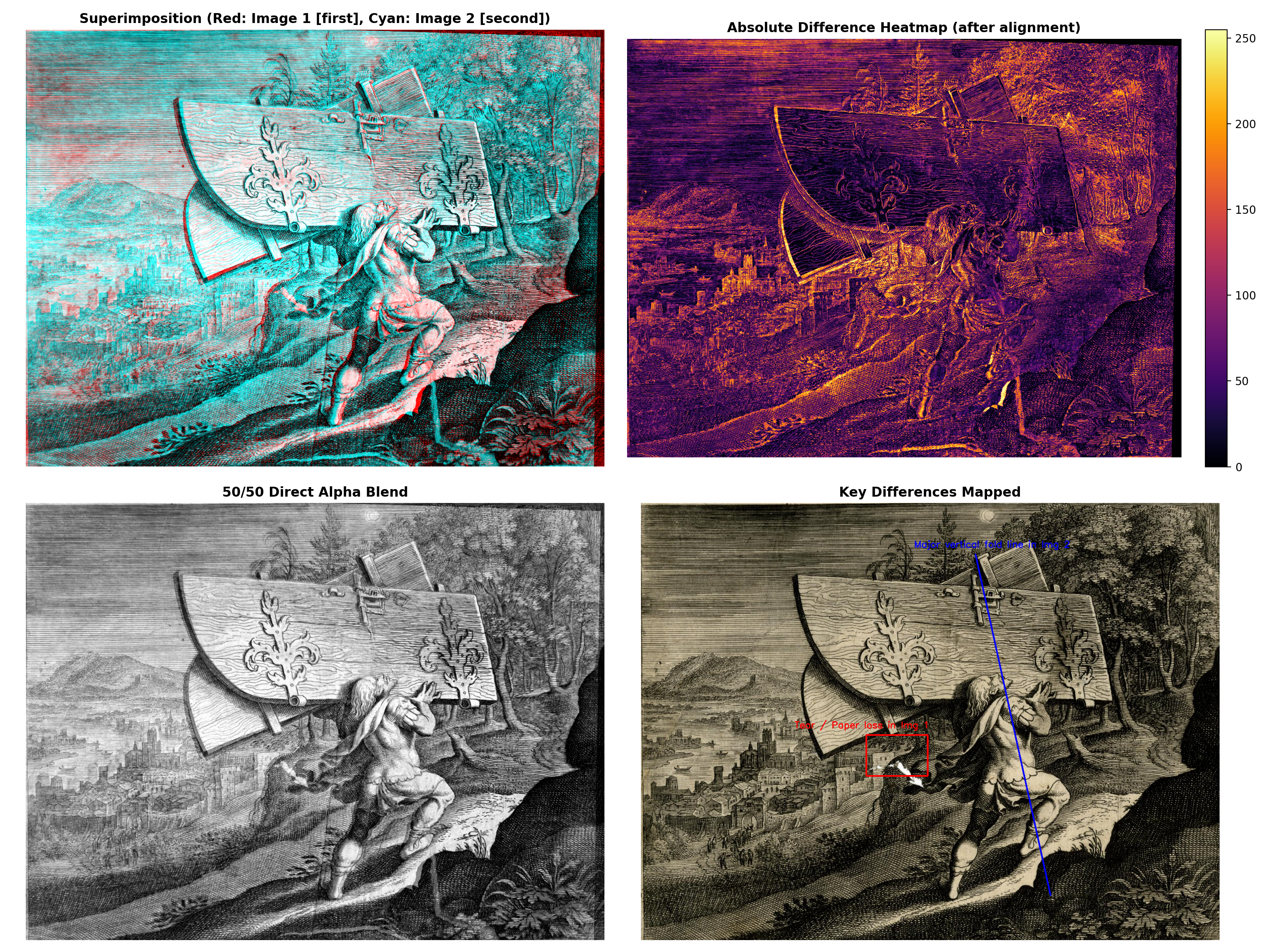
Superimpose these two images to show any tiny differences in them.
Once again we see an absolutely perfect match:
Armed with this information that our copy appeared to be a pixel-level exact match for the original Merian plates, we sat in the Library of Congress Main Reading Room last week with a copy of Wilco C. Poortman's 1986 "Bijbel en prent" and using our cellphone camera asked Gemini to skim the Merian section for anything relating to a 1740 Bible. Indeed, Poortman not only confirms that these are the original circa-1630 plates, but even provides the fascinating story of how they came to appear in a Bible a century later (Vol 2: pp. 58-59):
Merian must have sold the copperplates shortly after the appearance of the Icones Biblicae to the publishing house of Lazarus Zetzner’s Heirs in Strasbourg. Most probably he was in financial difficulties connected with taking over the business from his brother-in-law. … In 1630 Zetzner’s Heirs published a Bible containing all 233 prints from the Icones. This Bible acquired the name “Merian Bible.” It is a magnificent folio edition that exercised great influence. For a popular edition, however, this Bible was too expensive. Consequently, many cheaper reprints appeared, usually with Dutch copies of the Merian prints. … According to Wüthrich in his “Afterword,” the copperplates from which the prints had been printed disappeared from circulation for seventy years. … In 1703 the publisher Balthasar Christoph Wust bought 258 copperplates in France. These were all Dutch copies of the Merian prints. In that same year he published a Bible using these copies of the Merian prints. When the Merian heirs saw this Bible, they remembered the original copperplates, retrieved them from their hiding place, and in 1704 issued a second edition of the Merian Bible, seventy years after the first edition of 1630. .. This account by Wüthrich does raise several questions. And these questions increase when we read on p. 304 of Schmidt’s Die Illustration der Lutherbibel: “The Merian Bible appeared for roughly 100 years from the publishing house of Matthaeus Merian’s heirs in ever-new editions.”
…
After the disappearance of the Merian publishing house in 1727, the publisher Philip Heinrich Hütter came into possession of the copperplates. He most probably found the copperplates in a pawnshop. How did they get there? From 1716–1722 Cosander Goethe and his wife Charlotte Maria Merian, a granddaughter of Matthäus Merian, lived in Frankfurt. They were in financial difficulties, had to sell or pawn many things, and thus the copperplates they had inherited ended up in the pawnshop. … Hütter used the plates for his Catholic Bible edition at Frankfurt in 1740. He had the signatures removed, some copperplates were reworked, and those that were badly damaged were replaced and newly engraved by Joh. Chr. Dekné.