
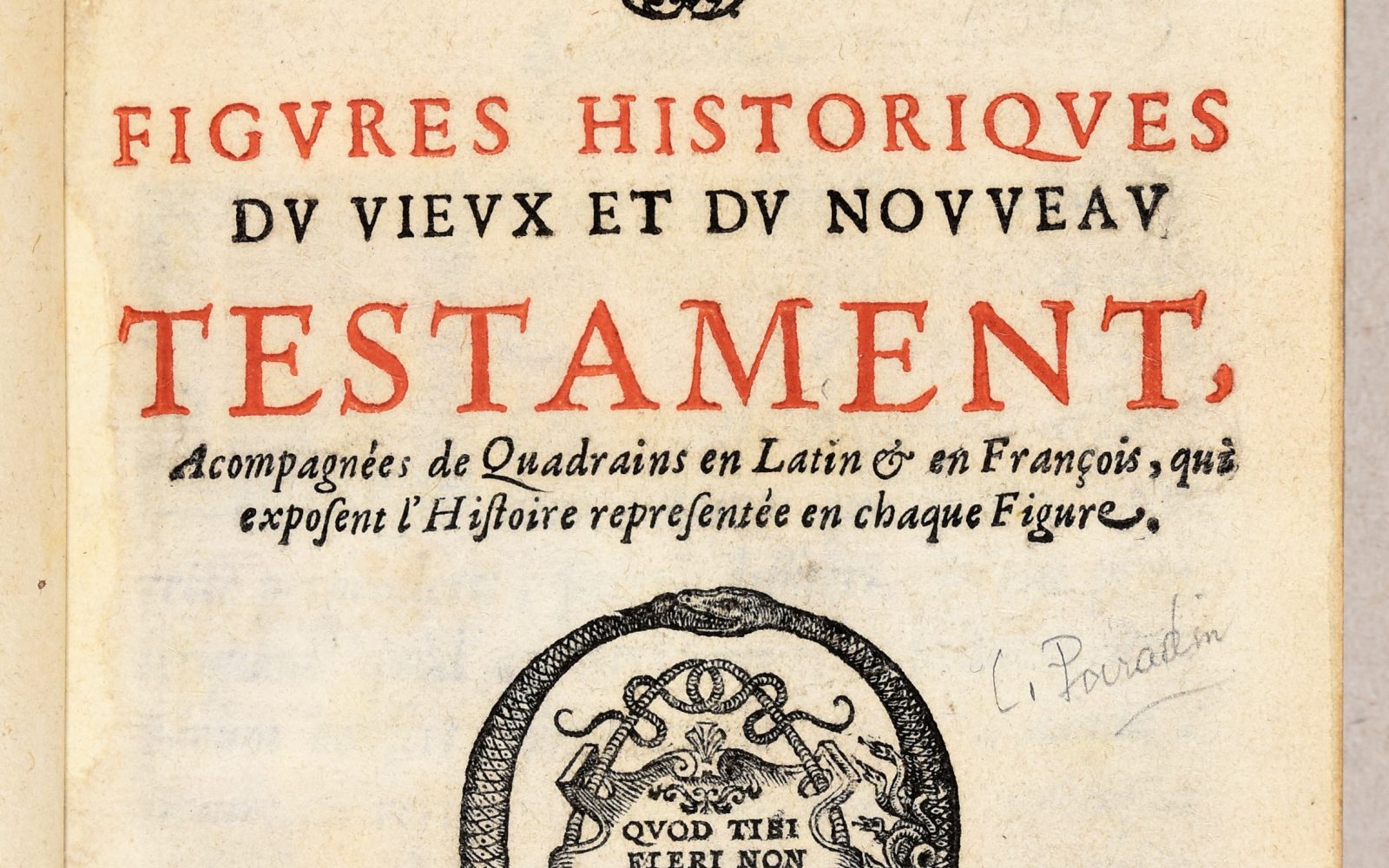
Gemini was incredibly able to track down the early auction provanance of a 1681 Bernard Salomon we were accessioning based only on cellphone photos of its title page and two bookplates found in it. The original 1867 catalog entry stated that the book had been "lavé et encollé" ("washed and resized") when it was rebound. What exactly does "resizing" of a book entail? Trimming its margins to fit into the new binding? Let's assume a novice cataloger encounters these terms when accessioning a book like this and isn't familiar with these technical conservation terms – can Gemini help explain what was done to the book?
The original catalog entry includes this brief description of conservation work done to the book. We copied and pasted it into Gemini and asked what it all meant:
Explain to me what was done to the book:
« Icones historicae Veteris et Novi Testamenti…
Figures historiques du Vieux et du Nouveau Testament…
À Genève, chez Samuel de Tournes, M. DC. LXXXI,
2 parties en un vol. in-8, figures sur bois, mar. bleu jans., tr. dor. (Niédrée.)
Bel exemplaire lavé et encollé.
C'est dans cette édition que se trouve nommé BERNARD SALOMON… »
This text is an entry from an antiquarian French bookseller’s or auction catalogue describing a specific copy of a 1681 illustrated Bible printed in Geneva.
In addition to describing the edition itself, the entry details the extensive restoration and luxury rebinding work that was performed on this specific physical copy—most likely in the mid-19th century, when such treatments were the height of fashion among French bibliophiles.
Here is a step-by-step breakdown of what was done to the book, based on the technical terms and abbreviations in the description:
1. Structural Consolidation
-
« 2 parties en un vol. in-8 » (2 parts in one volume, octavo): The book was printed in two distinct sections (the Old Testament and the New Testament) in octavo format (a standard, medium-small book size). Rather than being bound as two separate books, the two parts were bound together into a single volume.
2. Chemical Restoration of the Paper
-
« lavé et encollé » (washed and resized): Before the book was put into its new binding, the pages were completely disbound and underwent a two-step chemical restoration process very popular among 19th-century French book collectors:
-
Lavé (Washed): The individual paper leaves were submerged in chemical baths (often diluted chlorine or mild acids followed by clean water) to bleach out centuries of foxing (brown spots), stains, dirt, and old ink marks, returning the paper to a bright, crisp white.
-
Encollé (Resized): Washing paper strips away its original sizing (the gelatin or animal glue added during papermaking to prevent ink from bleeding and to give the page stiffness). Without sizing, washed paper feels limp and spongy, like blotting paper. To fix this, the restorer dipped the washed pages into a warm gelatin bath and pressed them dry, restoring the crisp, rattling "crunch" and strength of new paper.
-
3. Luxury Rebinding and Decoration
-
« mar. bleu jans. » (maroquin bleu janséniste — Blue Jansenist Morocco leather): The book was given a luxury binding made of Morocco leather (maroquin), a high-grade, durable goatskin dyed blue. It was finished in the "Jansenist" style (janséniste), an aesthetic named after the austere 17th-century religious movement. A Jansenist binding features a completely plain, unadorned exterior (no gold borders or floral stamps on the covers, just the natural grain of the fine leather), relying entirely on the perfection of the leather and craftsmanship for its beauty, though it often hides ornate gold tooling on the inside edges of the boards.
-
« tr. dor. » (tranches dorées — Gilt edges): All three outer edges of the paper block (top, bottom, and fore-edge) were trimmed smooth and covered in gold leaf. This was both decorative and practical, as gold leaf seals the top of the book against dust and moisture.
-
« (Niédrée.) »: This is the signature of the master bookbinder who executed the binding (and likely oversaw the washing and sizing): Jean-Édouard Niédrée (1803–1854). Niédrée was one of the most celebrated Parisian bookbinders of the 19th century, famous for the lightness, elegance, and precision of his work for elite collectors.
Summary of the Rest of the Entry (The Book's Contents)
For complete context, the rest of the text describes the edition itself rather than the physical alterations:
-
Title & Publisher: Icones historicae Veteris et Novi Testamenti… (Historical figures/illustrations of the Old and New Testaments), published in Geneva by Samuel de Tournes in 1681 (M. DC. LXXXI).
-
« figures sur bois » (woodcuts): The book is illustrated with prints made from carved wooden blocks.
-
« Bel exemplaire… » (Fine copy…): A dealer's note praising the condition of the book after its treatment.
-
« C'est dans cette édition que se trouve nommé BERNARD SALOMON… » (It is in this edition that Bernard Salomon is named…): The woodblocks used to print this 1681 edition were actually carved more than a century earlier in Lyon by the famous Renaissance master Bernard Salomon (c. 1506–1561). While his illustrations had been printed anonymously in many earlier 16th-century editions by the de Tournes family, the catalogue points out that this 1681 edition is historically significant because it explicitly credits Salomon by name.