


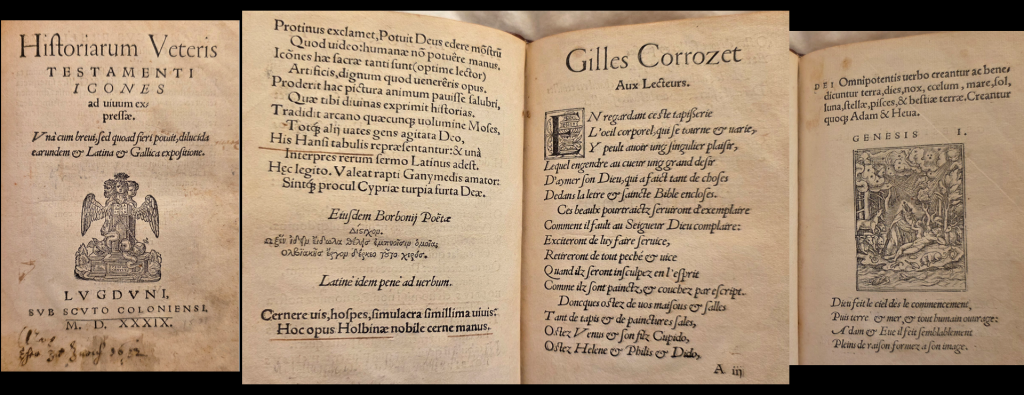
Hans Holbein the Younger's Icones revolutionized biblical illustration and 16th-century visual storytelling, establishing a universal visual vocabulary for the Bible and serving as the definitive template for religious illustration across Europe for centuries. First published in 1538, the second edition in 1539 added two woodcuts, the French quatrains and the Bourbon attribution to Holbein, making it the First Complete Edition. Below is a stunningly crisp and vivid 1539 printing of Icones, showing the full beauty of its woodcuts in their earliest printings. The introductory poems at the start of the book are in Latin, with a brief passage in Greek. While translations of these passages exist on the web, we wanted to see how Gemini faired given just cellphone snaps of the first four pages and asked to transcribe and translate them. You can see just how incredible of a job Gemini does. The ability to just snap a photo of a page from a 500-year-old book and instantly get back a complete transcription and translation is a reminder of the sheer power of Gemini and advanced AI models for museum and archives cataloging and research.
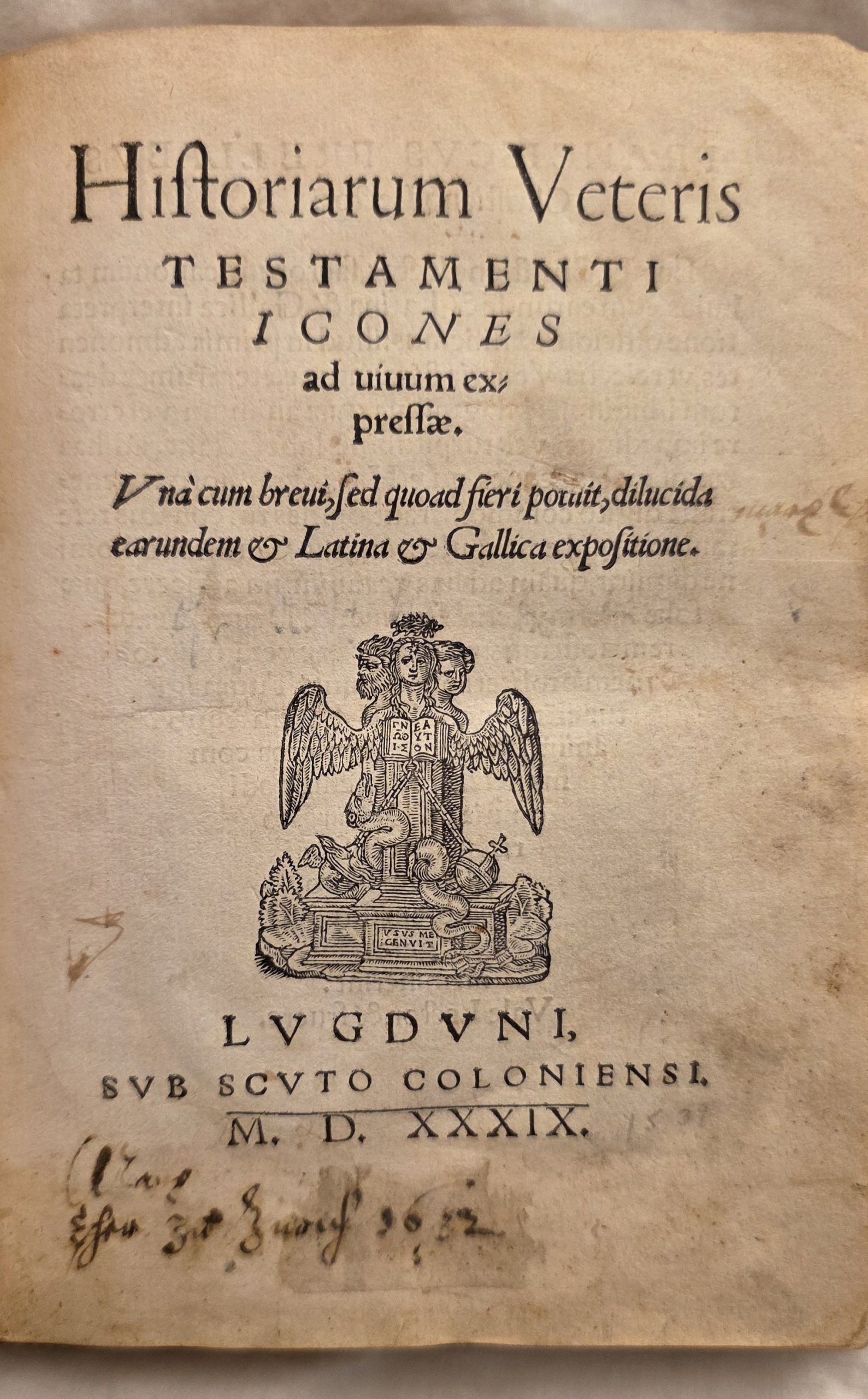
Title Page
[Latin Text]
Historiarum Veteris
TESTAMENTI
ICONES
ad uiuum ex=
pressae.
Vnà cum breui, sed quoad fieri potuit, dilucida
earundem & Latina & Gallica expositione.
[Translation]
Images of the Histories of the Old Testament portrayed to the life.
Together with a brief, but as far as possible, clear explanation of them in both Latin and French.
[Woodcut Printer’s Mark Text]
VSVS ME GENVIT
[Translation]
Experience [or Practice] gave birth to me.
[Publication Info]
LVGDVNI,
SVB SCVTO COLONIENSI.
M. D. XXXIX.
[Translation]
LYON,
UNDER THE SHIELD OF COLOGNE.
1539.
(Note: There is faint 17th-century handwriting at the bottom that appears to end with the year "1632", but the rest is illegible.)
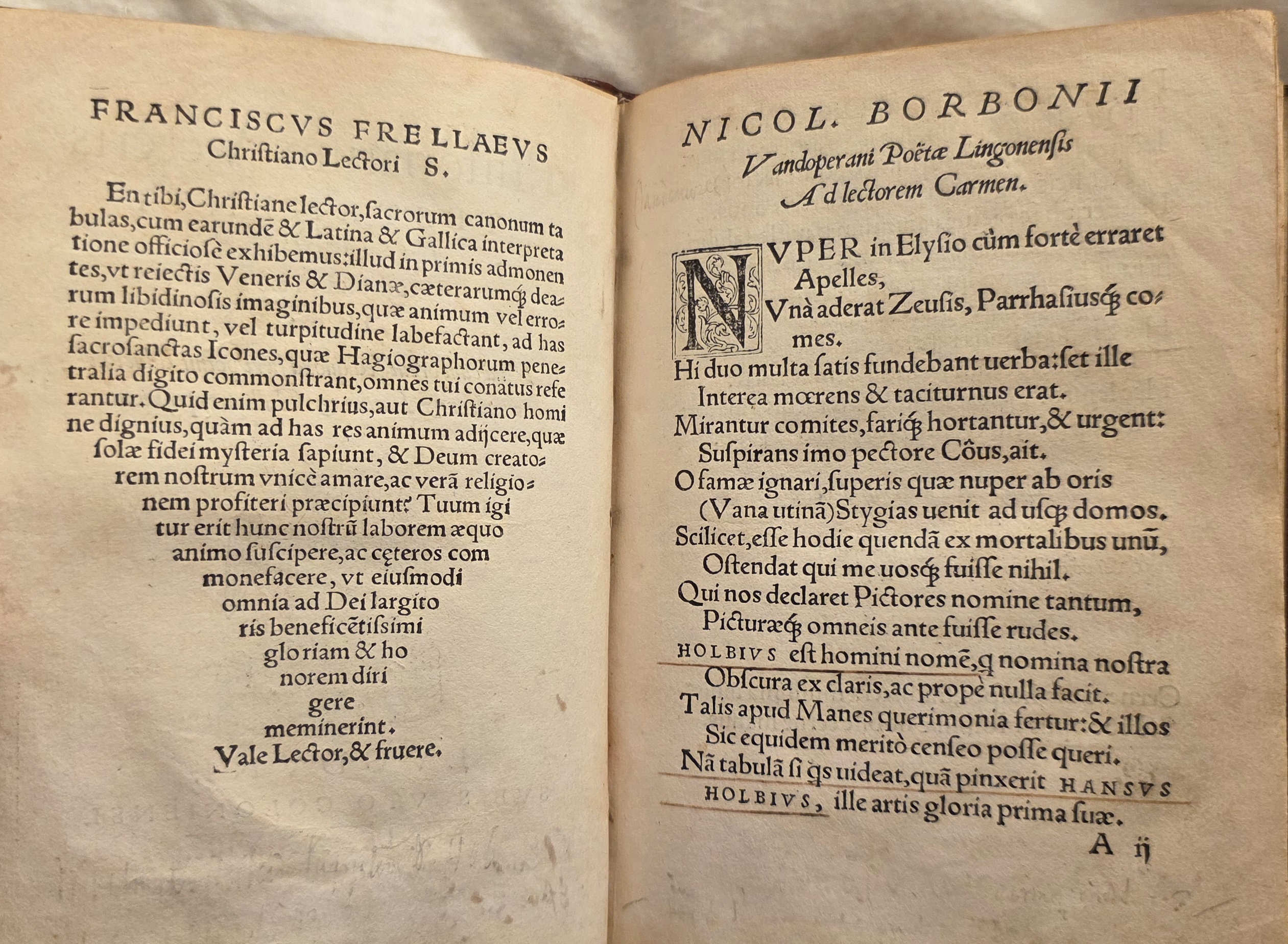
Introductory Pages (A1 verso & A2 recto)
Left Page (Latin Prose)
[Latin Text]
FRANCISCVS FRELLAEVS
Christiano Lectori S.
En tibi, Christiane lector, sacrorum canonum ta
bulas, cum earundẽ & Latina & Gallica interpreta
tione officiose exhibemus: illud in primis admonen
tes, vt reiectis Veneris & Dianæ, cæterarumq́ue dea=
rum libidinosis imaginibus, quæ animum vel erro=
re impediunt, vel turpitudine labefactant, ad has
sacrosanctas Icones, quæ Hagiographorum pene=
tralia digito commonstrant, omnes tui conatus refe
rantur. Quid enim pulchrius, aut Christiano homi
ne dignius, quàm ad has res animum adjicere, quæ
solæ fidei mysteria sapiunt, & Deum creato=
rem nostrum vnicè amare, ac verã religio=
nem profiteri præcipiunt? Tuum igi
tur erit hunc nostrũ laborem æquo
animo suscipere, ac cęteros com
monefacere, vt eiusmodi
omnia ad Dei largito
ris beneficentissimi
gloriam & ho
norem diri
gere
meminerint.
Vale Lector, & fruere.
[Translation]
FRANÇOIS FRELLON
Sends Greetings to the Christian Reader.
Behold for you, Christian reader, the pictures of the sacred scriptures, which we dutifully present together with their Latin and French interpretation: advising this first of all, that, having rejected the lustful images of Venus and Diana and the rest of the goddesses, which either hinder the mind with error or weaken it with foulness, all your efforts should be directed to these most holy Images, which point out with a finger the inner sanctuaries of the Holy Writers. For what is more beautiful, or more worthy of a Christian man, than to apply the mind to these things, which alone taste of the mysteries of faith, and teach us to solely love God our creator, and to profess the true religion? It will therefore be your task to receive this our labor with a favorable mind, and to remind others that they should remember to direct all such things to the glory and honor of God, the most beneficent bestower.
Farewell, Reader, and enjoy.
Right Page (Latin Poem)
[Latin Text]
NICOL. BORBONII
Vandoperani Poëtæ Lingonensis
Ad lectorem Carmen.
NVPER in Elysio cùm fortè erraret Apelles,
Vnà aderat Zeuxis, Parrhasiusq́ue comes.
Hi duo multa satis fundebant uerba: sed ille
Interea mœrens & taciturnus erat.
Mirantur comites, fariq́ue hortantur, & urgent:
Suspirans imo pectore Côus, ait.
O famæ ignari, superis quæ nuper ab oris
(Vana utinã) Stygias uenit ad usque domos.
Scilicet, esse hodie quendã ex mortalibus unũ,
Ostendat qui me uosq́ue fuisse nihil.
Qui nos declaret Pictores nomine tantum,
Picturæq́ue omneis ante fuisse rudes.
HOLBIVS est homini nomẽ, qui nomina nostra
Obscura ex claris, ac propè nulla facit.
Talis apud Manes querimonia fertur: & illos
Sic equidem meritò censeo posse queri.
Nã tabulã si quis uideat, quã pinxerit HANSVS
HOLBIVS, ille artis gloria prima suæ.
A ij
[Translation]
OF NICOLAS BOURBON
of Vandœuvre, Poet of Langres,
A Poem to the Reader.
Recently, when Apelles was by chance wandering in Elysium,
Zeuxis was present alongside him, and Parrhasius as a companion.
These two were pouring forth quite many words: but he [Apelles]
Meanwhile was sorrowful and silent.
His companions marvel, and exhort him to speak, and urge him:
Sighing from the bottom of his heart, the Coan [Apelles] says:
"O ignorant ones of the rumor, which recently from the upper shores
Has come down (would that it were false!) all the way to the Stygian dwellings.
Namely, that there is today a certain one out of mortals,
Who shows that I and you were nothing.
Who declares us to be Painters in name only,
And that all works of painting before were crude.
HOLBEIN is the name of the man, who makes our names
Obscure instead of famous, and nearly nothing.
Such a complaint is reported among the Shades: and I indeed
Think that they can justly complain thus.
For if anyone should see a picture, which HANS
HOLBEIN has painted, he is the foremost glory of his art."
A 2 (Printer's signature)
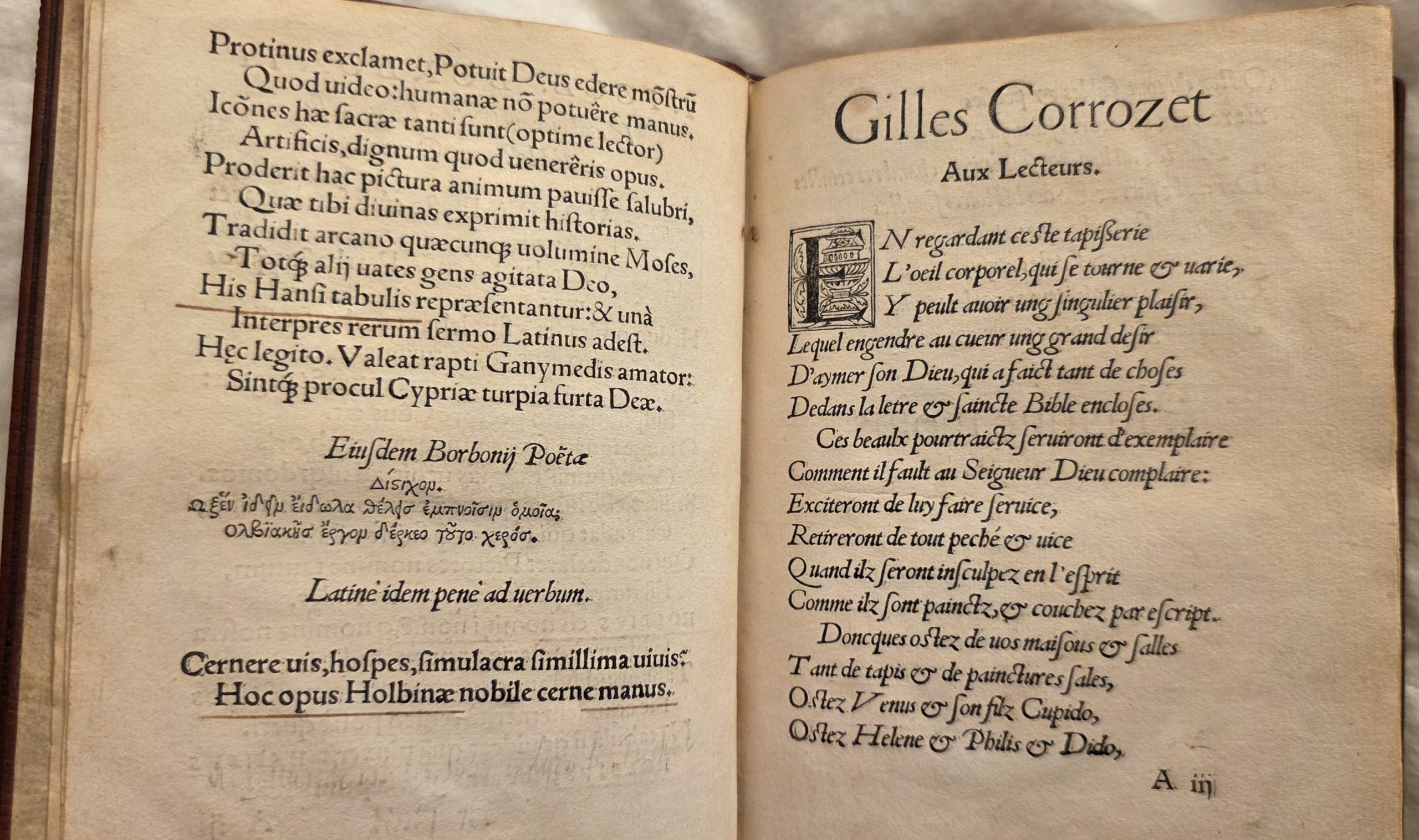
Continuation of Prefaces (A2 verso & A3 recto)
Left Page (Continuation of Latin Poem)
[Latin Text]
Protinus exclamet, Potuit Deus edere mõstrũ
Quod uideo: humanæ nõ potuêre manus.
Icõnes hæ sacræ tanti sunt (optime lector)
Artificis, dignum quod uenerêris opus.
Proderit hac pictura animum pauisse salubri,
Quæ tibi diuinas exprimit historias.
Tradidit arcano quæcunque uolumine Moses,
Totq́ue alij uates gens agitata Deo,
His Hansi tabulis repræsentantur: & unà
Interpres rerum sermo Latinus adest.
Hęc legito. Valeat rapti Ganymedis amator:
Sintq́ue procul Cypriæ turpia furta Deæ.
Eiusdem Borbonij Poëtæ
Δίστιχον.
Ω ξέν᾽ ἰδ᾽ ἤμ εἴδωλα θέλῃς ἐμπνοῖσιν ὁμοῖας
Ολβϊακῆς ἔργον δέρκεο τοῦτο χερός.
Latine idem pene ad uerbum.
Cernere uis, hospes, simulacra simillima uiuis?
Hoc opus Holbinæ nobile cerne manus.
[Translation]
Let him immediately exclaim, "God could have produced the marvel
That I see: human hands could not have."
These sacred images are the work of such a great Artist (excellent reader),
A work worthy of your reverence.
It will be beneficial to have fed your mind with this wholesome picture,
Which expresses divine histories for you.
Whatever Moses handed down in his hidden volume,
And so many other prophets, a people stirred by God,
Are represented in these pictures by Hans: and together
The Latin language is present as an interpreter of things.
Read these things. Farewell to the lover of the abducted Ganymede [Jupiter]:
And let the shameful secret affairs of the Cyprian Goddess [Venus] be far away.
Of the same Poet Bourbon
A Distich [in Greek].
O stranger, if you wish to see images just like breathing beings,
Look upon this work of the Holbeinian hand.
Almost the same word for word in Latin.
Do you wish to see, guest, images most like living beings?
Behold this noble work of the hand of Holbein.
Right Page (French Poem)
[French Text]
Gilles Corrozet
Aux Lecteurs.
EN regardant ceste tapisserie
L'oeil corporel, qui se tourne & uarie,
Y peult auoir ung singulier plaisir,
Lequel engendre au cueur ung grand desir
D'aymer son Dieu, qui a faict tant de choses
Dedans la letre & saincte Bible encloses.
Ces beaulx pourtraictz seruiront d'exemplaire
Comment il fault au Seigneur Dieu complaire:
Exciteront de luy faire seruice,
Retireront de tout peché & uice
Quand ilz seront insculpez en l'esprit
Comme ilz sont painctz, & couchez par escript.
Doncques ostez de uos maisons & salles
Tant de tapis & de painctures sales,
Ostez Venus & son filz Cupido,
Ostez Helene & Philis & Dido,
A iij
[Translation]
Gilles Corrozet
To the Readers.
In looking at this tapestry [metaphor for the collection of images],
The bodily eye, which turns and varies,
Can have a singular pleasure in it,
Which engenders in the heart a great desire
To love one's God, who has done so many things
Enclosed within the letter and holy Bible.
These beautiful portraits will serve as an example
Of how one must please the Lord God:
They will excite one to do Him service,
They will withdraw one from all sin and vice
When they are engraved in the mind
Just as they are painted, and set down in writing.
Therefore remove from your houses and halls
So many tapestries and dirty paintings,
Remove Venus and her son Cupid,
Remove Helen and Phyllis and Dido,
A 3 (Printer's signature)
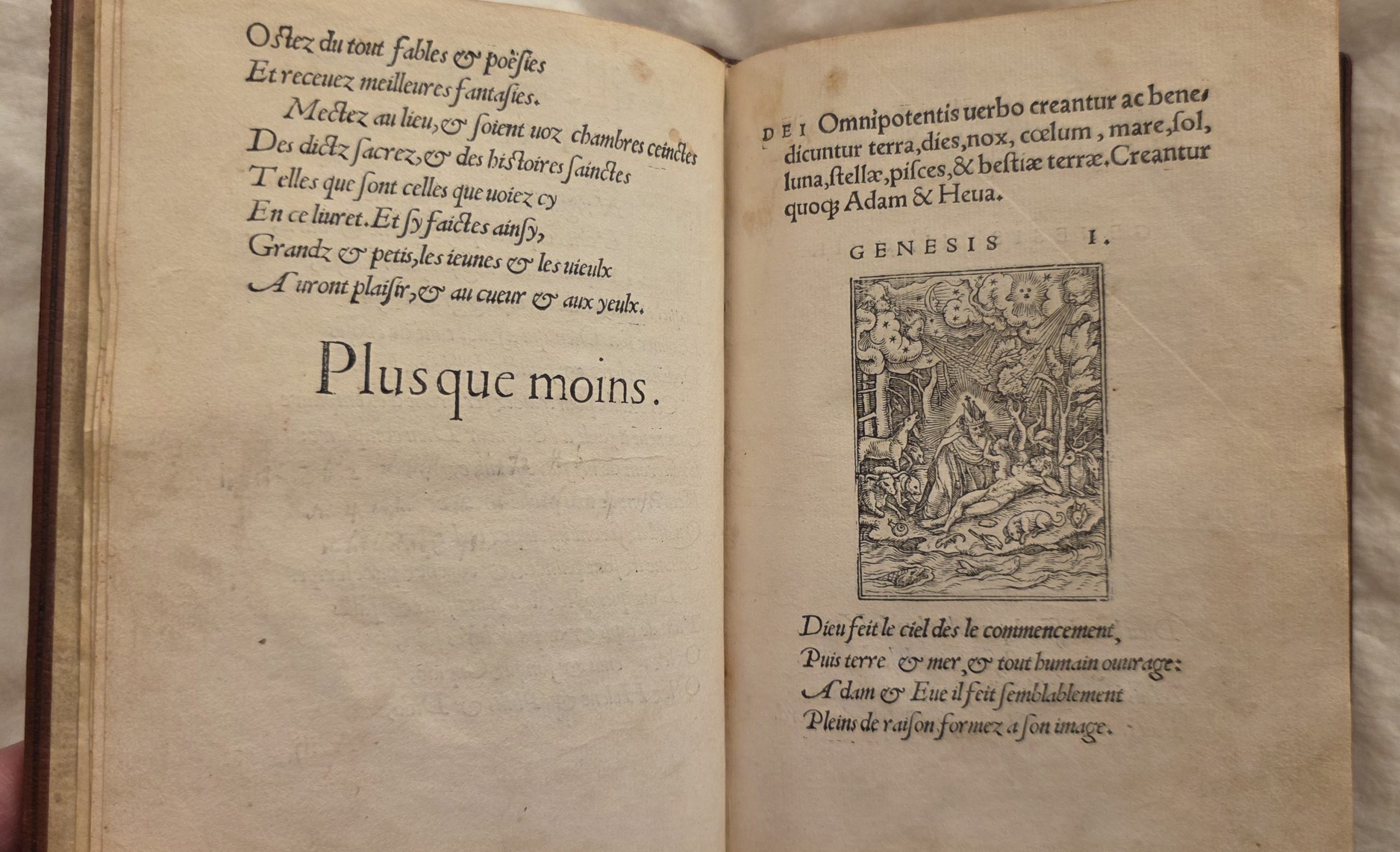
Final Preface Page & First Page of Content (A3 verso & Genesis 1)
Left Page (Continuation of French Poem)
[French Text]
Ostez du tout fables & poësies
Et receuez meilleures fantasies.
Mectez au lieu, & soient uoz chambres ceinctes
Des dictz sacrez, & des histoires sainctes
Telles que font celles que uoiez cy
En ce liuret. Et sy faictes ainsy,
Grandz & petis, les ieunes & les uieulx
Auront plaisir, & au cueur & aux yeulx.
Plus que moins.
[Translation]
Remove entirely fables and poems
And receive better fantasies [images/thoughts].
Put in their place, and let your rooms be encircled
By sacred words, and holy histories
Such as are the ones you see here
In this booklet. And if you do thus,
Great and small, the young and the old
Will have pleasure, both in the heart and in the eyes.
More than less. (This was Gilles Corrozet's personal motto)
(Note: faint, illegible handwriting is present in the blank space below).
Right Page (First Content Page: Creation)
[Latin Text]
DEI Omnipotentis uerbo creantur ac bene=
dicuntur terra, dies, nox, cœlum, mare, sol,
luna, stellæ, pisces, & bestiæ terræ. Creantur
quoque Adam & Heua.
GENESIS I.
[Translation]
By the word of the Omnipotent GOD are created and blessed
the earth, day, night, heaven, sea, sun,
moon, stars, fishes, and beasts of the earth. Created
also are Adam and Eve.
GENESIS I.
[Woodcut Illustration]
(Illustration of God creating Adam and Eve, surrounded by animals).
[French Text]
Dieu feit le ciel des le commencement,
Puis terre & mer, & tout humain ouurage:
Adam & Eue il feit semblablement
Pleins de raison formez a son image.
[Translation]
God made the heaven from the beginning,
Then earth and sea, and all human creation:
Adam and Eve he made likewise
Full of reason formed in his image.