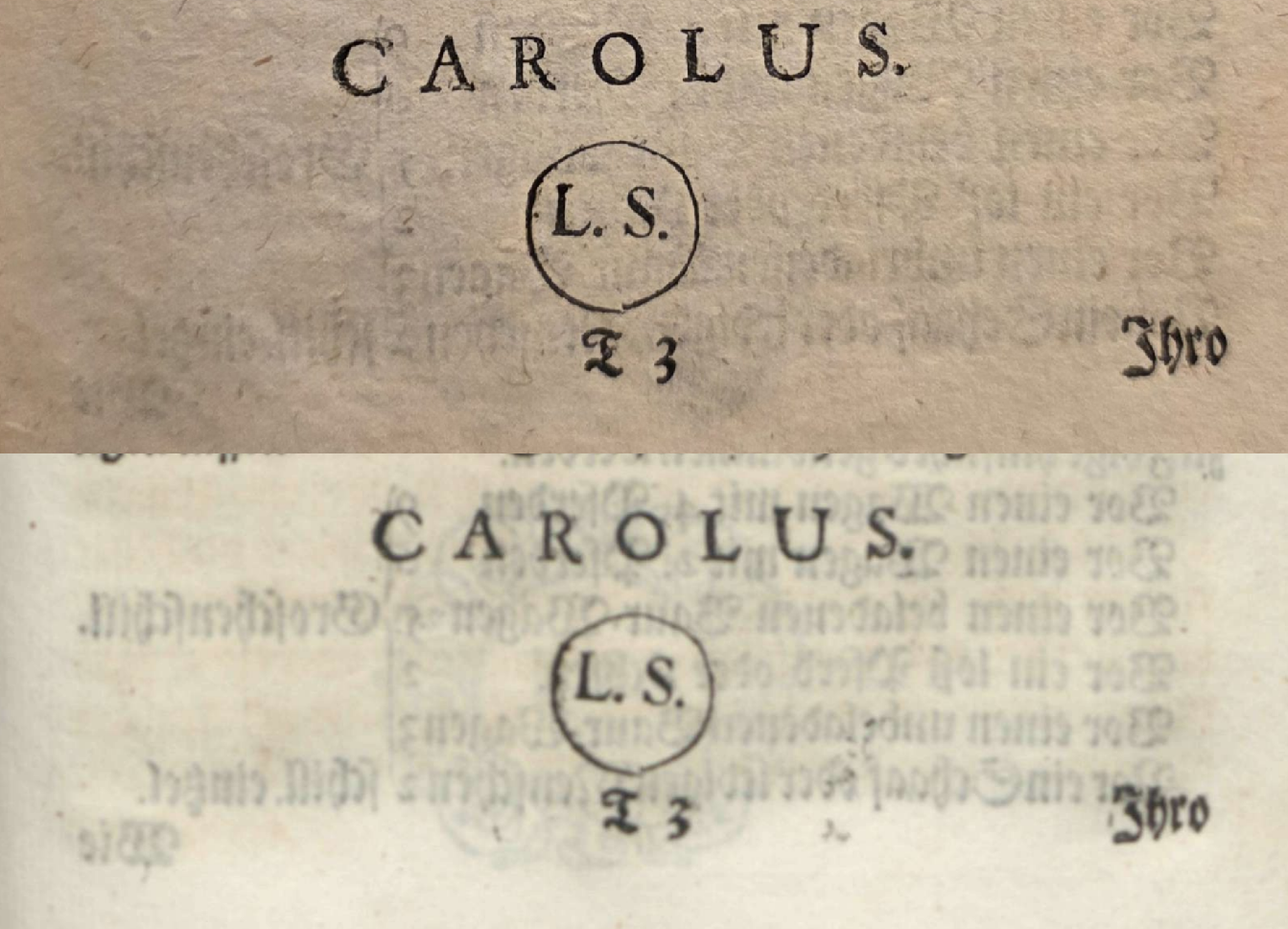
Yesterday we explored how Gemini helped us identify that an apparent stamp in a 1689 Livonian law book was actually not a stamp at all and was part of the original printing, rather than a separately-inked addition. Later in the same book we encountered several examples of what appeared to be hand-drawn outlines around a letterpress "L.S." to form them into a different style of stamp. Unlike the perfectly round and obviously inked previous stamp-like image, the unevenness and imperfect form, including the failed bottom closure, leaned strongly towards the circle being a later hand-inked annotation. Asked to verify whether this was hand-drawn, Gemini, without being asked, searched the open web to locate other digitized copies to compare against (since a hand-drawn circle would vary across copies), located a digitized copy, tracked down the exact page in the digitized PDF, and determined that the circle matched the digitized other copy to the exact pixel, confirming that the circle was printed, rather than hand-drawn.
You can compare the two below:
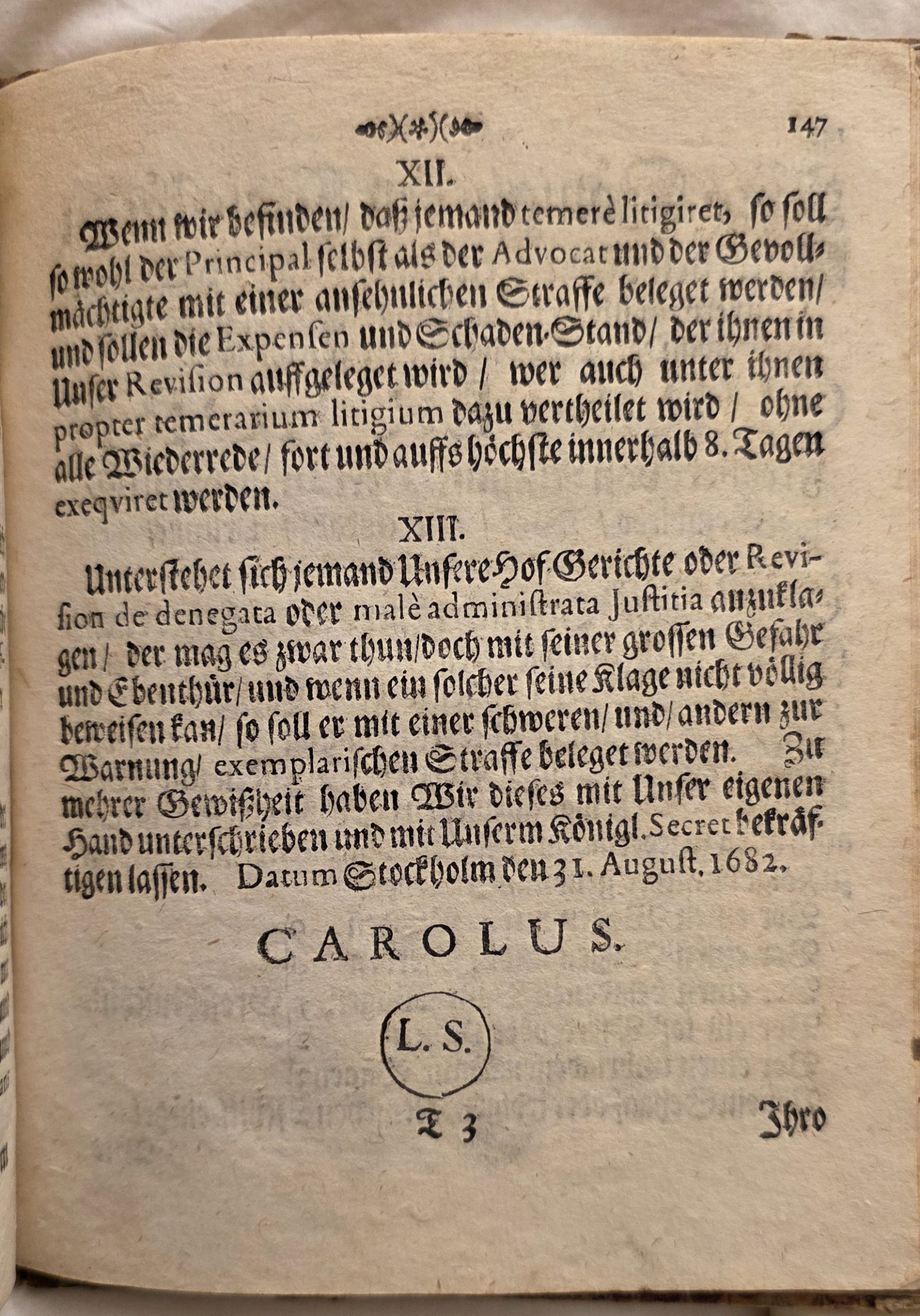
The entry in our book:
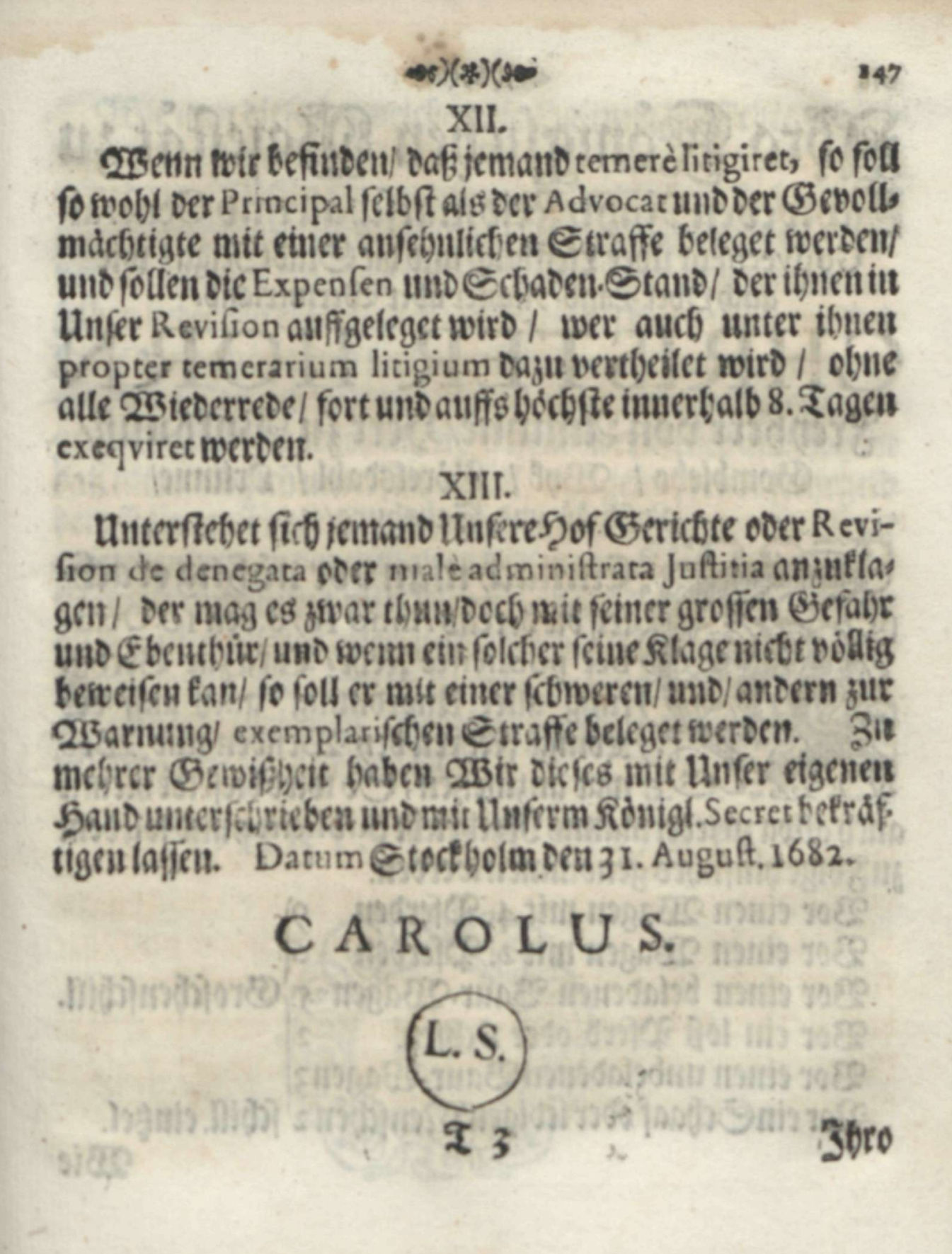
The entry in a different digitized copy showing an absolutely identical outer line, including the imperfections and the exact spacing (down to the pixel) of the circle from the surrounding and inner text. Scroll to page 155 of the digitized PDF.