


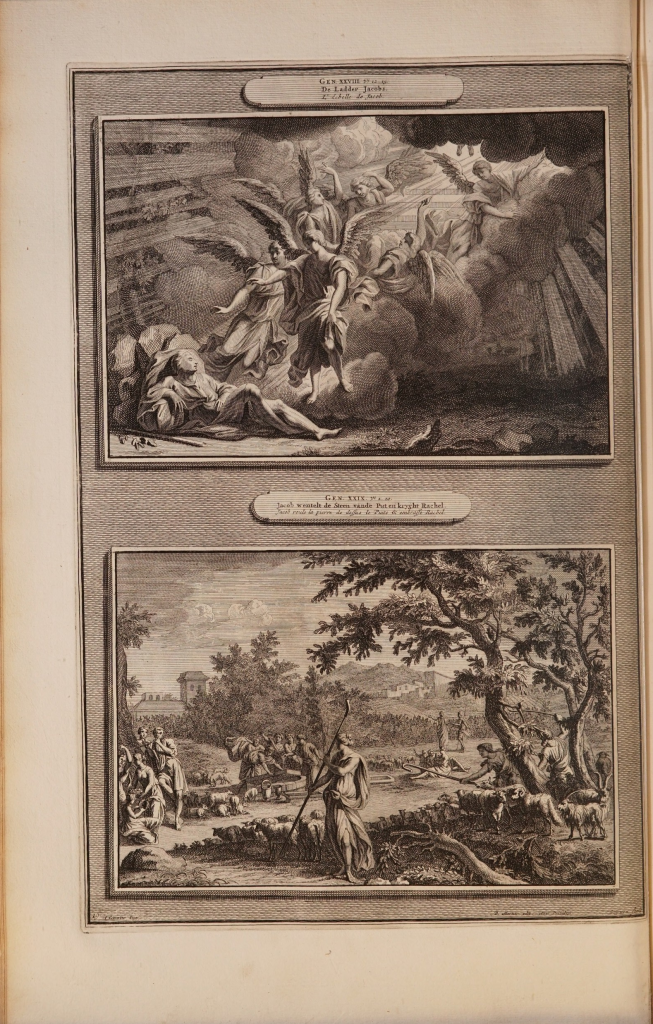
One of the most basic, but most powerful cataloging tasks our new Gemini rare books workflow performs is visual collation. Collation refers to the task of inventorying a given copy of a book page by page and accounting for all of its pages and various special parts, like blank end pages, etc., resulting in a formula that gives the complete list of all pages in the work and makes it possible to instantly compare against other known copies to identify missing or non-standard pages. Collation of large works of hundreds or even thousands of pages is a mind-numbing and exceptionally error-prone task that, as we've found over the years, even the most experienced institutions and dealers can get wrong, incorrectly identifying a work as complete when it is actually missing key pages. Using our new workflow, Gemini visually inspects every single page in a digitized PDF, cover to cover, compiling the final collation and then, most powerfully, researching the optimal complete collation for the work and comparing the current work against that collation to compile an inventory of missing and added pages. Here, we see this collation process at work for a 1700 Mortier Great Bible that had been previously triple-collated complete and acquired as a complete copy. Here, Gemini identifies that there are actually multiple missing pages from volume 1 – a fact that elluded three different prior expert human collation reviews.
Below you can see the Gemini collation analysis report from our workflow:
Collation Formula
Ideal collation of Vol. 1: 2°: π1 [*1 + †1, *2] **² ***² A² B³ C² D³ E² F³ G² H³ I² K³ L² M³ N² O³ P² Q³ R² S³ T² V³ X² Y³ Z² 2A³ 2B² 2C³ 2D² 2E³ 2F² 2G³ 2H² 2I³ 2K² 2L³ 2M² 2N³ 2O² 2P³ 2Q²(2Q2 signed 'Qq 3') 2R³ 2S² 2T³ 2V² 2X³ 2Y² 2Z³ 3A² 3B³ 3C² 3D³ 3E² 3F³ 3G² 3H³ 3I² 3K³ 3L² 3M² 3N1 [$2 signed in 2-leaf gatherings, $3 signed in 3-leaf gatherings (-π1, -*1)]; 153 letterpress leaves, pp. [16], 1–282, [8]; plus engraved frontispiece and 141 hors-texte engraved plates (nos. 1–141, with pls. [7] and [8] unnumbered), and (in copies issued with maps) 3 double-page/folding maps. Collation of this copy: 144 of 153 letterpress leaves (lacking A² [pp. 1–4], C1 [pp. 11–12], M1 [pp. 55–56], O2 [pp. 67–68], R1 [pp. 81–82], S1 [pp. 85–86], 2E3 [pp. 139–140], and 2H2 [pp. 153–154]), pp. [16], 5–10, 13–54, 57–66, 69–80, 83–84, 87–138, 141–152, 155–282, [8]; plus engraved frontispiece (PDF p. 13) and 132 of 141 hors-texte engraved plates (present: nos. 3–5, [7]–[8], 9–27, 29–33, 35–40, 42, 44–69, 71–76, 78–141; lacking nos. 1, 2, 6, 28, 34, 41, 43, 70, and 77; without folding maps). Preceded and followed by binding and endleaves (PDF pp. 1–10, 565–568).
Completeness Assessment
Volume 1 ('Eerste Deel', covering the Old Testament and Apocrypha) only of a 2-volume set; imperfect. All 8 preliminary letterpress leaves (half-title, letterpress title, dedication to Antonie Heinsius, 'Voorreede', and 'De Boekverkooper aan den Leezer'), the engraved frontispiece, and all 4 terminal index/errata/binder's-direction leaves ('Bladwyzer', 'Drukfouten', 'Bericht voor den Boekbinder', ending 'Eynde van het Eerste Deel' on 3N1v) are intact. Within the main text, however, 9 letterpress leaves (18 pages) and their 9 corresponding facing engraved plates have been excised: gathering A² (pp. 1–4, Creation and Fall, with Plates 1–2); C1 (pp. 11–12, Noah building the Ark, with Plate 6); M1 (pp. 55–56, Jacob's journey into Egypt, with Plate 28); O2 (pp. 67–68, First and Second Plagues of Egypt, with Plate 34); R1 (pp. 81–82, Quails and striking the rock at Horeb, with Plate 41); S1 (pp. 85–86, Giving of the Law at Sinai, with Plate 43); 2E3 (pp. 139–140, early exploits of Samson, with Plate 70); and 2H2 (pp. 153–154, Samuel anointing Saul, with Plate 77). Signature 'Qq 3' on p. 193 is a press-misprint for 'Qq 2' without loss of text. No folding maps are present.
Few outside the rare books community are likely to understand how to read a detailed collation formula like that, so let's go back and ask Gemini to translate it into plain English for us:
Explain this in plain English - what page(s) is this copy missing and what is on the missing pages?
In plain English, this copy is missing 9 printed leaves (18 text pages), 9 full-page copperplate engravings, and 3 optional folding maps. All front matter (including the engraved frontispiece and printed title page) and the 8-page index at the back are intact.
Exactly What Is Missing—and What Was on Those Pages
Mortier's Bible was designed with a strict 2-to-1 layout: each of the 141 full-page engraved plates contains two copperplate illustrations corresponding to two numbered pages of biblical commentary (141 plates × 2 = 282 numbered pages).
Every single missing text leaf in this copy is the exact companion to one of the 9 missing plates (Plate N always pairs with pp. 2N–1 and 2N), meaning those 9 plate-and-text pairs were removed or lost together:
| Missing Printed Leaf | Missing Page Numbers | Missing Plate(s) | Biblical Content on the Missing Text & Engravings |
Gathering A² (2 leaves) |
pp. 1–4 | Plates 1 & 2 (4 scenes) | Creation & the Fall (Genesis 1–3): Creation of the world, Adam naming the animals and Eve in Eden, eating the forbidden fruit, and the expulsion from Paradise (the copy resumes on p. 5 with Cain and Abel). |
Leaf C1 (1 leaf) |
pp. 11–12 | Plate 6 (2 scenes) | The Great Flood (Genesis 7–8): The deluge submerging the earth after Noah enters the Ark, followed by the waters receding and Noah's exit/sacrifice after the Flood. |
Leaf M1 (1 leaf) |
pp. 55–56 | Plate 28 (2 scenes) | Jacob's Death in Egypt (Genesis 48–50): The closing scenes of Genesis—Jacob blessing Joseph's sons/the twelve tribes and Jacob's death and funeral procession back to Canaan (just before Exodus begins). |
Leaf O2 (1 leaf) |
pp. 67–68 | Plate 34 (2 scenes) | Crossing the Red Sea (Exodus 14–15): The Israelites passing through the parted Red Sea and the drowning of Pharaoh's pursuing army. |
Leaf R1 (1 leaf) |
pp. 81–82 | Plate 41 (2 scenes) | The Law at Mount Sinai (Exodus 20–22): Two scenes from the sequence illustrating the Ten Commandments and the covenant laws delivered to Moses on Sinai. |
Leaf S1 (1 leaf) |
pp. 85–86 | Plate 43 (2 scenes) | Ratifying the Covenant on Sinai (Exodus 24): Page 85 covers "Moses, having come down from the mountain, builds an altar" (with the twelve pillars and blood of the covenant); page 86 covers Moses, Aaron, and the seventy elders ascending Sinai. |
Leaf 2E3 (1 leaf) |
pp. 139–140 | Plate 70 (2 scenes) | End of Joshua / Opening of Judges (Joshua 24 – Judges 1): The transition from Joshua's final covenant and death to Israel consulting the Lord and the opening campaign of Judges 1. |
Leaf 2H2 (1 leaf) |
pp. 153–154 | Plate 77 (2 scenes) | Jephthah and His Daughter (Judges 11): Page 153 recounts Jephthah's exile by his half-brothers, victory over the Ammonites, and rash vow; page 154 depicts his daughter coming out with timbrels to greet him upon his return. |
Also absent — 3 Folding/Double-Page Maps:
-
Mortier sold this Bible both with and without an optional suite of large engraved maps (which is why the cataloger writes "in copies issued with maps… without folding maps"). When present in Volume 1, the three maps depict 1) the Terrestrial Paradise (Garden of Eden) and Lands of the Patriarchs, 2) the Exodus / Forty Years' Wandering in the Desert, and 3) the Holy Land divided among the Twelve Tribes (sometimes substituted or paired with a double-hemisphere World Map).
Plain-English Guide to the Bibliographic Jargon
If you want to understand how the rest of that formula works, each shorthand code tracks the physical construction of the book:
-
2°(Folio): A large, tall book made by folding each full printed sheet of paper once to create 2 leaves (4 pages). -
π1 [*1 + †1, *2] **² ***²(Front Matter): The 8 unnumbered leaves (pp. [16]) at the very beginning—printed title page, dedication, and preface. All 16 pages are present. -
A² B³ C² D³ ... 3M² 3N1(Gatherings/Signatures): Early printers labeled packets of folded pages ("gatherings") at the bottom margin using a 23-letter Latin alphabet (A–Z, skippingJ,U, andW), then doubling (2A–2Z) and tripling (3A–3N) the letters. The small superscript numbers (²and³) mean the gatherings alternate between 2 leaves (4 pages) and 3 leaves (6 pages). The note(2Q2 signed 'Qq 3')simply records a minor 1700 typesetting typo at the bottom of leaf2Q2. -
144 of 153 letterpress leaves: A leaf is one physical sheet with two sides (recto and verso). Out of 153 text leaves (306 pages total: 16 unnumbered front pages + 282 numbered text pages + 8 unnumbered index pages at the end), this copy has 144 leaves (288 pages). -
hors-texte engraved plates&pls. [7] and [8] unnumbered: Hors-texte ("outside the text") means the copperplate illustrations were printed separately on heavy paper (blank on the back) and bound in next to the text pages rather than counted in the page numbering. Plates 7 and 8 are present in this copy—the brackets just mean the engraver forgot to stamp numbers on those two plates across the entire 1700 print run. -
PDF pp. 1–10, 565–568andPDF p. 13: Refers to the digital scan frame numbers, showing that frames 1–10 and 565–568 are just the leather covers and blank flyleaves, and frame 13 is the decorative engraved frontispiece.