One of the greatest mysteries surrounding the image of the Declaration of Independence is that the William Stone copperplate that is the source of the image we know today is claimed to have supported at least 4,208 printings (200 official government parchment copies, one unofficial parchment, 4,000 paper copies for the Peter Force series and 7 copies by BEP in 1976). The sparsity of surviving records means it is not clear whether the full 4,000 paper copies contracted for were actually printed, but assuming they were, how could a single copperplate support that many printings given the soft metal's propensity to flatten and degrade under the tremendous pressure of the printing press over a series of runs? Asked to explore this question, instead of digging into the history of Declaration facsimiles, Gemini went a very different route: a richly cross-disciplinary analysis spanning art, cartography and currency production, connecting the question of the Stone copperplate to the mass-produced copperplate engravings of centuries prior in which such large printing runs were routine and copperplates could change hands and be resold for decades or even centuries of continuous use, offering a powerful example of how AI models' infinitely interdisciplinary knowledgebases and reasoning chains can help scholars reach across fields of study.
When we first asked Gemini to explore the question of the Stone copperplate's large print run, we expected it to focus primarily on trying to tie together the known evidence of the Stone copperplate and examine the print runs of other known Declaration of Independence facsimiles. Instead, Gemini went an entirely different direction: it tapped into the rich literature of copperplate intaglio engraving from the 1500s to early 1800s, especially in the fields of art, cartography and currency production. For example, Gemini dove into the details of a detailed 1819 UK study on the state of copperplate paper currency production that found that a typical copperplate banknote plate of the era could sustain around 6,000 printings and retain sufficient fine detail to deter counterfeiting (meaning the far more coarse and less-detailed text of Stone's engraving could likely sustain significantly more printings). It also surfaced a series of fascinating historical and physical studies of how copperplates actually degrade and the historical limits that are actually documented to have been produced from a single copperplate. For example, Gemini identified studies like this one that argue that it was processes like the burnishing of copperplates between editions to remove corrosion that resulted in their degradation, not the pressure of the printing rolls themselves. Most interestingly, Gemini tracked down a fascinating 2005 study that used archival records of the Plantin-Moretus archives to prove that in at least one case a single unmodified copperplate from 1601 supplied 6,425 printings before being reworked and over the course of multiple reworkings was kept in continual production for 57 years producing a grand total of 18,257 impressions. If a single early 17th century copperplate engraving with extremely fine detail could sustain 6,425 printings before needing retouching, then it is clear that the large simple lettering of Stone's facsimile could bear 4,201 printings without question.
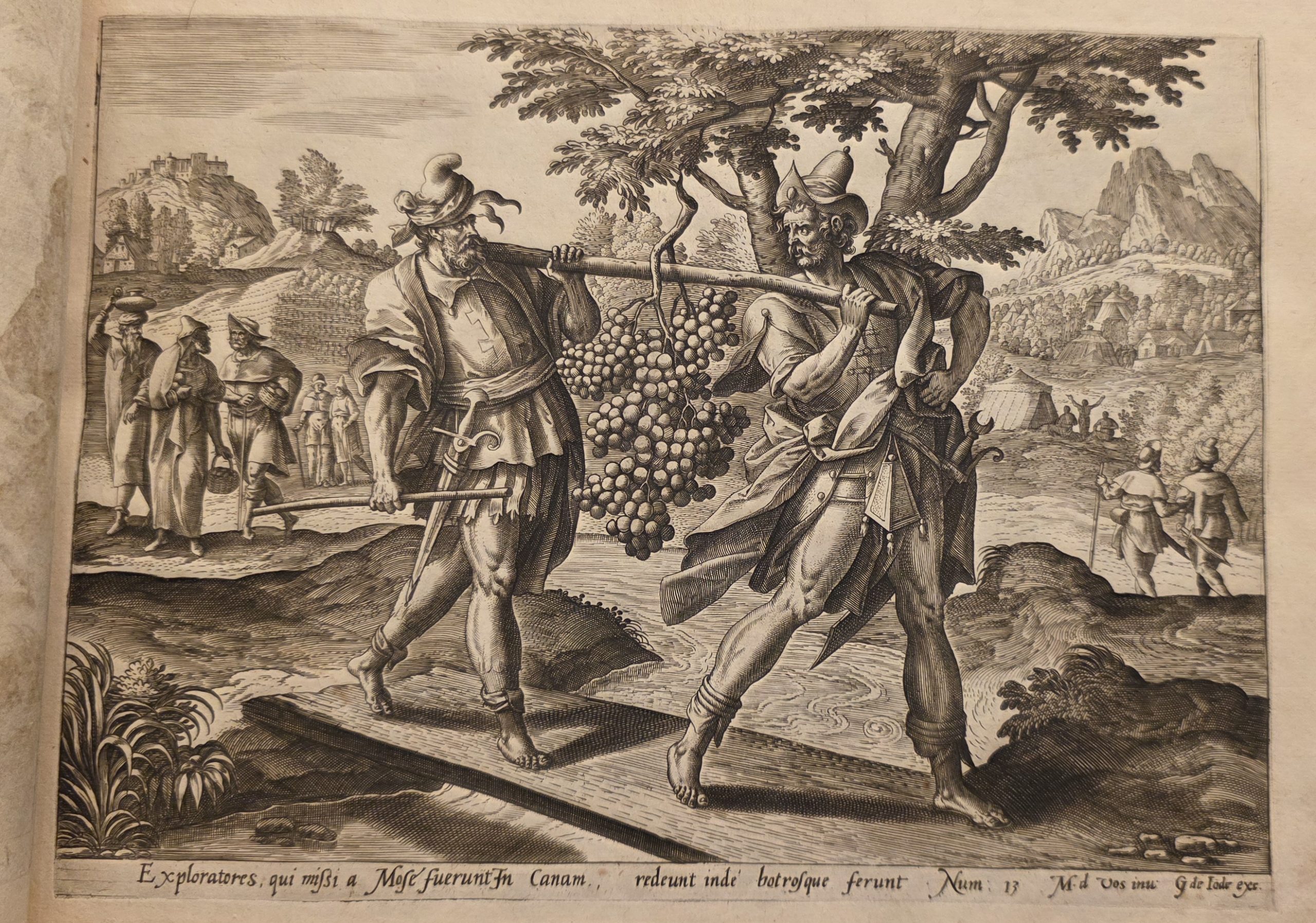
Illustrating this process visually, let's take a closer look at this remarkably crisp, well-inked and pristine printing of an engraving after Maarten de Vos's Spies of Canaan from an early printing of Jode's 1585 thesaurus, when the copperplate was nearly brand new. We can see the equisite level of detail across the entire scene:
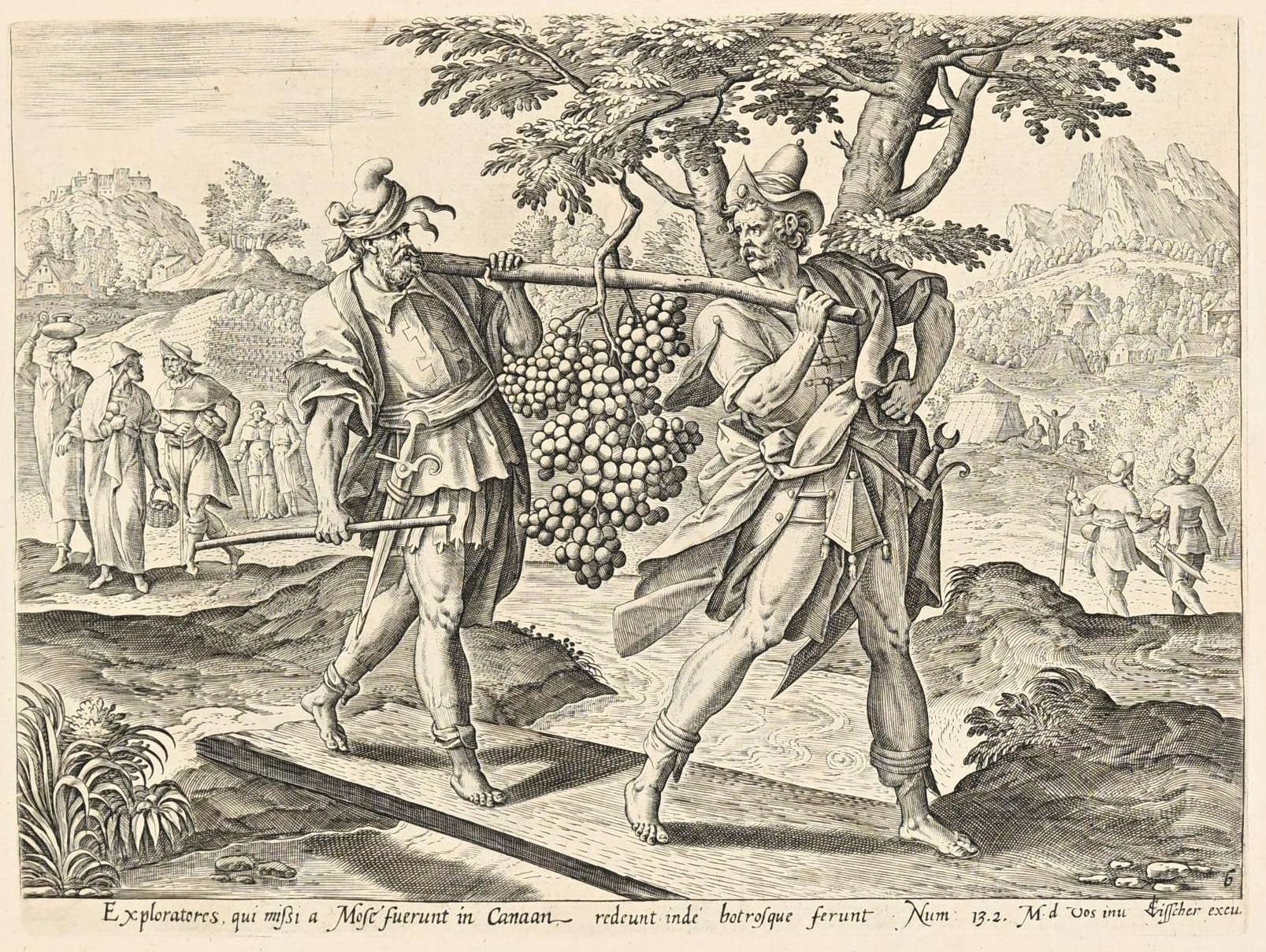
Below we can see a reprint by Schabaelje from the same copperplate, published in 1646, around 61 years later. Among the known major print runs of this plate are Jode's 1585 Thesaurus in which it first appeared, the 1639 and 1643 Visscher printings, assorted loose printings (since these engravings were also sold individually) and Jan Philipsz Schabaelje's 1646 Den Grooten Figuer-Bibel. While the size of each of those printing runs is unknown, it is entirely reasonable to estimate, based on standard printing runs for heavily engraved works of the era, that this engraving could have seen 4,000-6,000 printings by the time of this Schabaelje print.
While the core image is present, we can see numerous artifacts from the plate's aging and heavy loss across all fine detail. However, we can see that despite the loss of the finest detail, the engraving still retains a majority of its key detail:
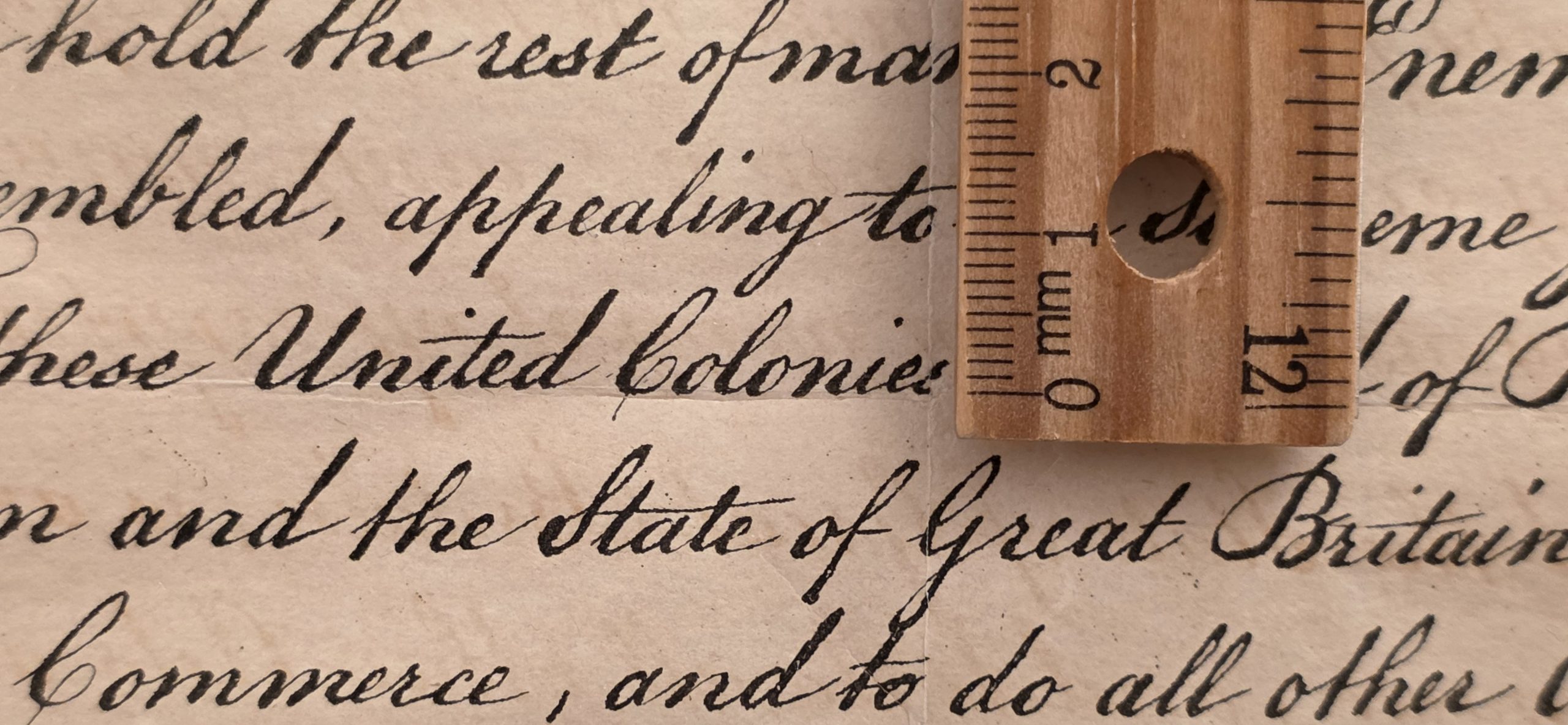
Importantly, the text, while slightly softened, survives entirely intact. If we look at the original 1585 Jode copy and zoom into the "N" in "Num" in the caption, we see that it is around 7mm tall:
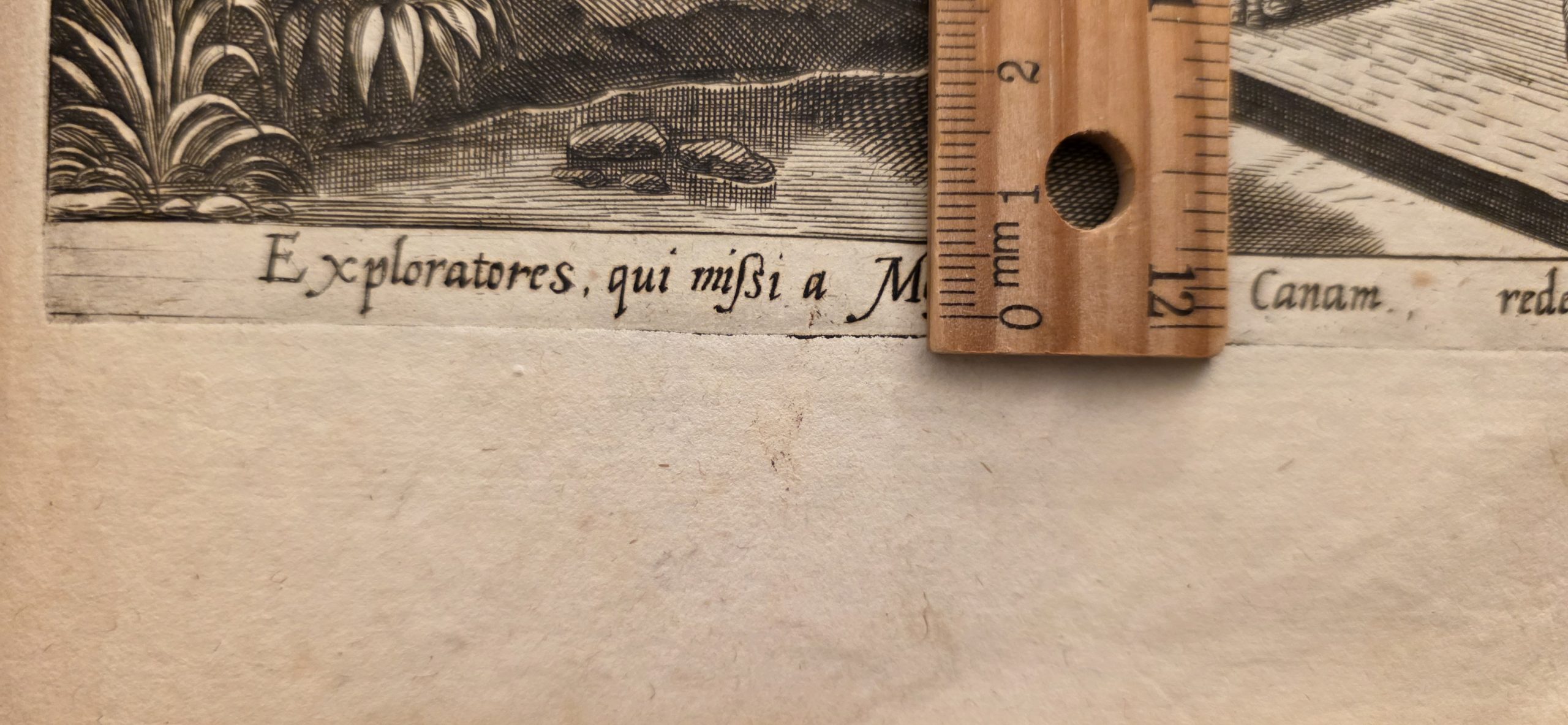
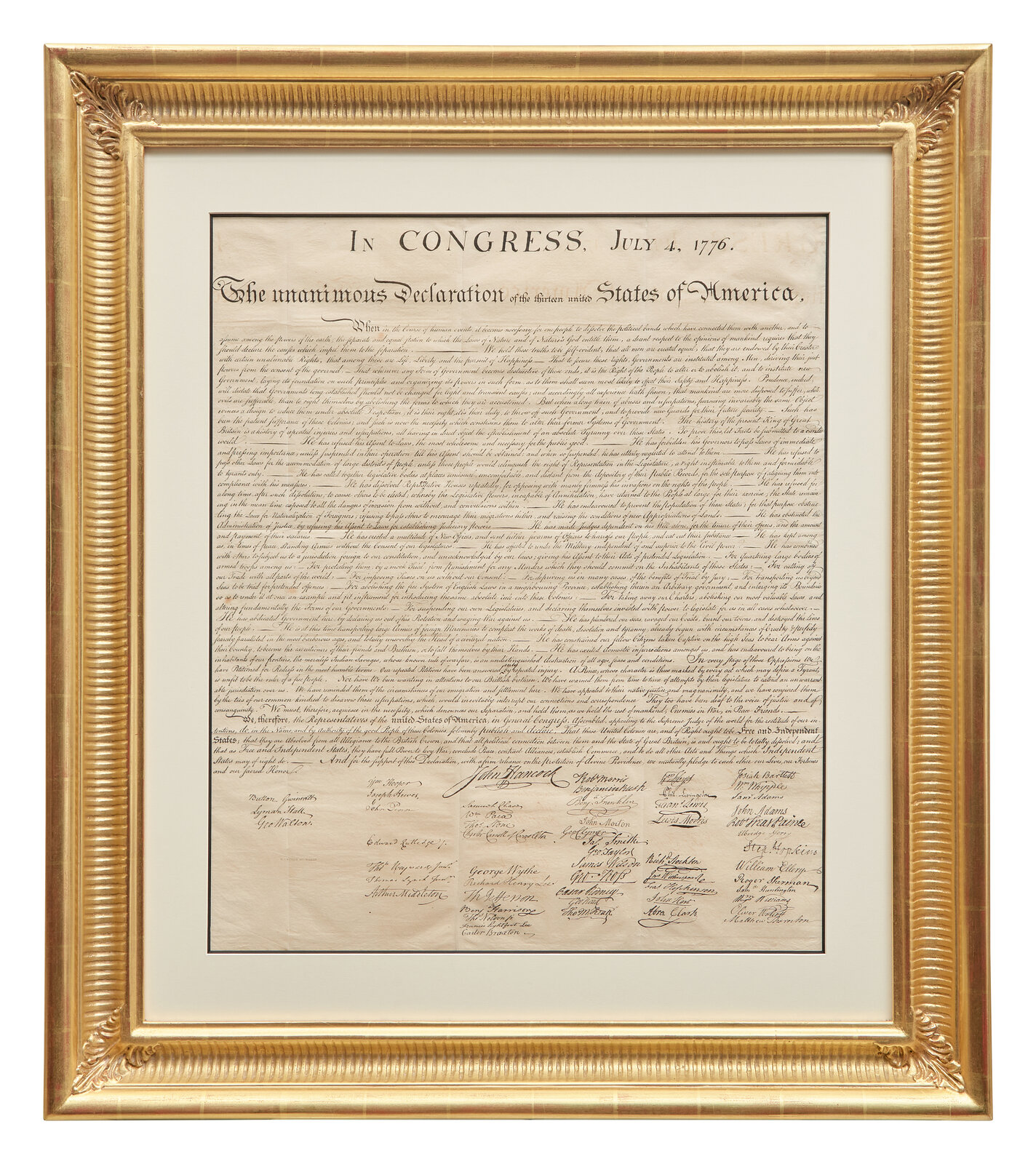
If we look closely at the Stone engraving we can see that that is about the height of the body text, meaning that if that size of text could surive years of printings for the Jode, it would likely have no issues surviving the Stone's printing run: