Earlier this week we popped by the absolutely incredible Daughters Of The American Revolution (DAR) Museum, which features a remarkable 31 period rooms, each showcasing a different state and period in American history. When we saw the table below in one of the rooms, we were curious what the object in front was and, most importantly, whether Gemini could accurately identify each object on the table based solely on this single cellphone photograph. As the results below testify, Gemini not only flawlessly inventoried all of the object on the table, it identified them as circa 1820-1850s (the room is actually 1830s) and even spotted the tumbler in front of the decanter, which we first missed when we quickly glanced at the image and showing Gemini's ability to even distinguish two highly-similar objects stacked in front of each other. In short, we were strolling through the DAR museum, wondered what an object on a table was, took a cellphone photo and asked Gemini and we got back a detailed inventory of all the objects on the table, including the one we were wondering about, reinforcing the tremendous power of these models for museum visitor engagement!
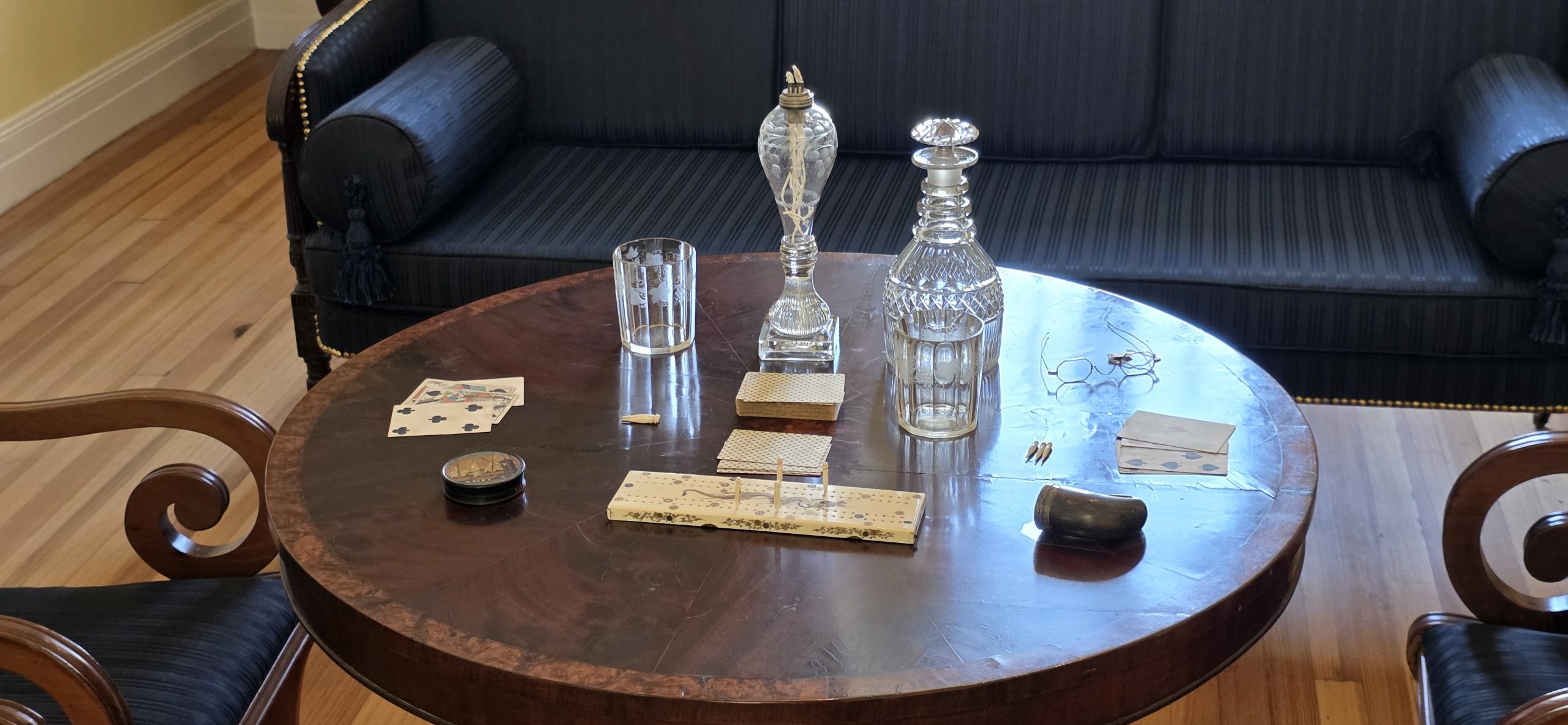
Let's see what Gemini is able to make of this table:
describe in detail all of the items you see on this table.
estimate the period this display is from.
give me an item-by-item breakdown, listing each individual item by itself as a bullet listed and for each describing it and why you believe it is that item.
Based on the style of the artifacts and furniture visible in the image, this display likely represents the early to mid-19th century, roughly the 1820s to 1850s. The heavy Empire-style seating, the specific type of lighting, and the design of the gaming accessories strongly align with the Antebellum period.
-
-
Glass oil lamp: A tall, clear glass lighting fixture stands in the center of the table. It features a bulbous fluid reservoir and a metal burner with two distinct wick tubes, which identifies it as a classic whale oil or burning fluid lamp common before the advent of kerosene.
-
Glass decanter: A cut-glass bottle with decorative facets, a flared lip, and a fitted glass stopper sits next to the lamp. Its shape and stopper identify it as a vessel meant for storing and serving spirits.
-
Two glass tumblers: Short, cylindrical, clear drinking glasses with subtle decorative etching or cutting are placed on the table. Their proximity to the decanter identifies them as the vessels intended for drinking the served liquor.
-
Playing cards: Several loose cards are scattered face-up on the table, showing club and spade pips, alongside two stacked decks. They are clearly playing cards, but they notably lack corner indices (the numbers or letters usually printed in the corners), which is characteristic of decks manufactured prior to the late 19th century.
-
Cribbage board: A long, rectangular board featuring a track of small holes rests on the table, with a few upright pegs currently inserted into it. This specific layout of parallel holes is universally used for tracking scores in the card game cribbage.
-
Small round box: A dark, circular container with a lid sits near the cards on the left side of the table. Given its size and context within a parlor game setting, it is likely a snuff box or a small container for holding game counters or coins.
-
Wire-rimmed spectacles: A pair of eyeglasses with very thin metal frames and round or oval lenses is folded flat on the table. The distinct wire arms and bridge clearly identify them as antique reading glasses.
-
Curved horn object: A dark, polished, crescent-shaped object rests near the right edge of the table. Its natural, tapered shape resembles a piece of hollowed animal horn, which was frequently used in this era to craft snuff mulls, small drinking cups, or cigar holders.
-
Small pegs: A few tiny, pointed, stick-like objects lie scattered near the right side of the table. Their size, shape, and proximity to the cribbage board indicate they are spare scoring pegs for the game.
-
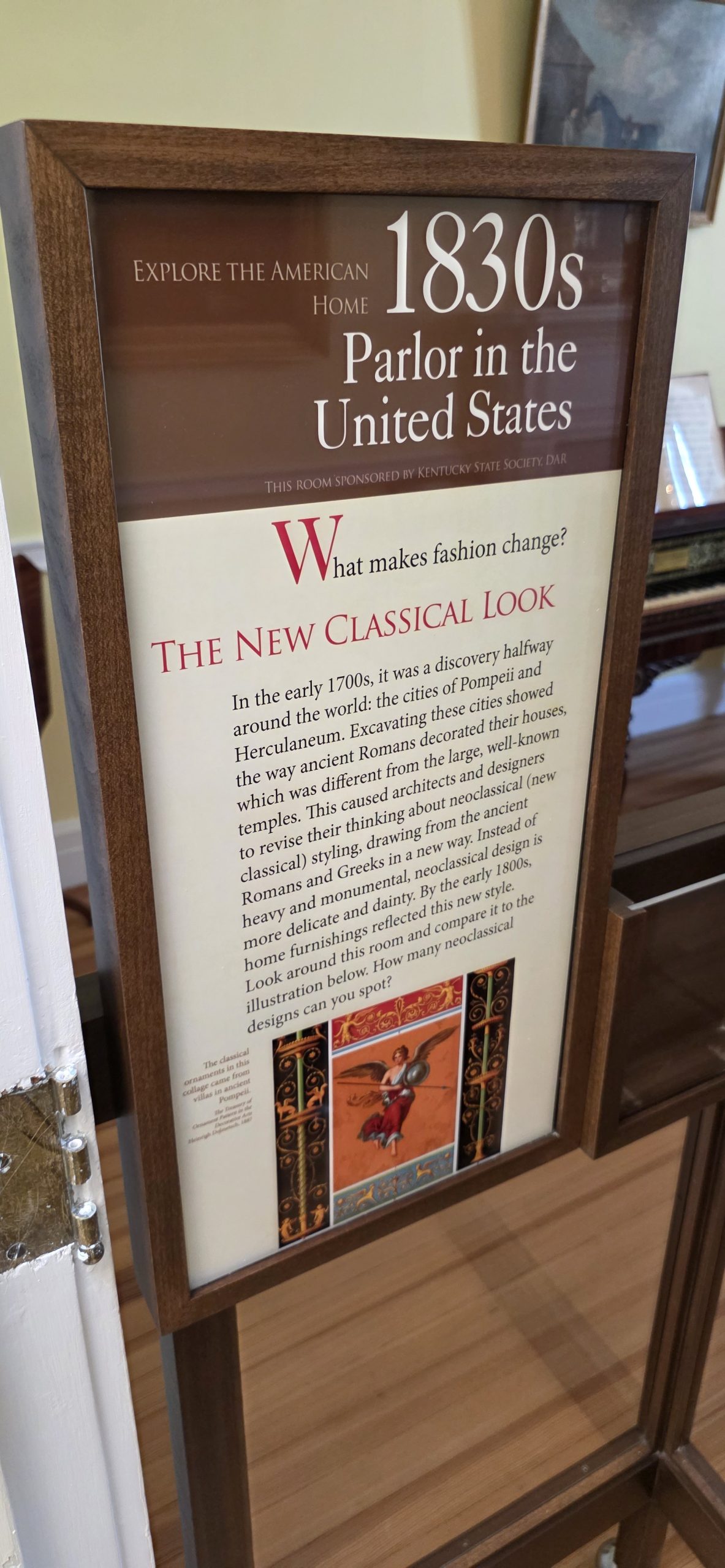
For reference, here is the museum sign for the room, which Gemini never saw, but which confirms its estimate of the room's time period: