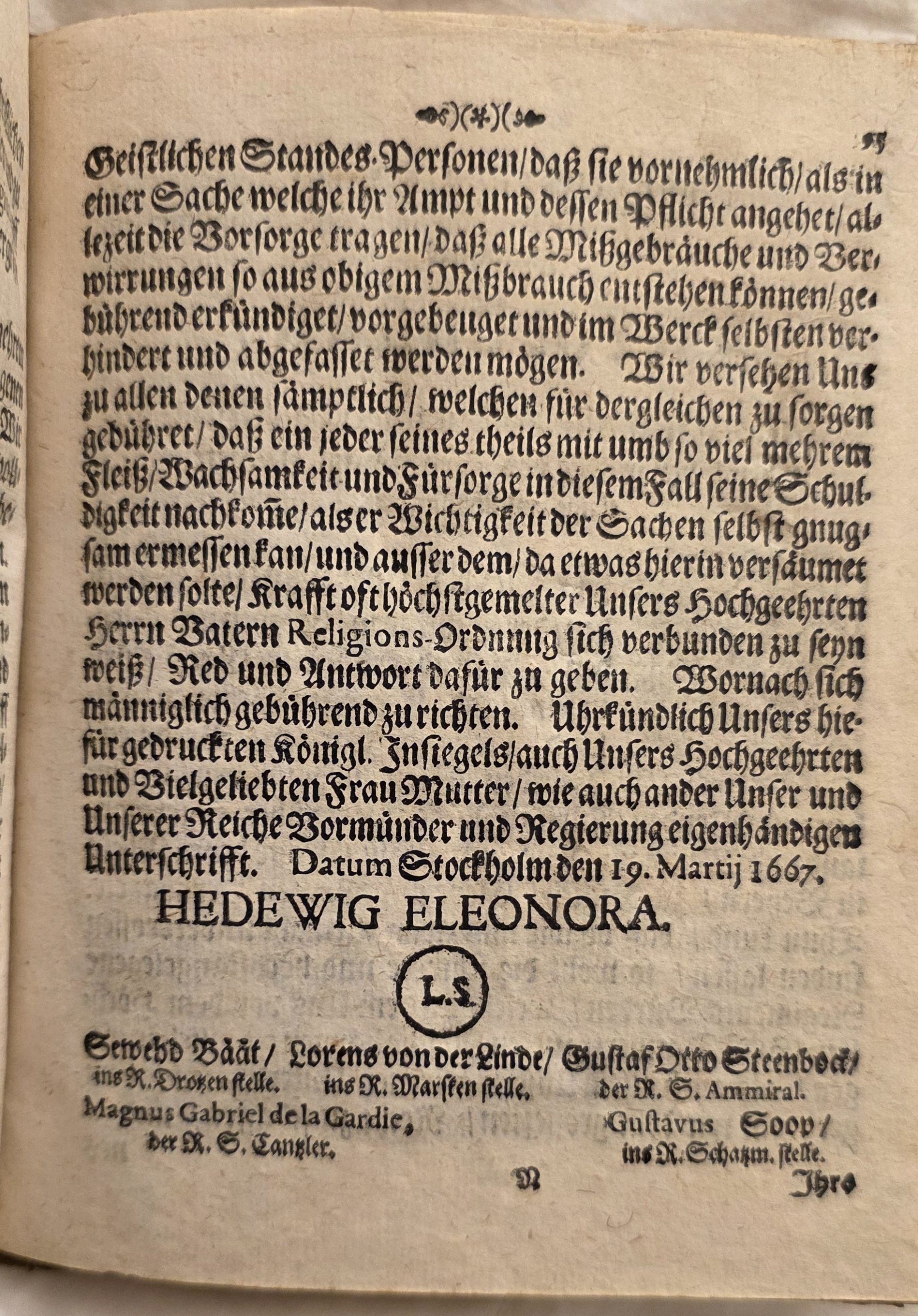
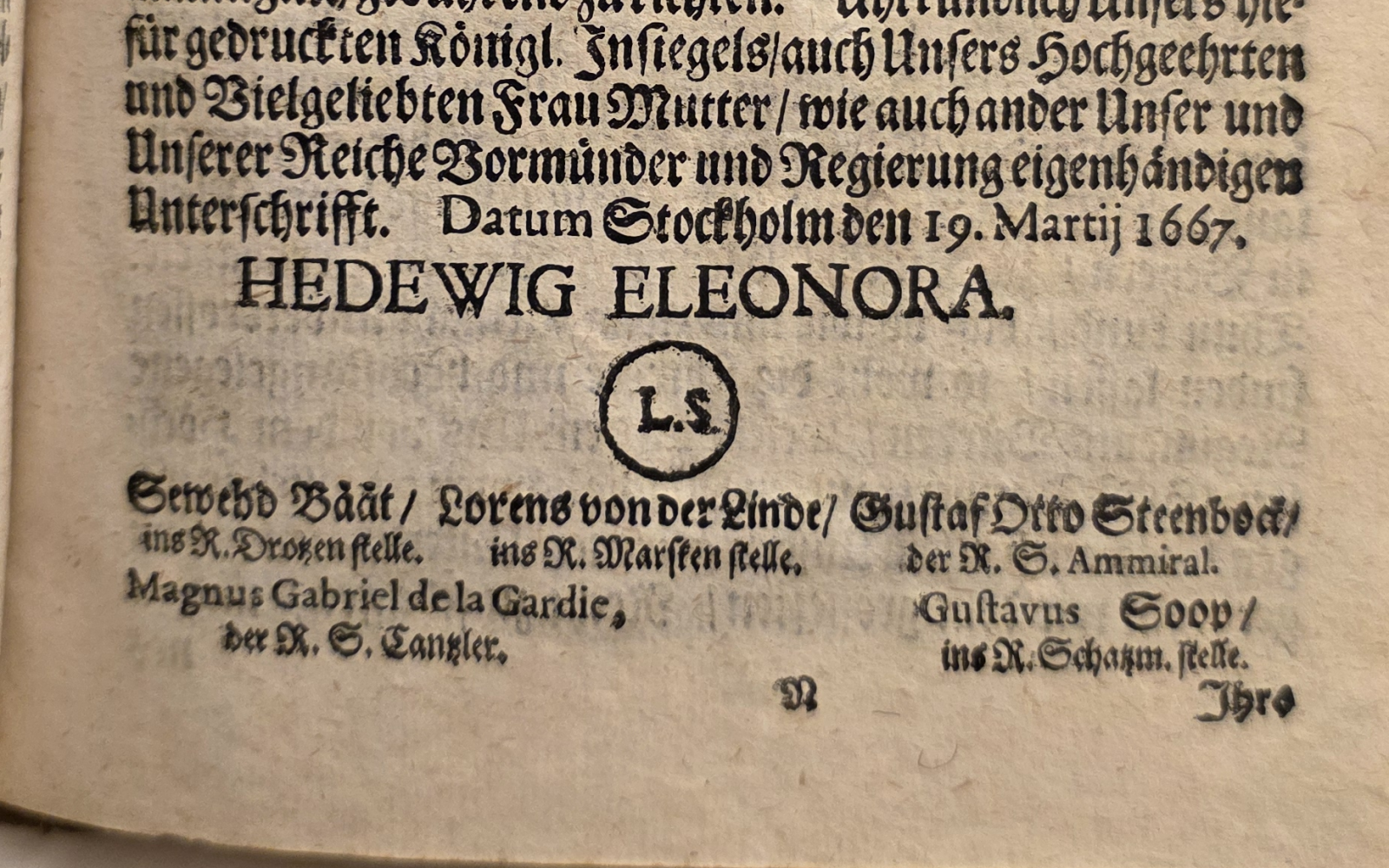
In accessioning a 1689 Livonian law book, we noticed a small roundel with initials LS on one of the pages and flagged it initially as a possible institutional ownership or provenance ink stamp. However, after confirming that it was not visible through the verso of the page and eventually confirming that it was printed in the same ink as the rest of the page, we were stumped: what exactly did this stamp represent? Once again, Gemini had an answer for us: a printed royal seal notation.
what does the LS stamp mean?
The encircled L.S. stands for the Latin phrase Locus Sigilli, which translates to "place of the seal."
In printed legal or royal documents from this era, it serves two primary functions:
-
On printed copies (like this book): Because it was impractical to press an actual wax or embossed royal seal onto every single page of a mass-printed book of ordinances, the printer used the L.S. symbol to show the reader that the original, handwritten master decree bore the official royal seal in that exact spot.
-
On original draft documents: It acted as a placeholder indicating where the official seal needed to be affixed before the document was finalized.
How it connects to the text on your page:
Just a few lines above the symbol, the German text explicitly references this seal:
"…Uhrkündlich Unsers hiefür gedruckten Königl. Insiegels…" ("…In witness whereof, our Royal Seal is printed/impressed hereupon…").
This particular document is a German-language printing of a Swedish royal decree dated March 19, 1667, in Stockholm (Sweden controlled several German territories at the time, such as Swedish Pomerania and Bremen-Verden). Because King Charles XI of Sweden was only 11 years old in 1667, the decree was issued by his regency council, led by his mother, Queen Dowager Hedwig Eleonora, alongside the five high royal officers listed below the seal (Seved Bååt, Lorens von der Linde, Gustaf Otto Stenbock, Magnus Gabriel De la Gardie, and Gustaf Soop).