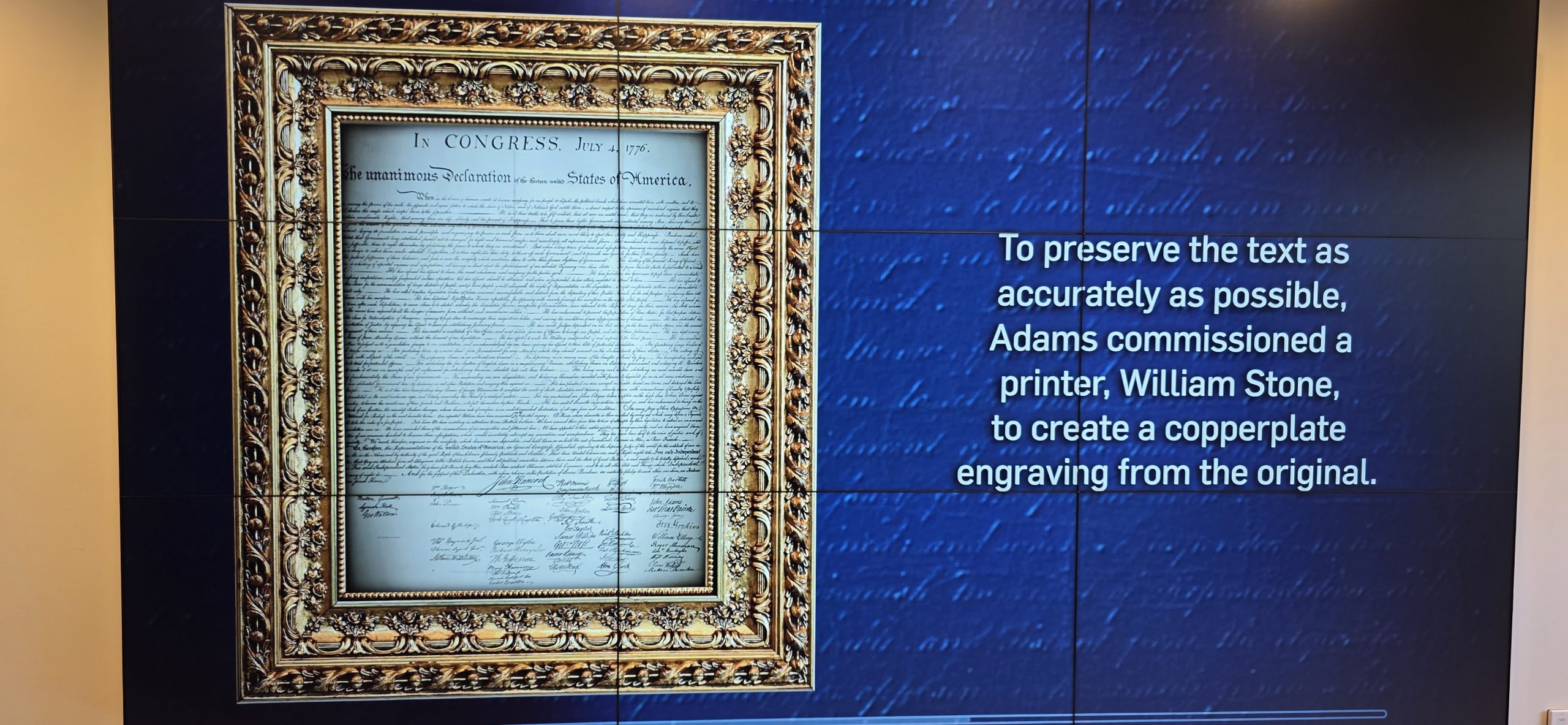
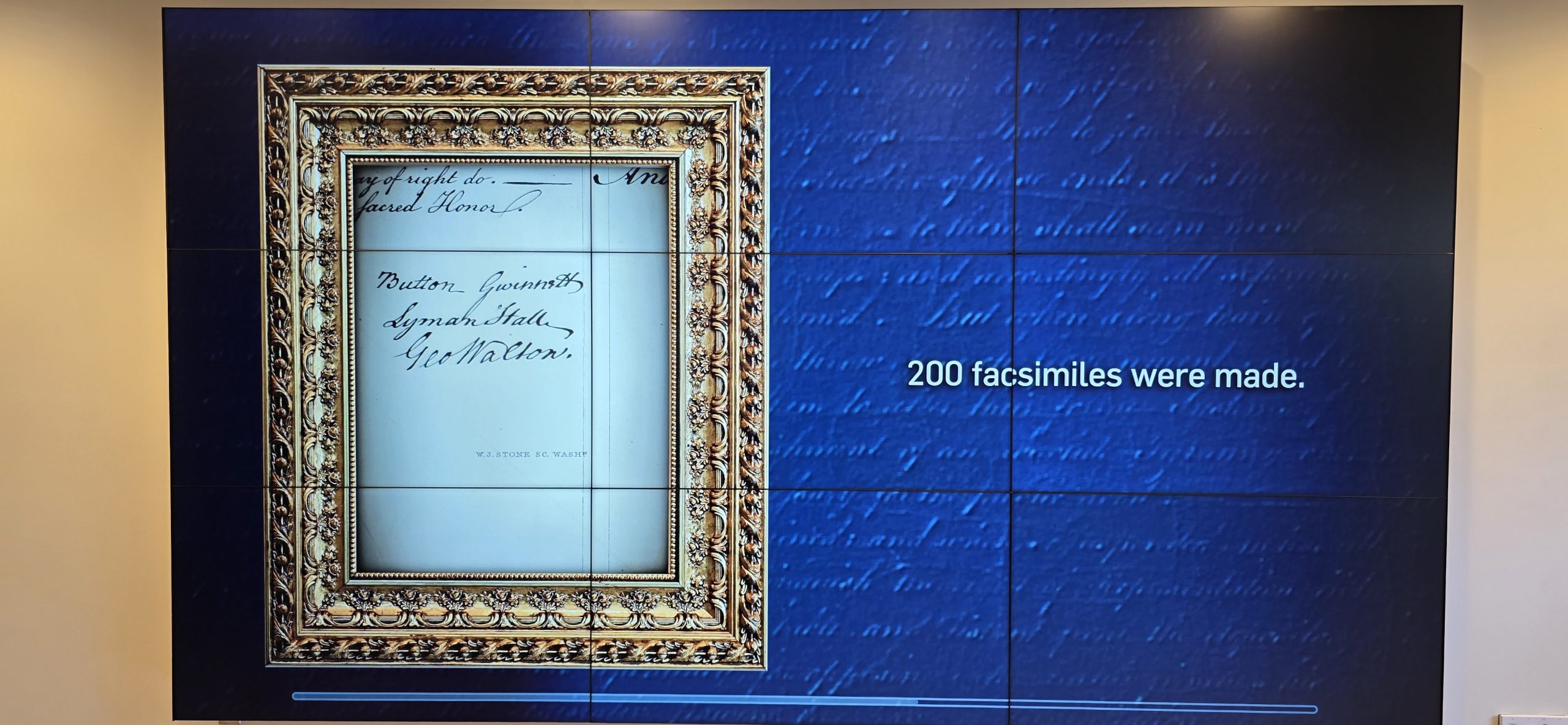
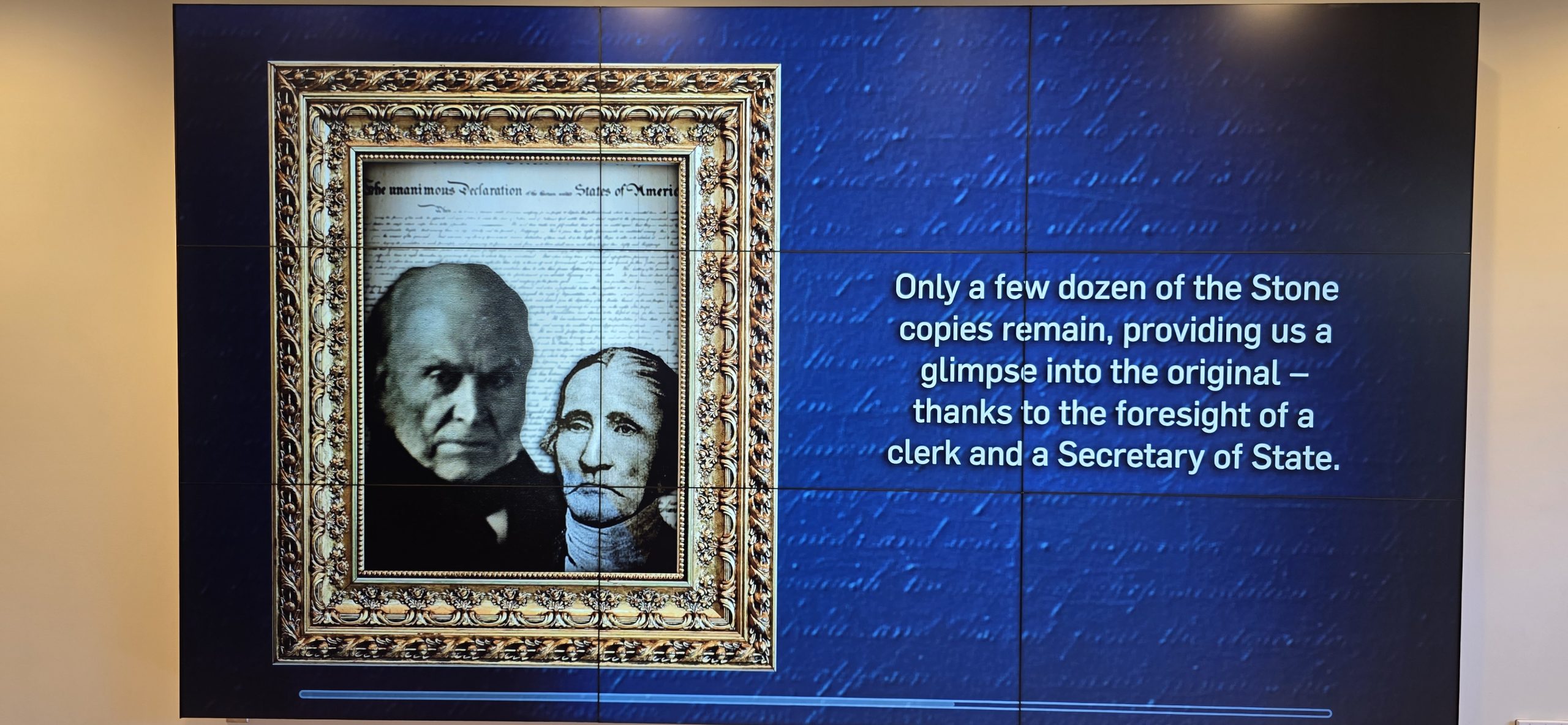
Whether or not cultural heritage institutions embrace AI, their visitors will increasingly be snapping photos with their cellphones and turning to AI models to learn more about what they see. We recently visited a major new museum that just opened in DC that features an exhibit about the history of the Declaration of Independence, including this digital display about the history of the William Stone Declaration facsimile that forms the basis of the image of the Declaration we know today. Amazingly, asked to fact-check the display, Gemini not only flags the error about the 200 copies, but even surfaces some fascinating historical context about the clerk depicted in one of the images!
We simply snapped a few photos of the display with our phone and asked Gemini to fact check them while we stood there:
Are any of these claims contested or require further context?
While the overarching story told in this exhibit is rooted in real events, several of the specific claims—and even the document displayed in the frame—are either historically contested or missing critical context:
1. The Visual Mismatch: An 1848 Force Print vs. the "200 Facsimiles"
-
What the exhibit shows: The display states that "200 facsimiles were made" while zooming in on the bottom-left column of signatures (
Button Gwinnett,Lyman Hall,Geo Walton) with the small engraver's markW.J. STONE SC. WASHn.underneath and a blank top margin above the title. -
Why this requires context:
-
Wrong edition shown for the "200" claim: The 1823 first edition of 200 vellum (parchment) copies did not have
W.J. STONE SC. WASHn.at the bottom left. Instead, the 1823 copies carried an official commission line engraved across the very top margin ("ENGRAVED by W.I. STONE for the Dept. of State by order / of J.Q. ADAMS Secy of State July 4th 1823"). -
The 1848 Peter Force edition: The
W.J. STONE SC. WASHn.mark shown on screen identifies the second edition printed on thin rice/wove paper in the 1830s–1840s for historian Peter Force’s American Archives (published in 1848). For that later printing, the original 1823 credit line at the top was burnished off the copperplate, Stone's signature was added under the Georgia signers, and roughly 1,500 to 4,000 copies were printed—not 200. -
201 vs. 200 copies: Even for the original 1823 vellum run, 201 copies were actually struck (200 official copies distributed by Congress, plus 1 extra copy Stone struck for himself, now in the Smithsonian), alongside a handful of paper proofs.
-
2. The "Clerk" Behind the Survival: Exaggerated Credit & Ironic Damage
-
What the exhibit claims: "Only a few dozen of the Stone copies remain, providing us a glimpse into the original – thanks to the foresight of a clerk and a Secretary of State."
-
Why this requires context:
-
Stephen Pleasonton's contested memoir: The portrait alongside Secretary of State John Quincy Adams depicts State Department clerk Stephen Pleasonton, who evacuated the Declaration in linen sacks to Leesburg, Virginia, just before British troops burned Washington in August 1814. However, historians note that Pleasonton's famous account—written more than 30 years later—exaggerated his solo "foresight." He claimed he acted on his own initiative against the advice of superiors, whereas contemporary records show Secretary of State James Monroe explicitly ordered the evacuation and fellow clerks (John Graham and Josias King) were heavily involved.
-
Two different clerks: Pleasonton had nothing to do with commissioning the 1823 Stone engraving; the State Department Chief Clerk who actually oversaw Stone's 1823 printing order under Adams was Daniel Brent. Furthermore, later in his career, Pleasonton had the original 1776 Declaration hung on a brightly lit wall in the U.S. Patent Office opposite a tall window for over a decade, exposing it to harsh sunlight and coal smoke that further bleached the ink.
-
Surviving count: Roughly 50 to 55 of the original 1823 vellum copies are documented today (a bit more than "a few dozen", which typically implies 30–36, a figure from older 20th-century censuses before more copies were located), while several hundred of the 1848
W.J. STONE SC. WASHn.paper copies survive.
-
Below you can see the three photos we used with Gemini above: