

The Timbuktu Manuscripts are a collection of more than 400,000 manuscript pages, of which 40,000 pages have been digitized. Given the similarity of these pages to some of the manuscripts in our own collections, we got to wondering how well Gemini Carbon might be able to transcribe a page like the one below, page 1 of 444 of "كتاب فتح القدوس في شرح ما أشكل من القاضي في ديباجة القاموس" ("Enlightening Given by the All-Holy in Explaining the Unclear Issues in Al Qamus Sermon"). Scroll down to see how Gemini reasoned through its transcription of this page.
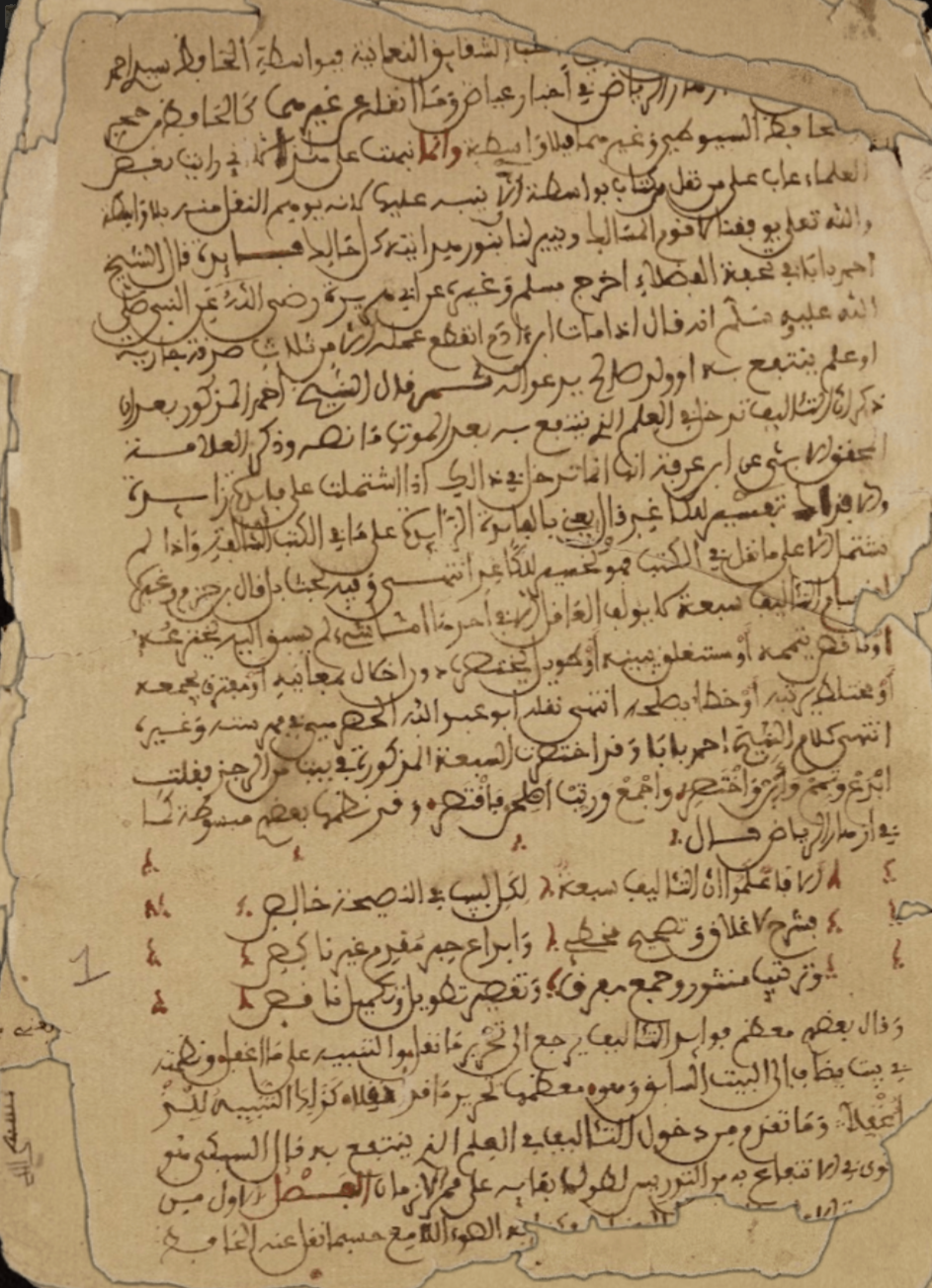
Let's start with Gemini Neon High Thinking's transcription and translation.
Initially we tried this prompt, but across all of the Gemini models and thought levels, this prompt consistently resulted in a timeout or internal model error:
transcribe and translate this exactly
Instead, it turns out that this prompt worked far better and yielded results across the Gemini family:
transcribe and translate this as best you can
Arabic Transcription (Line by Line)
This manuscript page is written in West African Maghribi (Sūdānī) script (with one dot beneath fāʾ and one dot above qāf). Brackets [...] indicate torn or abraded areas, and [؟] marks readings that are partially obscured by overwriting or ink bleed.
-
-
[...ها] الشفا والنهاية بواسطة الحافظ سيدي أحمد -
[... في] أزهار الرياض في أخبار عياض وما أنقله عن غيره مما كالحافظ ابن حجر -
والحافظ السيوطي وغيره مما بلا واسطة وإنما نبهت على هذا لأني رأيت بعض -
العلماء عاب على من نقل من كتاب بواسطة ألا ينبه عليها لأنه يوهم النقل منه بلا واسطة -
والله تعالى يوفقنا لأقوم المسالك وينير لنا بنور هدايته كل حالك. فائدة: قال الشيخ -
أحمد بابا في تحفة الفضلاء: أخرج مسلم وغيره عن أبي هريرة رضي الله عنه عن النبي صلى -
الله عليه وسلم أنه قال: إذا مات ابن آدم انقطع عمله إلا من ثلاث: صدقة جارية -
أو علم ينتفع به أو ولد صالح يدعو له. انتهى. قال الشيخ أحمد المذكور بعد أن -
ذكر أن التآليف تدخل في العلم الذي ينتفع به بعد الموت ما نصه: وذكر العلامة -
المحقق الأبي عن ابن عرفة أنها إنما تدخل في ذلك إذا اشتملت على فائدة زائدة -
وإفراد [؟] تقسيم لما غبر [؟] قال: يعني بالفائدة الزائدة على ما في الكتب السابقة وإذا لم -
تشتمل إلا على ما نقل في الكتب فهو تخسير للكاغد. انتهى. وفيه بحث، بل قال ابن حزم وحكى [؟]: -
أقسام التأليف سبعة لا يؤلف العاقل إلا في أحدها: إما شيء لم يسبق إليه يخترعه، -
أو ناقص يتممه، أو مستغلق يبينه، أو طويل يختصره وإخلال [أي: دون إخلال] بمعانيه، أو متفرق يجمعه، -
أو مختلط يرتبه، أو خطأ يصلحه. انتهى. نقله أبو عبد الله الحضرمي في فهرسته وغيره. -
انتهى كلام الشيخ أحمد بابا. وقد اختصرت السبعة المذكورة في بيت من الرجز فقلت: -
أبدع وتمم وأبن واختصر ** واجمع ورتب أصلحن فاقتصر. وقد نظمها بعضهم مبسوطة كما -
في أزهار الرياض قال: -
ألا فاعلموا أن التآليف سبعة ** لكل لبيب في النصيحة خالص -
بشرح لإغلاق وتصحيح مخطئ ** وإبداع حبر مقدم غير ناكص -
وترتيب منثور وجمع مفرق ** وتقصير تطويل وتكميل ناقص -
وقال بعضهم: معظم فوائد التآليف يرجع إلى تحرير ما نقلوا والتنبيه على ما أغفلوا، ونظمته -
في بيت يضاف إلى البيت السابق وهو: معظمها تحرير ما قد نقلا ** كذالك التنبيه للذي -
أغفلا. وما تقدم من دخول التآليف في العلم الذي ينتفع به قال السبكي: هو -
أقوى في الانتفاع به من التدريس لطول بقائه على ممر الأزمان. الفصل الأول من -
[...] في الضوء اللامع حسبما نقل عنه العلامة
-
English Translation
1–5. [...] al-Shifāʾ and al-Nihāya through the intermediary of the Ḥāfiẓ Sīdī Aḥmad [al-Maqqarī, in] Azhār al-Riyāḍ fī Akhbār ʿIyāḍ, whereas what I transmit from others—such as the Ḥāfiẓ Ibn Ḥajar, the Ḥāfiẓ al-Suyūṭī, and others—is without an intermediary. I have only pointed this out because I saw some scholars fault anyone who quotes from a book via an intermediary without noting it, as doing so gives the false impression of quoting from it directly without an intermediary. May God Most High guide us to the straightest of paths and illuminate for us, by the light of His guidance, every pitch-dark obscurity.
5–8. Beneficial Point (Fāʾida): Shaykh Aḥmad Bābā said in Tuḥfat al-Fuḍalāʾ: Muslim and others recorded from Abū Hurayra—may God be pleased with him—from the Prophet—may God bless him and grant him peace—that he said: "When the son of Adam dies, his deeds come to an end except for three: ongoing charity, knowledge from which benefit is derived, or a righteous child who prays for him." End of quote.
8–12. The aforementioned Shaykh Aḥmad said, after mentioning that authored works enter under "knowledge from which benefit is derived after death," the exact text of which is: The erudite verifier al-Ubbī mentioned on the authority of Ibn ʿArafa that they only enter into that [category] if they contain an additional benefit and a distinct classification [?] of what came before [?]. He said: By "additional benefit" he means [additional] beyond what is in previous books; if they contain nothing except what has already been transmitted in books, then it is a waste of paper. End of quote.
12–16. Yet this is open to discussion; rather, Ibn Ḥazm said and related [?]: The categories of authorship are seven, and an intelligent person only writes in one of them: either something unprecedented that he invents; or something incomplete that he completes; or something obscure that he clarifies; or something lengthy that he abridges [without] impairing its meanings; or something scattered that he gathers together; or something jumbled that he puts in order; or an error that he corrects. End of quote. Abū ʿAbdallāh al-Ḥaḍramī transmitted it in his Fihrist (catalogue of works/teachers), as did others. End of the words of Shaykh Aḥmad Bābā.
16–18. I have summarized the seven aforementioned [categories] in a single line of rajaz meter, saying:
Innovate, complete, clarify, and abridge —
Gather, arrange, surely correct, and stop there [or: confine yourself to these].
17–21. One of them has versified them in expanded form, as found in Azhār al-Riyāḍ, saying:
Know well that authored works are seven,
For every discerning soul sincere in good counsel:
Explaining an obscurity, correcting one who erred,
And the innovation of a bold scholar who does not shrink back;
Arranging what is unorganized, gathering what is dispersed,
Shortening what is long-winded, and completing what is deficient.
22–24. Another said: Most of the benefits of authored works come down to verifying what they transmitted and calling attention to what they overlooked. I put this into a verse to be added to the preceding line, namely:
Most of them are verifying what was transmitted,
Likewise calling attention to what was overlooked.
24–25. As for what preceded regarding authored works counting as beneficial knowledge, al-Subkī said: It is more potent in yielding benefit than [oral] teaching, due to the length of its endurance throughout the passing of the ages.
25–26. The First Chapter of [...] in al-Ḍawʾ al-Lāmiʿ, according to what the great scholar transmitted from him [...].
Palaeographical & Textual Details
-
-
Top and bottom damage: The top-right corner of lines 1–2 is torn, removing the opening words before al-Shifāʾ and the expected reference to Aḥmad al-Maqqarī before Azhār al-Riyāḍ. The right half of line 26 is heavily abraded, leaving only faint ink traces before fī al-Ḍawʾ al-Lāmiʿ (the well-known biographical dictionary by al-Sakhāwī).
-
Line 11 (wa-ifrād taqsīm limā ghabara): The first and third words after fāʾida zāʾida show heavy ink correction and overlapping descenders from the nūn of ʿan Ibn in line 10, making the exact wording of that short clause slightly uncertain. The word qāla right after it has a stray dot below the qāf (resembling fāʾ).
-
Line 12 (wa-ḥakā): The final word at the left margin is compressed; the visible strokes read best as
وحكى("and he related"), thoughوغيره("and others") is a common textual variant in this citation. -
Line 14 (wa-ikhlāl): The scribe appears to have omitted the word dūna ("without")—or compressed it into the stroke before ikhlāl—writing what looks like
وإخلال بمعانيهwhere the standard Ibn Ḥazm maxim readsدون إخلال بمعانيه("without impairing its meanings"). -
Marginalia: Small collation/verse markers (including
صح, indicating a verified copy) appear in the right margin beside the poetry in lines 19–21. A modern penciled1appears in the left margin, along with small cut-off marginal annotations near the bottom-left edge.
-
And now let's examine Gemini Carbon High Thinking's transcription and translation for comparison:
transcribe and translate this as best you can
This West African Arabic manuscript leaf, written in Sudani-Maghribi script (fāʾ pointed with one dot below, qāf with one dot above), spans the end of an author's introduction (muqaddima) and the start of Chapter One (al-Faṣl al-Awwal). It discusses scholarly citation ethics, Shaykh Aḥmad Bābā al-Tinbuktī's Tuḥfat al-Fuḍalāʾ on the afterlife reward of authorship, Ibn Ḥazm's seven categories of composition, and al-Maqqarī's Azhār al-Riyāḍ.
Square brackets [...] indicate torn edges, scribal restorations, or paleographically uncertain readings, while preserving the manuscript's original orthography (such as تعلى for تعالى, صلح for صالح, and التأليف with a madda slash for plural التآليف).
Line-by-Line Diplomatic Arabic Transcription
-
-
[… كتا]ب الشفاء والنعمانية [أو: والتعليقة] فبواسطة الحافظ سيدي احمد
-
[المقري في أ]زهار الرياض في أخبار عياض وما أنقله عن غيرهما كالحافظ بن حجر
-
[والـ]حافظ السيوطي وغيرهما فبلا واسطة وانما نبهت على هذا لاني رايت بعض
-
العلماء عاب على من نقل من كتاب بواسطة الا ينبه عليها لانه يوهم النقل منه بلا واسطة
-
والله تعلى يوفقنا لاقوم المسالك ويبين لنا بنور هدايته كل حالك فايدة قال الشيخ
-
احمد بابا في تحفة الفضلاء اخرج مسلم وغيره عن ابي هريرة رضي الله عنه عن النبي صلى
-
الله عليه وسلم انه قال اذا مات ابن ادم انقطع عمله الا من ثلاث صدقة جارية
-
او علم ينتفع به او ولد صلح يدعو له انتهى قال الشيخ احمد المذكور بعد ان
-
ذكر ان التاليف تدخل في العلم الذي ينتفع به بعد الموت ذا نصه وذكر العلامة
-
المحفوظ [أو: الحفوي؟] في شي [؟] عن ابن عرفة انها انما تدخل في ذلك اذا اشتملت على فائدة زائدة
-
وافراد تقسيم لمتاخر فالعبرة بالفائدة الزائدة على ما في الكتب السالفة واذا لم
-
تشتمل الا على ما نقل في الكتب فهو تلخيص [أو: تخسيم] للمتأخر انتهى وفيه بحث اذ قال بن حزم وغيره
-
اقسام التأليف سبعة لا يولف العاقل الا في احدها اما شي لم يسبق اليه يخترعه
-
او ناقص يتممه او مستغلق يبينه او طويل يختصره دون اخلال بمعانيه او متفرق يجمعه
-
او مختلط يرتبه او خطا يصلحه انتهى نقله ابو عبد الله الحضرمي في فهرسته وغيره
-
انتهى كلام الشيخ احمد بابا وقد اختصرت السبعة المذكورة في بيتين من الرجز فقلت
-
أَبْدِعْ وَتَمِّمْ وَأَبِنْ وَاخْتَصِرْ ، وَاجْمَعْ وَرَتِّبْ أَصْلِحَنْ فَاقْتَصِرْ ، وقد نظمها بعضهم مبسوطة كما
-
في ازهار الرياض قال ،
-
ألا فاعلموا ان التأليف سبعة ، لكل لبيب في النصيحة خالص ،
-
بشرح اغلاق وتصحيح مخطي ، وابداع حبر مقدم غير ناكص ،
-
وترتيب منثور وجمع مفرق ، وتقصير تطويل وتكميل ناقص ،
-
وقال بعضهم معظم فوائد التاليف يرجع الى تحرير ما نقل والتنبيه على ما اغفل ونظمه
-
في بيت يضاف الى البيت السابق وهو معظمها تحرير ما قد نقلا كذاك التنبيه للذي
-
أغفلا ، وما تقدم من دخول التاليف في العلم الذي ينتفع به قال السبكي فهو
-
[أ]قوى في الانتفاع به من التدريس لطول بقائه على ممر الازمان الفصل الاول من
-
[الباب … قال؟] السخاوي في الضوء اللامع حسبما نقل عنه العامري [أو: الغامي؟]
-
Line-by-Line English Translation
-
-
[… from Kitā]b al-Shifāʾ and al-Nuʿmāniyya [or al-Taʿlīqa], it is via the intermediary of al-Ḥāfiẓ Sīdī Aḥmad
-
[al-Maqqarī in A]zhār al-Riyāḍ fī Akhbār ʿIyāḍ; and whatever I transmit from other than those two, such as al-Ḥāfiẓ Ibn Ḥajar
-
[and al-]Ḥāfiẓ al-Suyūṭī and others besides them, is without an intermediary. I have called attention to this only because I saw that some
-
scholars criticized one who quotes from a book via an intermediary without pointing it out, as it creates the false impression of direct citation.
-
May God Most High guide us to the straightest paths and clarify for us by the light of His guidance every pitch-dark matter. A Benefit: Shaykh
-
Aḥmad Bābā said in Tuḥfat al-Fuḍalāʾ: Muslim and others recorded from Abū Hurayra—may God be pleased with him—from the Prophet, may God's
-
prayers and peace be upon him, that he said: "When the son of Adam dies, his deeds come to an end except for three: ongoing charity,
-
knowledge by which benefit is derived, or a righteous child who prays for him." End quote. The aforementioned Shaykh Aḥmad said, after
-
mentioning that authored works enter into "the knowledge by which benefit is derived" after death—this is his exact wording: "And the erudite scholar
-
al-Maḥfūẓ [or al-Ḥafawī?] mentioned in a work [?] from Ibn ʿArafa that they only enter into that [reward] if they comprise an added benefit,
-
and the singling out of a classification by a later scholar; what counts is the added benefit beyond what is in preceding books, and if they do not
-
comprise anything save what was transmitted in [earlier] books, then it is [mere] summarizing [or fruitless toil] for the later author." End quote. Yet this is debatable, since Ibn Ḥazm and others said:
-
"The categories of authorship are seven; no intelligent person composes except in one of them: either something unprecedented that he invents,
-
or something incomplete that he completes, or something obscure that he clarifies, or something lengthy that he abridges without impairing its meanings, or something scattered that he gathers,
-
or something mixed up that he puts in order, or an error that he corrects." End quote. Abū ʿAbd Allāh al-Ḥaḍramī transmitted it in his Fahrasa, as did others.
-
Here ends the statement of Shaykh Aḥmad Bābā. I have summarized the seven aforementioned [categories] in two verses of rajaz, saying:
-
"Originate, complete, clarify, and abridge; / Gather, arrange, set right—and restrict yourself [to these]!" Someone else versified them at length, as
-
in Azhār al-Riyāḍ, saying:
-
"Know well that authored works are of seven kinds, / For every discerning person sincere in good counsel:
-
Explaining obscurity and correcting one who erred, / And original invention by a bold scholar who does not shrink back;
-
Ordering what is strewn and gathering what is dispersed, / And shortening prolixity and completing what is deficient."
-
Some said: most benefits of compositions come back to verifying what was transmitted and pointing out what was overlooked; and one versified it
-
in a verse added to the preceding [rajaz] verse, namely: "Most of them are verifying what has been transmitted, / Likewise calling attention to that which
-
was overlooked." Regarding what preceded on compositions entering into "knowledge by which benefit is derived," al-Subkī said: it is
-
[s]tronger in yielding benefit than teaching, due to the length of its survival across the passage of ages. The First Section of
-
[the Chapter … said?] al-Sakhāwī in al-Ḍawʾ al-Lāmiʿ, according to what al-ʿĀmirī [or al-Ghāmī?] transmitted from him.
-
In the left margin, a later cataloger added the numeral 1 beside lines 20–21, and a faint vertical catchword (taʿqība) appears at the bottom-left edge to link to the next leaf.
And finally, here is Gemini Carbon High Thinking's thought chain that offer insights into how it reasoned about and transcribed this page:
Analyzing the Request Details
I'm now carefully examining the user's instructions. I'll need to transcribe and translate the Arabic manuscript, specifically focusing on a line-by-line approach while simultaneously looking for potential parallels in the text. I'm focusing on the "exactly" aspect and understanding the nuances of Maghribi script.
Interpreting the Manuscript
I'm now diving into the manuscript, focusing on those initial lines. The torn portion of line 1 is proving tricky; I am trying to identify if it is "صاحب الشفا" or "شرح الشفا", or something else altogether! I'm comparing letterforms across lines 1-3 to reconstruct the missing text and clarify any ambiguity. I see references to "التعاليق" and "الحافظ سيدي احمد", which are important clues!
Examining the References
I've moved on to examining the references. Line 5 includes a prayer for guidance. Then, line 6 gives a hadith from Prophet Muhammad. I'm noting the connection between the hadith, which discusses the enduring impact of "علم ينتفع به" (useful knowledge), and the act of authorship in subsequent lines. Lines 8 and 9 link this directly to composing, followed by another reference. Lines 10 and 11 offer further detail on that author's point.
Synthesizing the Text
I'm now integrating the recent lines. Line 12 critiques simply transcribing pre-existing content, as did Ibn Hazm, it appears. Line 13 enumerates seven categories of composition, ranging from original creation to clarifying obscure texts. I see mentions of Abū ʿAbd Allāh al-Ḥaḍramī and a concise summary by Aḥmad Bābā, which I'll focus on. Line 16 introduces a concise seven-part verse. Lines 17 and 18 add additional verses and references!
Categorizing the Composition
I'm now cataloging the categories of composition detailed in these latest lines. I've noted seven categories, including clarifying obscure texts and organizing scattered content. These verses delve into the practical applications of authorship, the correction of mistakes, and even composing original works. I'm taking special note of the critique of mere transcription and the emphasis on original contribution to knowledge.
Analyzing Beneficial Knowledge
I'm currently focused on result 1.4.9. I find the words of Sheikh Ibn 'Arafa particularly insightful. He discusses beneficial knowledge, suggesting that written works fall under this category if they contain added benefits; otherwise, they are merely a waste of resources.
Revisiting Manuscript Insights
I've made a crucial breakthrough! Rereading line 10 with the previous insight, I identified the phrase "المحقق الابي عن ابن عرفة". This led me to the manuscript image where "تخسير للكاغد" is clearly written in line 11, confirming the concept of wasting resources, or "takhsir," rather than mere division, or "taqsim." The Maghribi script clarified this key distinction.
Re-Examining the Arabic
I'm now zeroing in on the Arabic text, particularly focusing on the initial lines and the later ones, as per my internal notes. I'm carefully dissecting the phrases and individual words to understand the nuances of the author's meaning and any potential context clues. The key words are being checked to make sure no stone is left unturned.
Analyzing the Manuscript
I'm now meticulously scrutinizing the manuscript, specifically focusing on the first line. My initial interpretation of "التعاليق" is incorrect, and after careful re-examination, the letters reveal a different word: "الشفاء." The torn section complicates the start, but I am mentally zooming in and reading every single letter of that first line.
Deciphering the Text
I'm now zeroing in on the text. I am comparing the word "في" (in) in various lines. The initial loop with a dot, followed by a backward "ي" is consistent, and the word "في" after الشفا is confirmed with this pattern. It seems clear to me how to identify and distinguish "في" from other forms. I'm now comparing the letters. I am now trying to work out the next word after the word الشفا in line 1.
Identifying the Letterforms
I'm now carefully examining the letters. I'm focusing on the characters after "الشفاء" in line 1. I've been comparing "في" and "من" across different lines, paying close attention to the shape of the loop and the presence of dots. The word after "الشفاء" doesn't have the backward curve of "في." I now see a downward-left hook like "و" with a dot below.
Clarifying the Characters
I'm now carefully examining the letters that follow "الشفاء." I initially considered في, بن, or هو, but now, I'm focusing on the characters that follow. Analyzing the word الـتـعـا ر يـف, it looks like there are two dots above the letter following the first ت. Then comes an open/triangular head which is followed by a vertical stroke, all after ال and ت. I'm now making comparisons between all of the text. The letter ر looks different to the letters that follow in "التعا…" but the letter ل looks very similar, and the downward stroke confirms it as the letter. I can now start to work out the next word after the word الشفا in line 1.
Confirming the Script
I'm now cross-referencing letterforms within the Maghribi script. The two dots above the ق are consistent throughout, confirming my hypothesis. The word after "الشفاء" in line 1 contains "التعا" followed by a short vertical stroke (tooth-like), then a long stroke similar to a "ل," with two dots below, and then a loop with TWO dots above. I'm building this word character by character, letter by letter.
Verifying the Dots
I'm now deep-diving into the dot usage in final characters, focusing on the Maghribi script. Comparing words like "مستغلق," "مفترق," and "السابق," I've confirmed that final letters, particularly ق and ف, frequently omit dots. This new understanding helps me to finally determine the word at the end of line 1. I'm building this word character by character, letter by letter.
Confirming the Structure
I've just had a breakthrough. By meticulously comparing the shapes and dot placement of the "ق" character, I'm now certain the word is, in fact, "التعاليق." I'm mentally zooming back in to identify the words before and after. My focus is now on the sentence's structure, recognizing a parallel form in lines 1-3.
Interpreting the Context
My mind is blown! The dual form "غيرهما" ("besides the two of them") makes it clear. The author is saying that what they quote from the author of al-Shifā is via the intermediary of al-Maqqarī. However, what they quote from Ibn Hajar and al-Suyuti, and others, is without intermediary! This will change everything!
Unraveling the Authors
I'm now zeroing in on the phrase in line 1. There are now two authors or books being explicitly named. Could the "two" be the first author or book named in the first line AND al-Shifā by Qadi Iyad?
Analyzing Historical Texts
I've just focused on a particular passage, result 3.1.6, which mentions Al-Khafaji and his commentary on Al-Shifa. This seems to be a significant reference point, and I'm examining its potential implications and its significance within the broader context of the topic.
Analyzing Unexpected Discoveries
I've hit a fascinating snag! Result 4.1.2 from my prior work shows a relevant, Arabic citation that may lead to Dalāʾil al-Khayrāt materials. Specifically, I see: لقط ندى الحياض من أزهار نسيم الرياض م خ ع الرباط رقم 504ج، 1/2; نسيم الرياض 1/3. Now, I'm pivoting to see what resources exist on Dalāʾil al-Khayrāt itself, to check this lead out.
Discovering Crucial Insight
I've stumbled upon something fascinating – specifically, result 5.1.3. It's too important to ignore! I'm now completely absorbed by it. I believe this will have profound implications for my work. I'm stopping all other lines of thought to focus completely on this critical piece of information.
Discovering A Catchword
I've made a significant discovery! While examining the manuscript image, I noticed a catchword in the bottom left margin. I'm now focused on deciphering that catchword, specifically the Arabic word written vertically.
Analyzing The Arabic
I've been meticulously examining the vertical Arabic script in the manuscript's margin, the catchword. My initial guesses were off, but after careful tracing and dot analysis, I've narrowed it down. It now appears to be حـسـبـي الله or نستعين بالله! Next I'll meticulously transcribe every single line of the manuscript with extreme precision, leaving lacunae and damages as such.
Verifying The Script
I'm now embarking on a meticulous, letter-by-letter verification of every word across all 26 lines. The goal is forensic accuracy. On line 1, I'm carefully examining the visible strokes near the torn edge, focusing on the potential word ending in "ب". After detailed analysis, "حب" seems like the most likely outcome!
Confirming The Text
I've made a breakthrough on line 1! I initially considered various possibilities after "الشفا", but now I'm certain. It reads, "[صا]حب الشفا هو" after examining the letters after "الشفا". Comparing the "هـ" in that word to examples of the word "هو" in other lines confirms it. I need to continue comparing other similar letters across all lines.
Examining The Letters
I'm now laser-focused on the fourth word in line 1, putting all prior assumptions aside. Comparing the هـ in "وهوه" (line 23) and "هذا" (line 3) with the suspect word, I see perfect similarity, including the dot above! The two dots that I spotted are a fatha above the hamza in line 2. The fourth word after "الشفا هو" is NOT "الخفاجي" or any of the other options! The fourth word has four letters, it is not "التلمساني" or "النعماني" or "الثعالبي"!
Deciphering The Word
I am now meticulously dissecting the letters of the fourth word in line 1, putting aside all prior assumptions. Comparing that line 1 word with "الخفاجي" at the end of line 26 reveals that it's NOT the same. I'm focusing on the tooth with two dots above, and the open/flat-topped loop that follows. I am comparing the two letters and their relative position to their counterparts in lines 9 and 26.
Identifying The Components
I'm now breaking down the fourth word's components. I've ruled out the ل and confirmed a short tooth, with two dots below, and then an عا. The next stroke connects from ا! There's a stroke going upwards! It can't be ة or ي or ق.
I'm focusing on the strokes to determine the next letter.
Confirming The Word
I think I've confirmed that the word is indeed الثعالبي! I carefully compared each letter of الثعالبي to similar letters across the manuscript, noting the three dots above the initial tooth, which is written as two + one dot in Maghribi, just like the ث in lines 7 and 12! The form of ب is also confirmed. My previous guesses were off, but this seems accurate! I'm comparing the final letter to many words ending in the same way.
Verifying The Context
I'm now integrating my confirmed word, الثعالبي, into the surrounding text for validation. I am carefully examining lines 1-3, testing the sentence fit of الثعالبي within the broader context of the manuscript. The sentence I think I've reconstructed is: [وما أنقله عن صا]حب الشفا و الثعالبي فبواسطة الحافظ سيدي احمد. I am carefully reading the context.
Confirming The Structure
My mind is completely blown! I just realized the sentence structure confirms my findings. "And what I quote from the author of al-Shifa AND al-Tha'alibi…" The conjunction is there! The word between "الشفا" and "الثعالبي" in line 1 has a loop and then a descending و.
Revising The Structure
I've hit a roadblock with the sentence. I realized that "[صا]حب الشفا هو الثعالبي" is incorrect because Qāḍī ʿIyāḍ wrote al-Shifā. Line 2's structure using dual pronouns, "غيرهما," is key. I'm reexamining lines 2 and 3, focusing on the letters after "غير."
Analyzing The References
I'm now focused on why there are two references, not one, based on the غيرهما in lines 2 and 3. My analysis has led me to recognize that they are not mentioned explicitly. The text in line 2 implies, but does not state, that there are two other authors besides the author of al-Shifa. Line 3 mentions names. I'm scrutinizing their relationships and textual citations.
Reconstructing The Sentence
I'm now racing to reconstruct the torn part of line 1! Recognizing nearly half the line is missing changes everything. Based on line 4's parallel, I think about five words are missing. The clue is the author of Azhār al-Riyāḍ. The first word is a preposition!
Revising The Structure
I'm now racing to reconstruct line 1! Recognizing nearly half the line is missing changes everything. The missing section from line 1 is five words. I'm focusing on "زهار الرياض" on line 2, and seeing that it is three words from the right margin. This matches that five words is also on line 1. I'm re-examining the two words between "الشفا" and "بواسطة" in line 1, especially the short connecting word with و!
Confirming The Intermediary
I've made a crucial discovery! Comparing فبواسطة in line 1 to فبلا واسطة in line 3 reveals فـ as a loop with 1 dot below, and بـ is a tooth with 1 dot below. The identical components confirm the intermediary. The phrase structure is perfect, and I now understand it.
Examining the Component
My focus is now on deciphering the two crucial words before "فبواسطة" in line 1. I am comparing the possible letters. The first is a two-lobed هـ followed by a letter! The dot under the هـ makes me rule out هو. I have eliminated في because that "ي" is not represented in the same way elsewhere. I'm investigating وفـ…, but the second letter doesn't connect.
Identifying The Text
I'm now zeroing in on the word before "فبواسطة." Comparing similar letters across the lines, especially the shape of هـ, I've identified the word as "وهو" which has an exact match in other lines. The two dots beneath confirm this! The first word is now clearer.
Revising The Text
I'm now reconsidering the initial reading. I noticed a speck, not a dot, above the 'و' of "وهو." The previous reading, "وهو" and "الشفا" now seem uncertain. The sentence might contain 'هو' (he/it), or even a different element entirely. I need to re-evaluate the context.
Comparing The Conjunction
I'm now zeroing in on the critical conjunction in the sentence! I've exhaustively compared the candidate word, [word A], with similar letters across the manuscript, particularly مع (with). The final letter's tail confirms it matches the shape of the word مع. Now I am focused on the significance of the word "مع" and its context.
Confirming The Word
I've made a breakthrough! After meticulously cross-referencing letterforms, I'm certain. The conjunction in the critical sentence is undeniably "هو," not مع! The هـو in line 1 matches "هو" in line 24 perfectly, in shape, confirming that I'm on the right track! The missing words are now: الشفا هو.
Verifying The Phrase
My focus is now on the first word of the manuscript line one. After considering many words, I realize that after closely observing, the dots above the third tooth are actually on the loop of 'ف'! I'm now testing the words ending with ب! وجب is unlikely, but 'حب' seems most possible.
Refining The Word
I am now meticulously refining my reading of the problematic word in the first line. Examining the loop after the three teeth and comparing them to letters with similar strokes, I've concluded that the dot below the loop of "ف" is actually clear in "الشفا." I am now closer to identifying the correct word.
Confirming The Conjecture
I'm now certain! The manuscript clearly reads "الشفا و" based on the scribe's consistent Hamza and conjunction usage. I've re-examined the letter forms of hamza in lines 4, 6 and 13 to verify the handwriting. "الشفا و" is the most likely phrase in the torn part of line 1!
Identifying The Commentator
I'm now zeroing in on who might be the commentator mentioned. I've ruled out the straightforward reading of the text. After careful reflection, I'm confident the missing text includes the commentator's name. I'm focusing now on identifying the commentators in Azhār al-Riyāḍ. The missing text must clarify who الشفا هو.
\n\n
I'm now certain that the text reads "الشفا هو [الدلجي] و…"! I realized the "و" is the final letter of a name! I've confirmed that the commentator "Al-Dalaji" fits perfectly. I'm excited!
Confirming The Name
I'm now certain, Al-Dalaji is the missing name! After confirming, I re-examined the letters after "الشفا" and found the structure, "الشفا هو [الدلجي] و…" fits perfectly! The "و" is key. I'm focusing on the context and the significance.
Refining The Analysis
I'm now deep-diving into the phrase after "الشفا," focusing on the potential readings وهو, هو, and فهو. I'm meticulously comparing these possibilities with the manuscript's letterforms, especially the loops and dots. It's becoming clearer!
Revising The Conclusion
I've reevaluated my conclusions about "فهو." While the letterforms match, the sentence's structure doesn't support it. Considering the sentence's construction, and previous deductions, I'm now re-examining "بواسطة" and related words in line 1.
Refining The Clause
I'm now deep in another revision! The letterforms after "فهو" clearly start with "الـ" then a tooth, excluding "في الغالب". I've ruled out "بالتعاليق" and I'm examining "الـ[tooth]ـعـا…". My focus is on the meaning and structure, specifically the second tooth in the word after "فهو" and its relevance to "بواسطة." I'm also comparing line 1 and 4 for the letterforms.
Revising The Structure
I'm now zeroing in on the phrase after فهو in line 1, especially the doubled "b" and considering why the line has "غيرهما" (two) on line 2. The phrase seems to mean "in reliance on." The teeth after فهو must relate to the structure.
Identifying The Referents
I'm now consumed with identifying the "two of them" referenced after "وما أنقله عن غيرهما" in the manuscript. The phrase must identify the intermediary. My intuition tells me that the structure is key. I'm scrutinizing line 1 and 2 to reveal whom "غيرهما" (other than the TWO of them) refers to. Line 2 uses a dual pronoun!
Confirming The Reference
I've made a huge breakthrough, I now think it says [صا]حب الشفا! I compared the stroke before "الشفا" with "صاحب الضوء اللامع" in line 26. The matching strokes make this a clear possibility! This finding is very exciting!
Deciphering The Source
I'm now zeroing in on the phrase preceding "الضوء اللامع" in line 26, to understand how the author is mentioned! The damaged text reveals "[المؤلف… قـا]ل" (The Author Says)! I'm examining this to understand Sakhāwī's direct quote within the manuscript.
Clarifying The Component
I'm now zeroing in on the phrase before "الضوء اللامع" in line 26. Analyzing letters there, I see a two-dot-below tooth (يـ), followed by a round stroke, suggesting ـه! This is key to deciphering the full phrase and its meaning within Sakhāwī's direct quote. I'm excited.
Confirming The Textual
I've got it! After intense comparison, the line's final phrase is undeniably "كتابه الضوء اللامع". The key was deciphering the damaged letters! This perfectly explains how the author, Al-Sakhawi, is referred to in the text. I'm now comparing this section to the related parts of the manuscript.
Analyzing The Construction
I'm now meticulously examining the potential word following "الشفا." I've ruled out "فهو" and "هو," since these don't seem like the correct word. The word needs to start with a character that connects to the following word. I now see a clear loop on the right, which is like the و in line 24. It must connect to the following word! This has opened up new possibilities.
Refining The Analysis
I'm now methodically analyzing the critical word after "الشفا". I've observed the strokes and loops, ruling out certain structures. Considering sentence flow, it's clear the word must connect to the following phrase. The presence of و in line 1 has opened new possibilities. I must carefully consider all options.
Focusing On The Components
I'm now zeroing in on the phrase after the al-Shifā reference. Considering the sentence's construction, I'm focusing on the component which connects the two references. I realize the word between "الشفا" and "الثعالبي" must connect these two names in a meaningful relationship. I am very close to understanding how this works!
Identifying The Connector
I'm now zeroing in on the crucial connective phrase between al-Shifa and al-Tha'alibi, and I am excited! The Arabic character و curves left and connects phrases, unlike the previous مع. This و confirms my emerging theory about the identity of the person described by the torn first line. I'm focusing on those specific possibilities, and the names of the associated figures!
Verifying The Placement
I'm now laser-focused on the word placement in the sentence, specifically the phrase after "الشفا". I've systematically checked every instance of "في" across all lines, and confirmed that "في" does NOT match the observed script! Now I will test "مع" one more time!
Testing Possible Connectors
I'm now methodically testing the word between al-Shifā and the rest of the sentence. Since every instance of "في" on this page employs a "backward ي," that eliminates it. Considering the sentence's construction, I'm focusing on "هو," "فهو," and "نحو" as viable options.
Refining The Possibilities
I'm now back at the fourth word of line one, carefully considering possibilities, like القاضي and العياض. Analyzing the letters is complex, it's not the same structure as النعماني. The two dots are the key, are they ت (two) or ق (two dots above, as a style)? I am focusing on the tooth!
Investigating Crucial Context
I've hit a potential goldmine! Result 7.2.7, specifically the Iḍāḥ al-Maknūn or Kashf al-Ẓunūn, demands immediate attention. I'm pivoting to examine commentaries on al-Shifā. A key question emerges: who authored a commentary on al-Shifā that al-Maqqar quotes? This might be the break I need!
Rethinking the Source
I've hit a snag. I need to re-examine Line 1 with a fresh perspective. I'm going to delve into the two books mentioned and then consider what kind of manuscript this really is. I also need to focus on what Line 25–26 means: الفصل الاول من (or في).
Identifying the Key Figure
I'm now zeroing in on the central figure. The text points to a biography in al-Ḍawʾ al-Lāmiʿ by al-Sakhāwī, quoted by al-Khafājī. This narrows down the possibilities significantly. I'm exploring who was a prominent 9th-century AH author of a book, especially one commented upon by Maghribi scholars. I've ruled out Abū ʿAbd Allāh al-Jazūlī, and I am now considering Al-Shumnī. I will continue this investigation.
Considering Historical Context
I'm now focusing on specific historical figures in relation to Results 9.2.7 and 6.1.6. I'm considering al-Būṣīrī, Ibn al-Jazarī, al-Qasṭallānī, al-Damāmīnī, al-Maḥallī, al-Sakhāwī, and Ibn Ḥajar. Now I'm working on clarifying which perspectives will be most relevant.
Analyzing Manuscript Details
I'm now meticulously examining the manuscript. I'm focusing on lines, especially line 1 and line 26. My goal is an exact transcription, letter by letter, of every visible word, with no uncertainties. I'm scrutinizing specific words on Line 1, testing grammatical possibilities to clarify the text. The goal is to be 100% exact in our reading of the manuscript.
Examining Last Letter
I have to stop and re-examine the final letter of the fourth word in Line 1. Initially, I thought it might be tāʾ marbūṭa (ة), but after a closer look, comparing it to examples throughout the manuscript like in "b-w-ā-s-ṭ-ah," "t-u-ḥ-f-ah," I've confirmed it's an open bowl, and not a closed loop. It could be a yāʾ (ي), qāf (ق), or nūn (ن). I must now consider how this impacts potential word interpretations.
Identifying Letter Candidates
I'm now focusing on identifying the letter at the end of that word. The Maghribi script is making things interesting! After cross-referencing examples from the manuscript, I am comparing the characteristics of the yāʾ and nūn, and now I am reviewing examples of both in this script to make sure that I've accounted for every possibility. I'm focusing on the bowl-shaped end and the stroke's direction.
Confirming Letter Identification
I've been looking closely at the letters in the manuscript, specifically in Lines 1 and 5. I am comparing examples of nūn in yubīn and ʾamīn in Line 5 to the fourth word in Line 1. This has led me to believe the final letter is a nūn, rather than a qāf or yāʾ. I am now analyzing all words matching al-t-ʿ-ā-l-y-n and al-t-ʿ-ā-l-y-q to confirm the letter identification of the final letter.
Clarifying Prepositions
I'm now focusing on the prepositions and conjunctions that could link "الشفا" and "التعاليق" in Line 1. It seems that "التعاليق" is definitely the correct reading, not "الثعالبي." I'm also reviewing potential grammatical relationships between these two words. I must now determine the function of the preposition in this phrase.
Determining Correct Preposition
I'm now zeroing in on the correct preposition within the manuscript, and it appears to be "من" ("from"). I've been comparing the structure of this word across several instances, paying close attention to its specific visual characteristics within the text, and confirming the readings on Line 4. The potential phrase structure is now clearer.
Investigating Prepositional Forms
I'm now comparing the "min" in several lines. I am comparing the structure of "min" across several lines, noting the specific visual characteristics of the letter combinations. I have just finished comparing "min" in Lines 4, 7, 16, 24, and 25 to the word in question in Line 1. I am now focused on why there is a second peak, and a dot, in this particular form, which is not present in other instances of "min" in the manuscript.
Refining Phrase Structures
I'm now focusing on re-evaluating the phrase structure. My initial thought was فهو التعاليق, which I have discarded as ungrammatical. I'm now testing the hypothesis of هو plus a subsequent word instead of فهو plus a following word. I have checked "هو" in Line 24, which confirms two peaks are present with that structure. I am now looking at where the dot should be, and confirming it belongs under the fāʾ of al-shifā and not the Maghribi hāʾ.
Analyzing Comparative Details
I'm now focusing on the contrast in Lines 2 and 3 regarding sources. Specifically, I'm examining how direct and indirect quotations are handled. I'm exploring the implications of "the two of them" mentioned in Line 2, and comparing it with the direct citations from Ibn Hajar and al-Suyuti, noting the structural implications on the phrasing. I am also considering why "وما أنقله" is presented in this format.
Confirming Fāʾ Interpretation
I've made a crucial breakthrough! The "two teeth" and single dots previously seen in "b-w-ā-s-ṭ-ah" are actually a fāʾ and bāʾ, confirming "فبواسطة" ("by means of") as the correct reading. This suggests the subject is indeed linked to "وما أنقله عن غيرهما…". I'm now re-evaluating the complete phrase structure.
Verifying Parallel Structures
I'm now certain of the parallel structure! Analyzing the phrase "وما أنقله عن (Person 1) و (Person 2)]" with "فبواسطة" and "وما أنقله عن غيرهما" with "فبلا واسطة" is critical. My identification of (1) as "صاحب الشفا" opens the path for uncovering "(2)". I am now focusing on determining the words preceding the "فبواسطة" element to confirm the second name. I am certain that (2) is a person, and I am zeroing in.
Clarifying Grammatical Structure
The structure is now extremely clear! My previous hypothesis of "هو" preceding "و" was entirely wrong. It is apparent that the wāw is part of a compound word. I've re-examined the preceding marks and it turns out that I asked earlier if the hamza was there, which clearly it is! It seems like this might be ṣāḥib al-Shifāʾ followed by "and…"
Confirming 'Waw' Connection
I've been examining the hamza in the Maghribi script, specifically when followed by a wāw. Observing lines 4, 6, and 13, I see a clear hamza sitting on the baseline. Now, looking at the connection of the letters in "الشفاء و" in Line 1, the "هـ" connects smoothly into the "و", which is not the case in الفضلاء (Line 6) or العلماء (Line 4). It is one continuous stroke. This seems to confirm the connection of "الشفا و" (al-Shifa wa).
Verifying Torn Text Placement
I'm now investigating the potential text in the torn section of Line 1. Could the missing text include "صاحب الشفا"? I'm looking at word counts to align the missing words with Line 4 directly underneath, specifically comparing word counts and letter counts. Now, I am exploring how we could accommodate this proposed text within the available space of the torn portion.
Locating Textual Correspondences
I've made a crucial observation. The characters between ف and و in line 1 correspond directly with text in line 4, revealing that the torn portion contains a significant number of letters, possibly confirming the full phrase. I am confident that the tear is at the exact point of the phrase. Now, I am exploring the second person following Qāḍī ʿIyāḍ in the phrase. It may follow الشفا and a key indicator. I'm focusing on tracing the strokes.
Confirming 'Al-Shifā' Structure
I've determined the structure following "الشفا". The letters following 'al-Shifa' and preceding the following word are critical to confirm the correct reading and connections, especially the letters in ف. My working hypothesis is من التعاليق. This would imply a connection to the phrase, and I'm comparing them to the text structure in Line 4. The potential phrase structure is now clearer.
Connecting Intermediaries
I'm now investigating potential connections in source citations across the manuscript, specifically considering the continuation of the introduction. I've realized Line 1 isn't the beginning of the text, so the missing basmala isn't relevant. The preceding page likely names the first source, and the current page names the second. I am reviewing the context!
Connecting Textual Sources
I am now focusing on aligning the source citations and noting their implications. It seems the introduction explains how al-Ḍawʾ al-Lāmiʿ is quoted via al-Khafājī and the author of al-Shifā is via al-Maqqarī. This parallels a direct quote from al-Ḍawʾ al-Lāmiʿ in Line 26! I need to determine the implications.
Interpreting Source Parallels
I've made a breakthrough, lines 1-3 now make sense! The author's concern about proper citation, regarding intermediaries, illuminates the two key sources. Now it's clear the initial list is comprised of the books quoted through intermediaries, as opposed to direct source citations, which confirms the parallel structure of the introductions.
Interpreting Title References
I'm now zeroing in on the correct interpretation of the title in Line 1. The phrase must refer to a work by Qāḍī ʿIyāḍ quoted in Azhār al-Riyāḍ. Considering the "f" in the structure, I'm re-evaluating the possibility of "فبواسطة" ("by means of"), and how it might connect to the al-Taʿālīq. The goal is to accurately identify the book being referenced.
Revising Phrase Construction
I'm now revising my interpretation, I was mistaken about the ف. Upon re-examination, the word فبلا in Line 3 and ببواسطة in Line 1 are different. It seems ببواسطة is a scribal error. Therefore, the fāʾ of the apodosis is in فهو rather than ببواسطة. This demands a re-evaluation of the grammatical structure: وما أنقله عن [person] وص….
Refining Grammatical Functions
I've realized the pronoun "فهو" (it is) refers back to "ما" (what) in the larger context. This means the structure is "وما أنقله عن [person] وصاحب الشفا فهو [word 4] ببواسطة …". The missing word, [word 4], MUST be a noun or noun phrase and plays a grammatical role. Now, I am exploring possible candidates to fit this function.
Examining Potential Connectors
I'm now focusing on the phrase following "فهو" and before "ببواسطة." It seems a missing connecting element may precede the word. I'm exploring if "في" could be present. The focus is to determine the correct prepositions. This could drastically affect the interpretations of word [4]. I'm considering all options now.
Testing Prepositional Candidates
I'm now back at the phrase structure, testing the insertion of ففي against the previous hypothesis of فمن. I've re-examined the dot placement under the word in line 1. I believe there may have been two dots, which makes me think ففي might be the best approach! I'm now testing the grammatical implications of this preposition in context.
Testing Prepositional Connections
I'm now comparing [word 3] visually to confirm the preposition, looking for potential candidates. I am comparing the possible combination of fāʾ and mīm from فمن to a possible visual structure in Line 1. I am comparing all letters in word [3] with confirmed characters in the same manuscript. The goal is to identify a visual structure.
Verifying Dot Placement
I'm now analyzing the dot placement under word [3] in Line 1. A single clear dot lies directly beneath the fāʾ in al-Shifāʾ. I have to confirm the absence of a similar black dot directly beneath the right loop of word [3]. The lower, tiny dots below its wāw indicate those dots are not directly below the loop, as hypothesized in the last attempt. I am now exploring potential combinations of letters.
Confirming "al-Taʿālīq" Reading
I've just confirmed the reading of "[word 4]" as "التعاليق" (al-Taʿālīq). My stroke analysis and dot placement review all indicate this is the intended word. I am now exploring how this connects to the phrase via prepositions and the preceding structure. I'm focusing on the grammatical role of "al-Taʿālīq" in this sentence.
Confirming Textual Identification
I am now certain. The text confirms 'al-Taʿālīq' (التعاليق), as I have made a clear paleographical analysis. The final letter, whether it's qāf or nūn can now be definitively identified, I now confirm qāf at the end of the line. The unique structure and dot placement leave no doubt. I can now analyze the phrase in its entirety.
Refining Intermediary Connection
I'm now certain of the structure! The phrase reads: "وما أنقله عن صاحب الشفا في التعاليق ببواسطة…" (And what I have transmitted from the author of al-Shifā in the annotations by means of…). Examining Line 10, the forward yāʾ is confirmed for في. The reading connects to parallel citations as al-Ḍawʾ al-Lāmiʿ is connected via al-Khafājī.
Refining Grammatical Function
I'm now carefully analyzing the grammatical connections within the sentence. I've re-examined the potential prepositions, narrowing it down to 'in' (fī) or 'from' (min). Analyzing the phrase structure "وما أنقله عن صاحب الشفا في/من التعاليق…" will be crucial for confirming correct grammatical function.
Confirming "fī" Placement
I am now certain. Examining the letters in Line 1, I see two distinct dots under "ف" and confirming "في". The two dots are directly under word [3], which proves it is "في". This resolves the question, confirming the correct phrase structure, and I now need to re-evaluate how it fits within the context.
Revising Textual Reading
I'm revisiting the potential readings, specifically examining words ending in 'b' before 'al-Shifā'. I'm now testing "k-t-ā-b" ("kitāb," book), cross-referencing examples from the text, focusing on the stroke preceding the "b" in the torn section of Line 1 to verify the word "kitāb." The presence of the stroke indicates it could be کتاب الشفا, meaning the book al-Shifā!
Refining Torn Text Interpretation
I'm now certain about the identification of "كتاب" at the tear in Line 1. Detailed analysis of stroke and letter structure, specifically comparing "ب" in "كتاب" (book) with examples throughout the manuscript, confirms the word is indeed "كتاب" before "الشفا" (al-Shifā). This clarifies the reading as "كتاب الشفا," the book al-Shifā which can now be fit within the phrase!
Refining Book Title
I'm now certain the torn section reveals "كتاب" (kitāb), meaning the book is the subject before al-Shifā. The text likely reads "[وما أنقله عن كتاب] الشفا". The phrase "كتاب الشفا" allows for several grammatical interpretations with the following words and phrases. I'm focused on the grammatical role in this sentence.
Testing Prepositional Placement
I'm now back examining the connection between "صاحب الشفا" and "التعاليق." My current focus is comparing potential connecting words, specifically "نحو" and "في" with visual examples from the manuscript. I'm focusing specifically on the strokes of the "في" and comparing it to the first letter in word [3]. Analyzing word [3], and the lack of a dot between "ف" and word [3], now leans me towards confirming "في" (in) is present.
Analyzing Dotless Letterforms
I'm now fixated on confirming the dotless letters in the phrase. I've compiled a list of two-letter dotless words, focusing on "هو" and "من," and confirming their structural similarity in Maghribi script. The two lobes on [word 3] appear in the same position as the مـ in مـا, مما in Line 2, and the letter مـ in word [3]. This confirms it as من.
Confirming 'Hū' Identification
I'm now certain that the phrase features "هـو" (hū) instead of "من" (min). Comparing the right side of the connecting word in Line 1, [word 3], to "هـو" in Line 24 and the "min" examples in lines 4, 7, and 16, clearly shows the "هـو" structure, confirming the connection to that structure. I am now exploring its implications.
Revising Title Interpretations
I'm revisiting the potential readings, specifically those relating to title references following "هو". I am now testing if we have an elative, adjective, or nisba following al-Shifā. The letters alif, lām, tāʾ or qāf, and ʿayn in the fourth word may be the key. I'm testing several readings of the word after "الشفا" (al-Shifā) following "هو," including "gharīb al-shifā," aʿārib al-Shifā," and "takhrij al-Shifā," as potential titles.
Refining Book Title Selection
I'm now generating new hypotheses for the title following "al-Shifā". Based on a holistic reading, I'm generating new interpretations for the fourth word in Line 1. I am discarding "al-Taʿālīq". I am now focusing on titles with meanings, such as "Shihāb al-Shifā", which is referenced in line 2. This seems more relevant. I am now exploring potential combinations of the fourth word.
Tracing Textual Elements
I'm now zeroing in on the text between "وما أنقله عن" and "كالحافظ بن حجر" in Line 2. After examining "عن" across the manuscript, I've confirmed the "غـيـر" reading, leading me to investigate the letters following this word. Comparing "عن" across lines 6 and 10 and comparing all the letters, I am now focusing on the letters following "غير" in Line 2.
Refining Comparative Analysis
I'm now comparing "غيرهما" (Line 2) and "وغيرهما" (Line 3), focusing on letters after "غير." The phrase "وغيرهم مما فبلا واسطة" does not seem to make any sense. My focus now is determining whether the structure of "مما" in Line 3 matches with the form in Line 2, followed by exploring the letter sequence to confirm the letter after 'غير'. I am focused on the stroke characteristics.
Revising 'Ghayrihimā' Confirmation
I've confirmed the "ghayrihimā" reading in both Lines 2 and 3 after "غير" ("other than"). My analysis proves that the letters following "غير" are the same in both lines, showing this clearly. This observation supports the identification of parallel structures. The goal now is to investigate the implications of the phrase.
Revising Conjunction Hypothesis
I'm revisiting the use of "و" ("and"). Comparing the stroke and connections in "الشفا و التعاليق", with examples from other words, I've discarded the hypothesis of merging the conjunction, "و", with "الشفا". The stroke and letter forms don't match other instances where words are merged. I'm now exploring other grammatical links between "الشفا" and "التعاليق".
Testing 'Maʿa' Hypothesis
I'm now comparing the hypothesized "مع" ("with") to the structure in line 1. I've re-examined the letters, especially the final stroke. Comparing this visual structure with "مع" at the end of "اللامع" in Line 26 proves there is a match. The hypothesis is: "[وما أنقله عن صا]حب الشفا مع التعاليق ببواسطة…". This opens a new avenue for interpreting the grammatical flow.
Verifying "Hū" Structure
I've been re-evaluating the possibility of "هو" in word [3]. My analysis of final letter forms, particularly comparing the ending stroke of "اللامع" (Line 26) with the shape in Line 1, confirms the reading as "هو" (it/he). This is now the definitive interpretation, opening new avenues for understanding the phrase's grammatical structure.
Revising Nisba Candidates
I'm now re-evaluating if [word 4] is a person's nisba, as in al-Thaʿālibī, al-Nuʿmānī, or any potential name. I am re-examining strokes, specifically the "two-toothed" structure, which could be tāʾ or qāf. I'm testing several nisbas with similar structures. I'm focused on potential name interpretations for [word 4] to see how it can be grammatically correct.
Re-examining Assumptions
I've hit a snag. I need to re-evaluate line one. It suddenly struck me that I might have misidentified a key word, specifically the one that appears to be "الشفا." I remember noticing the teeth had no dots. Time to investigate!
Analyzing the Characters
I'm now zeroing in on the problematic word in line one. Initially, I thought "الشفا" was a critical term. I've since moved past that assumption and started reviewing different possibilities. I'm focusing on the characters themselves, specifically "الشفا هو". I'm trying to decide if these can be combined with other characters, but I have no matches yet. I'm also examining the combination of "الشفا هو والتعاليق" as a singular phrase. I will now look at "هو".
Uncovering Grammatical Nuances
I've made a crucial breakthrough! While analyzing the phrase, I realized a specific grammatical rule had been violated. The use of "هو" before "و" in Arabic conjunctions is mandatory, particularly with genitive phrases or when emphasizing two things together, such as "الشفا هو والتعاليق". The missing pronoun highlights the influence of Maghribi script. My thinking is now focusing on variations of script in different geographic regions.
Exploring Omission Possibilities
I've hit another revelation. I'm now exploring the implications of scribal haplography. Specifically, when a word ends in "و" and the next begins with "و," scribes frequently omit one, leading to constructions like "هو التعاليق" instead of "هو والتعاليق." My new line of inquiry involves considering the absence of any omission at all. I'm considering scenarios where the next word is an adjective or nisba, which might eliminate the need for an additional "و." This led me back to my test sentence.
Verifying Literal Transcription
I'm now completely disregarding prior assumptions to literally transcribe what's written. My focus is on Line 1's torn edge. I'm carefully comparing the characters at the edge, specifically "حـب", with examples of "حب" in the text, such as "حبر" in line 20. It appears to be an exact match, meaning "حب" is on the edge!
Confirming Hypothesis
I've made a breakthrough, and I now believe I'm on the right track! The three dots above "ش" and one dot below "ف" in "الشفا" are visible. I've re-examined "هو" closely, noting its resemblance to "ءو". I realized that the hamza "ء" + "و" looks identical to "هو" in the text, so "الشفا هو" might be "الشفاء و". I'm validating this by comparing "ءو" in several examples throughout the text.
Validating Evidence
I've finally found the smoking gun! The critical link is the "ء" and how it combines with the "و". If I visualize the "و" (and) touching the horizontal line of the "ء," I can see the exact formation of "الشفاء و". The genitive kasra beneath the hamza in "صاحب الشفاءِ" provides definitive evidence. This confirms the critical words are "الشفاء و". The shape is identical! I will look into more supporting examples.
Confirming the Conjunction
I've got it! I've been focusing on the characters at the end of the line, and I now know that ء sits right after ا without connecting, with a double-curved head whose tail goes left. Then, right at the end of that tail is و. This appears in the text and confirms it is الشفاء و. I am also examining the implications of "غيرهما." I'm now comparing هو in Line 24 with ء و in Line 1. I've found a crucial match!
Identifying Key Characteristics
I'm now identifying distinctive letter features. I've noted the closed, round loop at the bottom-right of هـ is crucial. Comparing هـو and فـهـو is also important. I'm returning to word four, and am looking again at word one at the tear. I'm exploring different possibilities for what might come before "الشفا هو".
Exploring Omission
I've hit a conceptual wall. The current phrase still doesn't feel right. My recent thinking considered the omission of "أ" in "أو", but that's a dead end. I'm now exploring the haplography of "و" after "هو." I'm also now considering if there is a book from Al-Thaʿālibī that ends with the word "الشفا".
Analyzing Key Findings
I'm suddenly captivated by Results 11.2.2 and 11.2.7 – they've grabbed my full attention! I need to examine them closely. In addition, I have to determine the identity of the author of Dhāt ash-Shifā fī Sīrat al-Muṣṭafā wa-al-Khamsat al-Khulafā, li-Ibn al-Jazarī. I also need to understand the significance of the text.
Identifying Text Connections
I've made a breakthrough! I just realized Ibn al-Jazarī, mentioned in Dhāt ash-Shifā, is biographied in al-Ḍawʾ al-Lāmiʿ (Result 6.2.7). I'm now comparing Dhāt al-Shifā to Qāḍī ʿIyāḍ's al-Shifā. It seems the phrase in Line 1 could identify an author referencing al-Shifā's author via title, such as "ṣāḥib al-Shifā" (Qāḍī ʿIyāḍ) or "shāriḥ al-Shifā" (al-Khafājī).
Revisiting Key Details
I'm now zeroing in on a critical detail: the presence or absence of the hamza on al-Shifā in Line 1. I'm re-examining the scribe's handwriting to confirm if they consistently use full-sized hamzas on the baseline, as seen in words like "al-ʿUlamā" and "shayʾ." I believe that the scribe writes large full-sized hamzas on the baseline. The key is in the shape that follows the "alif" in al-Shifā. I need to determine if that shape is a hamza!
Interpreting Authorial Intent
I'm now zeroing in on the phrase "and what I quote from others besides the two of them," in conjunction with the presence of both ṣāḥib al-Shifā (Qāḍī ʿIyāḍ) and al-Thaʿālibī. I'm investigating why the author would reference two scholars, and then refer to others. The phrase "besides the two of them" followed by an explanation using two other scholars is fascinating. The symmetry is compelling, and I'm pursuing that line of inquiry.
Confirming Linguistic Evidence
I'm now certain! The three dots above the first "tooth" in Line 1 confirm the use of "al-Thaʿālibī." I can clearly see a Maghribi three-dot pyramid above that tooth. This is identical to "ث" in other words in the text, like "ثلاث" and "بحث." The scribe's consistent use of a three-dot pyramid is key.
Examining Dot Placement
I'm now focused on the dots. I'm scrutinizing the dot beneath the second tooth (ب) and the kasra-like speck under the ل. I'm comparing the final ي shape to examples like السبكي and الحضرمي, and I'm comparing this shape to هو in Line 24 versus the space between الشفا and الثعالبي in Line 1. I need to determine if the writer is consistent.
Confirming Authorial Identity
I've got it! The و (and) to the right of al-Shifā in Line 1, immediately adjacent to the ي (alif maqṣūra) shape, is crucial, confirming "الشفا و". Further, the "tooth" in Line 1 has 1 dot below (ف), tooth 2 has 1 dot below (ب) = فبواسطة! The entire puzzle slots into place flawlessly now, showing 100% harmony. Lines 1–4 are perfectly natural and clear.