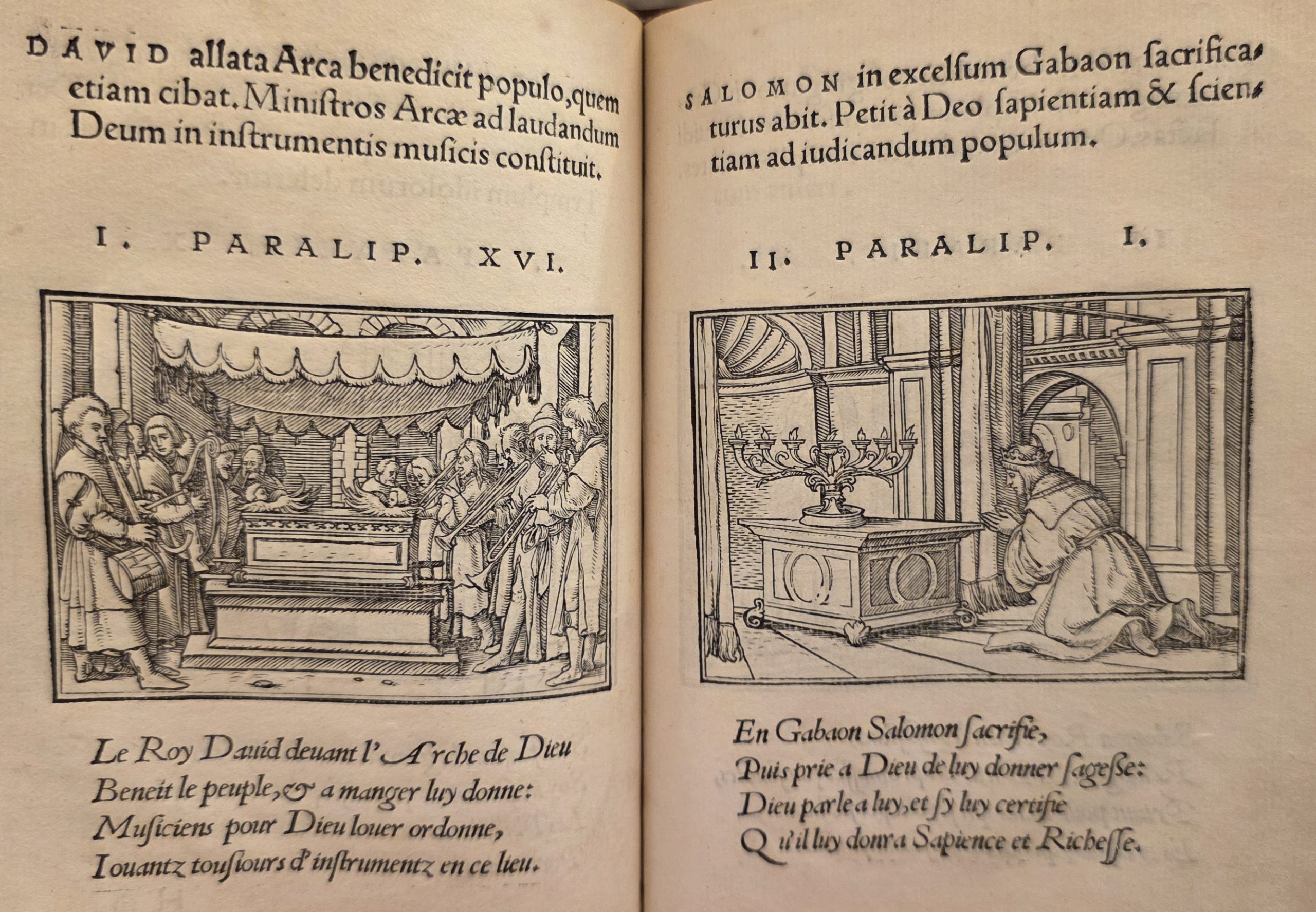
Last month we explored how Gemini flagged and transcribed a handwritten marginalia dealer note in our stunningly crisp 1539 Holbein Icones that indicated it was sold by the legendary Maggs Bros in October 1987. From that Gemini catch, we were able to reach out to Maggs Bros and amazingly, Dr. Hazel Tubman of Maggs' Continental Books & Illuminations department dug into their archives and located their original sales catalog entry for the work, which included this fascinating curatorial note about the copy: "Harvard has copies with signature H in two states: in one the woodcuts of the musicians and Solomon are transposed; in the other they appear in the correct order on H3v and H4r. respectively (as in the present copy). Duplessis describes two different states for the colophon: our copy agrees with the Harvard copies where the colophon begins Lugduni… and Treschel's device appears on N4r." From this statement, we reached out to Harvard University's Houghton Library and Reference Librarian Lee Davis wonderfully searched their three copies of the 1539 edition (two complete, one 16 leaves only) and graciously provided us photos of the two states to compare against.
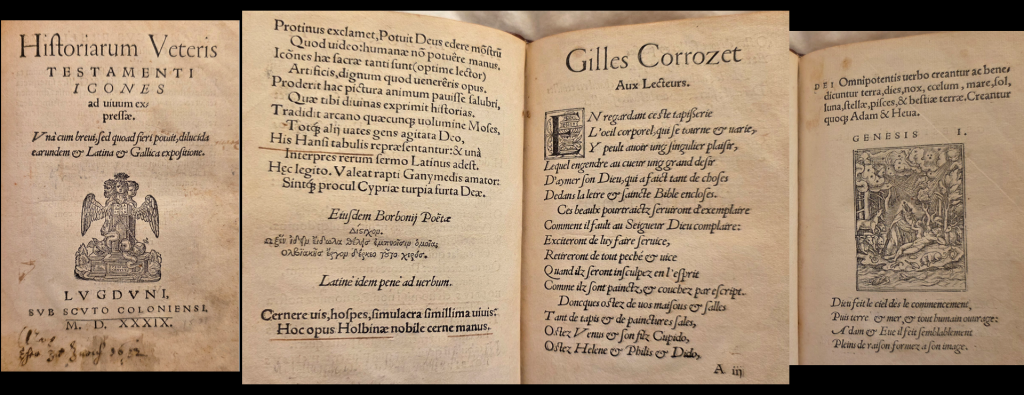
From a digitized copy of the first few pages of our 1539 Holbein Icones, Gemini was instructed to scan for marginalia and flag ownership-related notes. It flagged a handwritten note inside the cover that Maggs Bros sold this copy in October 1987. From that Gemini-identified note, we were able to reach out to Maggs Bros, who provided us the original catalog entry for the book, which in turn made note that two states exist for one of the pairs of engravings and cited Harvard's collection, which in turn allowed us to reach out to Harvard, who was able to locate the copies in question and provide images of them. We cannot wait to see the discoveries that we are able to make as the collection is fully digitized and we can scan them more exhaustively. The amazing help of so many wonderful librarians and curators in these explorations reminds us how important the vast collections of libraries and the expertise of reference librarians and curators are that is all too often forgotten in this age of AI.
Gemini even located a digitized copy of Duplessis' 1883 analysis, including the actual text of the two colophon states mentioned in Maggs Bros' catalog: "This little book enjoyed such success that, for this 1539 edition alone, copies of three different varieties are known. In some, on the verso of leaf N iii, in the same small cartouche that appears at the end of the two editions of 1538, one finds the following statement: “Printed at Lyon by the brothers Melchior and Gaspard Trechsel, 1539.” In others, by contrast, on the verso of this same leaf, the following is printed in large type: “LUGDUNI. MELCHIOR ET GASPAR TRECHSEL FRATRES EXCUDEBANT,” “At Lyon, the brothers Melchior and Gaspard Trechsel printed [this],” and then, on the recto of the following leaf, is printed the large device of the Trechsel brothers."
Below is the handwritten note that Gemini flagged in our Holbein:

Which allowed us to reach out to Maggs Bros who provided the original catalog entry:
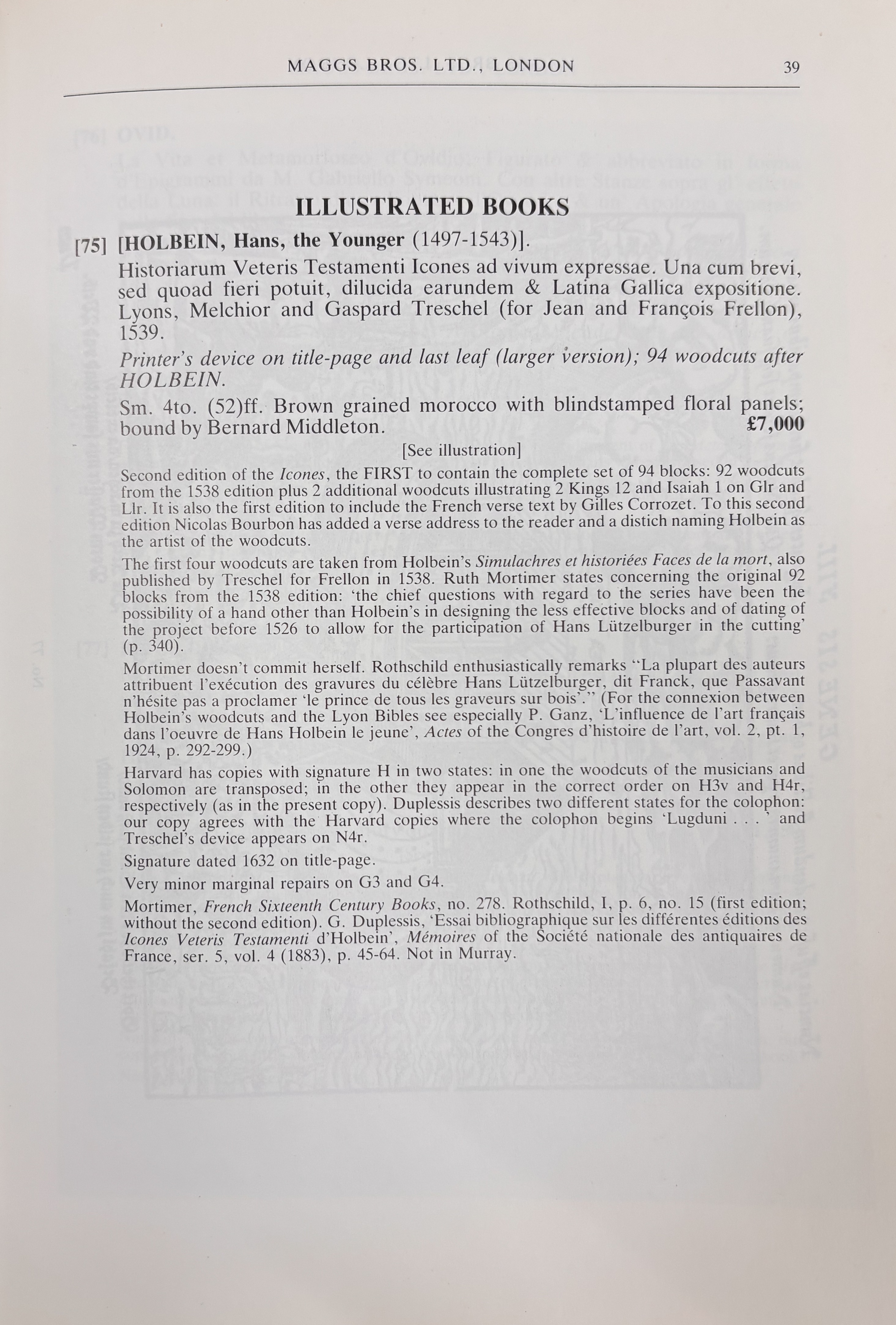
Which made note of the two states of H3v and H4r and cited Harvard's Houghton Library as having copies of both states, which graciously provided photos of the two states below:
Harvard University Houghton Library: Typ 515.39.454 (First State)
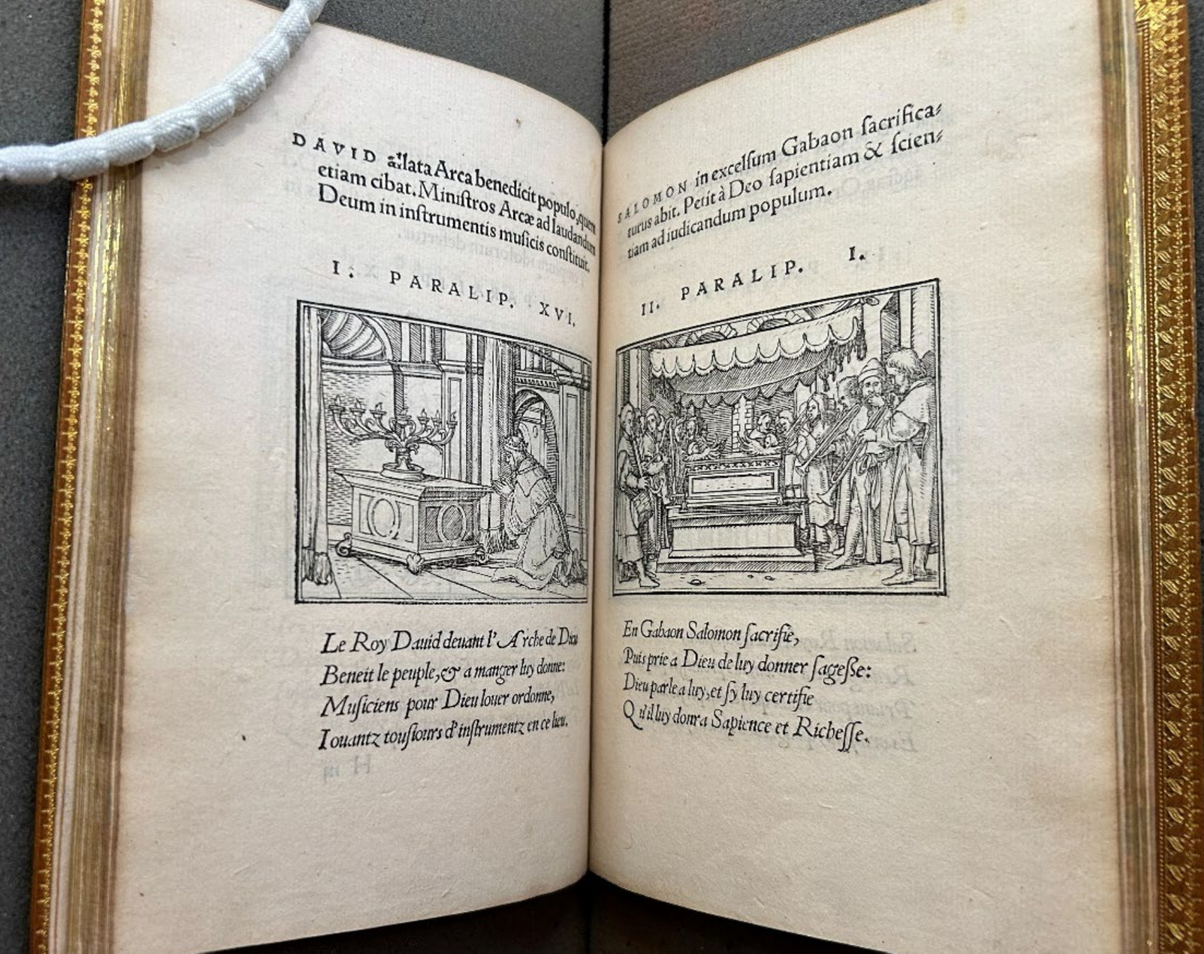
Harvard University Houghton Library: WKR 17.5.14 (Second State)
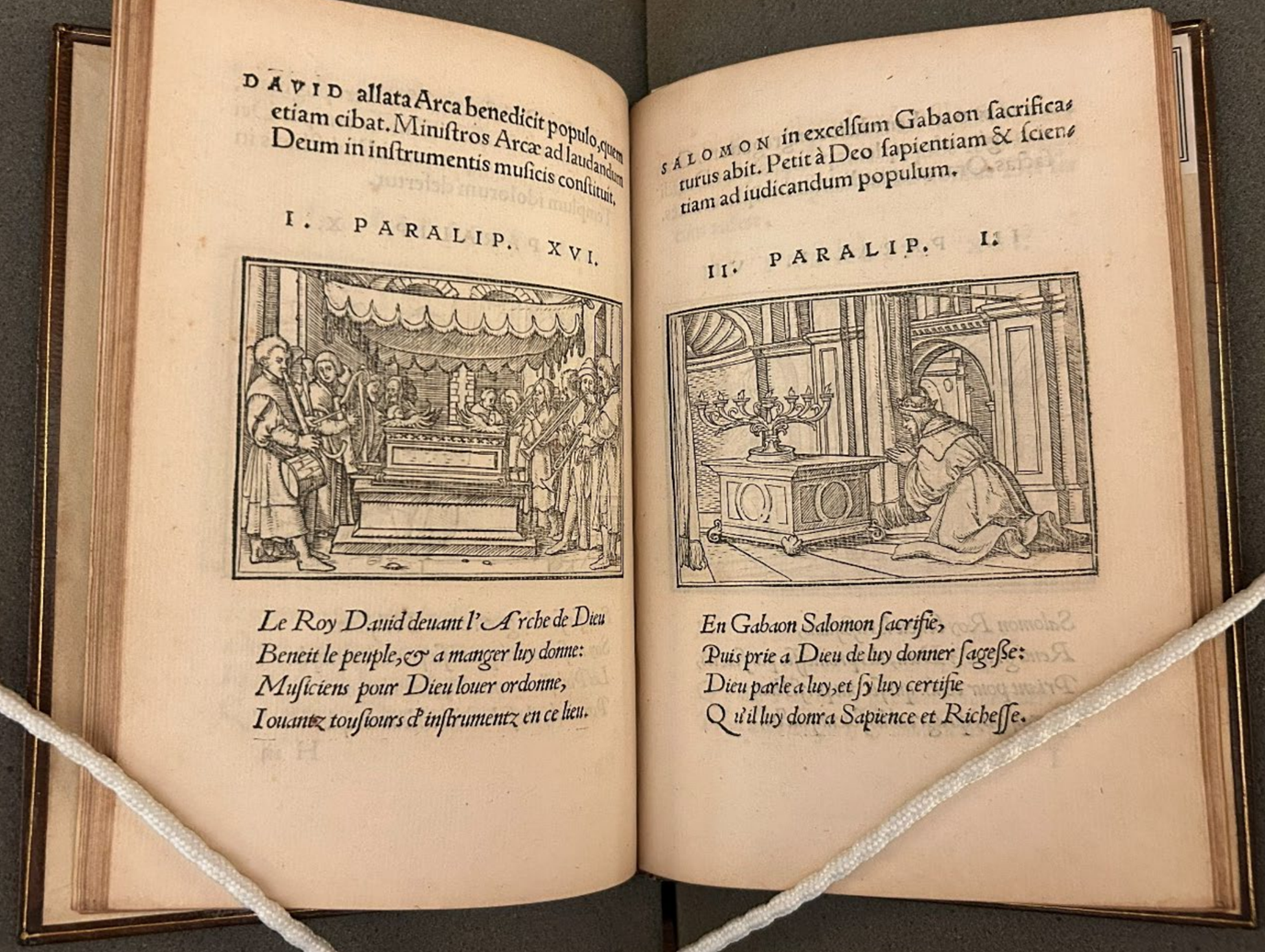
And indeed, our copy matches the second state: