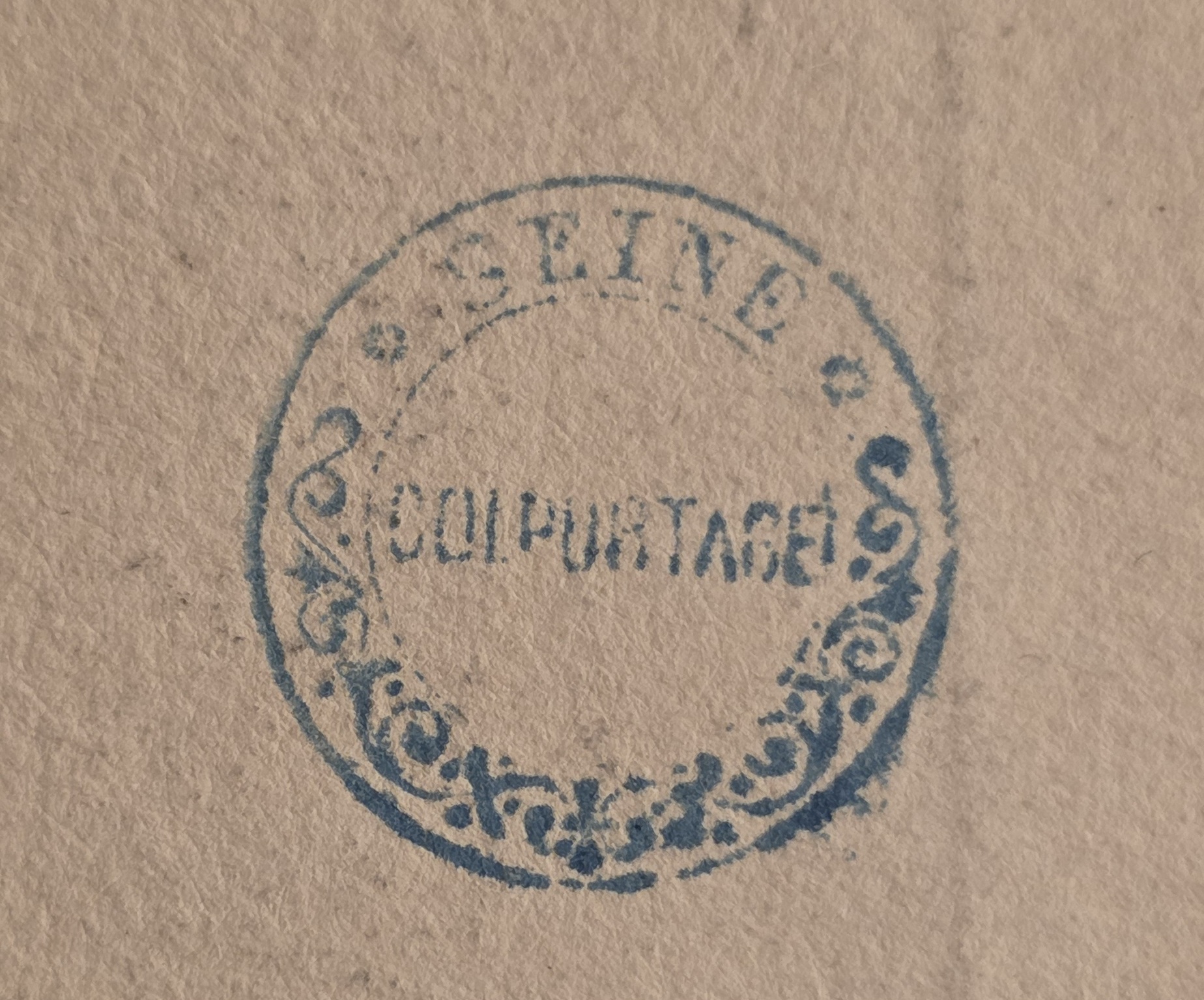
Accessioning for a cultural heritage collection that spans nearly a thousand years is a bit like Indiana Jones each day: you stumble across the most fascinating moments, big and small, from throughout global history. Today we discovered this stamp on the back of a set of Old Master prints we were accessioning. At first we thought it was a deaccessioning stamp, but the word "colportage" means "peddling" in French, suggesting this was a commerce stamp of some kind relating to Seine. Once again, Gemini for the win, discovering this fascinating moment of French history: a Seine Peddler's Stamp and further learned that our print had been located in Paris during the mid-to-late 1800s.
As we now do as part of our standard accessioning workflow, we immediately took a photo of the stamp and asked Gemini to track it down for us:
This stamp was on the back of an engraving from the early 1600s.
What is its meaning.
Explain in detail.
This is a 19th-century French regulatory and censorship stamp that authorized the sale of the artwork by a traveling peddler. The image displays a circular blue ink stamp with the word "SEINE" along the top edge, "COLPORTAGE" across the center, and a decorative scrolling border along the bottom.
Here is the detailed historical meaning behind the stamp and why it appears on an older engraving:
-
The Colportage System: In France, colportage was a network of itinerant peddlers (colporteurs) who traveled between villages and cities carrying baskets of books, almanacs, pamphlets, and prints to sell to the public.
-
Government Censorship: During the 19th century—particularly under the July Monarchy (1830–1848) and the Second Empire (1852–1870)—the French government established strict censorship laws to control the spread of republican ideals, political dissent, and "immoral" materials among the working classes and rural populations.
-
The Authorization Process: To enforce these laws, peddlers were legally required to submit their entire inventory to local police or prefectural authorities for inspection. If an item was deemed safe for public consumption, authorities applied an official ink stamp to the item.
-
The Seine Department: The word "SEINE" indicates that this specific engraving was inspected and approved by the censors in the Department of the Seine, which encompassed Paris and its immediate suburbs.
-
Presence on a 17th-Century Engraving: Colporteurs did not just sell newly printed materials; they frequently sold overstock, secondhand goods, and older prints. Even though the engraving was made in the early 1600s, it was likely acquired by a peddler and entered the secondary retail market in the 19th century. To legally sell the 200-year-old print on the streets of Paris at that time, the peddler was required to have it stamped by the local authorities. Because these stamps were applied directly to the paper, they are commonly found on the reverse side (verso) of older master prints and engravings that circulated during this era.