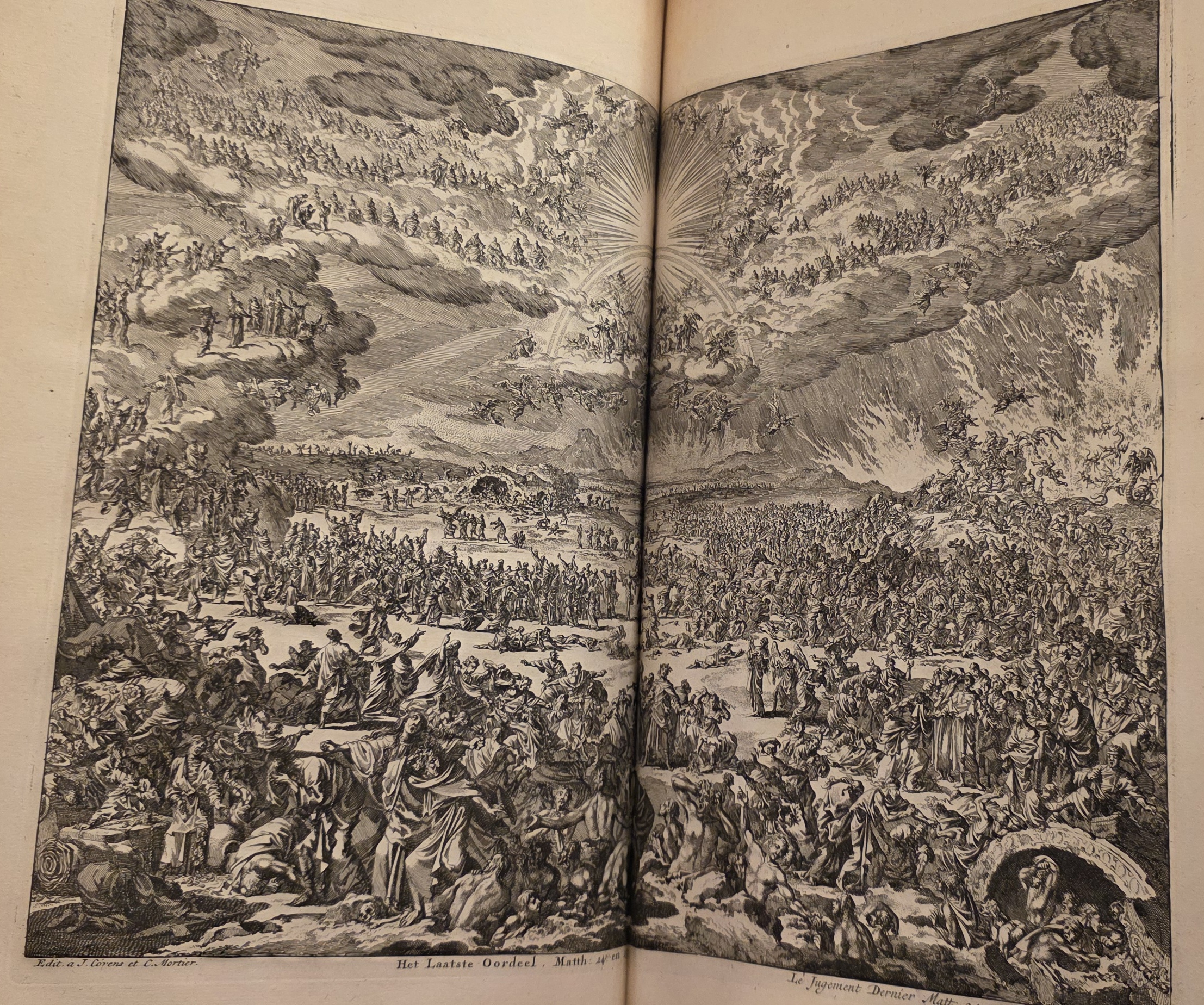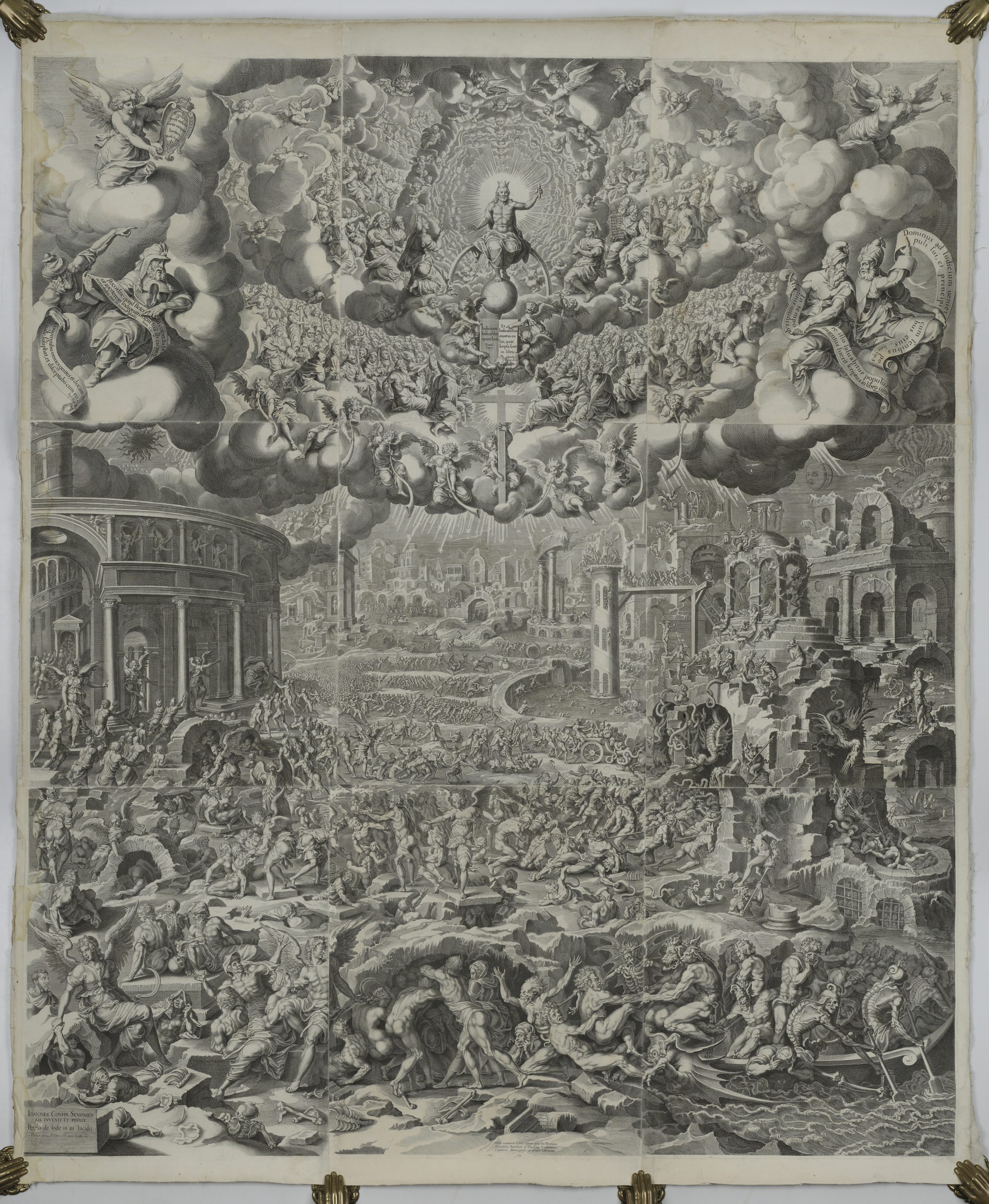
The Collection holds two monumental visions of the Last Judgement: a double-page engraving by Jan Luyken and Pieter de Jode I's massive 4ft 8 in x 4 ft engraving of Jean Cousin's painting. As a layperson with limited art history knowledge, how might Gemini help a museum patron better understand these two works' contrasting views of the end of times?
This is the prompt we used with Gemini and we provided it the two images at the bottom of this page:
Compare and contrast these two depictions of the Last Judgement in detail, including their Biblical iconography, what they choose to depict, how they choose to depict it, etc. How are they similar and how do they diverge? Explain why those similarities or differences.
Here is Gemini Deep Research's assessment:
And here is Gemini 3.8 Flash's analysis:
These two prints offer two monumental, yet culturally and stylistically divergent, interpretations of the biblical Apocalypse and the final judgment of humanity.
- Image 1 is a monumental twelve-sheet engraving executed in 1615 by Pieter de Jode I after the c. 1585 painting by French Renaissance/Mannerist master Jean Cousin the Younger (Musée du Louvre).
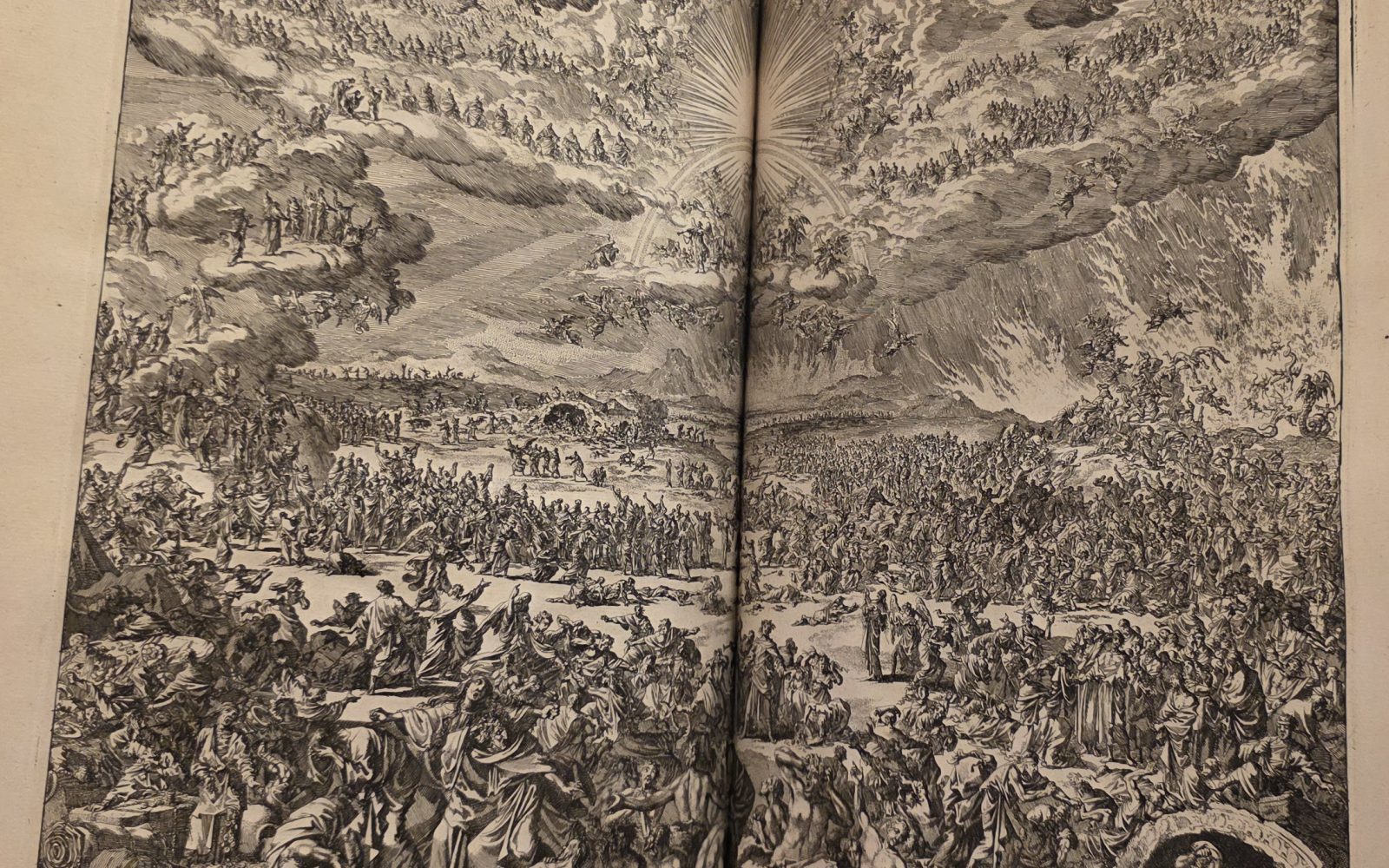
- Image 2 is a double-page biblical etching by the Dutch artist and engraver Jan Luyken, published in Amsterdam around 1700 by Pieter Mortier (and reissued here by Johannes Cóvens & Cornelis Mortier) for a luxury illustrated "Great Bible" (Figures de la Bible / Historie des Ouden en Nieuwen Testaments), specifically illustrating Matthew 24 and 25.
Below is a detailed comparative analysis of their iconography, pictorial choices, stylistic composition, and the religious contexts that shaped them.
1. Biblical Iconography & Thematic Depiction
Representation of Christ and Heaven
- Cousin / de Jode (Image 1): Follows the late medieval and High Renaissance tradition (such as Michelangelo’s Sistine Chapel). Christ sits centrally atop a celestial sphere and rainbow, bare-chested to reveal his sacrificial wounds, with his right hand raised in benediction and his left casting judgment. Below him, angels carry the Arma Christi (the True Cross, the pillar of flagellation, the crown of thorns) and hold open the Book of Life. He is flanked by concentric tiers of intercessors and heavenly hosts: the Virgin Mary, John the Baptist (the Deësis motif), Old Testament patriarchs (Moses with tablets), and apostles.
- Luyken (Image 2): Centers directly on the apocalyptic discourse of Matthew 24:30 ("And they will see the Son of Man coming on the clouds of heaven with power and great glory"). Christ is not an isolated, muscular sculptural colossus presiding close up; instead, he appears deeply set within a celestial break in the clouds, engulfed in an explosion of divine light (shekinah). Surrounding him are cascading ranks of countless angels blowing shofars/trumpets and descending with rays of glory. Luyken de-emphasizes individual saintly intercession in favor of a cosmic theophany.
The Division: The Elect vs. The Damned
- Cousin / de Jode (Image 1): The division between the righteous and the damned follows both Catholic iconography and classical/Dantean myth:
- Christ’s Right (Viewer’s Left): The elect are guided by angels toward the New Jerusalem, represented here by majestic classical Roman architecture (a circular colonnaded temple and arches), symbolizing the endurance and eternal glory of the Church.
- Christ’s Left (Viewer’s Right): The damned are violently dragged by demonic beasts into subterranean caverns. At the bottom right, Cousin incorporates classical mythology via Dante: Charon is depicted with an oar ferrying screaming souls across the River Styx into the flaming mouth of Hell.
- Luyken (Image 2): Takes its iconographic cue literally from Matthew 25:31–46 (the separation of the sheep and the goats):
- Left: The righteous stand across an open plain. They are dressed in flowing, modest biblical robes, kneeling in prayer, lifting hands in adoration, and being guided in orderly, peaceful communion toward the divine light.
- Right: Rather than mythological ferrymen or subterranean dungeons, the destruction is a cosmic tempest. Sheets of catastrophic brimstone, lightning, and torrential fire pour directly out of the sky onto the damned, driving them screaming toward a flaming abyss and lake of fire.
The General Resurrection of the Dead
- Cousin / de Jode (Image 1): Focuses intensely on corporeal, visceral resurrection: skeletons crawling out of stone tombs, bodies regaining musculature and flesh, and figures pulling one another from fractured stone sepulchers amid ruined classical columns and tombs.
- Luyken (Image 2): Depicts the resurrection as a vast, naturalistic event occurring over an infinite terrestrial expanse—the earth literally fissures, mounds burst open, and whole valleys of dry bones awaken into living souls stretching to the horizon.
2. Spatial Composition & Artistic Style
| Feature | Jean Cousin / Pieter de Jode (Image 1) | Jan Luyken / Covens & Mortier (Image 2) |
| Artistic Period | Late Renaissance / Northern Mannerism (c. 1585–1615) | Dutch Baroque / Early Enlightenment (c. 1700) |
| Spatial Organization | Vertical, tiered hierarchy; highly compartmentalized into distinct celestial, terrestrial, and underworld zones. | Horizontal, sweeping panorama; deep linear and atmospheric perspective emphasizing infinite landscape. |
| Human Figures & Nudity | Dominated by heroic, muscular nudes in dynamic contrapposto and twisting figura serpentinata (heavily indebted to Michelangelo). | Dominated by robed, naturally proportioned crowds; emotional expression conveyed through collective gesture and drapery rather than anatomical display. |
| Setting & Environment | Architectural ruins, Roman colonnades, crumbling vaults, and classical masonry. | Wild natural plains, jagged distant mountains, apocalyptic storms, and vast atmospheric skies. |
| Density & Line | Dense horror vacui; intricate, sharp, sculptural engraving lines emphasizing plasticity and physical volume. | Expansive, airy etching with high chiaroscuro contrast—blinding radiant whites against turbulent dark clouds and fiery smoke. |
3. Historical and Theological Context: Why Do They Differ?
Counter-Reformation Catholicism vs. Dutch Protestant Biblicism
- Cousin's Catholic Environment: Jean Cousin worked in France during the Wars of Religion, and Pieter de Jode engraved the work in Counter-Reformation Antwerp. Catholic theology emphasized:
- The intercessory power of the saints (Mary and John the Baptist actively pleading near Christ).
- The visual continuity with Roman Antiquity and the institutional Church (the classical temples and monuments).
- The assimilation of Christian humanist literature (Dante's Inferno, classical river spirits, Charon's boat).
- Luyken's Dutch Protestant/Pietist Environment: Jan Luyken was an Amsterdam Mennonite/pietist artist illustrating a Bible designed for scholarly reading and personal devotion across the Dutch Republic.
- In line with the Protestant principle of Sola Scriptura (Scripture alone), Luyken explicitly eliminates non-biblical pagan fables (no Charon, no classical underworld deities).
- He removes saintly intercession; salvation and condemnation proceed strictly from Christ's judgment based on the Word of God (the text citation Matth: 24 en 25 is engraved directly beneath the image).
- The focus shifts from ecclesiastical architecture to individual conscience, moral repentance, and the awe of direct divine encounter.
Intended Medium and Viewer Function
- The Monumental Print (Image 1): Composed of twelve large sheets pieced together into an immense wall-sized print. It was intended for display in public chambers, monasteries, or elite collections to showcase artistic mastery (invenit / incidit) and provide a visual spectacle of anatomical virtuosity and theological orthodoxy.
- The Illustrated Bible (Image 2): Created as a fold-out / double-page folio within a book format. Its purpose was didactic and immersive: a reader turning to the end of the Gospels would spread open the pages and be visually pulled into the biblical prophecies of the end times, meant to inspire introspective awe, vigilance, and moral reflection.