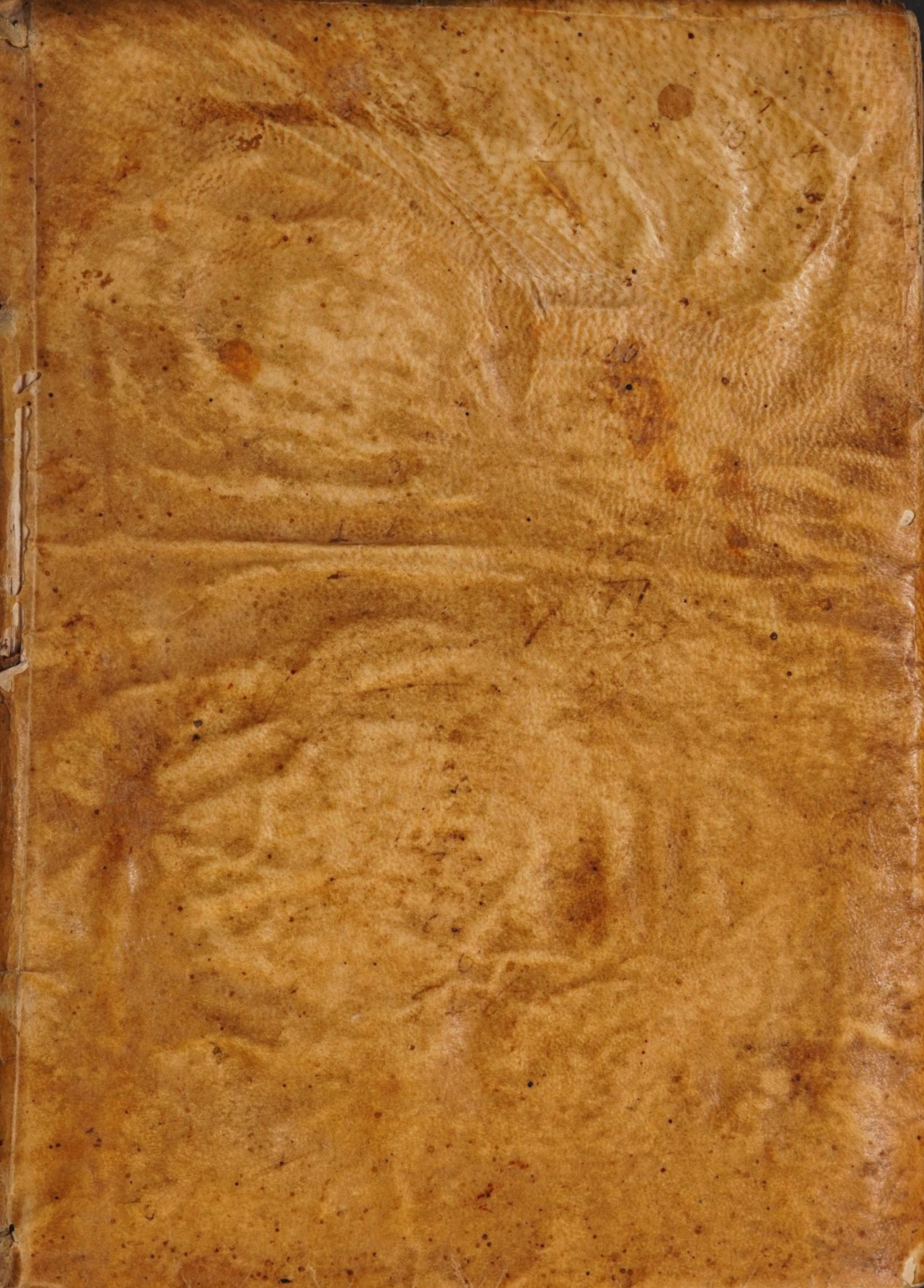
Continuing our new collection-scale analysis workflow built on Gemini Carbon, we've added a new module that performs a detailed analysis of the binding of each work. Gemini visually inspects not only the binding itself, but the first and last few pages to inspect the interior pastedown, identify the work itself and search for any binders marks. Here, we can see the resulting analysis for a 1616 printing of Delrio's Disquisitionum Magicarum bound in contemporary vellum.
{
  "binding_scan_pdf_pages": [
    1,
    2,
    3,
    4,
    5,
    6,
    7,
    8,
    1081,
    1082,
    1083,
    1084
  ],
  "covering_material": "Full semi-limp parchment/vellum (displaying pronounced hair-follicle graining characteristic of sheepskin or coarse calfskin parchment), heavily patinated to a warm tawny-brown tone.",
  "boards_and_structure": "Italian semi-limp vellum structure (legatura floscia) over thin, flexible paperboards/cartonnage with slightly overlapping fore-edges (semi-yapp). Smooth, flat spine without raised bands; textblock attached to the covers via laced-in parchment or alum-tawed sewing slips (visible along the front and rear inner joints). Worked primary head- and tailbands sewn in yellow/ochre thread over round cores. No clasps, catches, or surviving fore-edge ties.",
  "decoration_and_tooling": "Covers and spine entirely untooled (no blind or gilt fillets, rolls, or stamps). Spine hand-lettered directly in brown iron-gall ink in an early calligraphic hand near the head: a faint upper title line ('Disqu[isitionum] Magi[carum]'), a small cross motif, large author titling ('Del Rio.'), and a horizontal penwork flourish beneath. Textblock edges are plain, trimmed, and unstained.",
  "endpapers_and_turn_ins": "Plain laid paper pastedowns and single front and rear laid paper flyleaves. Narrow vellum turn-ins along the fore-edge and tail, with the upper quarter of the front pastedown cut short or lacking, exposing a wide horizontal band of follicular parchment at the head and two laced-in slips at the hinge. Front pastedown shows layered paper repairs over earlier erased/covered manuscript notes; front free endpaper recto carries 17th-century ecclesiastical ownership inscriptions (referencing a convent of St. Vincent in Nicosia, Sicily) and distinct red-and-black ink offsetting from the 1616 title page; rear flyleaf verso bears an ink shelfmark ('C: 3 / li: 2') at upper right.",
  "identified_binder_or_workshop": null,
  "estimated_date_range": "Early 17th century (ca. 1616–1640), contemporary with the 1616 Venetian textblock.",
  "estimated_geography": "Italy (probably Venice or Sicily, consistent with the Venetian imprint and early Nicosia conventual provenance), justified by the classic Italian semi-limp vellum construction with laced-in slips, plain edges, yellow worked endbands, and direct ink spine titling.",
  "notable_features_and_condition": "Intact contemporary utilitarian binding showing heavy age-toning, surface spotting, natural skin cockling, and horizontal creasing across both covers and spine. Vellum is cracked and chipped along the front outer joint and headcap, with a small puncture just below the ink flourish on the spine; pastedowns exhibit creasing and minor worming/tears near the hinges.",
  "historical_binding_rationale": "Martin Del Rio's Disquisitionum Magicarum Libri Sex was a heavily consulted Counter-Reformation treatise on demonology, superstition, and judicial procedure for theologians, confessors, and inquisitos. Binding this bulky quarto in plain, undecorated semi-limp vellum reflects standard, economical 17th-century Italian retail and monastic practice—providing a lightweight, resilient, and low-cost working cover suited to a Sicilian clerical library rather than an ostentatious collector's cabinet."
}