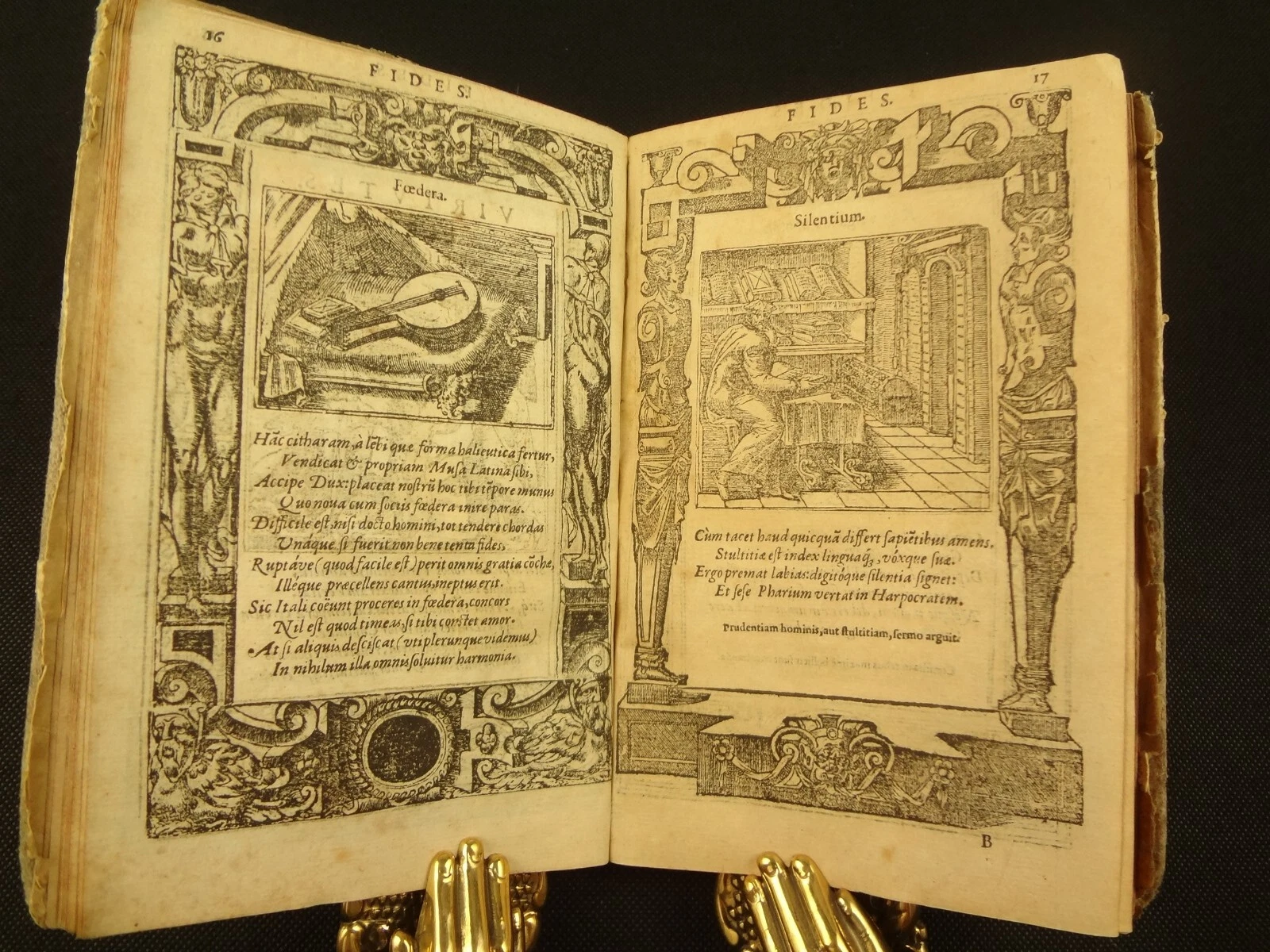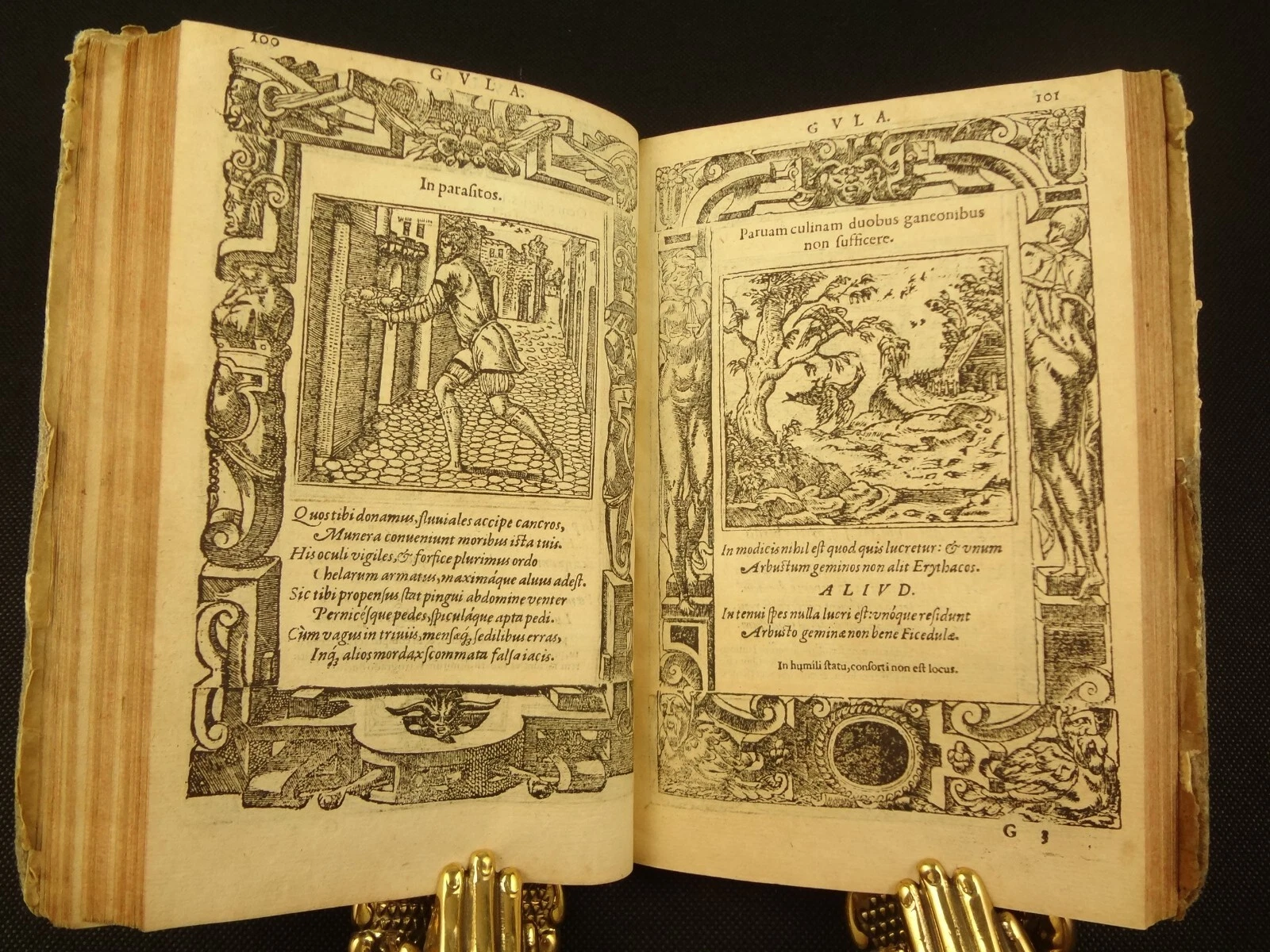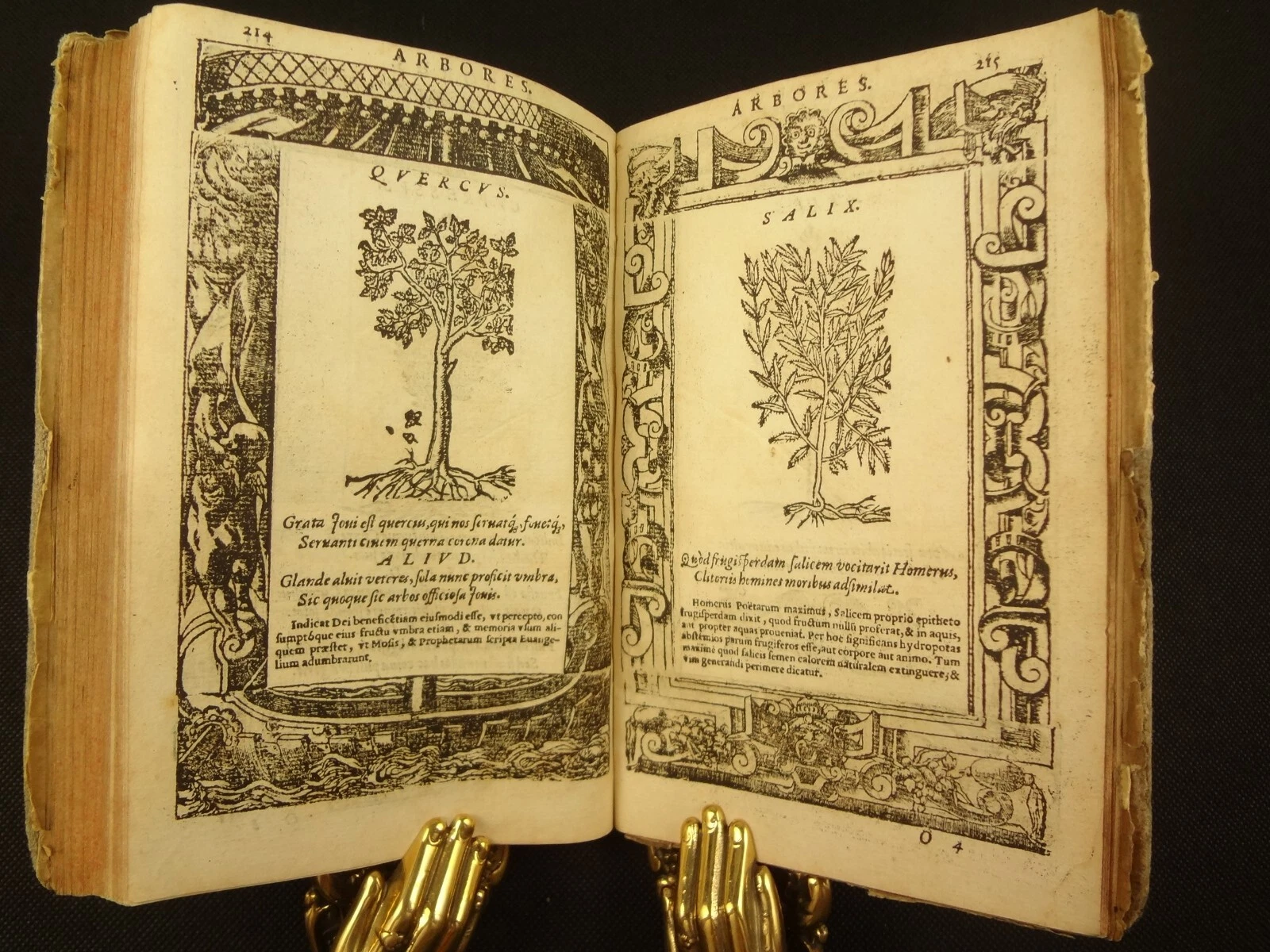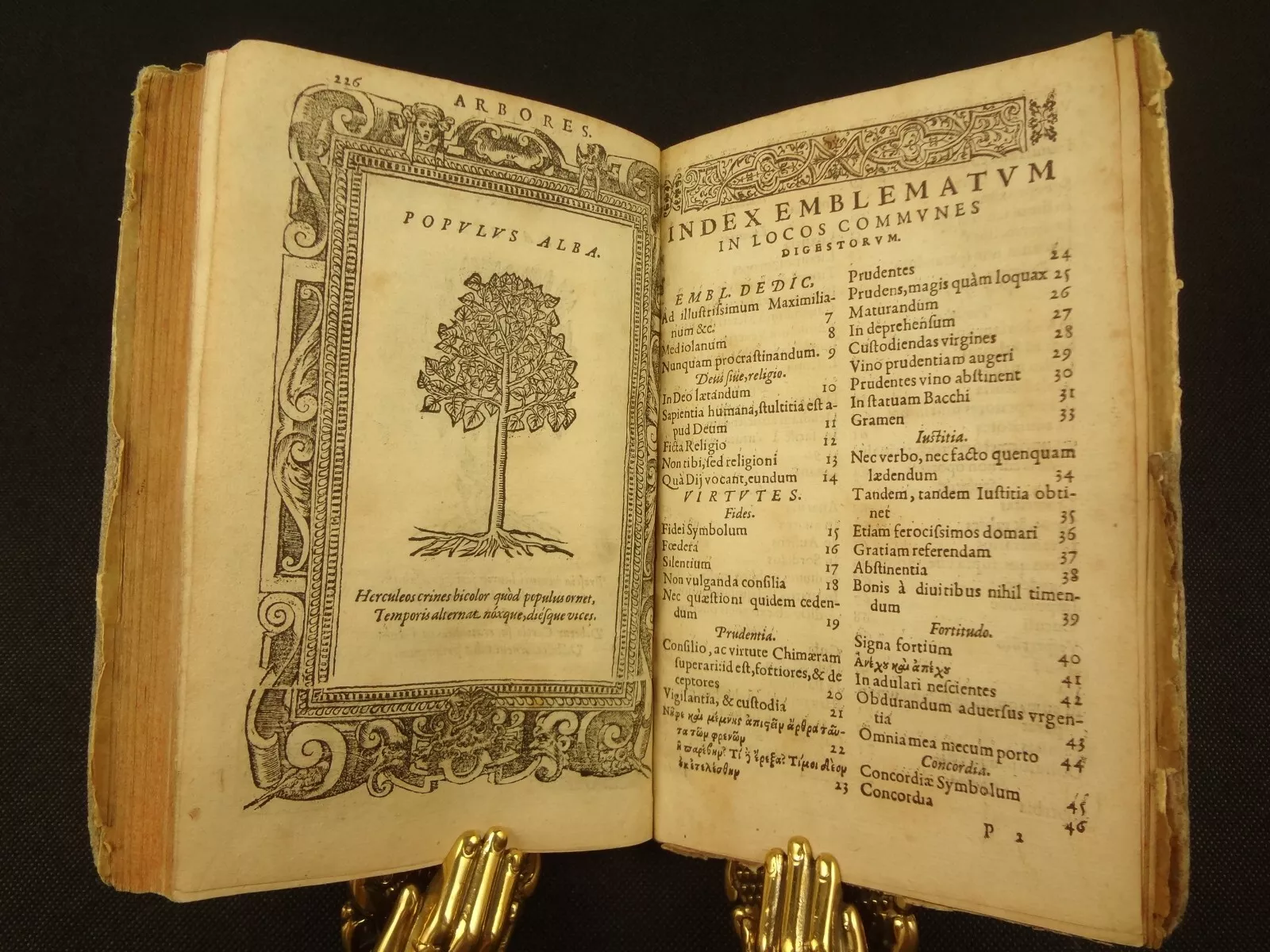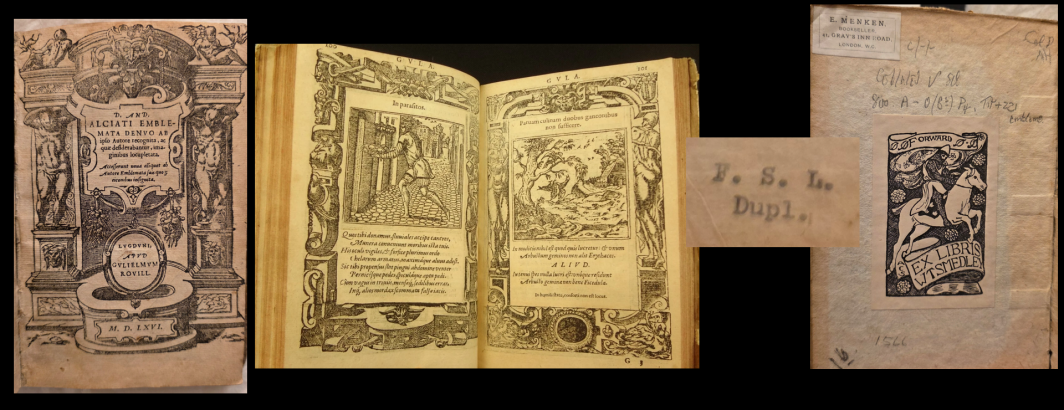
The very first 16th century book acquired by The Collection was a 1566 Emblemata by Andrea Alciato, published by Guillaume Rouillé in Lyon, France. At the time it was the oldest work in the Collection and special care was taken to understand its history and provenance through expert assessment. As we continue our experiments in Gemini-assisted cataloging, we wanted to revisit this book, this time examining how well Gemini matches up with our authoritative human expert cataloging of the work. In this case the book has an especially unique provenance: it was originally part of the William Thomas Smedley collection, was sold to Henry Clay Folger as part of what became the Folger Library in 1924 and was deaccessioned and sold at auction by the Folger at Sotheby & Co in June 1964. (All details confirmed with the Folger Library). Given only a set of cellphone photos of the book, how well is Gemini able to discern all of this detail and history from the various bookplates and handwritten notes in the book? Both Gemini Pro 3.1 and Gemini Deep Research correctly identify the book's entire history from these provenance markings, going so far as to track down the date one of the previous bookstamp owners moved (thus providing a "no later than" milestone) and transcribing and deciphering an early handwritten collation inside the cover confirming the book's completeness.
First, we wanted to simply vet that Gemini could properly identify the book and specific edition from the title page. This should be fairly trivial to any frontier model, but can also prove to be quite helpful as a verification check on human catalogers, as Gemini has actually identified several works in our collection where the original catalog entry from the deaccessioning institution or expert assessment commissioned by the auction house or previous owner had inaccuracies that we were able to subsequently verify based on Gemini's pointers.
Here we simply upload the title page of the book and this prompt to get back a quick overview of the book that matches its original human cataloging:
tell me in detail about this book
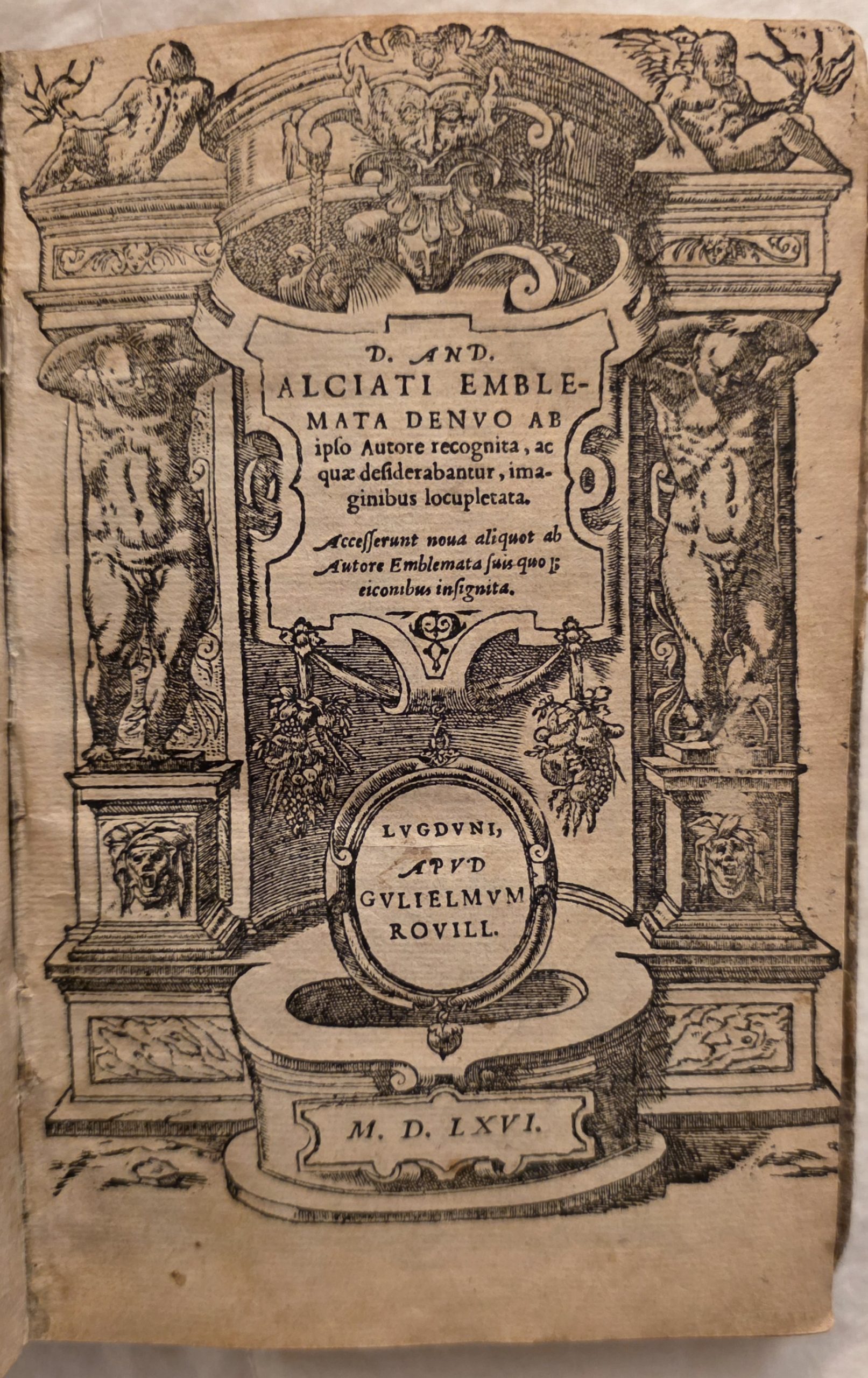
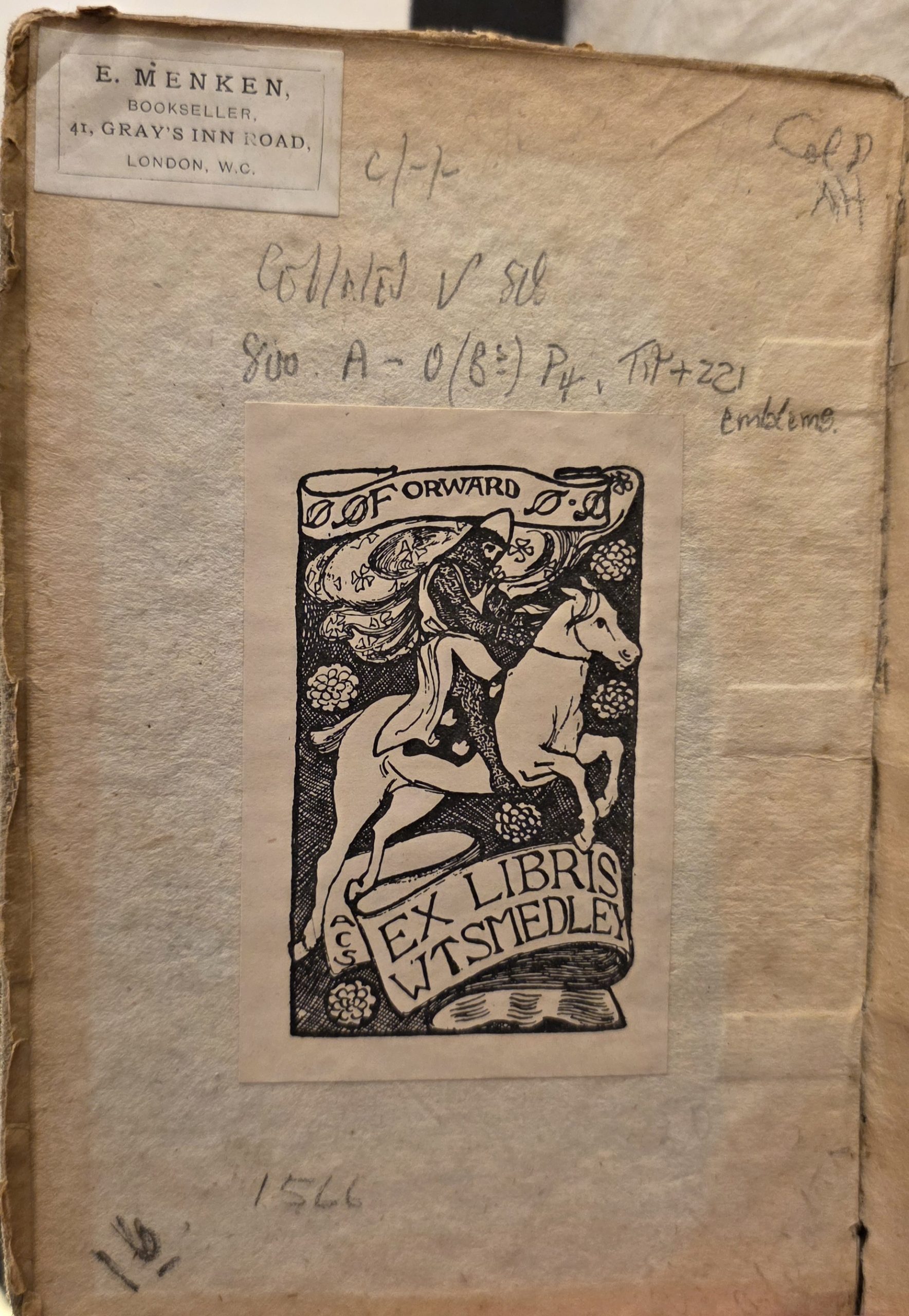
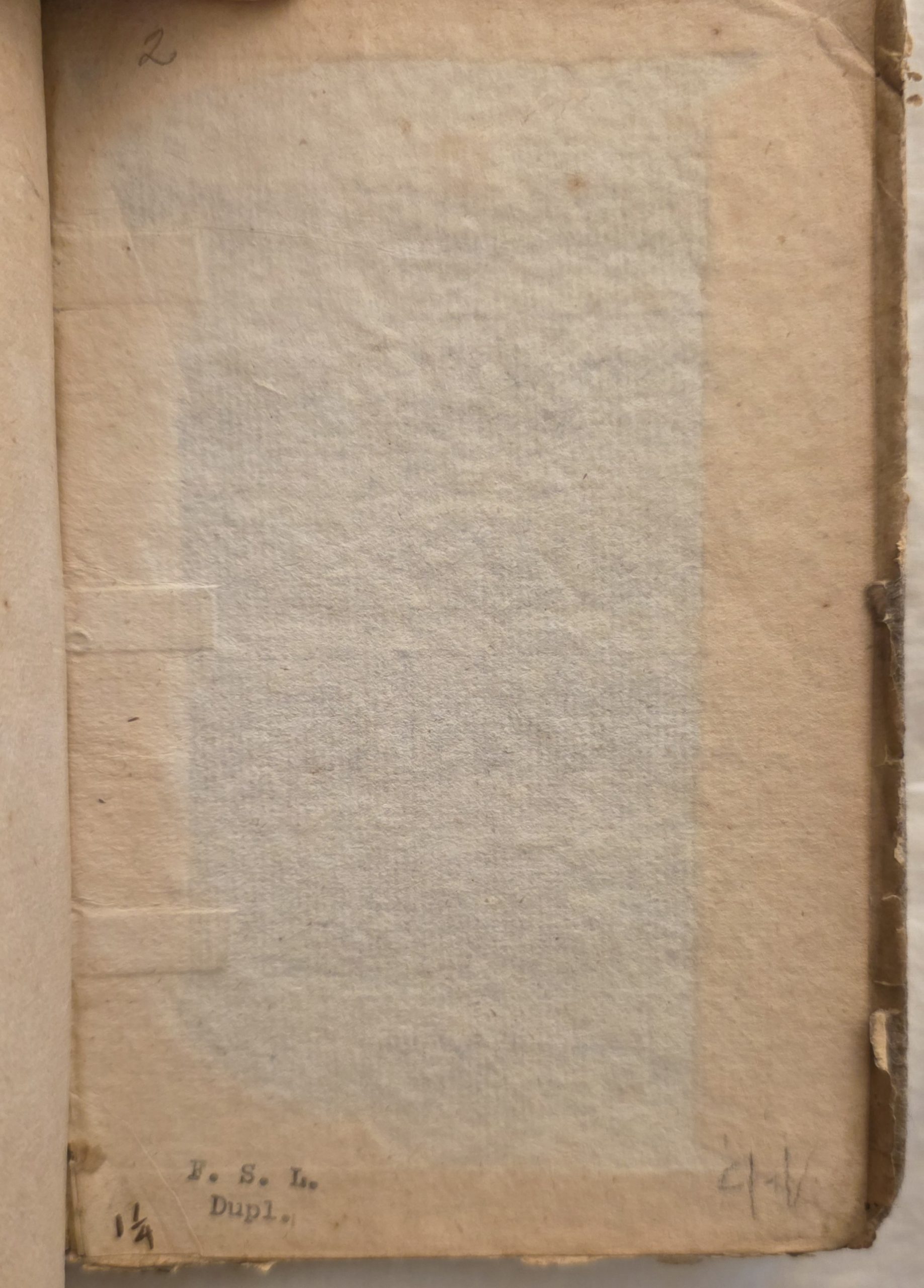
We spotted two bookplates of previous owners, one private and one a bookseller, and one ink stamp that appears to be a deaccessioning stamp from an institutional collection. Gemini correctly identifies William Thomas Smedley's bookplate (his most elaborate known bookplate), adds in the critical context that the bookseller E. Menken moved to Bury Street, New Oxford Street in the 1890's (previous expert human review of this copy had identified an article in The Bookseller from 1891 announcing the move), and, most importantly, the Folger deaccessioning stamp. Gemini also not only transcribes the handwritten text on the inside front cover, but correctly identifies it as a collation confirming that this copy is complete with all pages and even walks through what the various parts of the collation notation mean:
identify these bookplates
transcribe the text and tell me its meaning
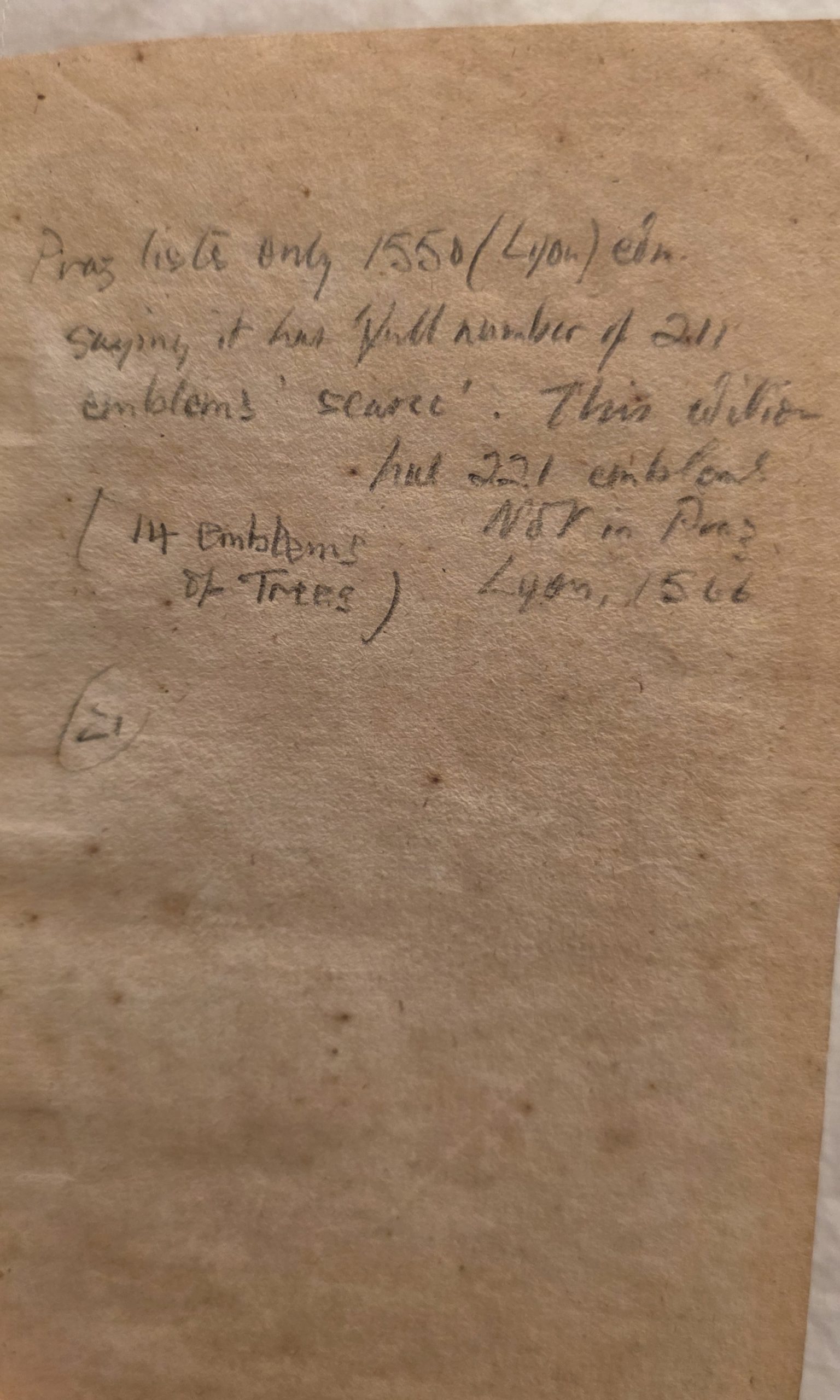
transcribe the markings on this page. what do they mean?
There was also this handwritten note. Gemini not only transcribes it, but identifies that the mentioned "Praz" refers to Mario Praz's "Studies in Seventeenth-Century Imagery", a then-definitive exhaustive inventory of known emblem books. In this case, the notes indicate that Praz's inventory does not list this specific 1566 edition.
Finally, let's ask Gemini to give us a complete history of this book using Gemini Deep Research:
Tell me in detail about this book, its history, significance, which edition it is, its rarity, previous owners if you can tell, who the artist and author was, etc.
Tell me about the borders around the images as well.
Estimate its rarity.
And a few images of the book interior that were provided to Gemini to assist with its analysis of this specific copy: