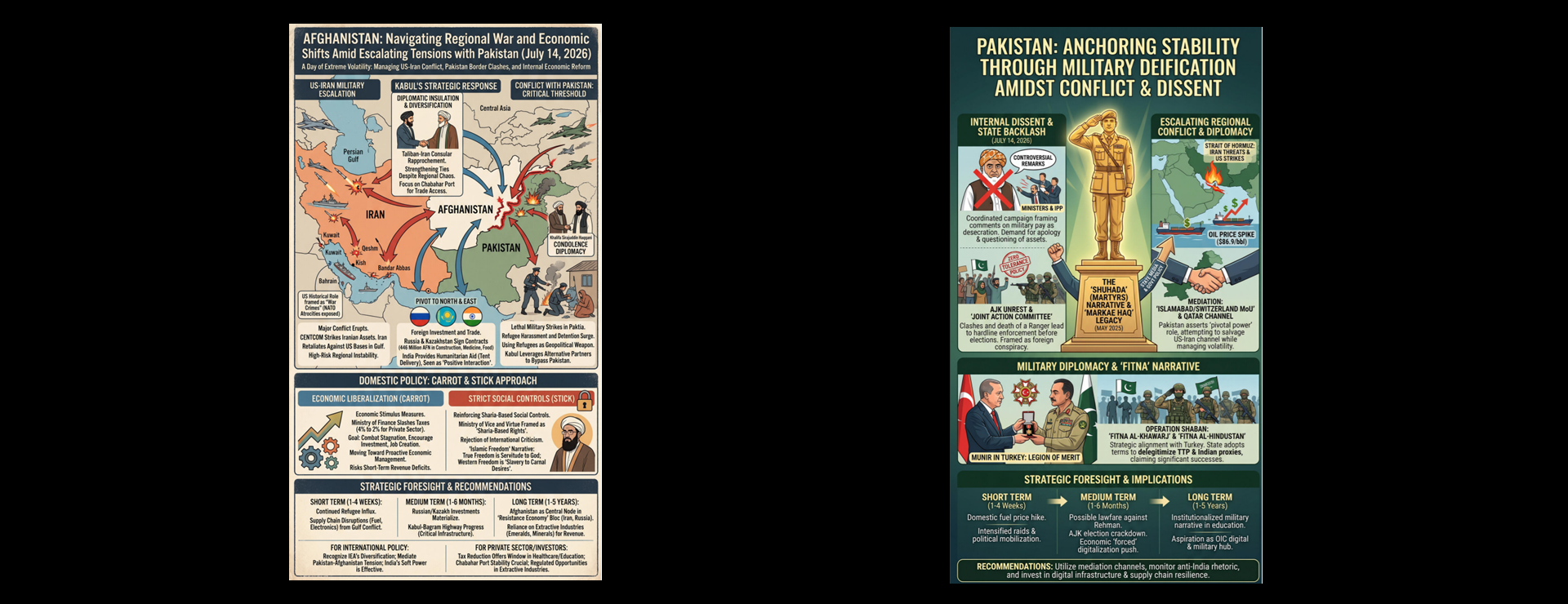
Earlier this week we added a power new "Geopolitical Framing" section to our Media Trends reports that explores the narrative undercurrents of how nations and world leaders are portrayed and depicted in each channel's coverage. Today we are immensely excited to announce six new highly experimental narrative assessment categories that are designed to explore Gemini's sociogeopolitical and contextual reasoning abilities and ability to "read between the lines". You can see a first glimpse of these new sections in today's Media Trends reports. These are highly experimental and may change, expand or disappear as we continuously evaluate them over the coming weeks, but are already capturing a rich cross-section of historically and societally contextualized qualitative indicators that we have to date struggled to incorporate into our reports, but are of especial importance to scholars studying societal-scale questions like political and social scientists. As usual, no data is used to train or tune any model.
- Internal Dynamics & Domestic Instability: Examines the channel's host country's internal sociopolitical stressors as detailed in that day's coverage.
- External Dynamics & Global Posture: Examines the channel's host country's presentation of its role in the global order as detailed in that day's coverage.
- Information Warfare Environment: Attempts to read "between the lines" to explore coverage of narrative shaping and propaganda.
- Geopolitical Framing: Added earlier this week, explores how nations and world leaders are portrayed and depicted in each channel's coverage.
- Escalation Risks: Chronicles explicit risk indicators discussed in that day's coverage that would lead to greater escalation or societal shocks, such as conflict redlines announced by policy leaders in the day's coverage.
- Indicators & Warnings (I&W): Potential physical manifestations of leading indicators of those Escalation Risks that could signal a potential tipping point in a given risk category, from conflict to famine to infectious disease outbreak or widescale infrastructure failure.
- Gaps & Blind Spots: Attempts to read "between the lines" and think deeply about the sociogeopolitical context of all of the findings of the report to identify potential information gaps that might change some of the report's findings.