


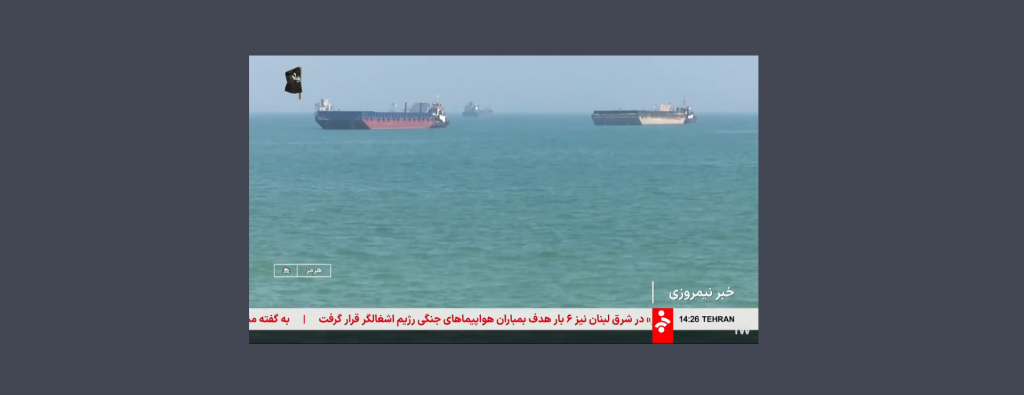
As we continue to explore the kinds of between-the-lines narrative and framing assessment Gemini is capable of, let's explore applying Gemini 3 Flash to yesterday's IRINN and PressTV ASR transcripts and asking the model to characterize the narrative framing of the nations and major political leaders most prominently discussed in the text. The results below are nothing short of remarkable in how Gemini was able to look across an entire day of coverage across the two channels and piece together the overall geopolitical framing of each. No data was used to train or tune any model.
For the analysis below we used the simple prompt below. Amazingly, the textual ASR transcripts consumed 108,017 tokens, but when converted to PDF consumed just 77,281 tokens with no difference in the results, reinforcing the optimization potential of PDFs to stretch the token window budget to allow for larger numbers of channels or analytic days to be considered at once. Note that in the example below, Gemini incorrectly writes some source citations inline in the text as "info:", confusing some of its template instructions. In production we would simply rerun the results a second time or additional times until we get a run that has the correct formatting.
For each prominent country and world leader mentioned, evaluate and characterize their implicit portrayal.
GEOPOLITICAL FRAMING
The media coverage from July 13-14, 2026, presents a world bifurcated between a "declining" Western imperial core and a "resurgent" Eastern resistance. The overarching theme is that the US attempt to "decapitate" the Iranian leadership through assassination was a strategic miscalculation that instead unified the regional front and justified Iran’s seizure of the global energy transit arteries.
COUNTRIES
- Iran: Portrayed as a strong, resilient, and principled regional hegemon that has emerged "victorious" from recent conflicts. It is framed as the guardian of regional rights and a defender of international law against US "piracy." Quotation: "Iran will continue to exercise its sovereignty and authority over the straight of hormosm will compel foreign powers and their allies to submit." (info:PRESSTV_20260713_140000)
- United States: Portrayed as a weak, chaotic, and inept aggressor. The US military is depicted as unable to protect its own bases or ensure the navigation it claims to defend. Quotation: "Washington is now in a much weaker position… Trump is trapped in a trap he himself made." (info:IRINN_20260713_183000)
- Israel: Portrayed as a corrupt and failing "terror state" nearing collapse. It is framed as being the primary instigator of US-Iranian tensions to serve the narrow interests of its leadership. Quotation: "Israel is a terror state… the terrorists that terrorize." (info:PRESSTV_20260713_093000)
- Saudi Arabia: Characterized as an inept puppet and "double-standard" actor. While seeking regional peace on the surface, it is depicted as acting on US/Zionist orders to sabotage Yemeni stability. Quotation: "Saudi Arabia will be punished for attacking the Iranian military." (info:PRESSTV_20260713_160000)
- Bolivia: Portrayed as a chaotic but principled ground for revolution. The "right-wing" government is framed as a pro-Zionist outlier facing a righteous indigenous uprising. Quotation: "The result these protests could be the beginning the end for Bolivia's pro Israel government." (info:PRESSTV_20260713_093000)
- Russia: Portrayed as a competent and stable strategic partner. It is framed as an equal to Iran in the struggle against "unilateralism." Quotation: "Russia and other independent countries… can neutralize the effects of pressures and sanctions." (info:IRINN_20260713_173000)
LEADERS
- Donald Trump: Characterized as a corrupt "looter" and a "mercantile" leader who views global security through the lens of "protection money." He is framed as inept for failing to win a war despite superior technology. Quotation: "Trump says in a way, i cannot win the war… I need to collect money from wherever i can." (info:PRESSTV_20260713_173000)
- Ayatollah Ali Khamenei (Late): Portrayed as a principled, saintly, and heroic figure. His death is framed as a "martyrdom" that has transcended physical presence to become a global revolutionary force. Quotation: "He stood against injustice, who stood against the episten class and was matured for that." (info:PRESSTV_20260713_010000)
- Benjamin Netanyahu: Framed as a chaotic and desperate figure using war to "evade justice." Quotation: "Netanyahu is also on trial for corruption and could face up to 10 years in prison… he is using his position to evade justice." (info:PRESSTV_20260713_100000)
- Lindsey Graham (Late): Portrayed as an evil warmonger and "merchant of death." His passing is framed as a relief to the region. Quotation: "His loss will be felt… in a good way, in the sense that you won't have a person like that constantly clamoring for more and more conflict." (info:PRESSTV_20260713_100000)
- Masoud Pezeshkian: Characterized as a principled and competent administrator. He is framed as the rational face of the Iranian state, managing international relations in Iraq while prioritizing domestic health and resource efficiency. (info:IRINN_20260713_173000)