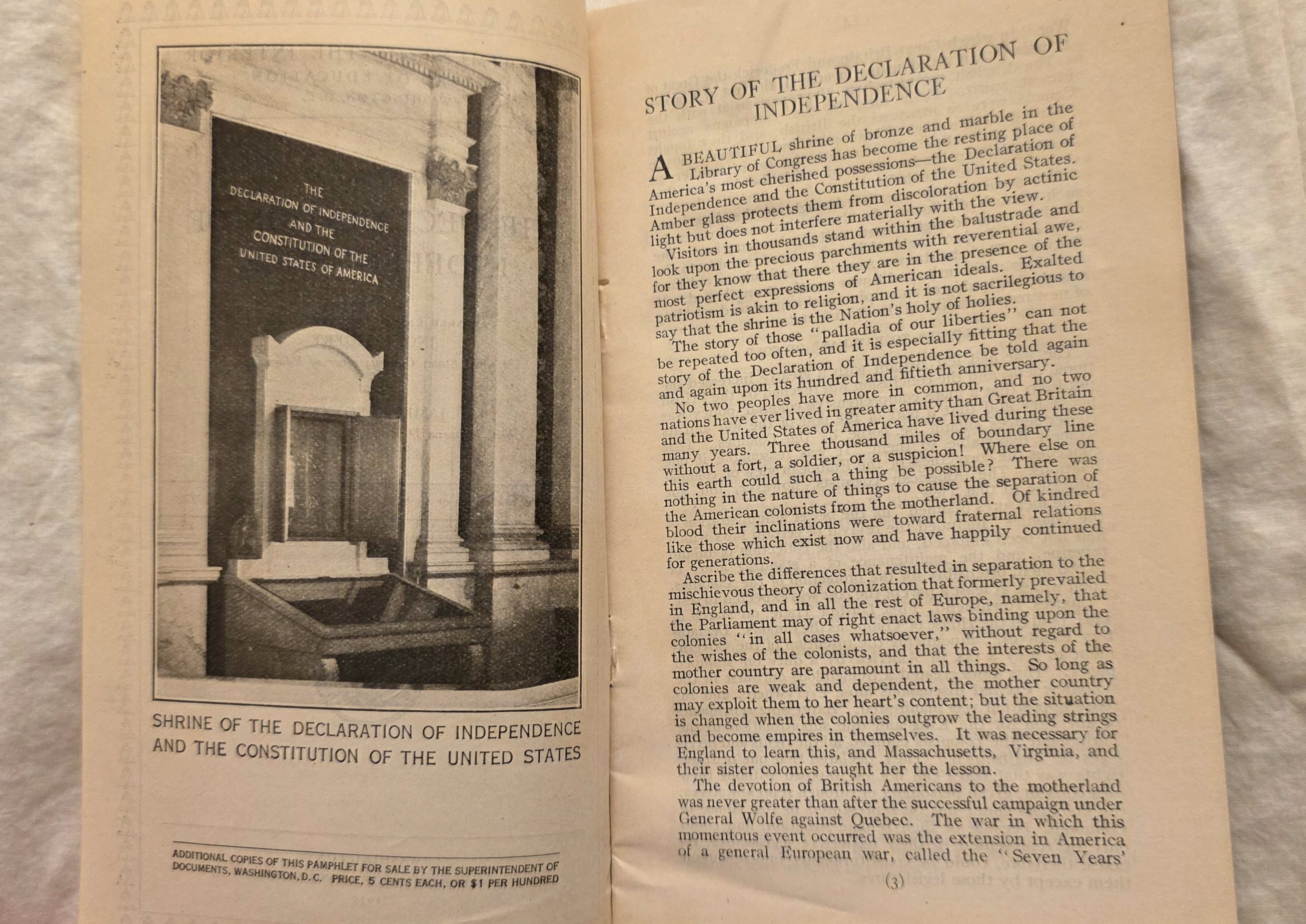
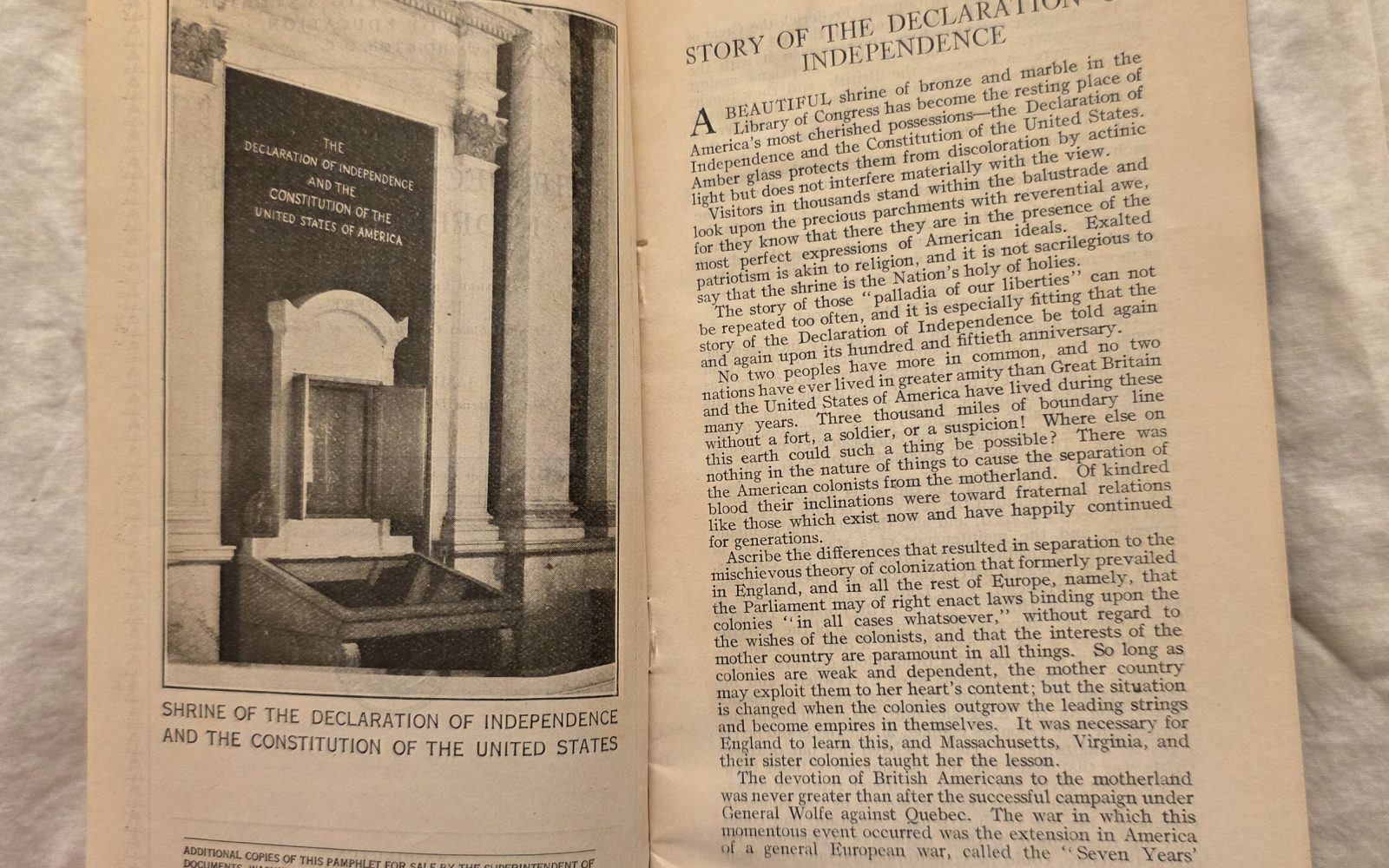
In accessioning our new 1926 Declaration of Independence pamphlet, we were fascinated by the photo on the inside of the front cover depicting the Declaration being displayed in an elaborate shrine and wondered where this pre-NARA display was. A simple query to Gemini was all it look to learn this was the Library of Congress display! Once again, demonstrating the power of Gemini to help us engage and interact with historical materials!
Where is this and how can you tell?
This photograph shows the original "Shrine" for the Declaration of Independence and the U.S. Constitution on the second-floor West Main Gallery of the Library of Congress (Thomas Jefferson Building) in Washington, D.C. Before the documents were permanently moved to the National Archives Rotunda in 1952, they were displayed here from 1924 to 1952 (with a hiatus at Fort Knox during World War II).
How you can tell:
-
The Distinct Shrine Design: Designed by architect Francis H. Bacon and dedicated by President Calvin Coolidge in 1924, this specific display featured an upright marble frame with bronze doors (housing the Declaration of Independence) above a slanted marble-and-bronze lectern display case (housing the pages of the Constitution). By contrast, the current display at the National Archives Rotunda sets all the documents into a low, semicircular granite altar beneath a muraled dome.
-
The Wall Inscription & Architecture: The gold-leaf lettering ("THE DECLARATION OF INDEPENDENCE AND THE CONSTITUTION OF THE UNITED STATES OF AMERICA") set into a dark marble panel flanked by twin Corinthian pilasters and towering fluted columns matches the architecture of the Great Hall's second-floor gallery in the Thomas Jefferson Building.
-
Bleed-Through Text on the Page: Looking closely at the top of the photograph, reversed text bleeding through from the opposite side of the page reads "DEPARTMENT OF THE INTERIOR / OFFICE OF EDUCATION / WASHINGTON, D.C." The Office of Education was only part of the Department of the Interior until 1939, which dates this publication to the 1920s or 1930s—when the documents were still housed at the Library of Congress.