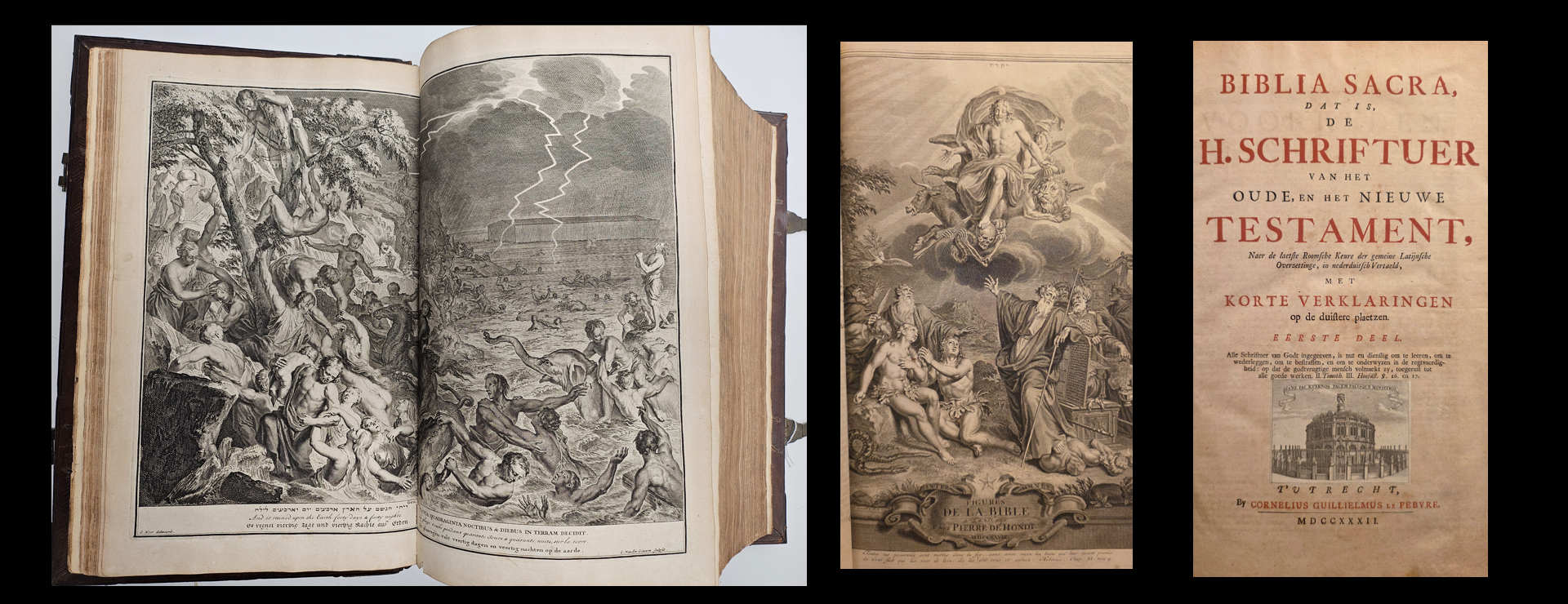
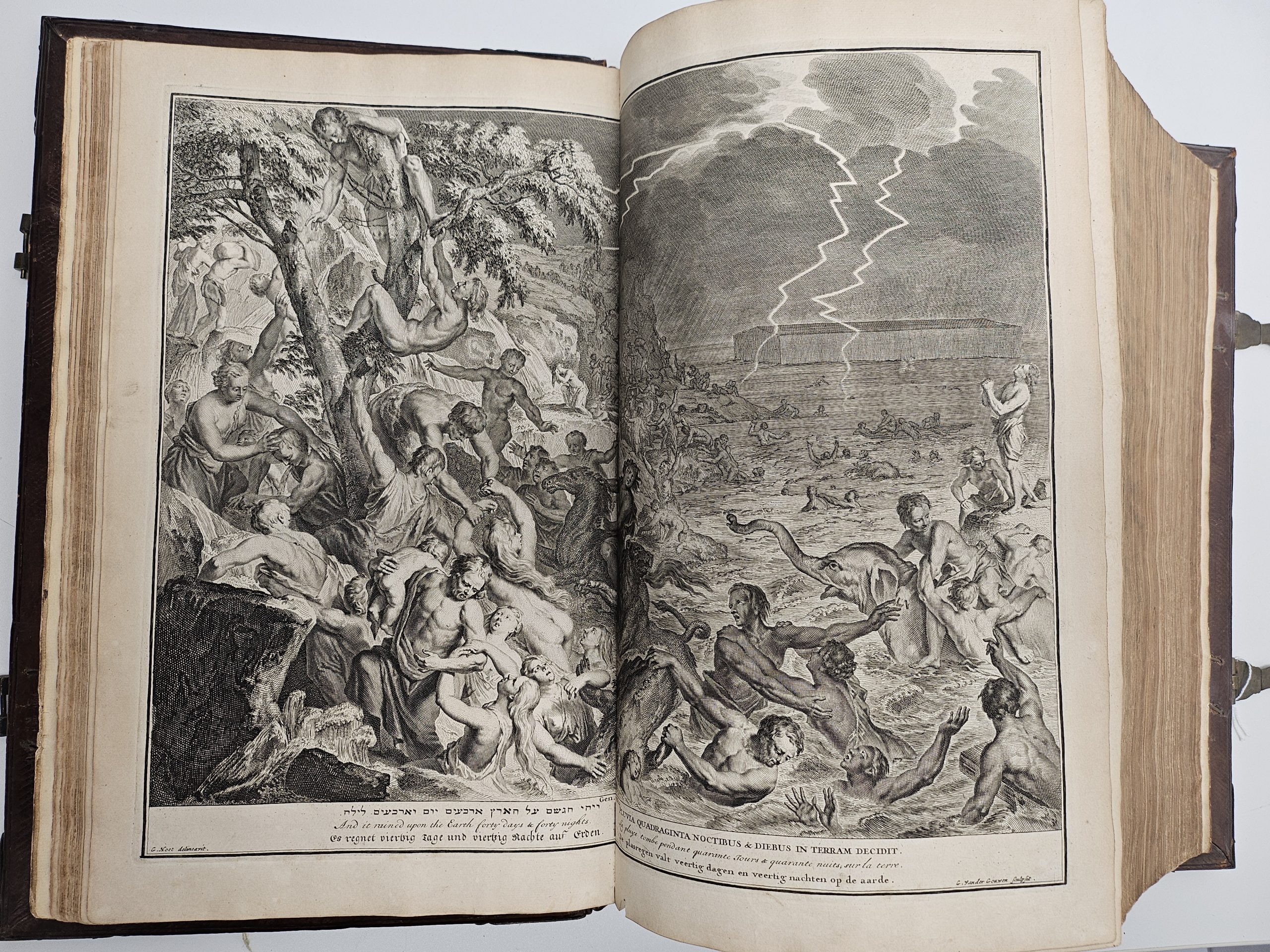
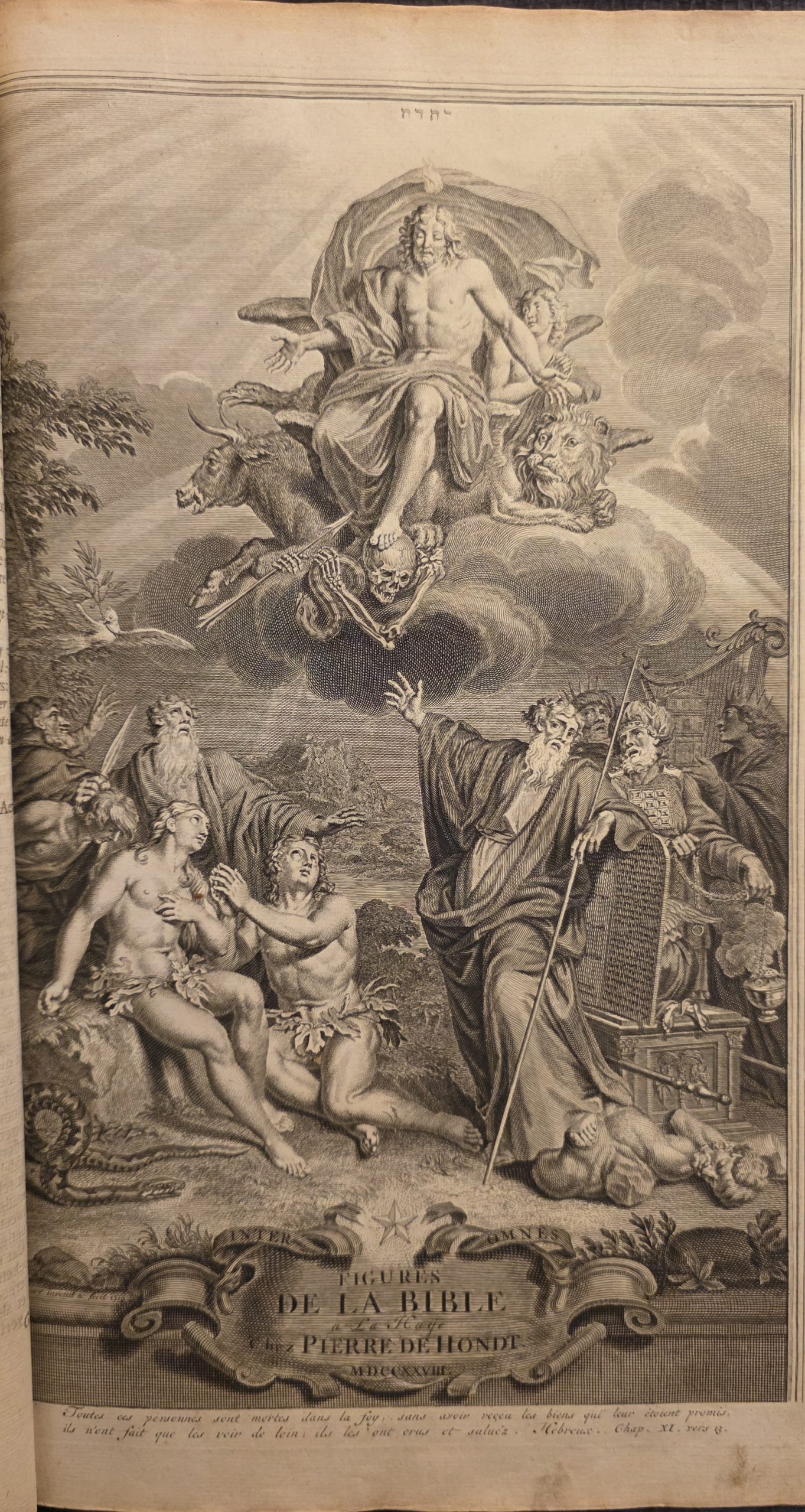
Continuing our Gemini for Museums series, in some research we were conducting recently on the evolution of Biblical illustration, the famed Pieter de Hondt’s illustrated Bible was discussed at length, prompting us to go back to take a closer look at our own copy of this incredible 1729 work interleaved in the 1732 text of the first edition of the Bible of the Dutch Old Catholics. Our copy contains some key elements of interest, including several handwritten notes, a glued-on modification to its cover page and a watermark in the textual pages. How might Gemini help us decipher all of these pieces? Remarkably, Gemini not only identifies everything we asked of it, it even hypothesizes a fascinating explanation for modified cover page!
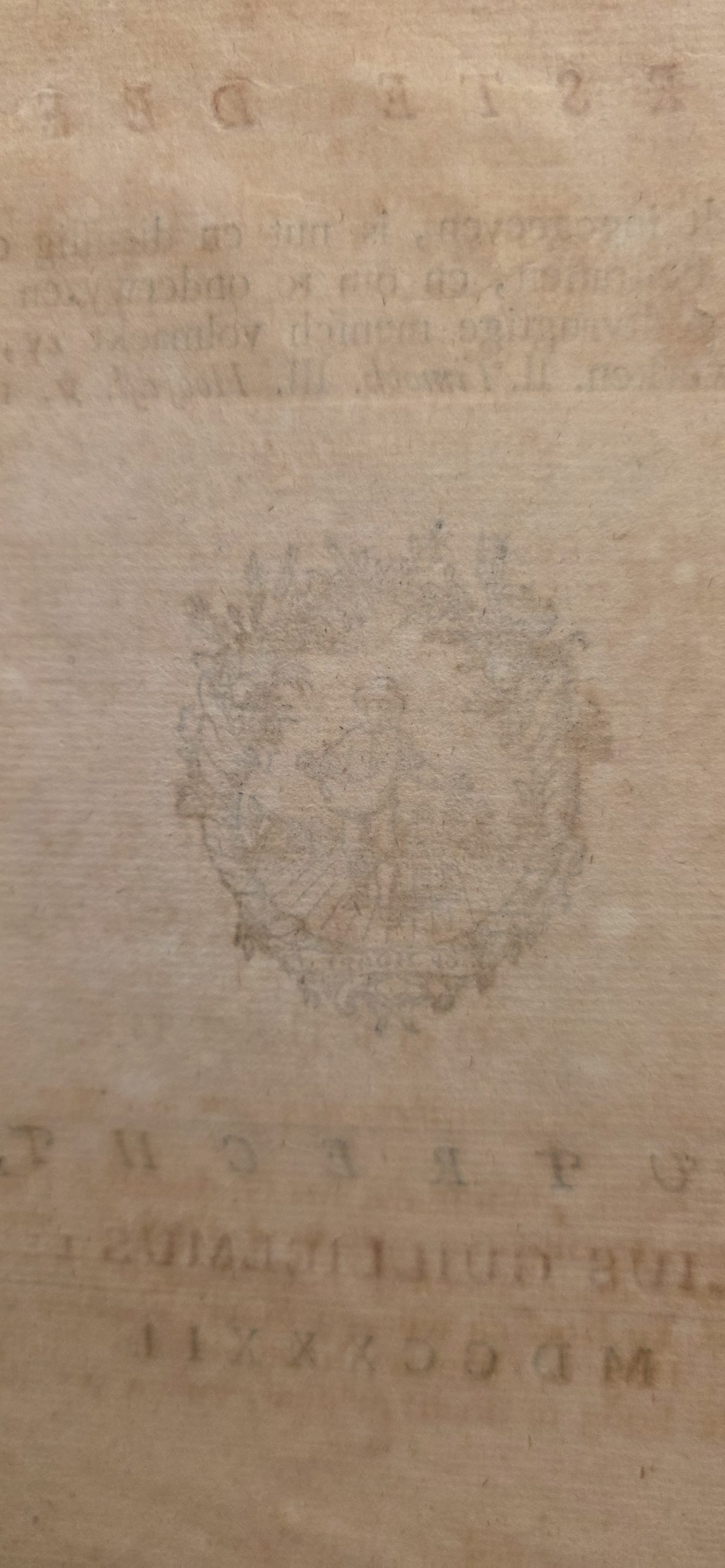
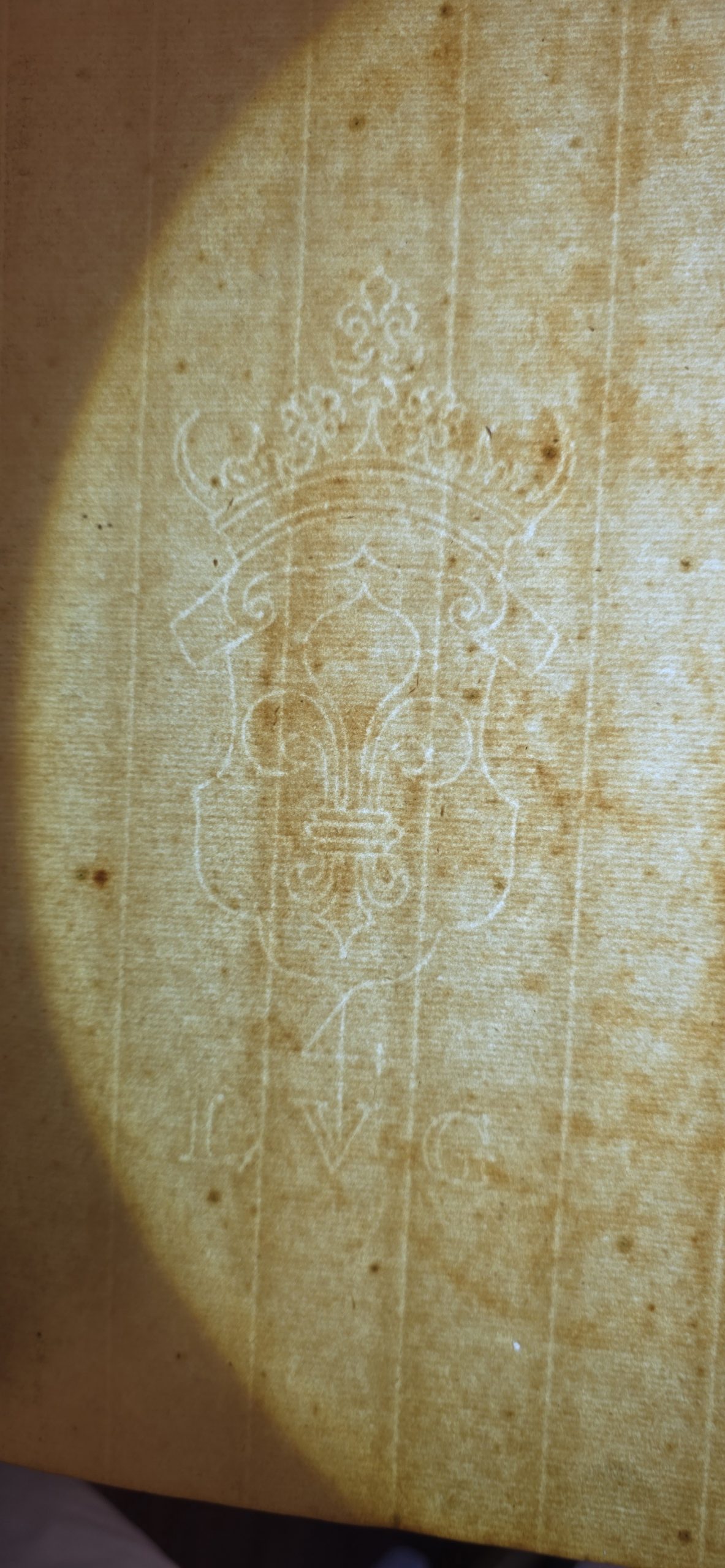
Let's start by identifying the watermark seen in the text pages. Remarkably, Gemini identifies it instantly as the watermark of Lubbertus van Gerrevink (LVG) and even pointed us to another example of it for confirmation! Identifying watermarks used to take a considerable amount of our time, sometimes involving days of research and emailing various scholars for leads. The ability of Gemini to precisely and accurately identify this in seconds is nothing short of transformative!
identify this watermark in an early 1700s Dutch Bible
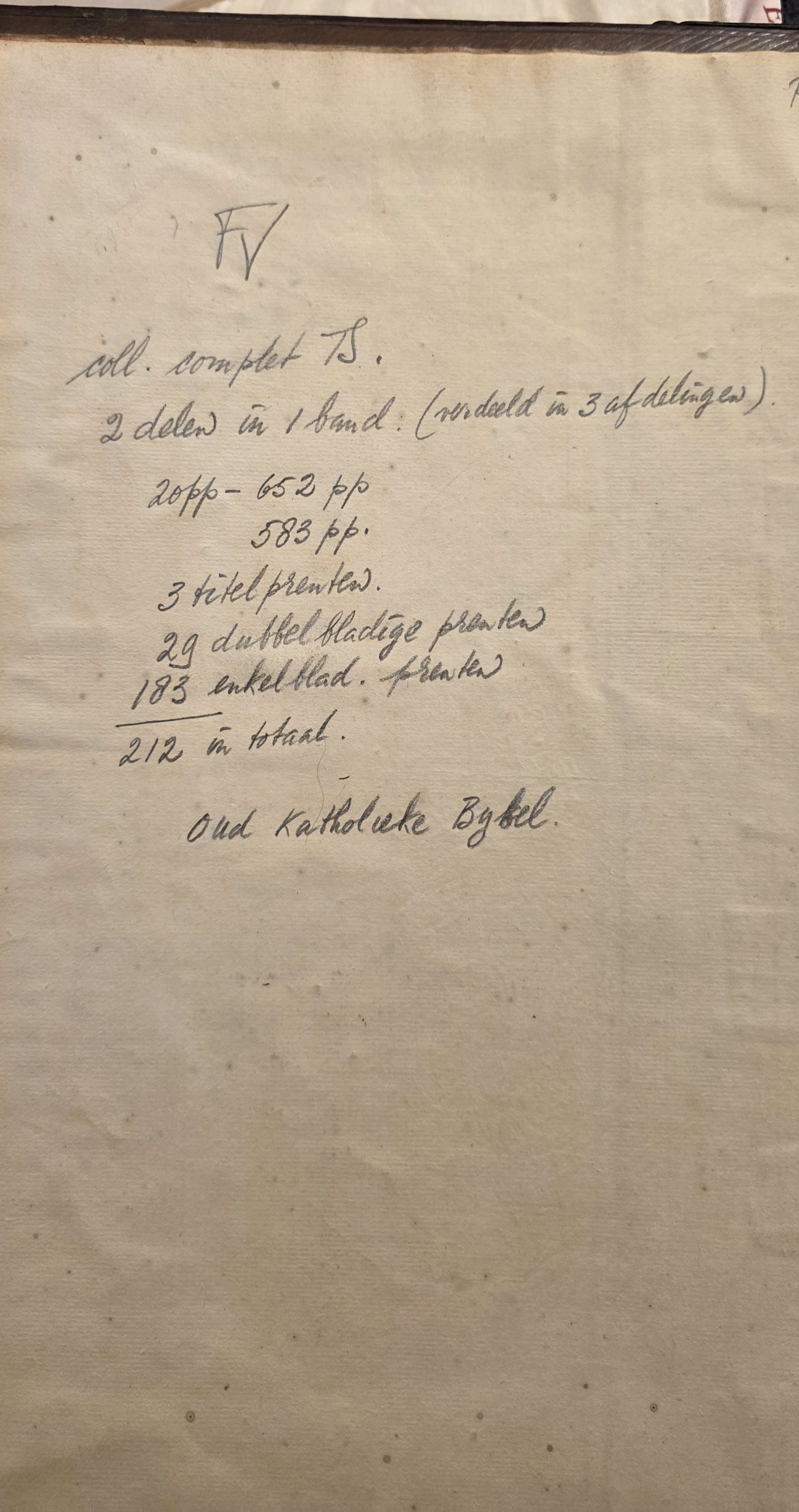
What about this handwritten count that appears to be a collation in Dutch? Indeed, Gemini reads the handwriting perfectly and transcribes and translates it to assess that it is indeed a collation by someone initialed "FV" attesting that the Bible and plates collate complete, with all 183 single-page prints, 29 double-page prints and 3 title prints, interleaved with 20 pages of preface text, 652 pages of Old Testament and 583 pages of New Testament:
transcribe and translate in its entirety
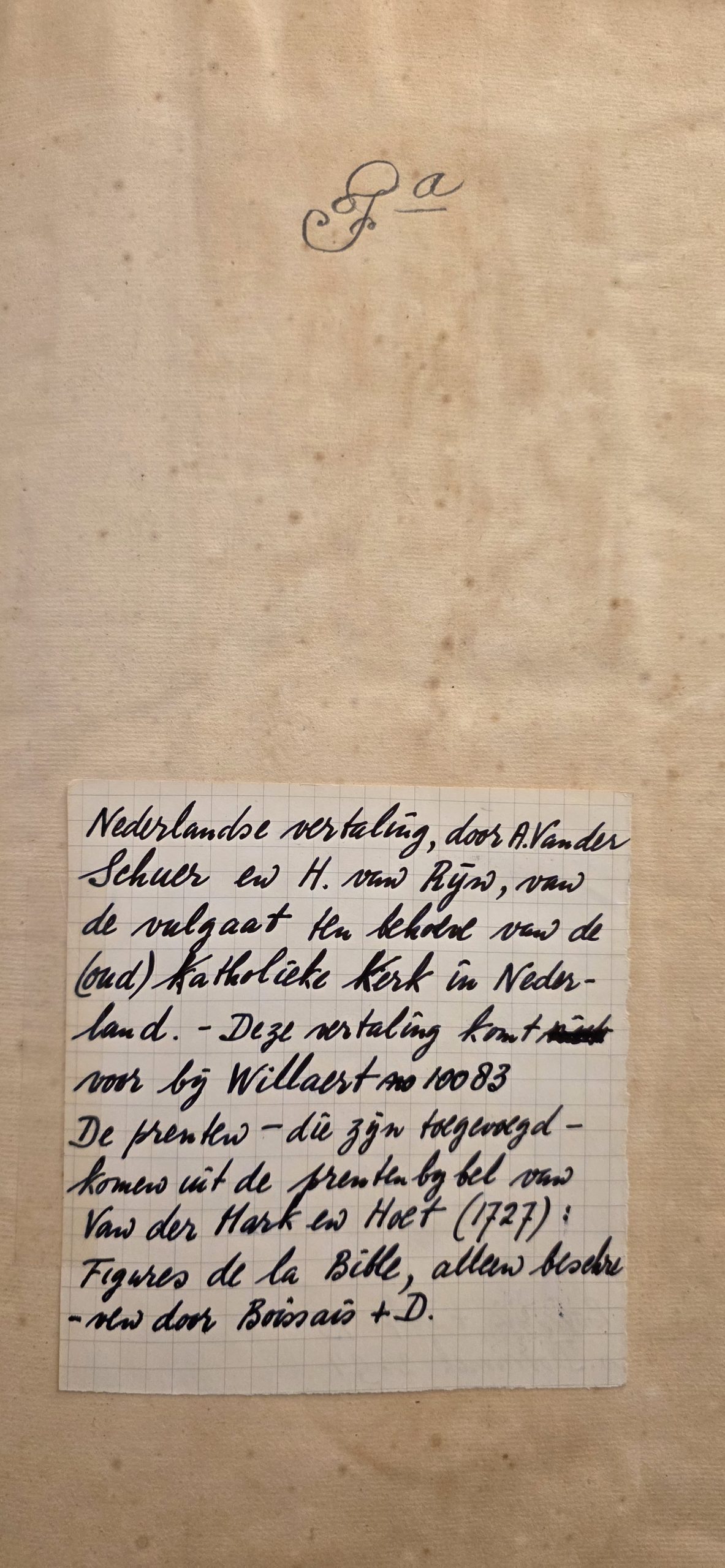
What about this handwritten note that is harder to read due to ink bleeding? Once again, Gemini is able to decipher the handwriting and transcribe and translate it as "Dutch translation, by A. Vander Schuer and H. van Rijn, of the Vulgate for the use of the (Old) Catholic Church in the Nether- lands. – This translation appears [the word "not" is crossed out] in Willaert no. 10083 The prints – which are added – come from the picture bible of Van der Mark and Hoet (1727) : Figures de la Bible, only descri- -bed by Boissais + D." Gemini remarkably even appears to decipher the crossed-out word!
transcribe and translate in its entirety
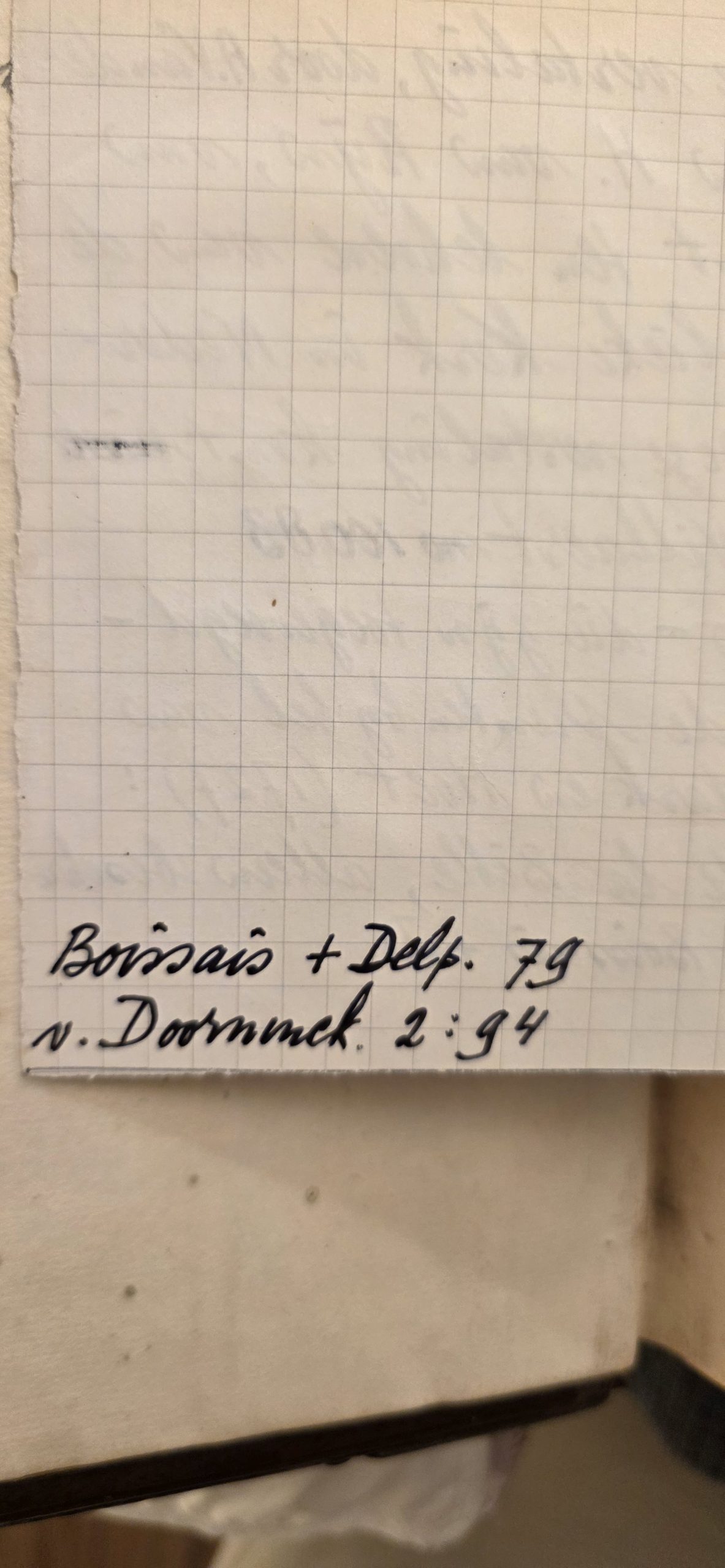
If we flip that sheet of paper over we can see this annotation. Let's see if Gemini can also track down what this refers to. Amazingly Gemini not only transcribes the inscription but tracks down the most likely references they refer to!
transcribe and translate in its entirety
what are the most likely references these refer to?
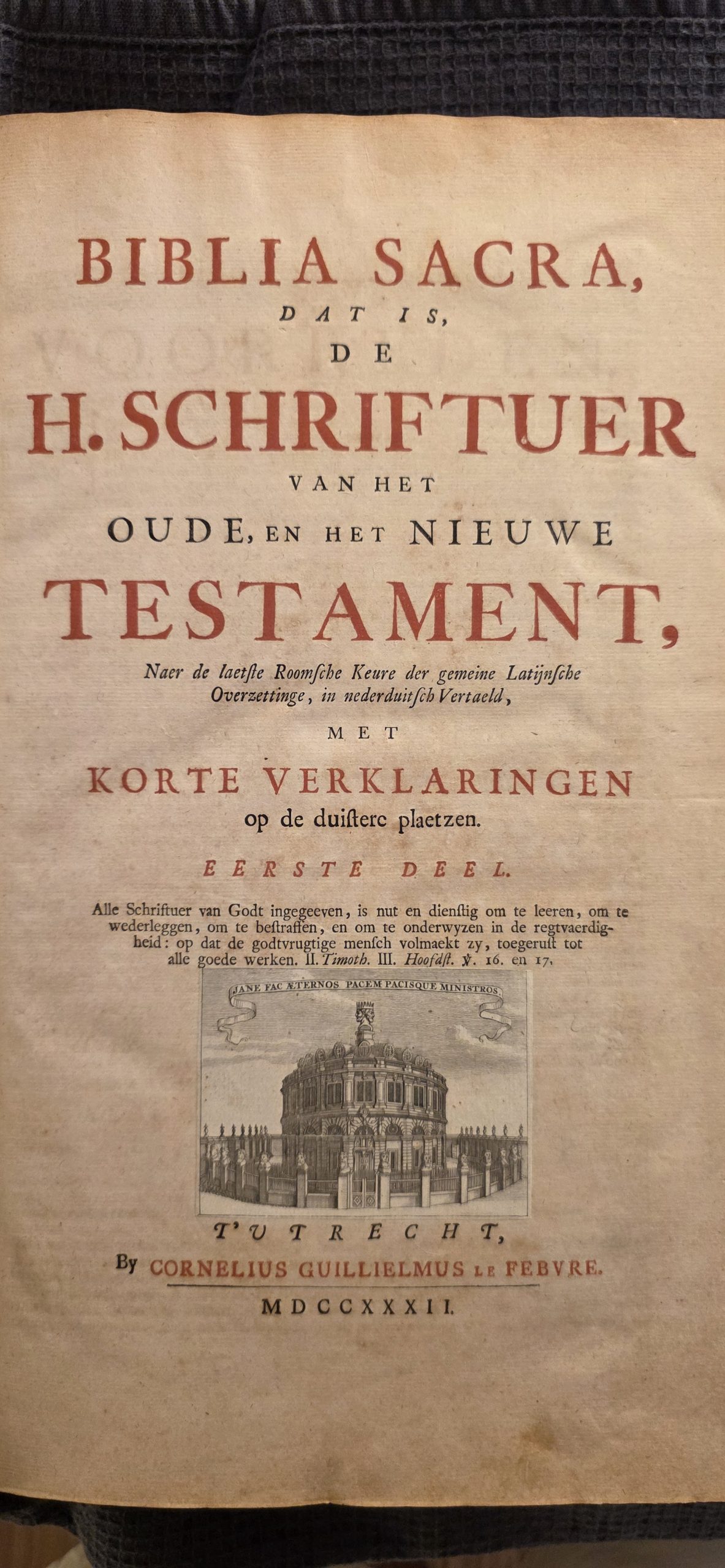
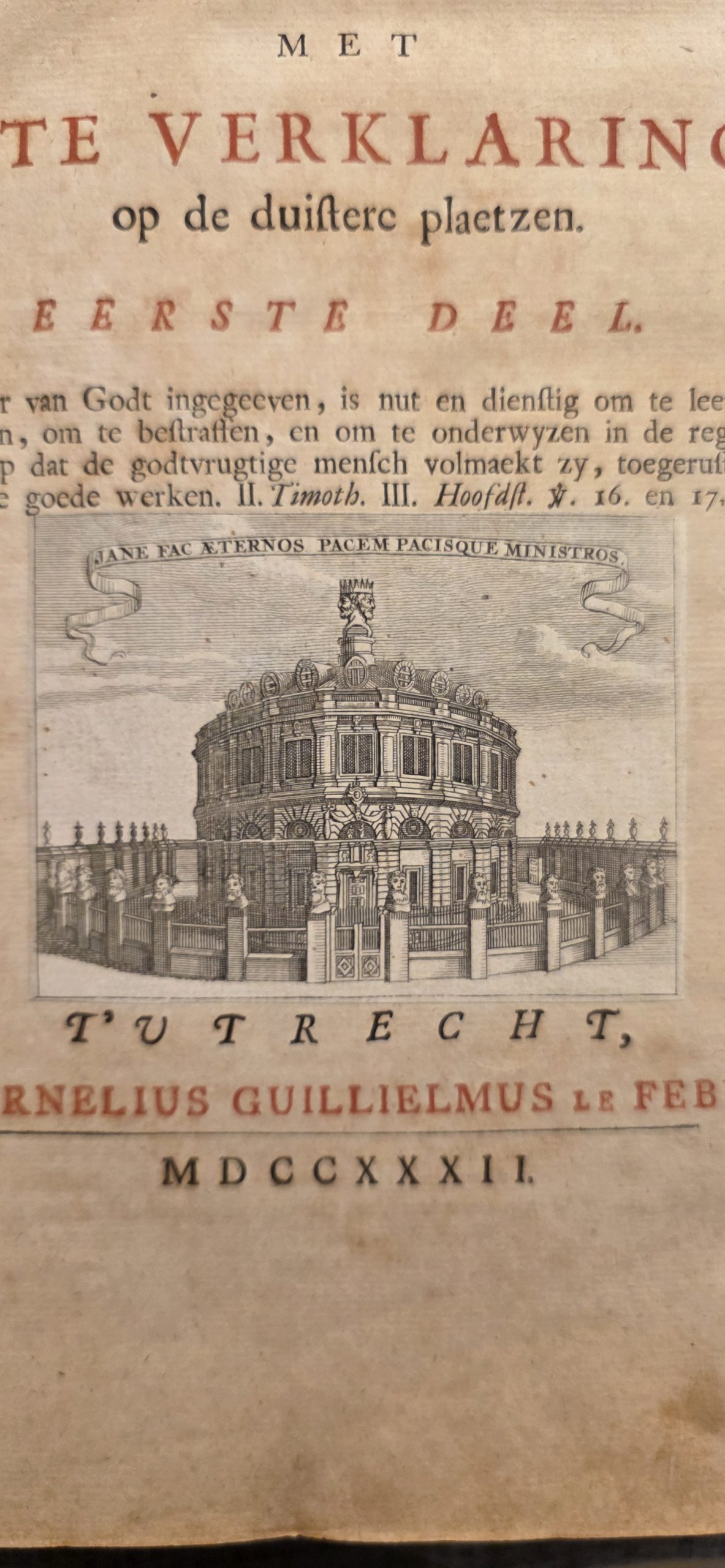
Finally, here is a fascinating and intriguing modification to the book: the original title vignette has been covered over by a pasted-in engraving. Incredibly, Gemini identifies the pasted-on engraving as the printer's device of the Oxford University Press (then operating out of the Sheldonian Theatre in Oxford, England) with the ribbon text saying ("JANE FAC AETERNOS PACEM PACISQUE MINISTROS" / "O Janus, make eternal peace and the ministers of peace"). Other variants of this printer's device can be seen in works like this. Fascinatingly, Gemini asserts that this modified engraving, complete with Janus head at top, was commissioned by the Oxford Press in 1713 to commemorate the Peace of Utrecht and that a previous owner pasted it here to connect with the fact that the book was printed in Utrecht as a form of Grangerism. We cannot find any evidence to support this and have reached out to OUP Archives to see if we can confirm or refute these details.
Further, Gemini was able to track down what the original covered-up printer's device looks like!
It appears that someone glued an engraving to this title page over an image.
Identify the engraving that was glued to the page.
Identify the original image that can be faintly seen through the back of the page.
Identify and give me the original title page.
Explain why the title page was altered like this.