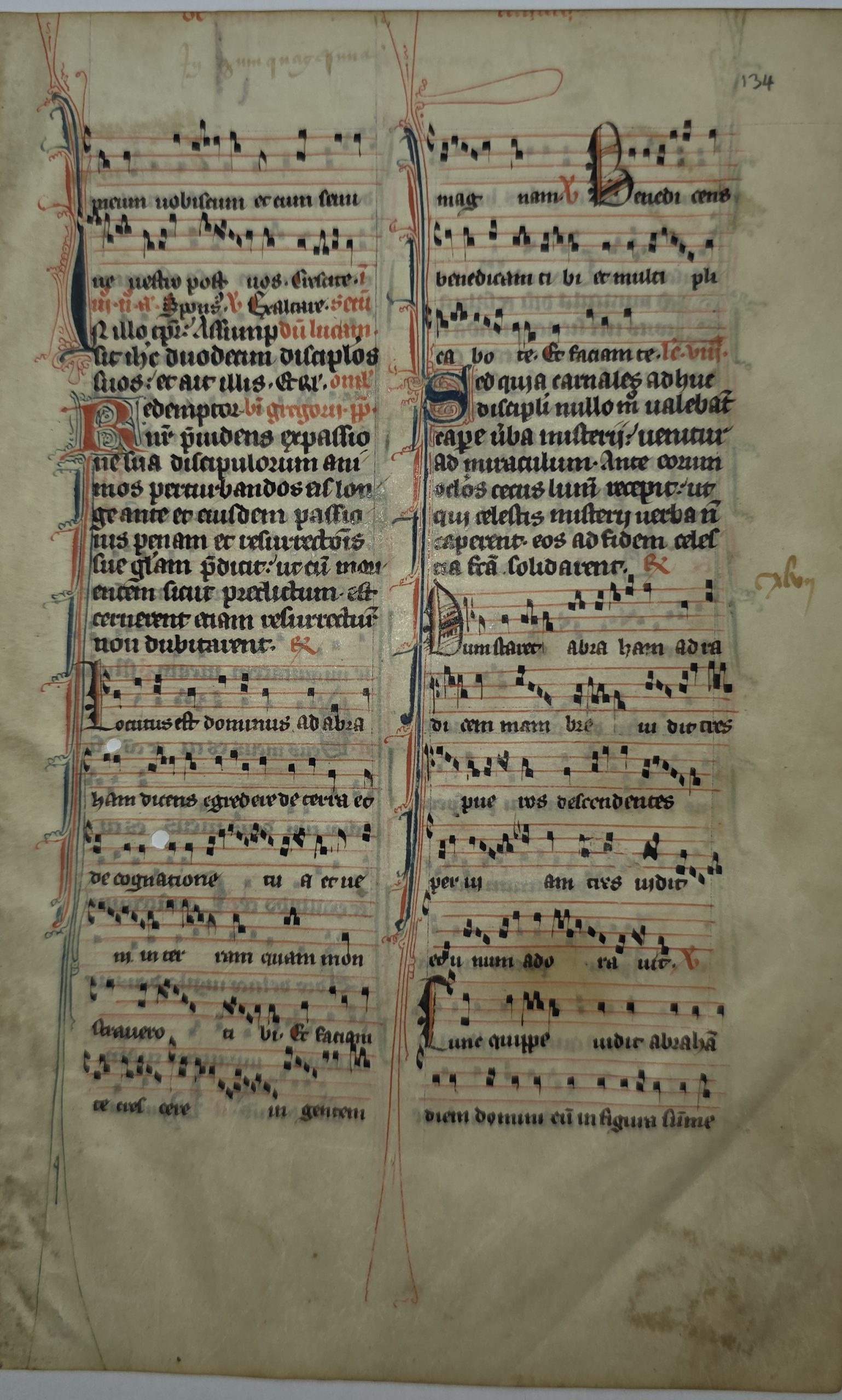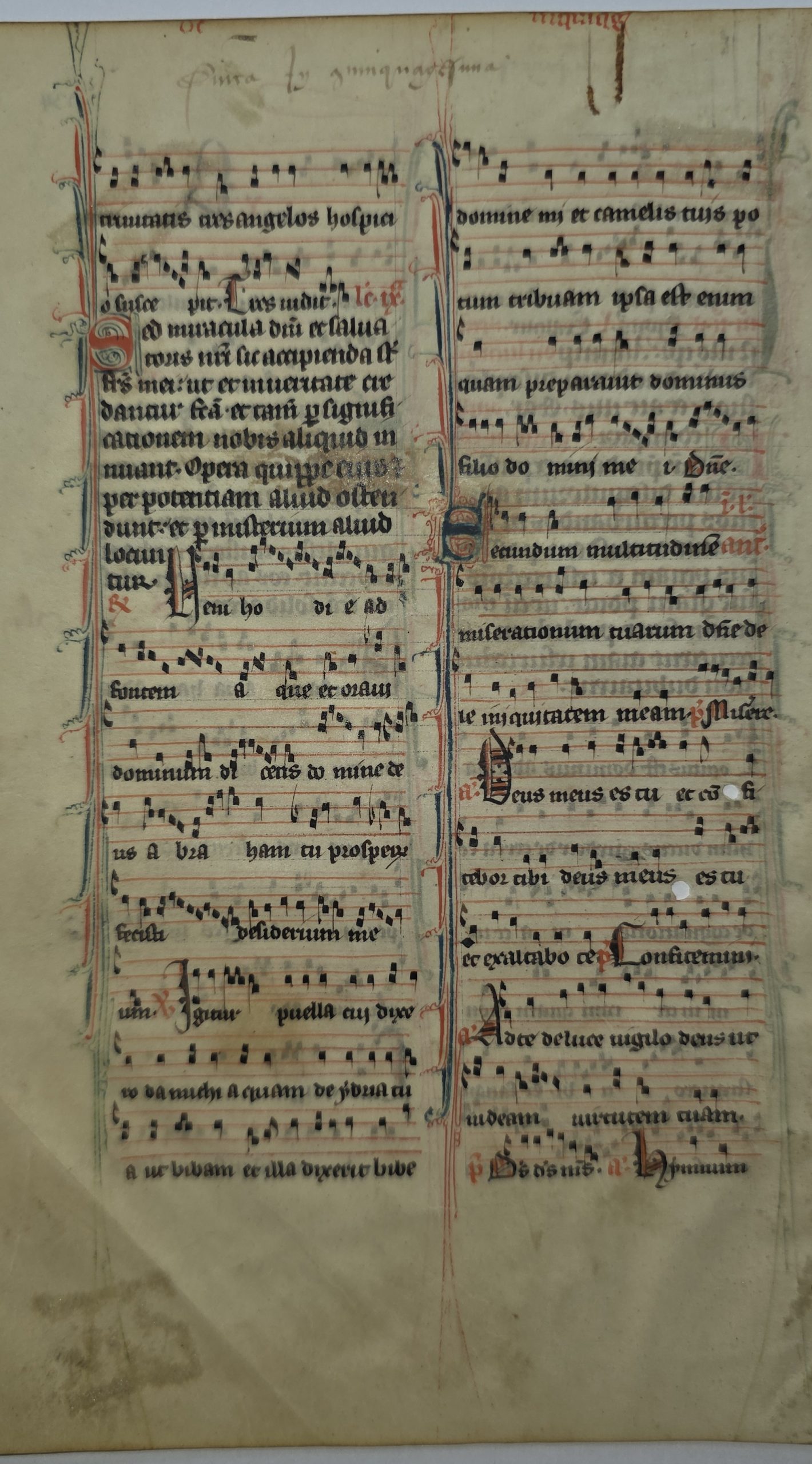
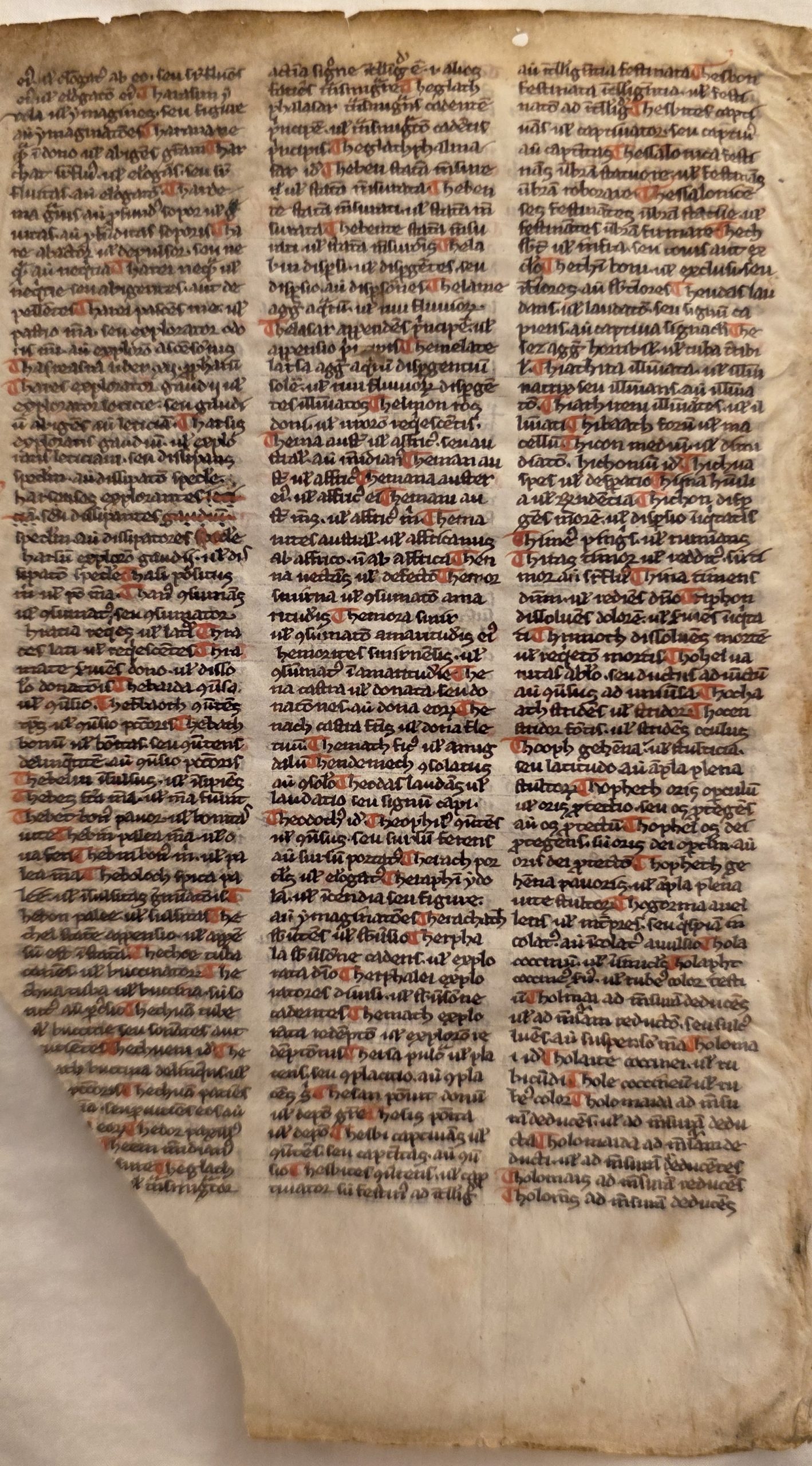
The earliest holdings of The Collection comprise three vellum manuscript leaves from the 13th century, making them nearly 800 years old. All three underwent expert human assessment prior to acquisition so we have a basic understanding of their contents, including their estimated dates and geographic origins, though the Gregorian chant leaf from a Breviarium notatum was unfortunately never assessed as to what specific chants it contains. Since we have a gold standard "ground truth" of human expert assessment for these leaves, let's ask Gemini Deep Research to deeply examine each of the three leaves and see how closely it matches to their previous assessments. For the chat leaf, what can it tell us about the music on the page?
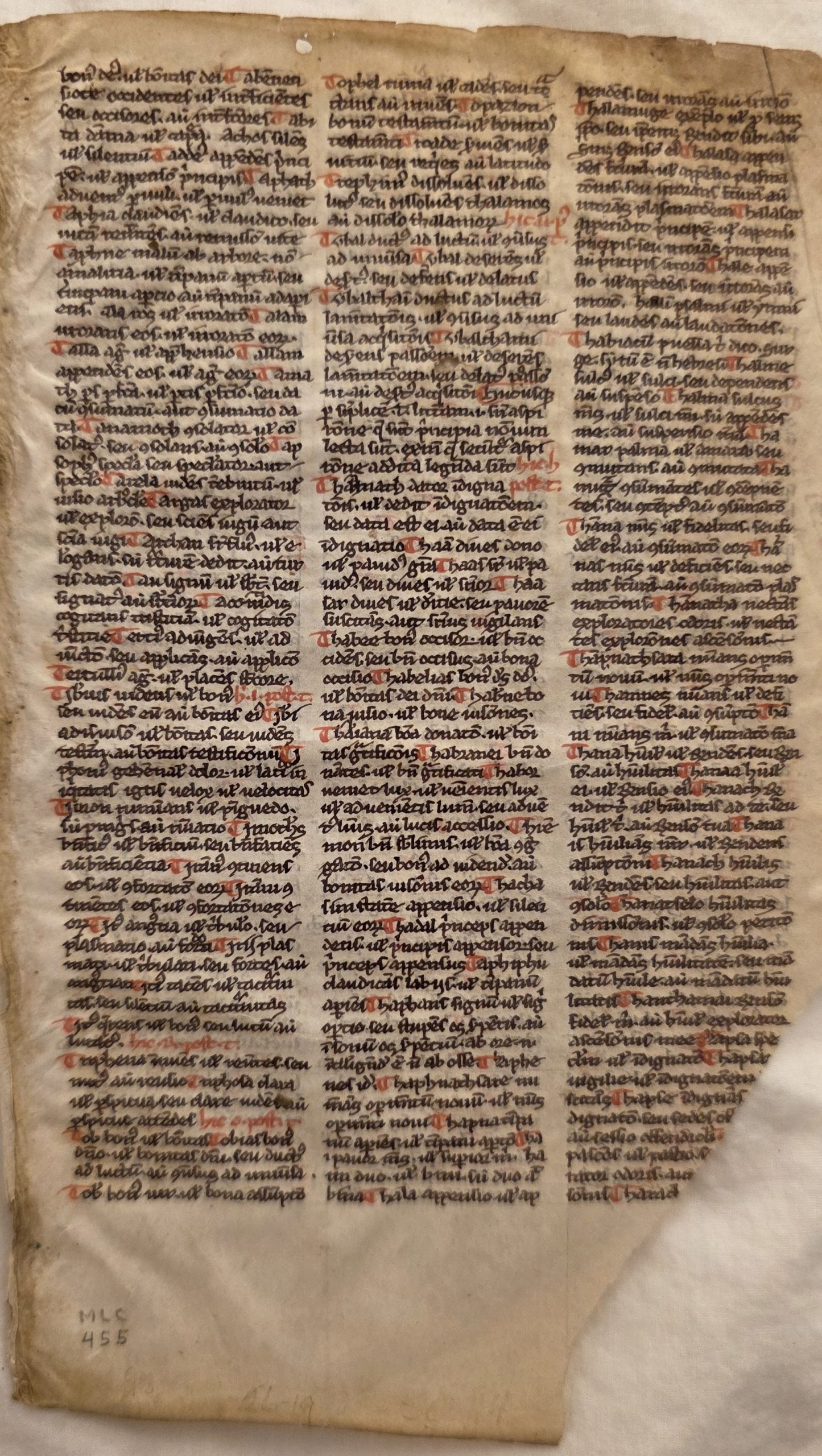
Incredibly, Gemini correctly draws together codicological, paloegraphic, musicological and other historical evidence from the cellphone photographs of each of the three leaves to precisely estimate their contents, origins, contexts and historical significance, matching the human expert assessment precisely in all three cases. Remarkably, Deep Research actually goes a step beyond the human assessments and catches a piece of evidence that the previous expert human reviews missed: it recognizes that a modern handwritten "MLC 455" margin note on the Hebraicorum is a provenance mark tracing this leaf to the Marvin L. Colker collection and 2022 Christies sale. (See a similar annotation on a different manuscript from the collection), adding critical historical provenance information to the leaf.
Here is the prompt that we used for each of the three manuscripts. When we first ran this analysis, Gemini struggled to get a sense of the size and scale of the manuscripts from the cellphone photographs, since there are no rulers or other objects for scale. While a human expert can instantly estimate their size based on knowing the known sizes those layouts and writing styles were used for, Gemini kept biasing towards seeing them as the giant Bible and antiphonal leaves that are far more commonly seen on the web. After various experimentation, it turns out all we had to do was give Gemini the size of the leaf in the prompt and all of those issues went away, unsurprisingly suggesting that the more physical information that can be given to Gemini, the better. We also discovered that our comprehensive overviews that asked Gemini to estimate a wide range of characteristics unsurprisingly led Gemini to struggle with certain assessments – a known issue with the limited context windows and attention of current models. Breaking the age and geographic origin estimate into a separate Deep Research analysis and the Breviarium notatum's musicology analysis into its own separate research analysis dramatically improved the accuracy and detail of both, offering another reminder of the benefits of breaking such AI analyses into discrete focused tasks, even when working with advanced "researching" models.
Give me a deeply researched history and context of the attached manuscript and focusing on its background, context, significance, meaning to and place among its peer works and rarity.
Tell me about its contents, their importance, its construction, materials used, format, dimensions, author/artist/engraver/publisher/illuminator/etc.
Think very carefully about the text and tell me precisely what the text is.
Perform a paleographic analysis of the writing.
If there is music, tell me precisely what the music is.
This is a single leaf from a larger work. Try to identify the source work it comes from.
If there are illuminations or illustrations, describe them and tell me about their meaning and purpose.
Look carefully for later marginalia that might give clues as to its provenance, previous ownership or other information.
Look carefully for damage and wear and tell me what that damage/wear might suggest or mean.
Estimate its age as precisely as possible.
Estimate how many copies survive.
Report should be entirely in English.
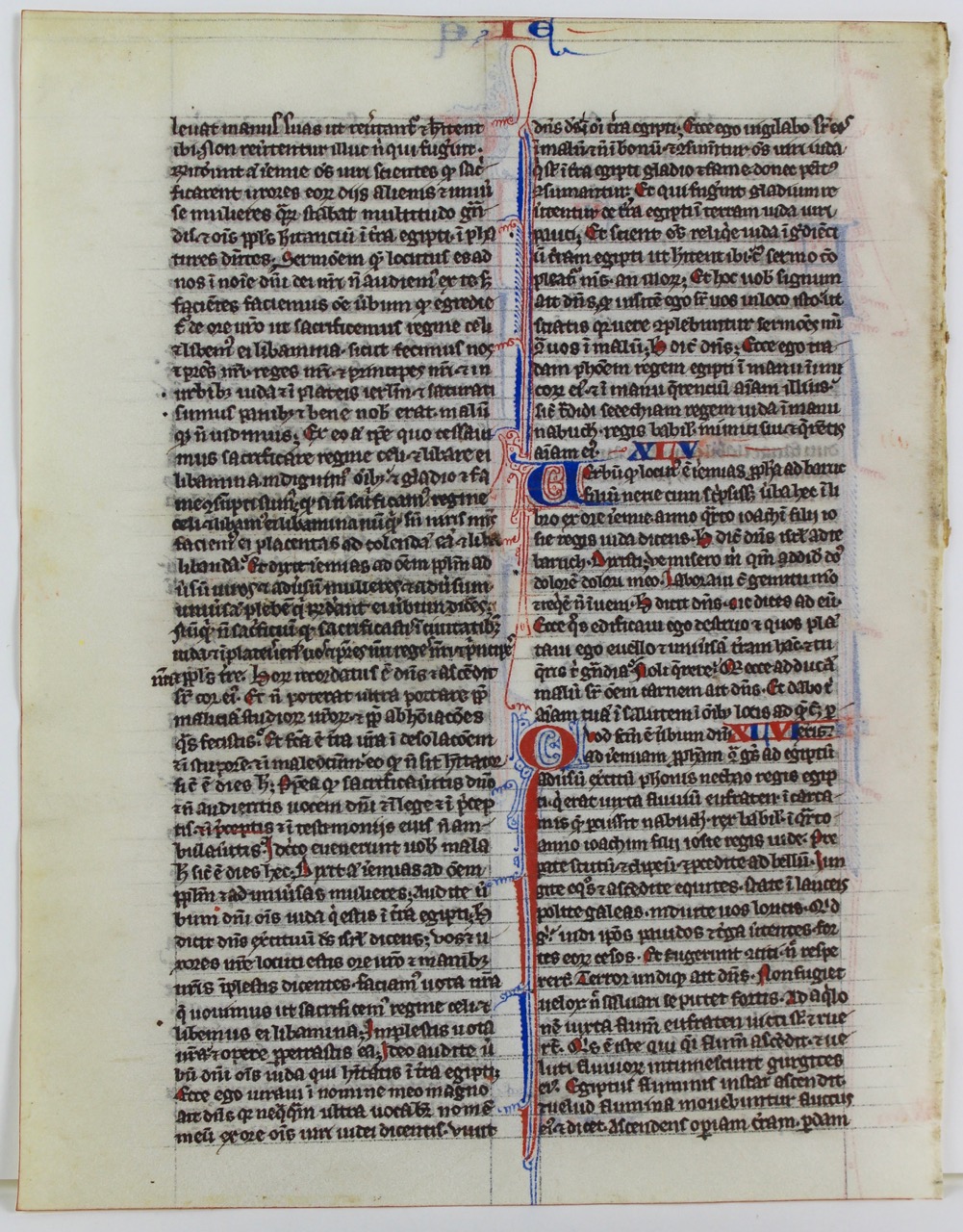
#Bible: The vellum leaf is around 165x130 mm in size.
#Hebraicorum: The vellum leaf is around 175 x 113mm in size.
#Chant: The vellum leaf is around 19 × 12 cm in size.
For the age and geography estimates:
Estimate the age and geographic provenance of this manuscript leaf precisely.
#Bible: The vellum leaf is around 165x130 mm in size.
#Hebraicorum: The vellum leaf is around 175 x 113mm in size.
#Chant: The vellum leaf is around 19 × 12 cm in size.
Since Gemini correctly assessed that the final leaf contains music, let's ask it to perform a musicology analysis:
Perform a detailed musicology analysis of this likely 13th century manuscript leaf.
Transcribe and translate all of the text and think carefully and tell me what specific music they are and their context and history.
Circa 1230-1260 Parisian Pocket Bible Leaf – Interpretationes Nominum Hebraicorum (Interpretation of Hebrew Names) – Letter "T"
- Codicological, Paleographical, and Historical Analysis of a Thirteenth-Century Pocket Bible Leaf: The Interpretationes Nominum Hebraicorum (Colker MS 455)
- Codicological and Paleographical Analysis: Age and Provenance Estimation of a Vellum Manuscript Leaf
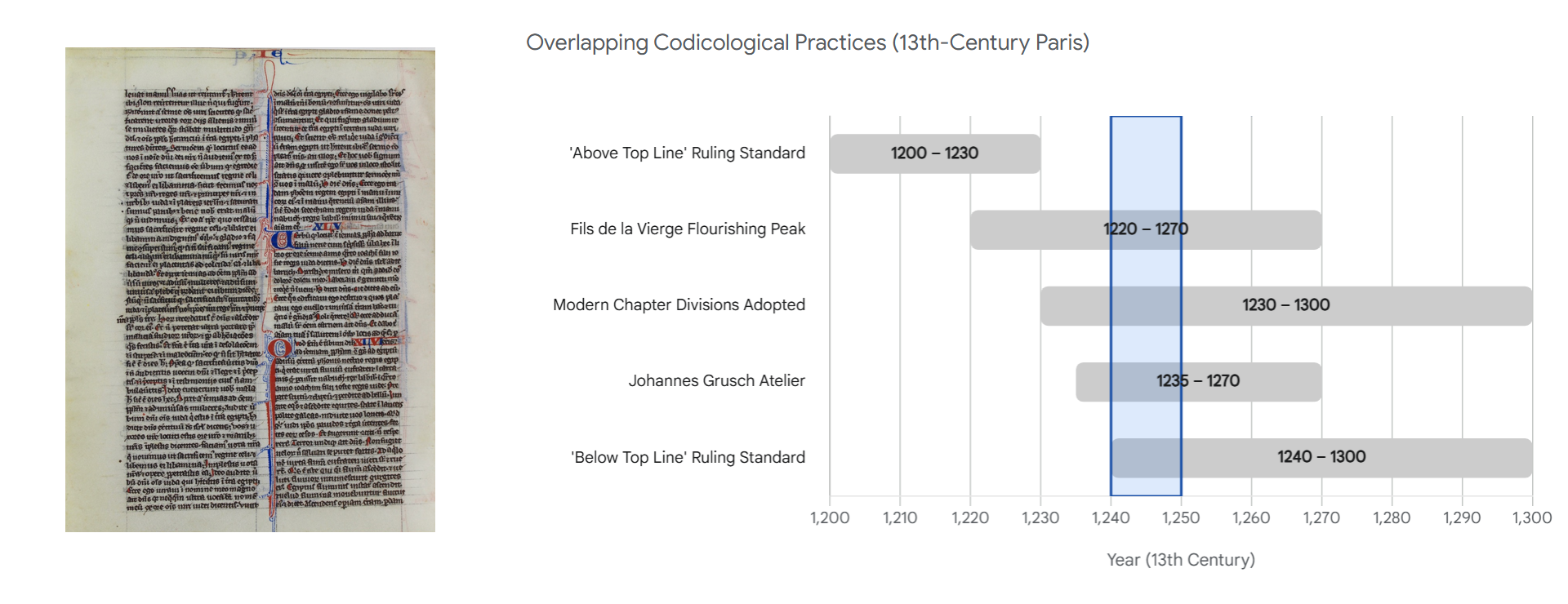
Circa 1240-1250 Parisian Pocket Bible Leaf – Book Of Jeremiah
- Codicological, Textual, and Historical Analysis of a 13th-Century Parisian Vulgate Pocket Bible Folio: The Book of Jeremiah
- Exhaustive Paleographical, Codicological, and Textual Analysis for the Precision Dating of a 13th-Century Parisian Pocket Bible Leaf
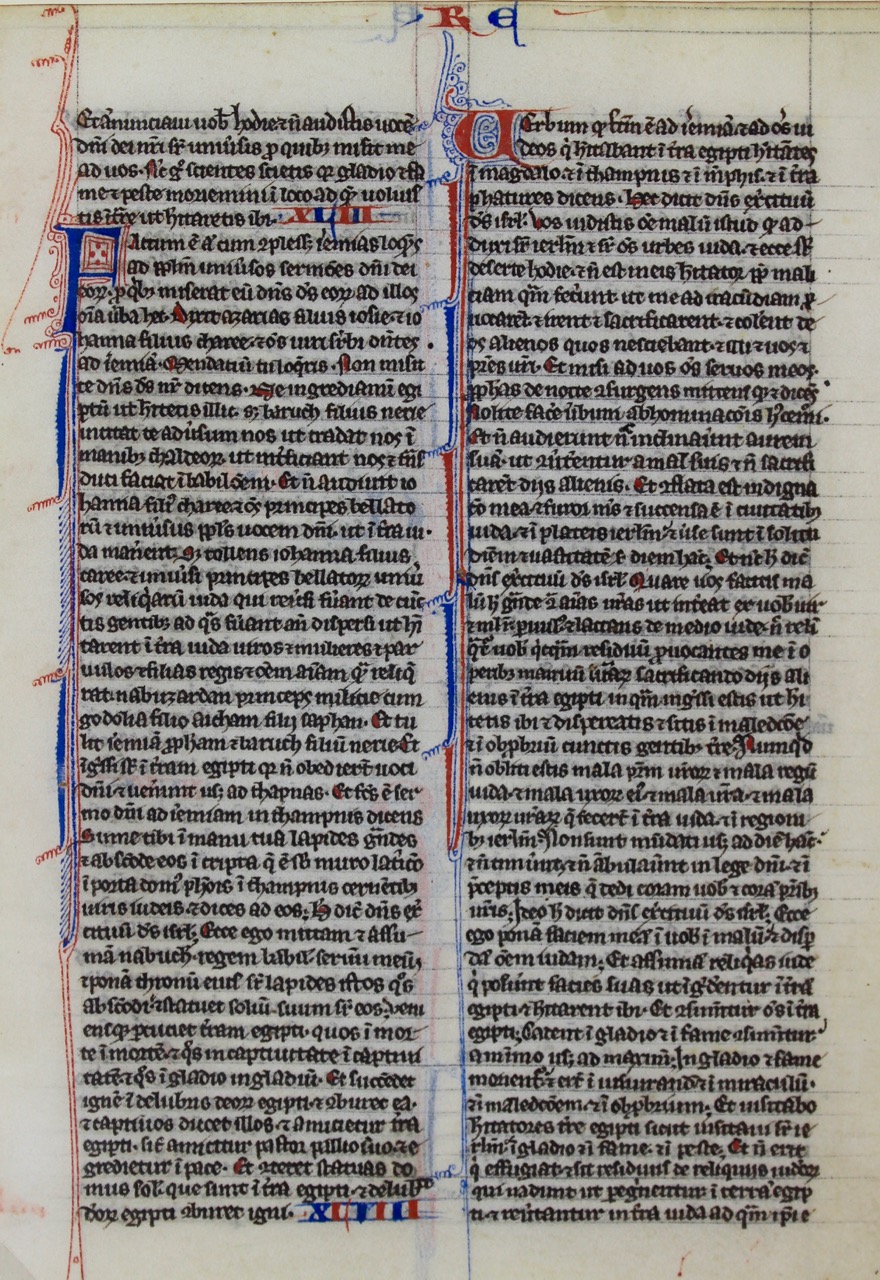
Circa 1275 Breviarium notatum – Gregorian Chant
- Paleographic, Codicological, and Musicological Analysis of a Manuscript Leaf from a Noted Breviary
- Codicological, Paleographical, and Liturgical Analysis of a Thirteenth-Century Portable Gradual
- Codicological, Paleographical, and Musicological Analysis of a Thirteenth-Century Noted Breviary Leaf