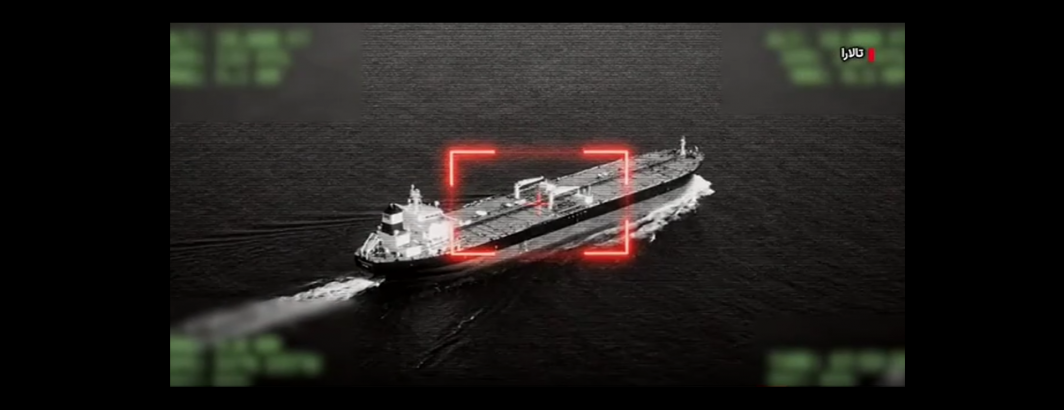
How does the coverage of Iran's foreign (English-language PressTV) and domestic (Persian-language IRINN) television channels compare, where does it overlap or diverge and how are they framing the conflict and other global and local events for their respective audiences? Let's ask Gemini 3.1 Pro High Thinking to perform a deep-dive on both channels' coverage from yesterday and deeply examine their respective narratives, looking at their overall coverage, their conflict-only coverage and their non-conflict coverage.
Let's ask it first to compare the channels' overall coverage:
Attached are the transcripts for two television news channels.
Ignore all advertising and non-news content and write a 1-5 page deeply reasoned analysis that compares and contrasts the two channels' coverage from the attached transcripts.
Identify the key themes of each channel's coverage and provide a detailed breakdown of where their coverage is similar and where it diverges and explain the most likely reasons for their differences.
Integrate key quotes from the transcripts into your report.
A Tale of Two Audiences: A Comparative Analysis of Press TV and IRINN Coverage
Introduction
Based on the provided broadcast transcripts from March 26, 2026, both Press TV (the English-language international broadcasting network) and IRINN (the Islamic Republic of Iran News Network, broadcasting domestically in Persian) cover the same overarching geopolitical crisis: a massive, ongoing military conflict between Iran and a US-Israeli coalition. Dubbed the “Ramadan War” in domestic broadcasts, this conflict involves severe bombardments of Iranian cities, sweeping regional military engagements by the "Axis of Resistance," and the closure of the Strait of Hormuz.
While both state-owned networks serve as mouthpieces for the Iranian government, a close analysis of their coverage reveals a sophisticated, dual-track media strategy. Press TV frames the conflict through the lens of anti-imperialism, global geopolitics, and international law to appeal to a global audience. Conversely, IRINN focuses heavily on domestic resilience, nationalistic fervor, religious duty, and everyday economic stability to maintain morale and order on the home front.
Key Themes in Press TV Coverage
Press TV’s coverage is highly analytical, outward-looking, and tailored to resonate with international viewers, particularly in the Global South, the broader Muslim Ummah, and Western critics of US foreign policy.
-
- The Fall of US Hegemony and Multipolarity: Press TV frames the war not just as a regional dispute, but as the catalyst for the end of the American empire. The network highlights global economic shifts, particularly the conditional opening of the Strait of Hormuz to nations that trade in non-dollar currencies. A featured analyst notes that the conflict proves "the era of US dominance and economic warfare is over."
- Hypocrisy of the West and International Law: The network heavily emphasizes the double standards of the US and European nations. It points out that while the US condemns Iran’s self-defense, it funds genocidal actions in Gaza and Lebanon. A commentator explicitly states, "International law is not a tool of convenience… you’ve never had any human rights statements written against the Americans where every single day American soldiers kill hundreds of black and colored people on the streets."
- Regional Complicity: Press TV directs intense criticism at Arab Gulf states (the UAE, Saudi Arabia, Bahrain), framing them as American proxies and warning them of catastrophic retaliation if their bases are used to attack Iran.
Key Themes in IRINN Coverage
IRINN’s coverage is highly emotional, pragmatic, and heavily rooted in Shia Islamic theology and Iranian nationalism. Its primary goal is to prevent domestic panic, assure citizens that the state is functioning, and frame the war as a sacred struggle.
-
- Domestic Resilience and State Functionality: IRINN dedicates significant airtime to proving that daily life continues despite the bombings. The network reports on the stable prices of chicken and meat, the operational status of banks, and government loans for citizens whose homes were destroyed. A reporter confidently notes, "With that we are in a war situation, but medicines are available."
- Ideological and Religious Framing: The conflict is framed as a holy war against absolute evil. The casualties are equated with the martyrs of early Islam. The network paints a poetic picture of the fallen: "Here is Behesht-e Zahra… man steps into the earthly world from his mother's womb, then lives as a martyr, kills death with martyrdom, and returns to the embrace of the mother of all existence."
- Internal Security and Vigilance: IRINN frequently updates viewers on the arrest of "Mossad-affiliated terrorists" and saboteurs aiming to create street riots, urging citizens to report suspicious activity to intelligence agencies.
Points of Convergence: Where the Narratives Align
Despite their different target audiences, both networks are fundamentally aligned in advancing the state’s core strategic narratives:
-
- Military Triumphs and "Operation True Promise 4": Both networks extensively cover the military successes of the IRGC, the Iranian Army, and Hezbollah. Both highlight the exact same targets: the destruction of US assets at Ali Al Salem (Kuwait) and Al Dhafra (UAE), the downing of American F-35 and F-18 fighter jets, and Hezbollah's destruction of 22 Israeli Merkava tanks.
- The Demonization of Donald Trump and Benjamin Netanyahu: Both networks portray the US President and the Israeli Prime Minister as delusional, desperate, and losing. Trump is repeatedly mocked for claiming that back-channel negotiations are taking place. Press TV analysts call him a "lazy and ignorant… lunatic," while IRINN guests refer to him as a "gambler" (قمارباز) and a "dirty yellow dog" suffering from dementia.
- Public Mobilization: Both channels prominently feature footage of Iranians staying out in the streets at night, defying the threat of bombardment. Both networks use this imagery to project unbreakable national unity following the targeted assassination of Iran's Supreme Leader, Ayatollah Ali Khamenei.
Divergences in Coverage and the Reasons Behind Them
While the facts of the war remain consistent across both channels, the framing diverges sharply. This divergence is a calculated strategy by Iran's state media apparatus to serve two distinct geopolitical and domestic imperatives.
-
- 1. Economic Framing: Macro vs. Micro
- Press TV focuses on the macro-economy. It discusses the price of oil surging past $107 a barrel, the disruption of 10 million barrels of daily oil shipments, the threat to the petrodollar, and the rise of the BRICS nations.
- IRINN focuses on the micro-economy. It reassures viewers that essential goods are clearing customs, noting that "the price of poultry in wholesale is 245 to 260 tomans" and emphasizing that factories are operating in three shifts.
- Reason: The international audience cares about how the war affects global markets and the US economy. The domestic audience, enduring heavy sanctions and bombings, cares about whether they can feed their families tomorrow. IRINN must act as a stabilizing force against panic-buying and economic despair.
- 2. Justification for the War: Anti-Imperialism vs. Sacred Duty
- Press TV appeals to secular, anti-imperialist, and pan-Arab/pan-Islamic sentiments. It links the struggle to the historical transatlantic slave trade, the Vietnam War, and the plight of the Global South. A guest notes, "Iran is fighting now for all the Arabs who are fighting Iran… they are fighting on the future of this area."
- IRINN uses deeply religious, Shia-centric, and Persian nationalist rhetoric. The conflict is called the "Ramadan War." Resistance is linked to the Battle of Karbala and Imam Hussein. The network praises the smooth succession of Ayatollah Mojtaba Khamenei. A citizen is quoted saying, "We are the generation of the conquest of Khaybar… from the era of Rostam to the highest point of the Quran."
- Reason: Press TV cannot rely on Shia theology to win over Western leftists, international diplomats, or Sunni populations in the Arab world; it must use the universal language of human rights and anti-hegemony. IRINN, however, relies on the deeply ingrained religious and cultural identity of the Iranian populace to encourage a willingness to endure suffering and martyrdom.
- 3. Tone Regarding Casualties
- Press TV highlights Iranian civilian casualties to expose Western hypocrisy and build international sympathy, detailing how the US and Israel use "white phosphorus" and booby-trapped toys, bombing schools and hospitals.
- IRINN acknowledges the martyrs but rapidly pivots to a narrative of stoic pride and military revenge. It broadcasts mothers of martyrs stating, "We are happy with all the suffering we endure," and proudly showing citizens saying they are unafraid of the bombs.
- Reason: Externally, Iran wants to project the image of a victim of brutal, illegal Western aggression to isolate the US and Israel diplomatically. Internally, projecting too much victimhood could lead to demoralization; therefore, IRINN must project an image of unbreakable, joyous defiance.
- 1. Economic Framing: Macro vs. Micro
Conclusion
The transcripts of Press TV and IRINN from March 26, 2026, illustrate a highly coordinated, bifurcated media strategy. Press TV acts as Iran's diplomatic and ideological sword on the global stage, aiming to unite the Global South against the US dollar and American military hegemony. Meanwhile, IRINN acts as the domestic shield, soothing economic anxieties, reinforcing state security, and using the powerful cultural touchstones of Shiism and Persian nationalism to ensure the Iranian populace remains unified under the ultimate test of a devastating, multi-front war.
Now let's zoom into their respective conflict coverage:
Attached are the transcripts for two television news channels.
Ignore all advertising and non-news content and identify ONLY the parts related to the conflict with Iran and write a 1-5 page deeply reasoned analysis that compares and contrasts the two channels' coverage of the conflict with Iran from the attached transcripts.
Identify the key themes of each channel's coverage and provide a detailed breakdown of where their coverage is similar and where it diverges and explain the most likely reasons for their differences.
Integrate key quotes from the transcripts into your report.
Comparative Analysis of Media Coverage: The 2026 US-Israel-Iran Conflict
Sources Analyzed: IRINN (Islamic Republic of Iran News Network) and Press TV
Introduction
The provided transcripts from March 26-27, 2026, offer a comprehensive look into the Iranian state media’s framing of a massive, ongoing military conflict—dubbed the "Ramadan War"—pitting Iran and its regional allies against the United States and Israel. Both IRINN and Press TV function as state-run apparatuses of the Islamic Republic of Iran; however, their coverage reveals a sophisticated, bifurcated media strategy. While both networks uniformly project a narrative of Iranian military triumph and Western desperation, they diverge significantly in their thematic focus, rhetorical tone, and targeted messaging. IRINN is engineered to sustain domestic morale, emphasizing national unity, religious resilience, and logistical stability. Press TV, conversely, is tailored for a global audience, focusing on anti-imperialism, the shifting multipolar world order, and the hypocrisy of Western international law.
Key Themes in IRINN’s Coverage (Domestic Focus)
1. Domestic Resilience, Unity, and Martyrdom
IRINN’s primary objective is to fortify the Iranian public's psychological resilience amid heavy bombardment. The network heavily emphasizes the "Meydan-dari" (field presence) of the Iranian people, portraying their continued presence in the streets as a form of asymmetric warfare that baffles the enemy. The war is framed as a crucible that has forged unbreakable national unity.
-
- Quote: "مردم بدون وقفه پا به پای نیروهای مسلح در میدان هستند" ("The people are in the field step by step with the armed forces without pause.")
- The coverage heavily leans on Shia religious motifs to rationalise the loss of life, particularly the assassination of Supreme Leader Ayatollah Ali Khamenei. Martyrdom is framed not as a loss, but as a victory of blood over the sword, drawing direct parallels to the Battle of Karbala.
2. State Competence and Logistical Stability
To prevent domestic panic, IRINN dedicates substantial airtime to mundane but critical logistical updates. It actively reassures the public that the state apparatus is functioning perfectly despite the war.
-
- Quote: "از نظر کمبود کالای ما کالای کمبود نداریم… تخم مرغ کاهشی شده الان" ("Regarding commodity shortages, we have no shortages… the price of eggs has even decreased now.")
- The network highlights government initiatives to rebuild bombed houses, provide loans to victims, and ensure hospital readiness, projecting an image of an unshakeable, paternalistic state protecting its citizens.
3. Military Dominance and the "True Promise 4" Operations
IRINN projects absolute military superiority. The network boasts of downing advanced US stealth fighters (F-35s, F-18s) and launching overwhelming missile barrages ("Operation True Promise 4") at Israeli cities (Haifa, Tel Aviv, Dimona) and US bases in the region.
-
- Quote: "ابتکار عمل در جنگ در اختیار نیروهای مسلحه… ما یه جاهایی گفتیم اگر فلان بکنید فلان خواهیم کرد… سنگینترشو انجام دادیم" ("The initiative in the war is in the hands of the armed forces… Where we said if you do this, we will do that… we carried out an even heavier response.")
Key Themes in Press TV’s Coverage (International Focus)
1. The End of US Hegemony and Global Geopolitical Shifts
Press TV frames the conflict not merely as a defense of Iran, but as the catalyst for the collapse of the US-led unipolar world order. It relies heavily on interviews with Western geopolitical analysts (e.g., Alastair Crooke, Peter Koenig) to validate the narrative that the US is trapped in an unwinnable war that will destroy the petrodollar.
-
- Quote: "…this has essentially imposed the conclusion on the world that the era of US dominance and economic warfare is over…"
- A major focal point is the selective blockade of the Strait of Hormuz. Press TV emphasizes that Iran is allowing Chinese vessels to pass if they pay in Yuan, actively framing the war as a vehicle for global dedollarization.
2. Synergy of the "Axis of Resistance"
Press TV dedicates extensive coverage to the coordinated efforts of Iran’s regional allies, portraying a united transnational front. It highlights Hezbollah’s "record 87 operations in 24 hours" and the destruction of Israeli Merkava tanks, the Iraqi resistance attacking US bases, and the Yemeni Houthis preparing to fully blockade the Red Sea.
-
- Quote: "This is a war that is raised in this area will decide the future of the region… Iran is fighting now for all the Arabs who are fighting Iran… they are fighting on the future of this area."
3. Western Hypocrisy and International Law
To appeal to the Global South and Western progressives, Press TV heavily underscores the humanitarian toll of US/Israeli strikes on Iranian and Palestinian civilians, framing the West as hypocritical violators of the very international laws they claim to uphold.
-
- Quote: "International law is not a tool of convenience. The US backed Israel's Gaza blockade… yet condemns Iran for defending itself in the Strait of Hormuz."
Detailed Breakdown: Similarities and Divergences
Where the Coverage is Similar:
-
- The Portrayal of the Enemy: Both channels portray US President Donald Trump and Israeli PM Benjamin Netanyahu as desperate, erratic, and isolated. Trump’s offers for negotiations and temporary ceasefires are uniformly dismissed by both networks as deceitful bluffs designed to save face and halt Iran's momentum.
- IRINN Quote: "ترامپ قمارباز در جنگ تحمیلی علیه ایران شکست می خورد… او ناچار بود برای تغییر فضای بازی برگ جدیدی رو کند" ("Trump the gambler is failing in the imposed war… he was forced to play a new card to change the atmosphere of the game.")
- Press TV Quote: "This is not coherence, this is improvisation, masquerading as leadership… Trump is proving once again that words mean nothing to him…"
- The Strait of Hormuz as the Ultimate Weapon: Both channels highlight the closure of the Strait of Hormuz as a masterstroke of asymmetric warfare that is inflicting unbearable economic pain on the West and regional Arab monarchies.
- The "True Promise 4" Retaliation: Both networks celebrate the exact same military achievements—the targeting of the Ayn al-Asad, Ali Al Salem, and Al Dhafra bases, as well as successful strikes deep inside Israeli territory.
- The Portrayal of the Enemy: Both channels portray US President Donald Trump and Israeli PM Benjamin Netanyahu as desperate, erratic, and isolated. Trump’s offers for negotiations and temporary ceasefires are uniformly dismissed by both networks as deceitful bluffs designed to save face and halt Iran's momentum.
Where the Coverage Diverges:
-
- Target Audience and Lexicon:
- IRINN speaks to the Iranian soul. It utilizes a deeply emotive, nationalistic, and religious lexicon. The war is contextualized within the history of the 1980s Iran-Iraq war and Shia eschatology. Phrases like "خون بر شمشیر پیروز شد" (Blood triumphed over the sword) and references to Imam Hussain and the newly appointed Supreme Leader, Mojtaba Khamenei, are ubiquitous.
- Press TV speaks to the global mind. It strips away the Shia-centric theological rhetoric and replaces it with secular, anti-imperialist, and geopolitical terminology. It speaks of "asymmetric warfare," "dedollarization," "color revolutions," and "international human rights."
- The Treatment of Regional Arab States:
- IRINN addresses neighboring Arab states (like the UAE and Saudi Arabia) with a mix of stern warnings and paternalistic advice, warning them not to allow their bases to be used, lest they face destruction.
- Press TV takes a much more analytical and globally-minded approach to these states, discussing how the Gulf monarchies are trapped between their reliance on US security umbrellas and the reality of Iranian geographic dominance, actively predicting the downfall of their regimes via "a new Arab Spring" if they side with the US.
- Focus on Domestic Economics vs. Global Economics:
- IRINN focuses on micro-economics to reassure the populace: the price of meat, the availability of bread, and the functionality of the Tehran metro.
- Press TV focuses on macro-economics to demonstrate global leverage: the S&P 500 plunging, the shifting of oil markets to the Chinese Yuan, and the skyrocketing price of gas in the United States.
- Target Audience and Lexicon:
Reasoning for the Differences
The divergence in coverage is a textbook example of a state tailoring its strategic communications to achieve dual, audience-specific objectives during a total war.
1. The Necessity of Internal Cohesion (IRINN's rationale):
For the Iranian state to survive a massive kinetic war featuring the assassination of its head of state and the bombing of its cities, internal collapse is a greater immediate threat than military defeat. IRINN’s coverage is meticulously designed to prevent panic and foster a "rally 'round the flag" effect. By constantly showing footage of everyday Iranians braving the bombs in the streets and ensuring that grocery stores are stocked, the state signals that it remains in absolute control. The religious framing imbues the suffering of the populace with divine purpose, transforming civilian casualties from a metric of state failure into a badge of righteous martyrdom.
2. The Necessity of External Deterrence and Information Warfare (Press TV's rationale):
Press TV operates on the premise that the war will ultimately be decided at the geopolitical negotiating table, and that the US can be pressured into withdrawing if the global cost becomes too high. By highlighting the economic devastation of the blocked Strait of Hormuz and the potential collapse of the US dollar, Press TV aims to panic Western financial markets and allied nations. Furthermore, by framing the conflict as a defense of the Global South against Western imperialism and Zionist genocide (heavily linking Iran's struggle to Gaza), Press TV seeks to isolate the US and Israel diplomatically. It provides intellectual ammunition for anti-war factions in the West, hoping to stoke domestic political pressure on the Trump administration to abandon the military campaign.
Conclusion
In the fictionalized 2026 "Ramadan War," the Iranian state media apparatus demonstrates a highly coordinated operational strategy. IRINN acts as the shield, reinforcing the domestic front through nationalism, religious stoicism, and reassurances of logistical normalcy. Press TV acts as the sword in the global information domain, wielding geopolitical analysis and the specter of global economic collapse to fracture the US-led coalition. Together, they project the image of a nation that is not only surviving an existential threat but is actively reshaping the global order in its favor.
Now let's flip things around and look only at the NON-CONFLICT coverage on the two channels:
Attached are the transcripts for two television news channels.
Ignore all advertising and non-news content and identify ONLY the parts that are NOT related to the conflict with Iran and write a 1-5 page deeply reasoned analysis that compares and contrasts the two channels' coverage of everything NOT related to the conflict with Iran from the attached transcripts. IGNORE ALL COVERAGE RELATED TO THE CONFLICT AND FOCUS ONLY ON THEIR COVERAGE OF NON-CONFLICT NEWS.
Identify the key themes of each channel's coverage and provide a detailed breakdown of where their coverage is similar and where it diverges and explain the most likely reasons for their differences.
Integrate key quotes from the transcripts into your report.
Comparative Analysis of Non-Conflict News Coverage: Press TV vs. IRINN (March 26, 2026)
Introduction
An analysis of the broadcasts from Press TV (Iran’s English-language international news network) and IRINN (Islamic Republic of Iran News Network, the domestic Persian-language channel) on March 26, 2026, reveals two vastly different editorial strategies when examining their non-conflict news coverage. By deliberately filtering out the dominant narratives regarding the geopolitical conflict with the United States and Israel, a distinct baseline of routine news programming emerges. Press TV focuses its non-conflict coverage on international hypocrisy, global human rights abuses by rival nations, and anti-imperialist narratives. In stark contrast, IRINN focuses heavily on domestic infrastructure, cultural events, sports, weather, and the projection of internal administrative competency.
This report provides a deeply reasoned breakdown of the key themes, similarities, and divergences in how these two networks handle non-conflict news, alongside an explanation for their distinct editorial choices.
Press TV: The Global Ideological Battlefield
Stripped of its coverage of the immediate Middle Eastern conflict, Press TV’s non-conflict news remains highly outward-facing and ideologically driven. The network utilizes unrelated international events to systematically delegitimize Western powers and their regional allies, framing Iran as part of a broader "Global South" struggle against imperialism.
Key Themes in Press TV's Non-Conflict Coverage:
-
- Western and Allied Hypocrisy: Press TV highlights stories that portray the US, Israel, and their allies as morally bankrupt on the global stage. A prominent example is the network's coverage of a UN General Assembly resolution regarding the transatlantic slave trade. The anchor reports:
"The UN general assembly had a resolution… about the transatlantic slave trade and saying it was the gravest crime against humanity. And interestingly enough, because this was spearheaded by Ghana, and receives 120 votes in favor, three countries, three countries voted against this, they were Argentina, Israel… and the United States."
This non-conflict story is used to paint the West as historically and currently oppressive. - Human Rights Abuses by Regional Rivals: Press TV devotes airtime to condemning the internal and foreign policies of rival Gulf states, specifically the UAE, independent of the direct military conflict. The broadcast details the UAE's involvement in Africa and domestic labor exploitation:
"…supporting the RSF in Sudan, murdering people, even the UN… has acknowledged the major human right abuses by the RSF in Sudan, the same RSF that has been supported and funded by the UAE…"
The anchor further highlights domestic issues within the UAE, citing "sex trafficking that that's happening in the UAE" and "modern day slavery… of which thousands of people from Pakistan from India from Kenya from Bangladesh… end up in this cycle of debt bondage." - Global Political Shifts and Satire: The network touches on South American politics, specifically the new administration in Argentina, noting the president's policy of "relocating [Israelis] to Argentina, especially in Patagonia." Furthermore, the network features a segment on the Russian prankster duo "Vovan and Lexus," who tricked the son of the former Shah of Iran, Reza Pahlavi. The anchor notes with amusement that "Alexie dressed up in the interview as Adolph Hitler."
- Western and Allied Hypocrisy: Press TV highlights stories that portray the US, Israel, and their allies as morally bankrupt on the global stage. A prominent example is the network's coverage of a UN General Assembly resolution regarding the transatlantic slave trade. The anchor reports:
IRINN: Projecting Domestic Normalcy and Development
IRINN’s non-conflict coverage is deeply inward-looking. Its primary objective is to showcase a functioning, developing, and culturally vibrant nation. The broadcast is filled with routine municipal updates, infrastructure achievements, and cultural touchstones.
Key Themes in IRINN's Non-Conflict Coverage:
-
- Infrastructure and Economic Development: IRINN dedicates significant time to reporting on domestic self-sufficiency and developmental milestones. The network proudly announces the expansion of green energy:
"آغاز بهرهبرداری از دو نیروگاه خورشیدی در کشور. معاون فنی و مهندسی ساتبا از برنامه بهرهبرداری دو نیروگاه خورشیدی در جنوب شرق کشور خبر داد…" (The start of exploitation of two solar power plants in the country… one 9 MW… another 27 MW).
Additionally, the channel covers agricultural achievements, specifically the expansion of shrimp farming in the Sistan and Baluchestan province, noting that the region has the capacity to "store 100 million shrimp" and that the province ranks third in the country for shrimp production. The opening of "30 kilometers of the Sistan-Baluchestan highway project" is also prominently featured. - Culture, Cinema, and Tourism: IRINN emphasizes the continuation of normal cultural life. It reports on the release of a major historical film:
"نمایش فیلم سینمایی موسی کلیم الله… در سکوی فیلمنت آغاز می شود. این فیلم تاریخی به نویسندگی و کارگردانی ابراهیم حاتمی کیا… نامزد ۸ جایزه بود…" (The screening of the cinematic movie Musa Kalimullah… begins on the Filmnet platform. This historical film written and directed by Ebrahim Hatamikia… was nominated for 8 awards).
The network also covers Norouz (New Year) holiday tourism, interviewing travelers in Hamedan enjoying the "1,880 historical, cultural, and natural monuments" and praising the "excellent weather and peace." - Routine Governance and Weather: IRINN provides standard administrative updates, such as the Meteorological Organization issuing an "orange alert for the intensification of the rain system in 25 provinces" and a "red alert for five provinces." It also updates citizens on holiday banking hours ("30% of bank branches are active"), student housing loans ("50% increase in housing deposit loans for married students"), and the rollout of smart government services on domestic messaging apps like Bale.
- Critiques of Western Society (Non-Military): Like Press TV, IRINN occasionally highlights Western flaws, but focuses on societal and tech issues rather than geopolitics. For example, it reports on a US court case:
"دادگاه عالی لس آنجلس شرکت های متا و گوگل را به دلیل طراحی آگاهانه سکوهای اعتیاد آور و [آسیب] به سلامت روان کاربران جوان مجرم شناخت" (The Los Angeles High Court found Meta and Google guilty for intentionally designing addictive platforms… harming the mental health of young users).
- Infrastructure and Economic Development: IRINN dedicates significant time to reporting on domestic self-sufficiency and developmental milestones. The network proudly announces the expansion of green energy:
Comparative Analysis: Similarities and Divergences
Where the Coverage Overlaps:
The primary similarity between the two channels is their shared overarching editorial mandate: to portray the Islamic Republic in a positive light while highlighting the moral, societal, or historical failings of Western nations and their allies. Even in non-conflict news, both networks find ways to critique the US—Press TV through the UN slave trade vote, and IRINN through the Meta/Google lawsuit regarding youth mental health. Both networks act as highly controlled instruments of state media, ensuring that no non-conflict story inadvertently undermines the state's legitimacy.
Where the Coverage Diverges:
-
- Geographic Scope: Press TV's non-conflict news is inherently transnational. It discusses Ghana, Argentina, Sudan, the UAE, the UK, and the UN. IRINN’s non-conflict news is intensely hyper-local, focusing on specific Iranian provinces (Sistan and Baluchestan, Hamedan, Qazvin, Lorestan) and domestic bureaucratic affairs.
- Thematic Focus: Press TV focuses on ideology, human rights discourse, and historical grievances (e.g., transatlantic slavery, modern labor exploitation). IRINN focuses on tangibles: megawatts of solar power produced, kilometers of highway paved, tons of shrimp harvested, and weather patterns.
- Tone: Press TV employs a combative, indignant, and moralizing tone, using strong rhetoric (e.g., "modern day slavery," "gravest crime against humanity"). IRINN’s tone is reassuring, bureaucratic, and optimistic, using the language of civic development and cultural pride.
Reasons for the Differences in Coverage
The stark divergence in non-conflict coverage is entirely driven by the demographic and psychological profiles of their respective target audiences.
-
- Press TV’s Motivation: Broadcasting in English, Press TV targets an international audience, specifically diaspora communities, anti-imperialist leftists in the West, and viewers in the "Global South." To appeal to this demographic, Press TV curates non-conflict news that aligns with a worldview highly critical of Western hegemony. By highlighting the US voting against a UN resolution on slavery, or the UAE's involvement in the Sudanese civil war, Press TV seeks to strip its geopolitical rivals of their moral high ground, portraying them as systemic oppressors on the global stage.
- IRINN’s Motivation: Broadcasting in Persian to the domestic Iranian populace, IRINN's primary objective is internal cohesion and psychological reassurance. In a nation facing external pressures, the state media must project an image of absolute normalcy, resilience, and forward momentum. By focusing on solar plants, highway construction, holiday tourism, and the release of high-budget domestic cinema (Musa Kalimullah), IRINN sends a subliminal message to the Iranian public: The state is functioning perfectly, the economy is growing, and daily life continues uninterrupted.
Conclusion
When isolated from the dominant narrative of military conflict, the March 26, 2026, broadcasts of Press TV and IRINN showcase a sophisticated, bifurcated media strategy. Press TV acts as the ideological sword, using global non-conflict news to attack the ethical standing of Western and regional rivals. IRINN acts as the domestic shield, using stories of infrastructure, agriculture, and culture to project internal stability and civic progress to the Iranian people. Together, they demonstrate how state media tailors entirely different realities from the global news cycle to serve distinct strategic audiences.